Recognizing number patterns Numbers Worksheets for 8-Year-Olds
3 filtered results
-
From - To
Explore our "Recognizing Number Patterns" worksheets designed specifically for 8-year-olds to enhance their math skills! These engaging and interactive worksheets help young learners identify and understand number sequences, skip counting, and other essential mathematical patterns. By practicing with fun exercises, children will boost their problem-solving abilities and build a strong foundation in numeracy. Perfect for home or classroom use, our printable resources encourage independent learning and make math enjoyable. Foster your child’s confidence and love for numbers today with our carefully crafted worksheets that cater to their learning needs and promote mathematical thinking in a vibrant and supportive way!
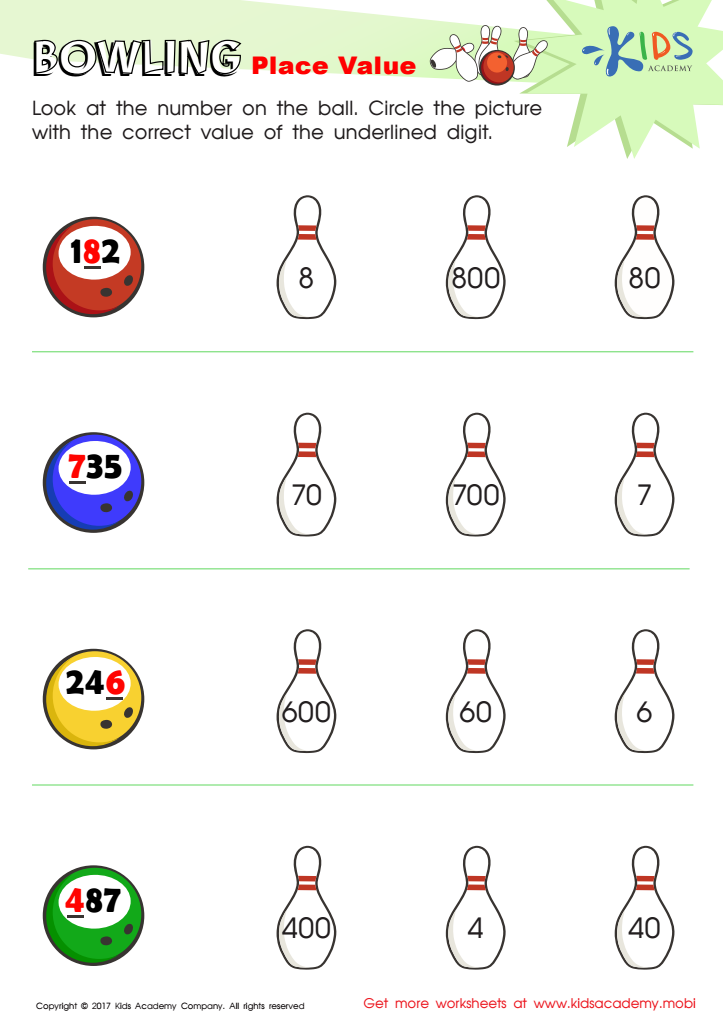
Place Value Worksheet
 Assign to My Students
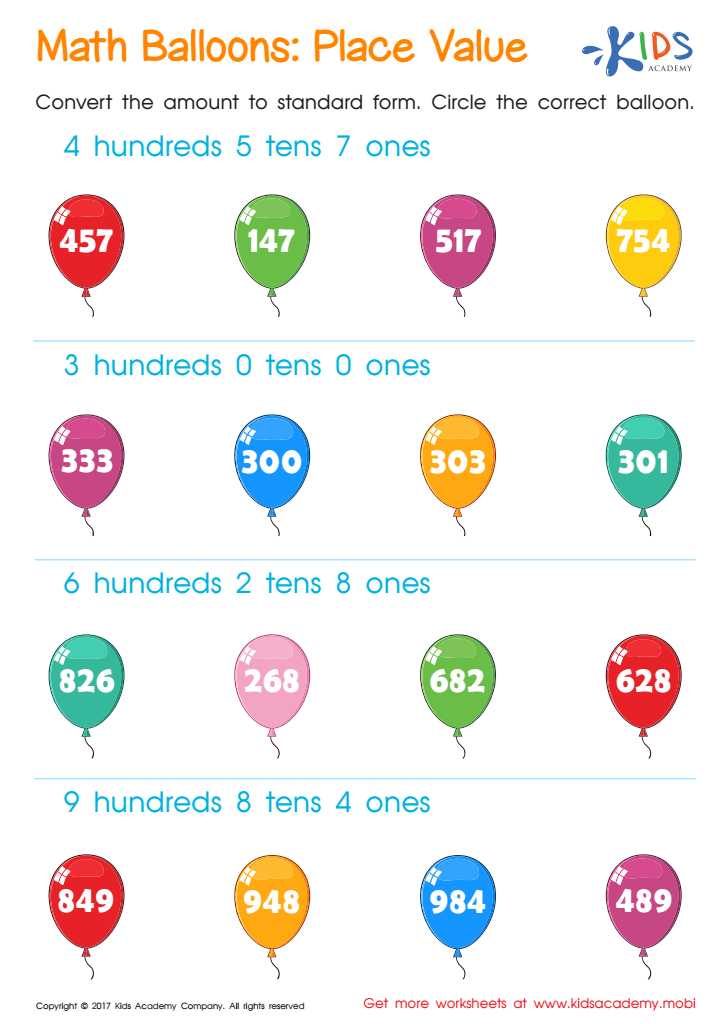
Place Value Printable Worksheet
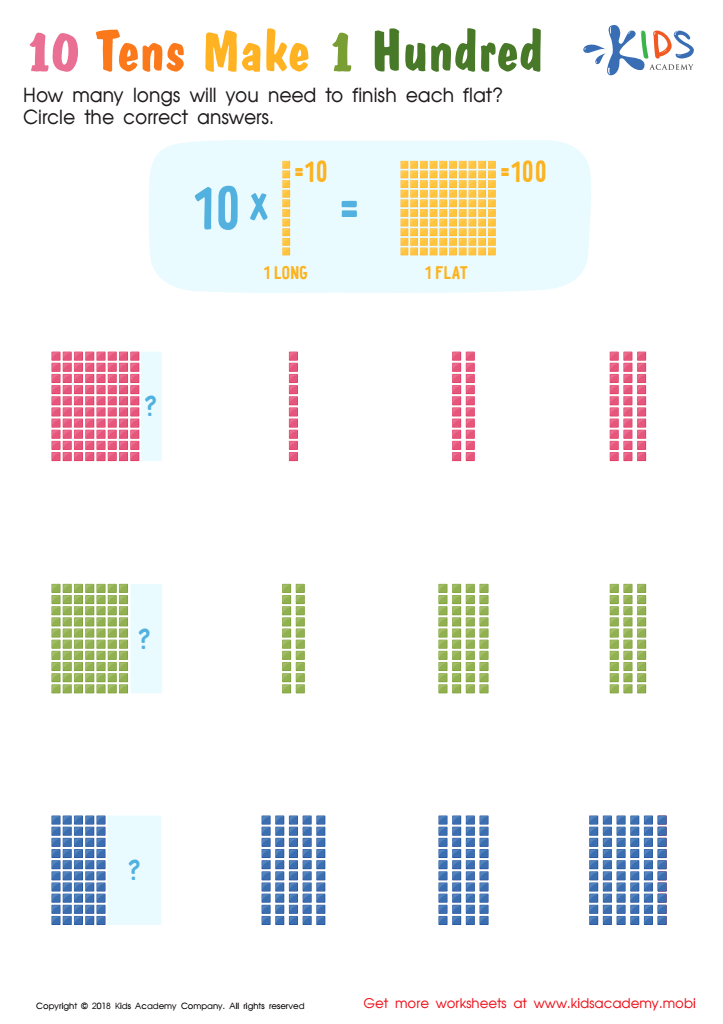
10 Tens Make 1 Hundred Worksheet






Recognizing number patterns is a crucial skill for 8-year-olds, laying the groundwork for advanced mathematical concepts. For parents and teachers, understanding and nurturing this skill is vital for several reasons. Firstly, pattern recognition enhances critical thinking and problem-solving abilities. By identifying sequences and relationships, children learn to approach math with logic and curiosity, fostering a growth mindset towards challenges.
Additionally, number patterns connect various mathematical concepts, such as addition, subtraction, multiplication, and division. This interconnectivity deepens their comprehension and helps them recognize the relevance of math in everyday life. Furthermore, pattern recognition serves as the foundation for more complex concepts in mathematics, like algebra and geometry, making it essential for future learning.
Beyond academics, engaging in pattern recognition can be a fun and interactive way to build a stronger bond between parents and children or encourage collaboration and teamwork among classmates. Ultimately, when parents and teachers prioritize pattern recognition, they empower children to develop resilience, confidence, and enthusiasm towards mathematics, ensuring a solid foundation for their educational journey and beyond. This care not only shapes their academic achievements but also equips them with valuable life skills.








