Subtraction skills Numbers Worksheets for 8-Year-Olds
3 filtered results
-
From - To
Boost your child's subtraction skills with our engaging and educational worksheets designed specifically for 8-year-olds! These printable resources provide a variety of fun and interactive exercises that help children master subtraction concepts, including single and multi-digit operations. Featuring visual aids and real-world problems, our worksheets cater to different learning styles and ensure kids remain motivated while practicing. As children work through these subtraction challenges, they will build confidence and improve their mathematical proficiency. Perfect for homeschooling or classroom use, parents and teachers will find these worksheets instrumental in helping young learners excel in subtraction. Download today and watch them thrive!
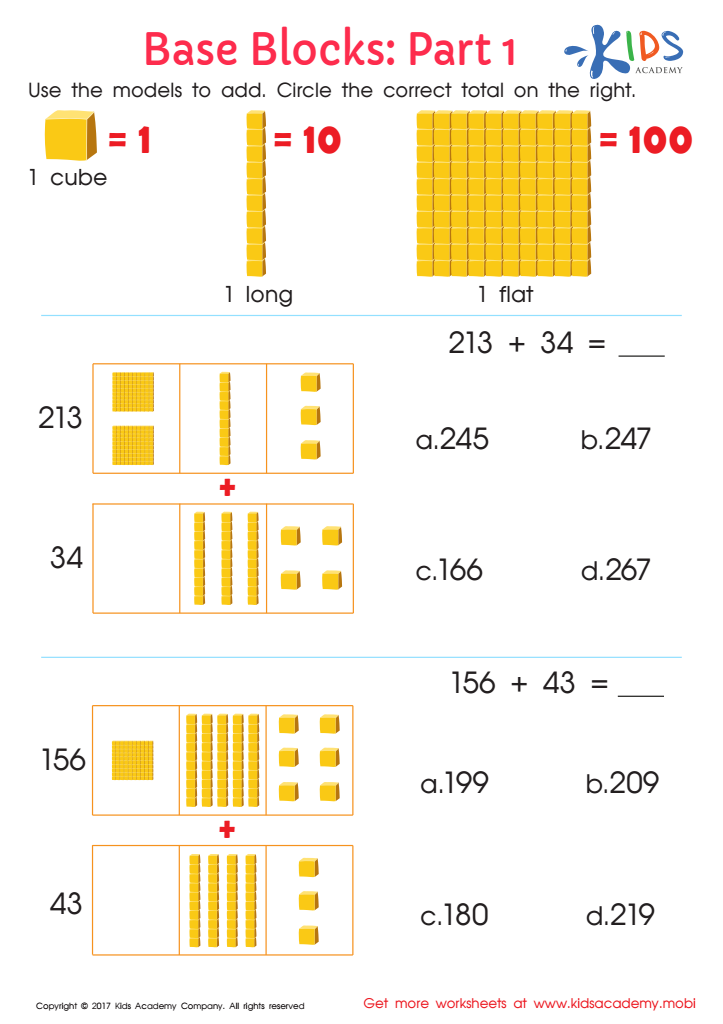
Base Ten Blocks Worksheet: Part 1
 Assign to My Students
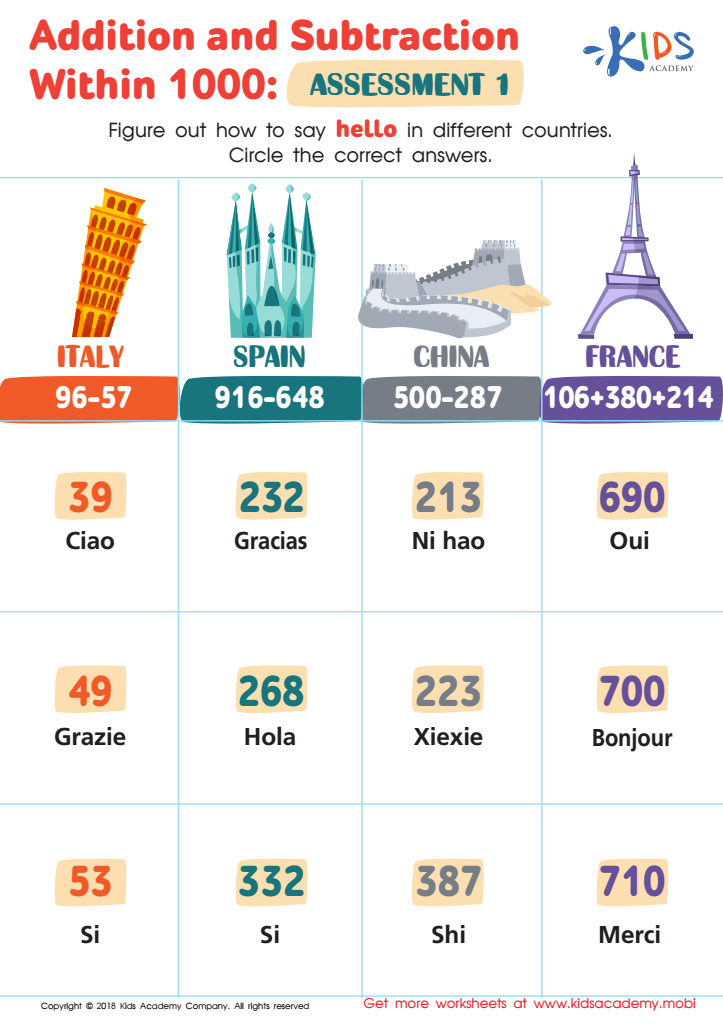
Addition and Subtraction Within 1000: Assessment 1 Worksheet
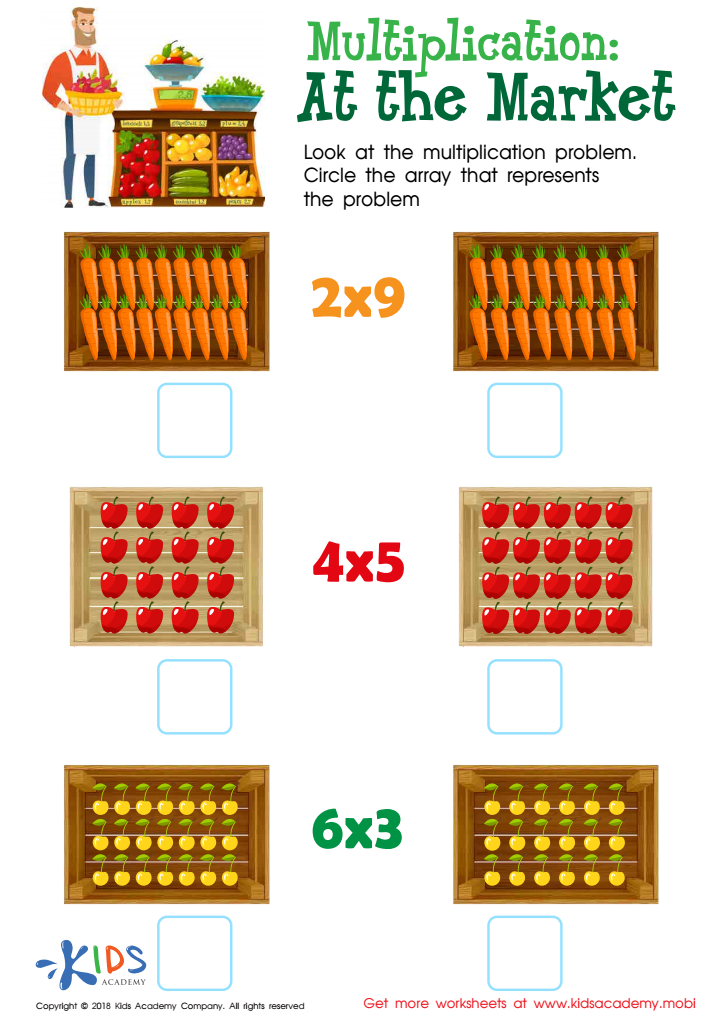
At the Market Worksheet








Subtraction is a fundamental mathematical skill that serves as a building block for more advanced concepts, making it essential for 8-year-olds. As children develop their understanding of numbers, subtraction plays a crucial role in enhancing their problem-solving abilities and logical thinking. Mastering subtraction helps children to comprehend concepts such as difference, quantity, and comparison, which are vital for everyday life situations.
Moreover, strong subtraction skills support children’s academic progress across various subjects. Whether calculating change during shopping or tackling word problems in math, knowing how to subtract sets the foundation for more complex operations like multiplication and division. In addition, proficiency in subtraction contributes to improved self-esteem and confidence in mathematics, often impacting a child's overall attitude toward learning.
Parents and teachers should prioritize subtraction skills as they directly influence not only mathematical fluency but also critical thinking abilities. Encouraging practice through fun games and real-world applications can help reinforce these skills, making learning engaging. Investing in strong subtraction skills at this age ensures children are well-prepared for future academic challenges, contributing to their long-term success in school and beyond. Thus, early intervention and support in these skills are vital for a child’s continued mathematical growth.








