Understanding place value Numbers Worksheets for 8-Year-Olds
5 filtered results
-
From - To
Discover our engaging "Understanding Place Value Numbers Worksheets" designed for 8-year-olds! These printable resources help young learners master the concept of place value in a fun and interactive way. Our worksheets include a variety of activities, such as identifying and writing numbers, comparing values, and understanding how each digit's position affects its value. Perfect for enhancing math skills at home or in the classroom, these worksheets encourage independent learning while reinforcing critical thinking. Dive into the world of numbers and let your child build a strong foundation in math with our thoughtfully crafted materials!
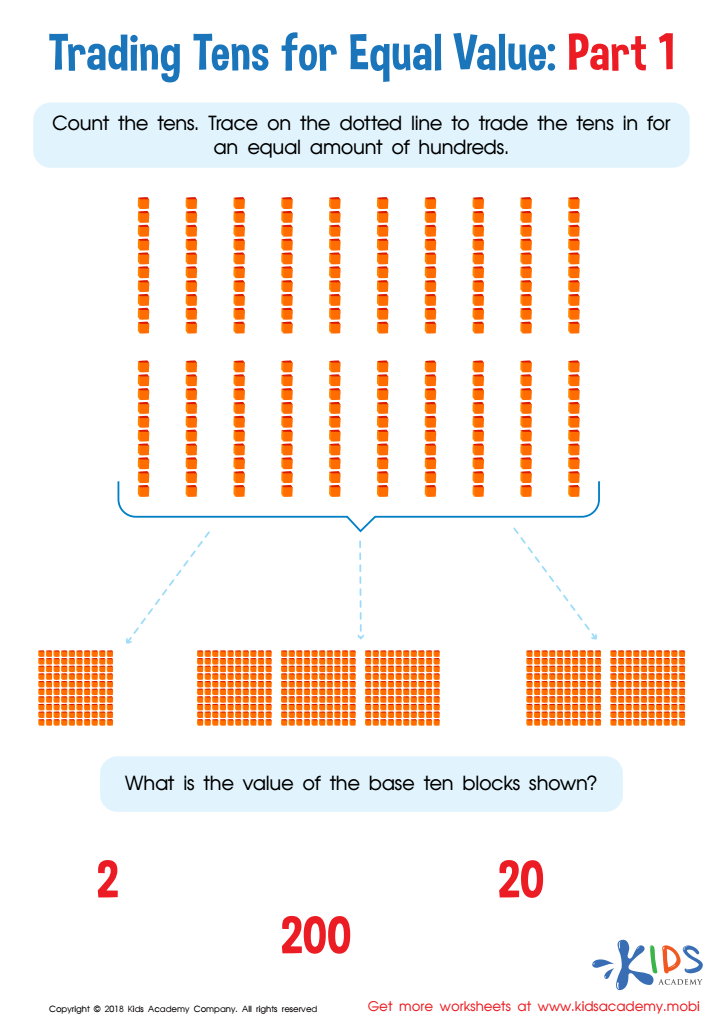
Trading Tens for Equal Value Worksheet: Part 1
 Assign to My Students
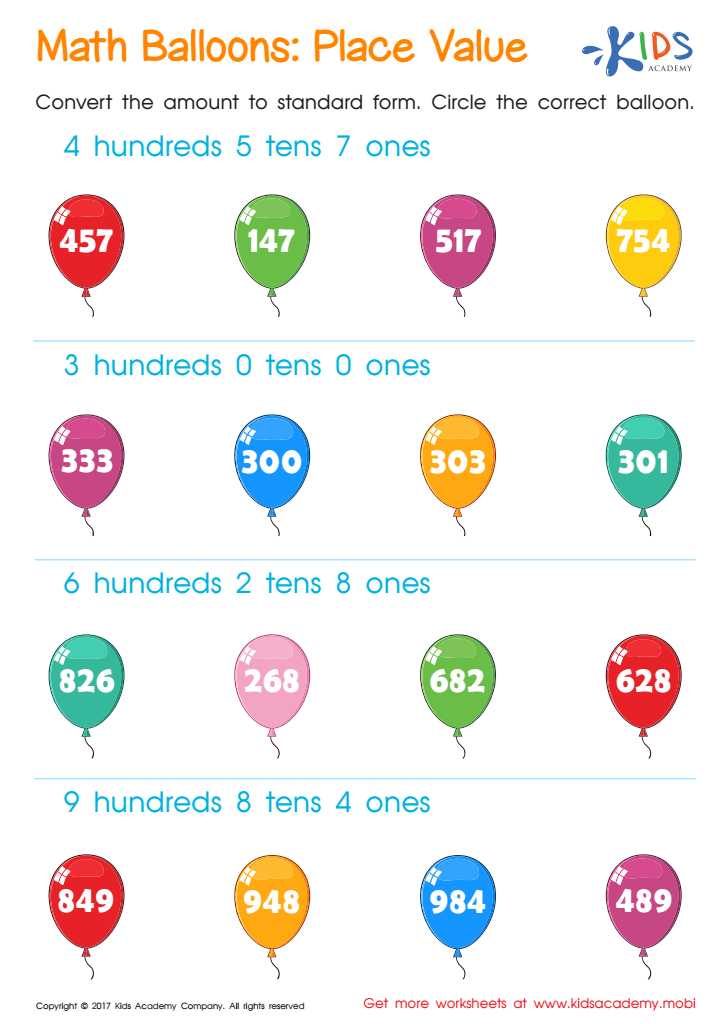
Place Value Printable Worksheet
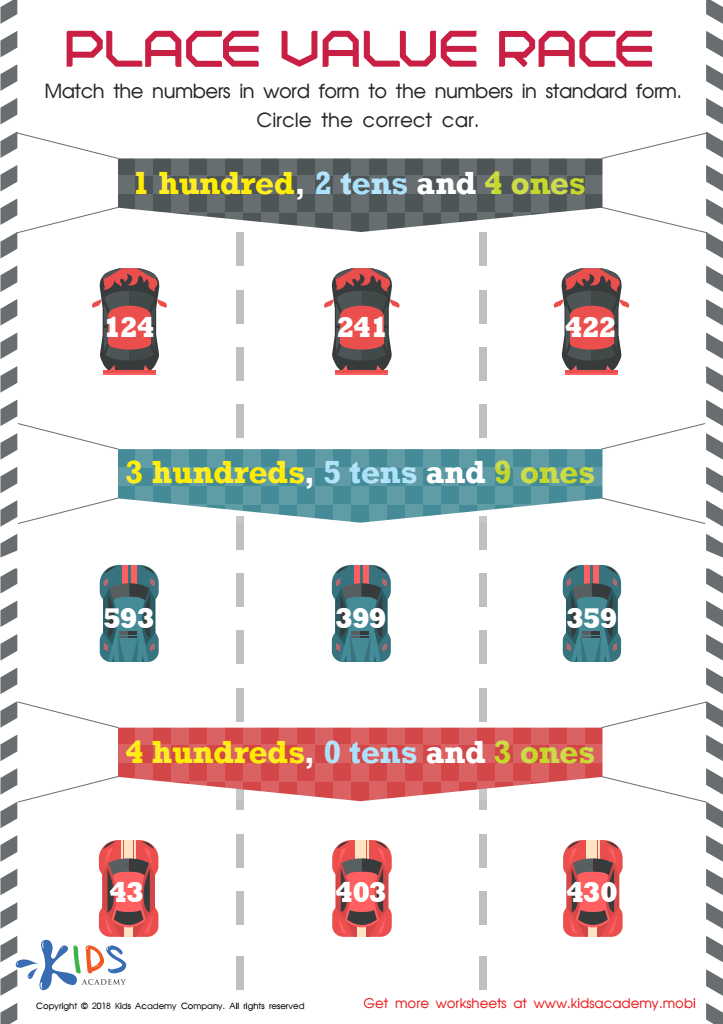
Place Value Race Worksheet
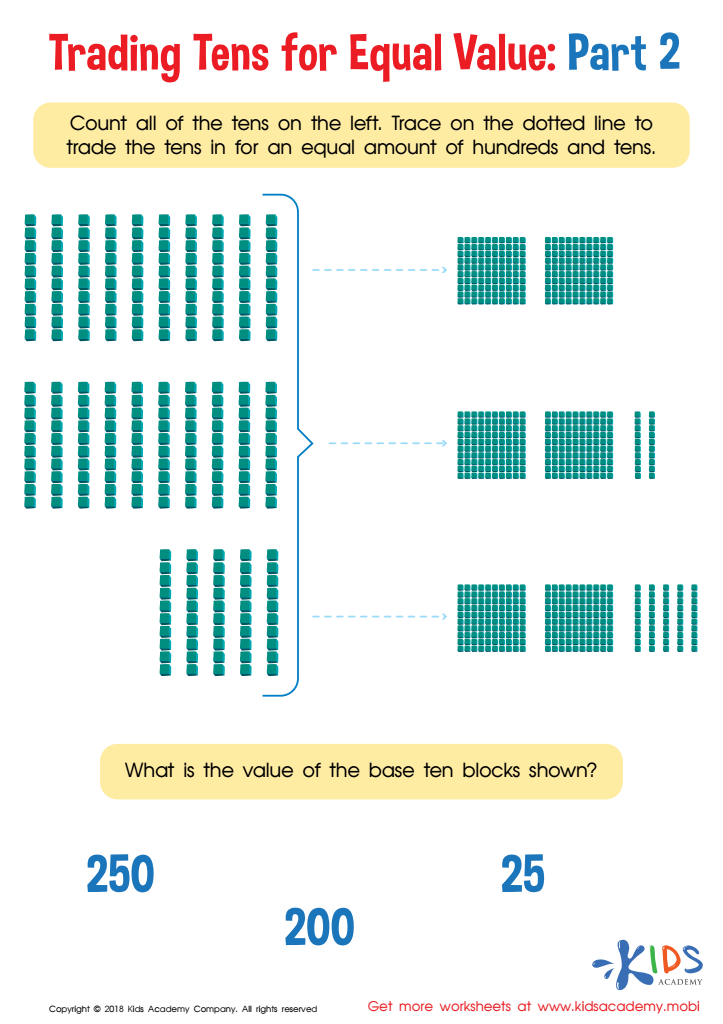
Trading Tens for Equal Value Worksheet: Part 2

Free Place Value Worksheet for 3rd Grade








Understanding place value is crucial for 8-year-olds as it forms the foundation for their entire mathematical education. At this age, children typically begin to work with multi-digit numbers and develop a deeper comprehension of how numbers operate within our number system. When children grasp place value, they learn that the position of a digit in a number determines its actual value; for instance, in the number 345, the '3' represents 300, and this insight is essential for performing arithmetic operations like addition and subtraction.
For parents and teachers, emphasizing place value enables children to become more confident and proficient in mathematics, fostering problem-solving skills needed for more advanced concepts, such as multiplication and division. A solid understanding of place value also aids in recognizing patterns within numbers, enhancing critical thinking and logical reasoning abilities.
Furthermore, ensuring that students master place value can alleviate common math-related anxieties they may face in later grades, as it builds a sense of security in their mathematical abilities. Involving parents in this learning process at home through games, practical examples, and discussions can further reinforce these concepts, ultimately opening up numerous opportunities for success in the child’s educational journey.








