Fine Motor Skills (coloring) Math Worksheets for 8-Year-Olds
5 filtered results
-
From - To
Enhance your child's precision and math acumen with Fine Motor Skills (Coloring) Math Worksheets designed for 8-year-olds. These enjoyable and educational worksheets integrate math problems with intricate coloring sections, fostering both fine motor skills and mathematical thinking. Each page encourages meticulous coloring, enhancing hand-eye coordination, and control, while simultaneously reinforcing math concepts such as basic arithmetic, shapes, and patterns. Ideal for home or classroom use, these worksheets offer a dual-focused approach to learning, ensuring that children remain engaged while developing essential skills for academic success. Boost both creativity and numeracy with our diverse collection.
Ready to see your child excel? Visit our page for more details!
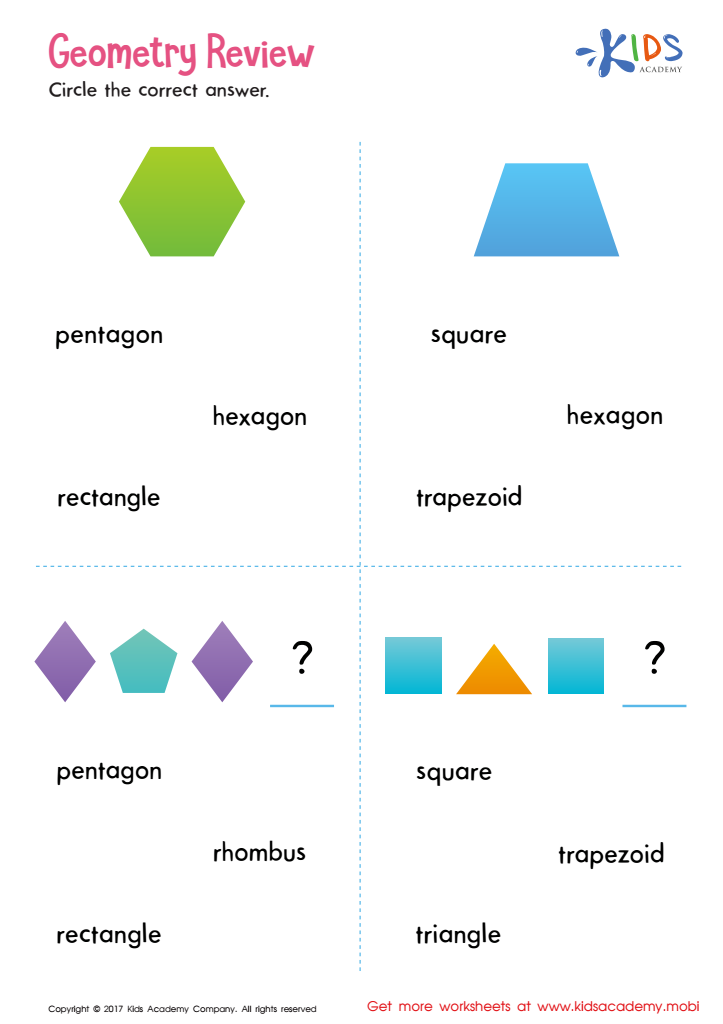
Geometry Review Printable
 Assign to My Students
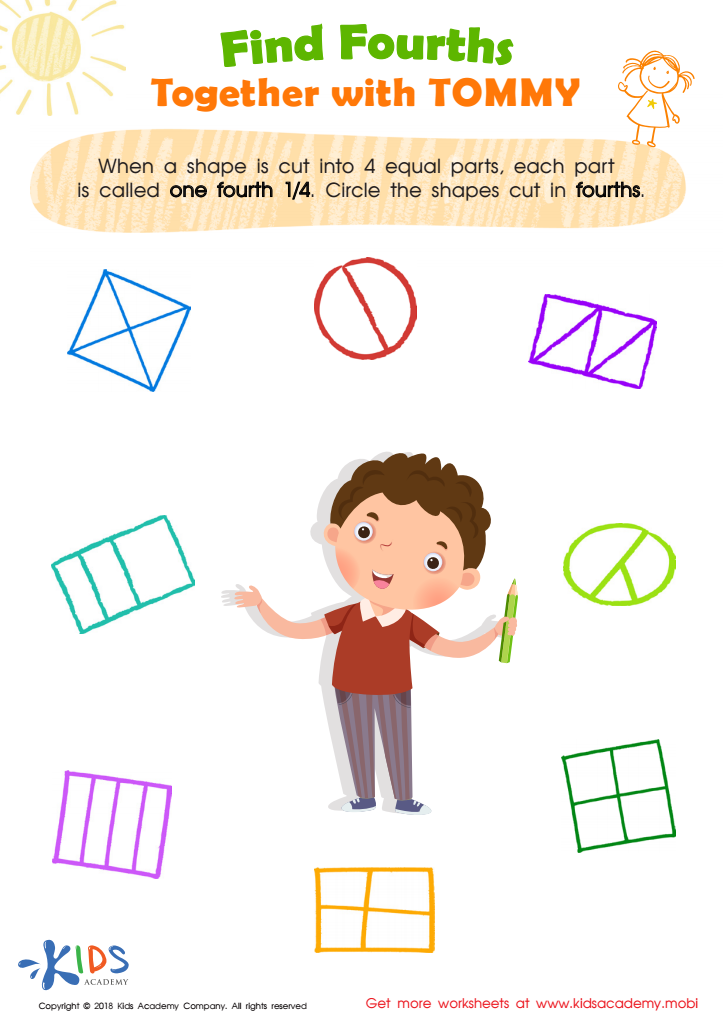
Find Fourths Together with Tommy Worksheet



.jpg)



Parents and teachers should care about the development of fine motor skills, such as those exercised through coloring activities, in 8-year-olds for multiple important reasons, particularly in the context of math learning. Fine motor skills involve the coordination of small muscles in the hands and fingers, essential for performing detailed, precise tasks. At the age of 8, children are at a critical stage of development where these skills impact their ability to grasp and manipulate writing tools, which in turn affects their handwriting and overall academic performance.
Integrating coloring into math activities benefits students by providing a visually engaging and hands-on methodology, reinforcing mathematical concepts through kinesthetic learning. For instance, when children color-code sections of a math worksheet according to answers, they simultaneously practice math and enhance their fine motor coordination. This dual engagement strengthens the neural connections between different areas of the brain, promoting better comprehension and retention of math skills.
Furthermore, fine motor skills are fundamental beyond just academics; they play a role in everyday tasks such as tying shoelaces and buttoning clothes, fostering independence and self-confidence. Therefore, emphasizing activities that develop these skills supports holistic growth, blending cognitive, academic, and practical life skill advancements, setting a solid foundation for future learning.








