Identifying Animals Math Worksheets for 8-Year-Olds
3 filtered results
-
From - To
Enhance your child's learning with our "Identifying Animals Math Worksheets for 8-Year-Olds". These engaging worksheets seamlessly blend math skills with animal identification, making math practice interesting and educational. Children will solve equations, work on number sequences, and develop strong reasoning abilities while exploring various animals. Ideal for 8-year-olds, these worksheets promote critical thinking and problem-solving skills. Our beautifully designed sheets feature a range of activities that capture curiosity and reinforce math concepts in a fun context. Make math an exciting adventure for your youngster with our innovative worksheets. Download now to start the learning journey!
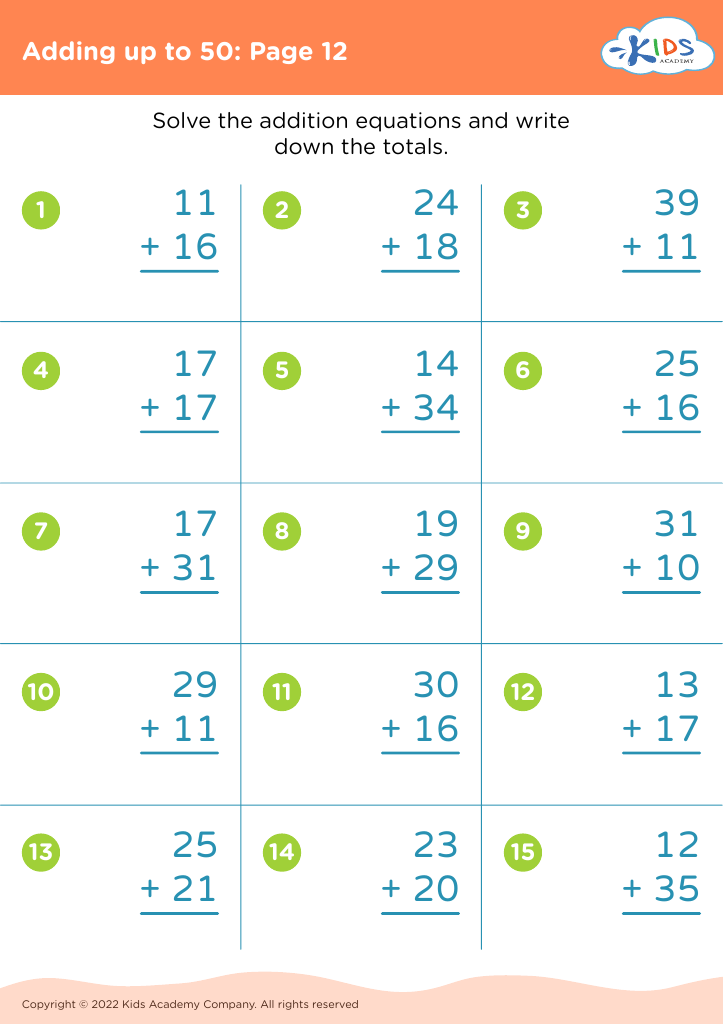
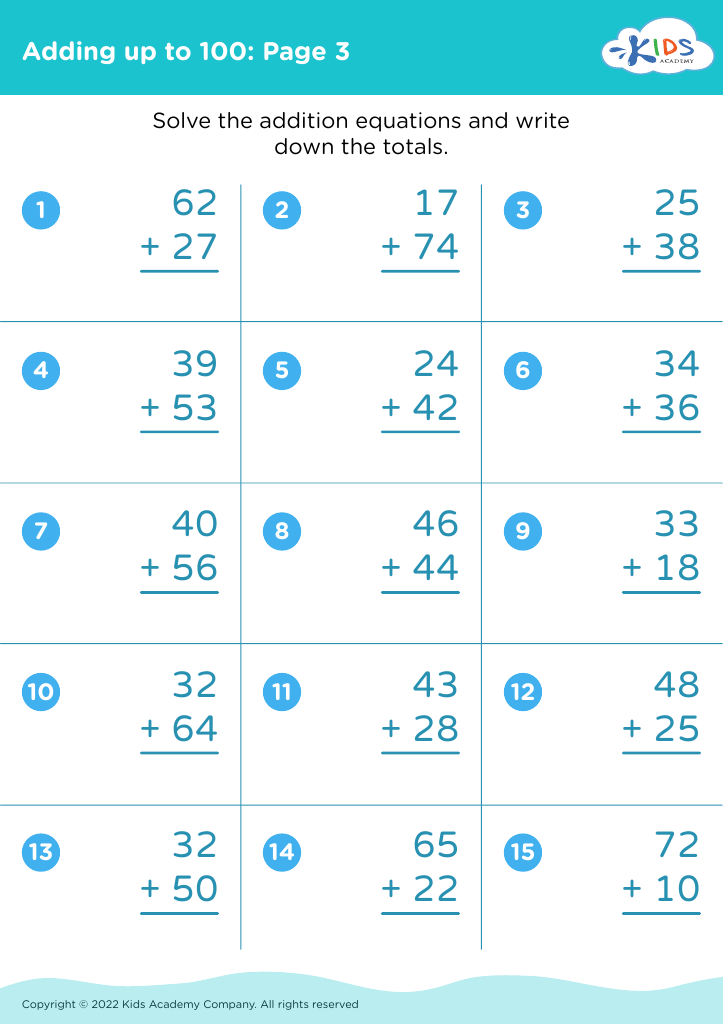
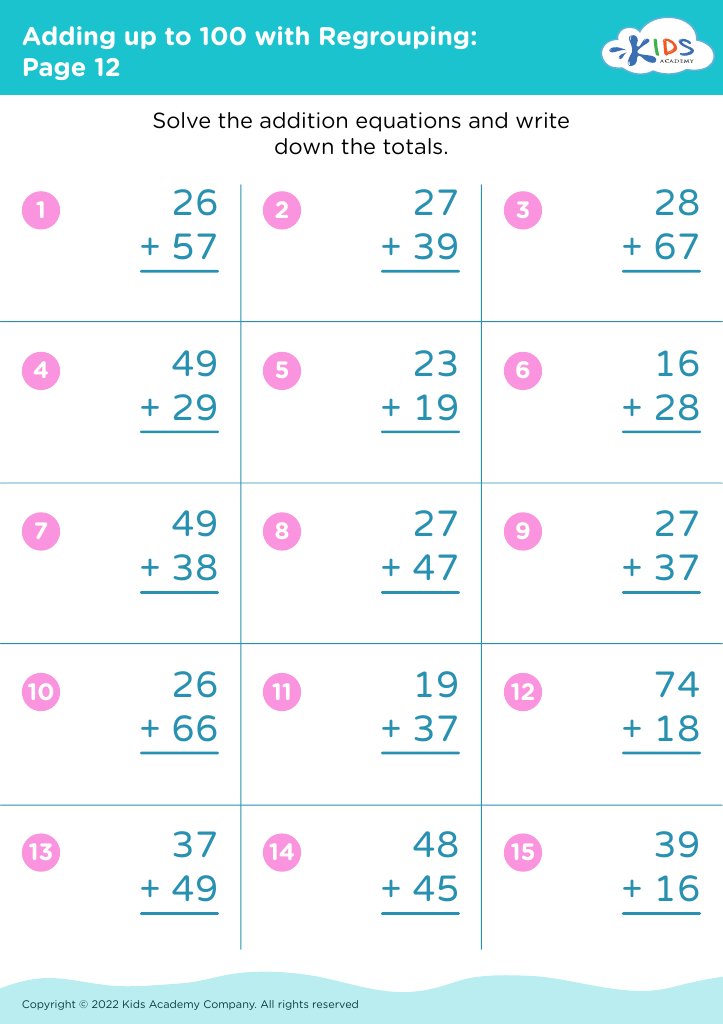








Parents and teachers should care about identifying animals math for 8-year-olds because it seamlessly integrates multiple core learning areas such as science, mathematics, and language arts, creating a well-rounded educational experience. At this age, children are naturally curious about the world around them, and an interest in animals provides a relatable context to present key mathematical concepts.
By incorporating animals into math lessons, children can engage in counting, sorting, and categorizing activities that enforce mathematical skills like addition, subtraction, and pattern recognition. For example, counting the number of legs on different animals or comparing the sizes of various species provides practical, hands-on ways to grasp numerical relationships and measurements.
Additionally, these activities bolster observational skills and critical thinking. When children identify and classify animals based on characteristics such as habitat, diet, or physical traits, they learn about scientific classification and develop attention to detail.
Lastly, this multidisciplinary approach supports language development. Discussing and describing animals encourages vocabulary expansion and promotes effective communication skills. As children articulate their observations and findings, they also practice reasoning and explanation techniques.
Overall, integrating animal identification with math enriches education, making abstract concepts tangible and sparking enthusiasm through engaging, real-world applications that cater to the versatile learning styles of 8-year-olds.








