Math skills improvement Math Worksheets for 8-Year-Olds
3 filtered results
-
From - To
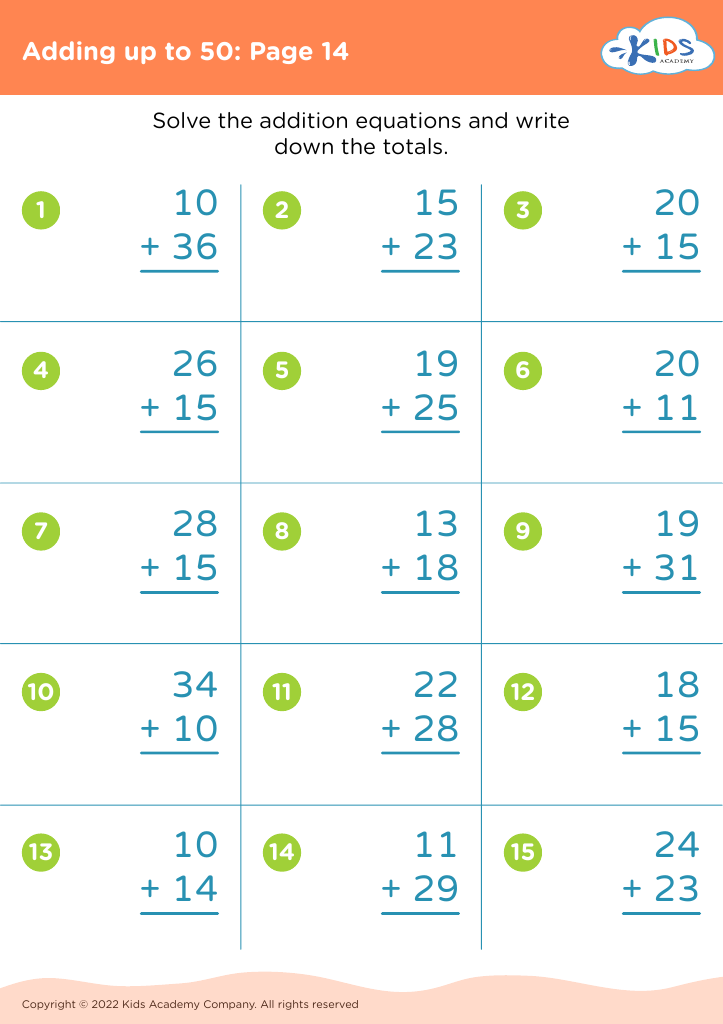
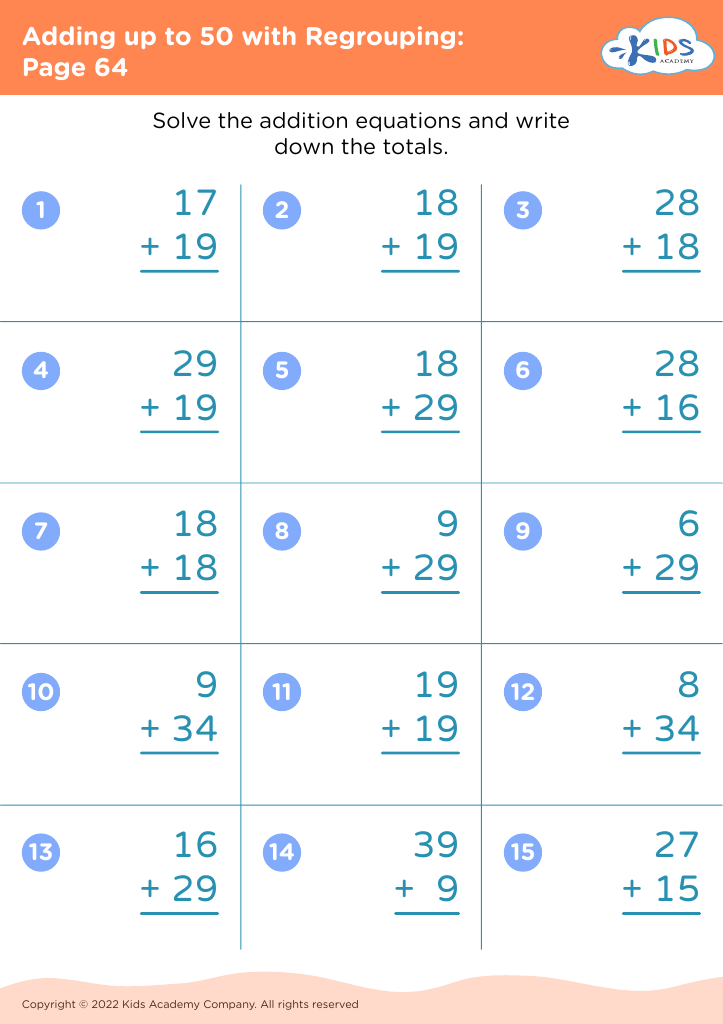
Enhance your child's math skills with our engaging math worksheets designed for 8-year-olds! At Kids Academy, we offer a variety of activities to strengthen mathematical understanding and boost confidence. Our printable worksheets cover key topics such as addition, subtraction, multiplication, division, fractions, and geometry—crafted to make learning fun and effective. Each worksheet features colorful graphics and real-world scenarios to keep young learners motivated and excited about math. Whether you're a teacher or a parent, explore our resources to support your child's journey toward math proficiency. Visit our website to download and start improving math skills today!
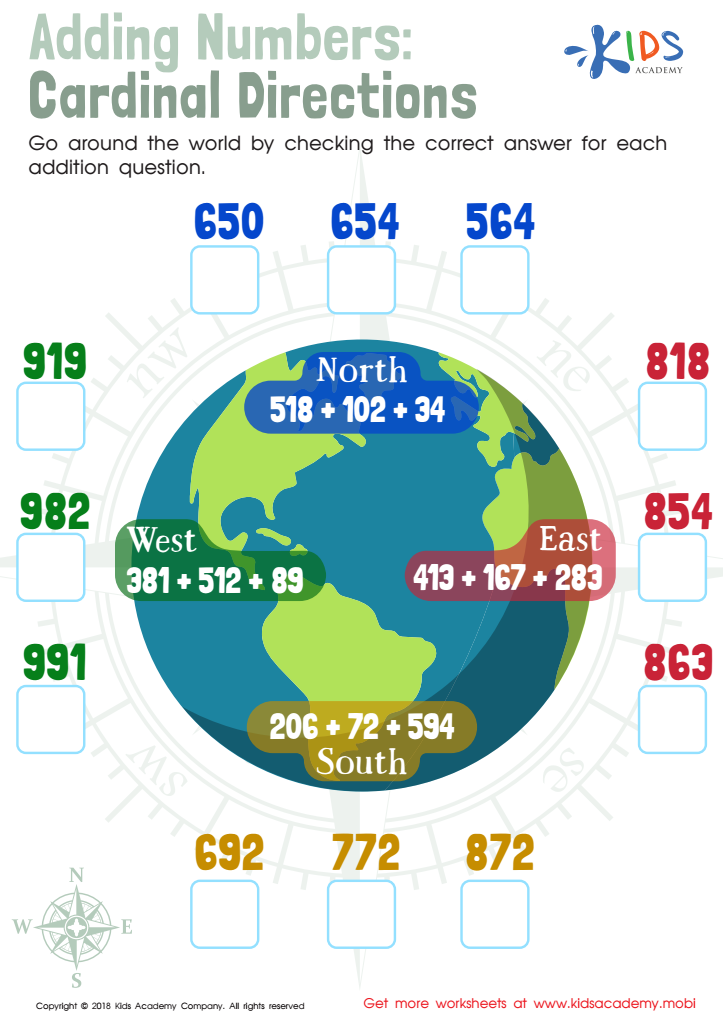
Adding Numbers: Cardinal Directions Worksheet
 Assign to My Students





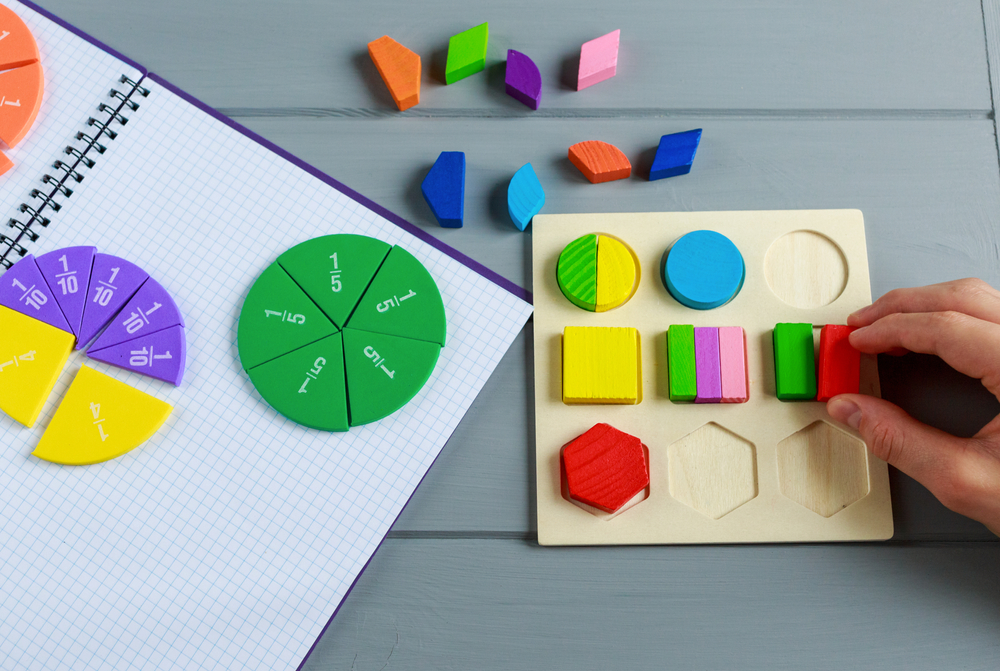


Parents and teachers should prioritize improving math skills for 8-year-olds because strong foundational math abilities significantly influence a child's overall academic success and future opportunities. At this age, children are developing critical thinking and problem-solving skills, which are essential for math and applicable across various subjects and real-life situations. Solid math skills facilitate the understanding of more complex concepts as children progress in their education, reducing the risk of future learning gaps and academic struggles.
Moreover, confidence in math can foster a positive attitude towards learning and perseverance, essential traits for lifelong success. Proficiency in math is not just about numbers; it encompasses logical reasoning, pattern recognition, and spatial awareness, which contribute to other cognitive skills. Research indicates that early math competence is a strong predictor of later achievement in both math and literacy.
By investing in their child's or student's math development, parents and teachers help create a structured and encouraging learning environment. This supportive atmosphere empowers children to tackle challenges, identify solutions, and build resilience. In the long run, equipping children with robust math skills opens doors to diverse career paths in a world where technological and scientific literacy is increasingly critical. Thus, prioritizing math skills at an early age lays the groundwork for a confident, competent, and capable future generation.








