
Pattern recognition Math Worksheets for 8-Year-Olds
8 filtered results
Difficulty Level
Grade
Age
-
From - To
Subject
Activity
Standards
Discover our engaging Pattern Recognition Math Worksheets for 8-Year-Olds at Kids Academy. Our expertly designed printables enhance your child's cognitive skills by offering a fun and interactive way to master pattern identification, sequence recognition, and logical reasoning. Ideal for young learners, these worksheets incorporate colorful visuals and creative activities to make learning enjoyable. Suitable for classroom use or at-home practice, these resources align with educational standards, promoting critical thinking and problem-solving proficiency. Equip your child with essential math skills and boost their confidence with our captivating pattern recognition exercises. Visit Kids Academy today and start learning through play!
Favorites
With answer key
Interactive
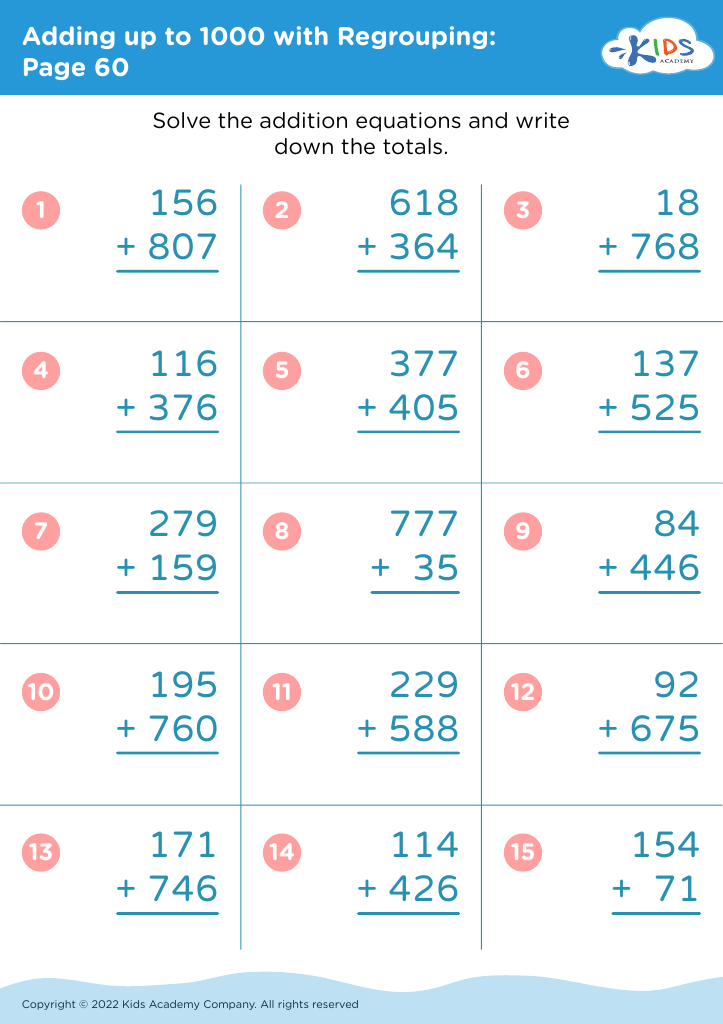
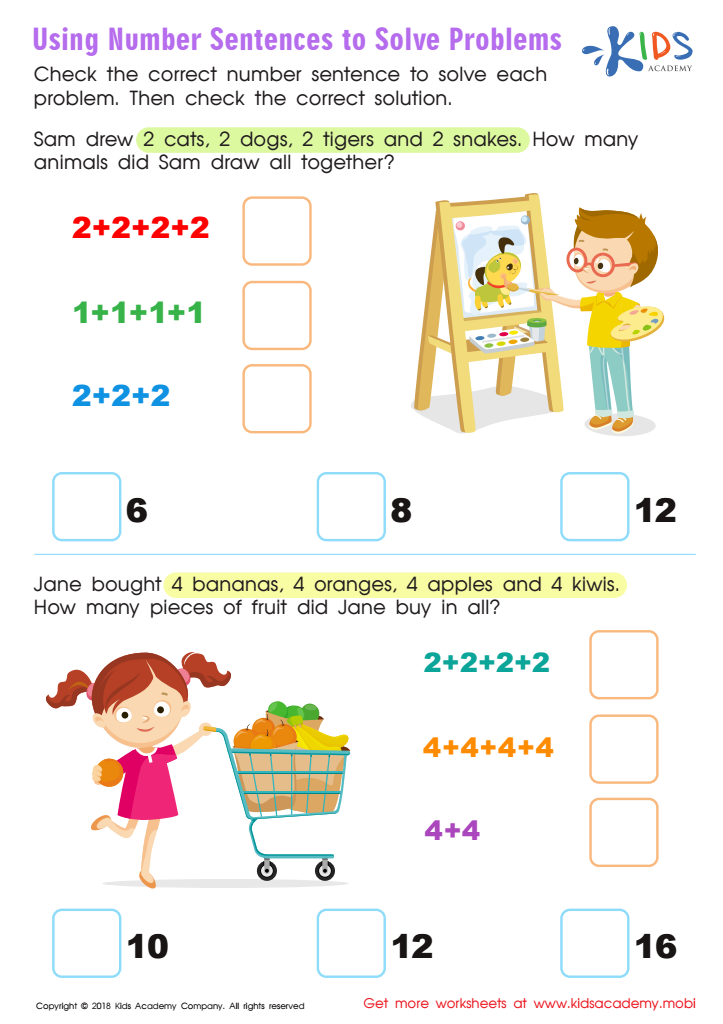
Using Number Sentences to Solve Problems Worksheet
Solving math problems requires an efficient strategy. Picture representation can help young mathematicians with basic addition problems, especially when it involves repeated addends. As they gain confidence, they'll be able to apply their number sentence solving abilities to more complex equations.
 Assign to My Students
Using Number Sentences to Solve Problems Worksheet
Worksheet
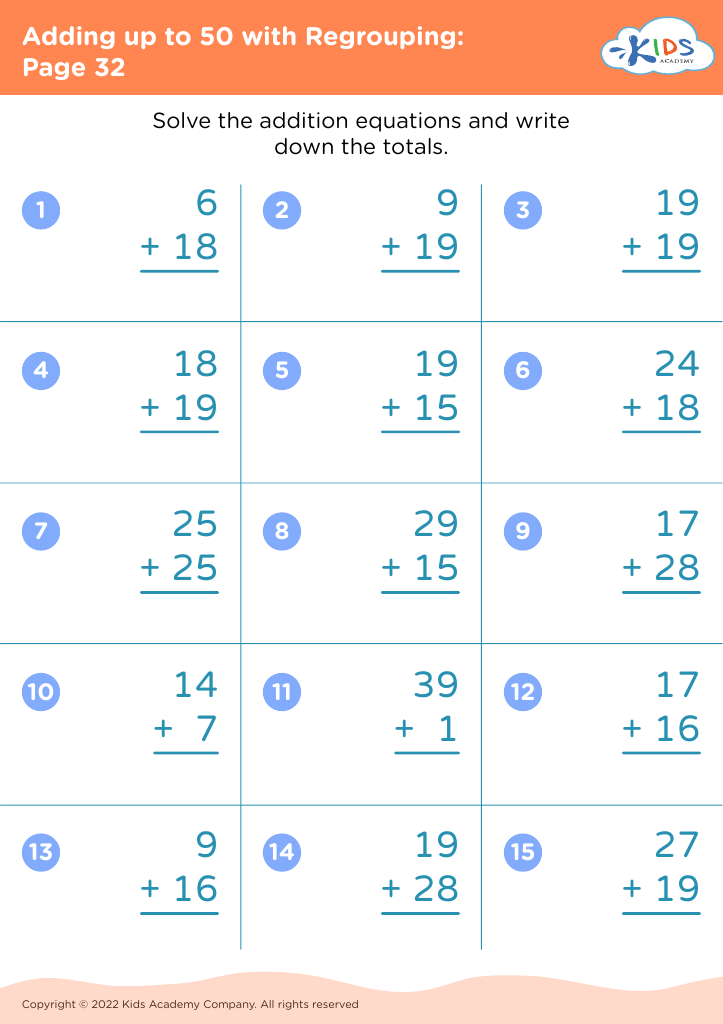
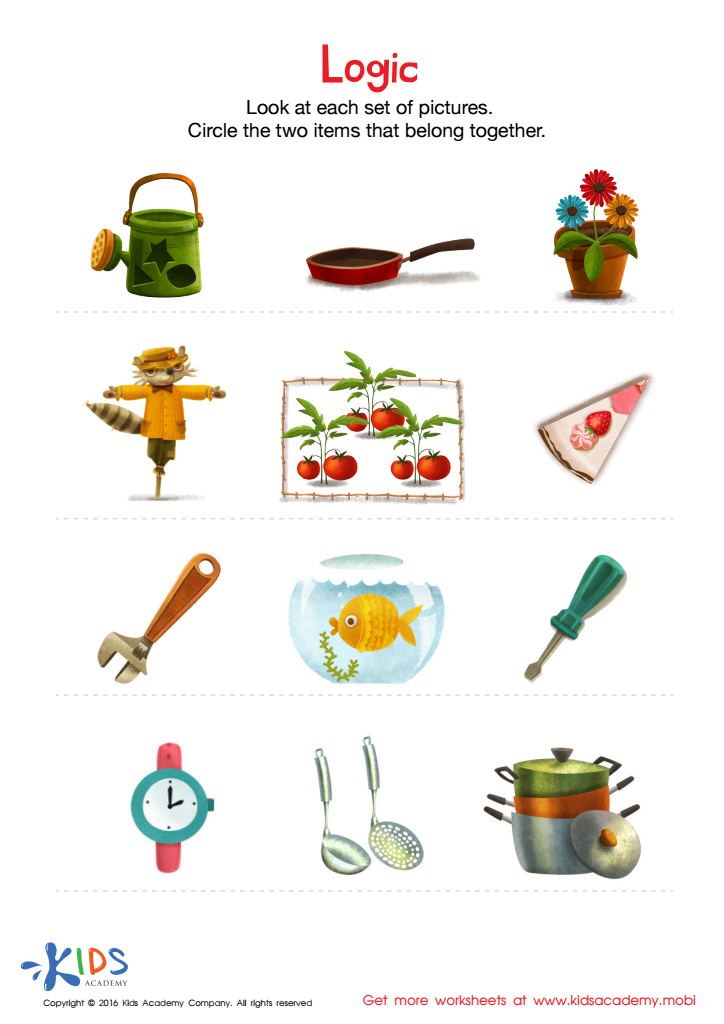
Logic Game Sorting Worksheet
Start your child's logic and reasoning development early with this fun matching worksheet! Through cute images and simple conversations, your little one can learn problem-solving, categorization, and matching skills. Plus, it's a great way for children to explore how items are used in real life. Try it and watch them boost skills with ease and fun!
Logic Game Sorting Worksheet
Worksheet
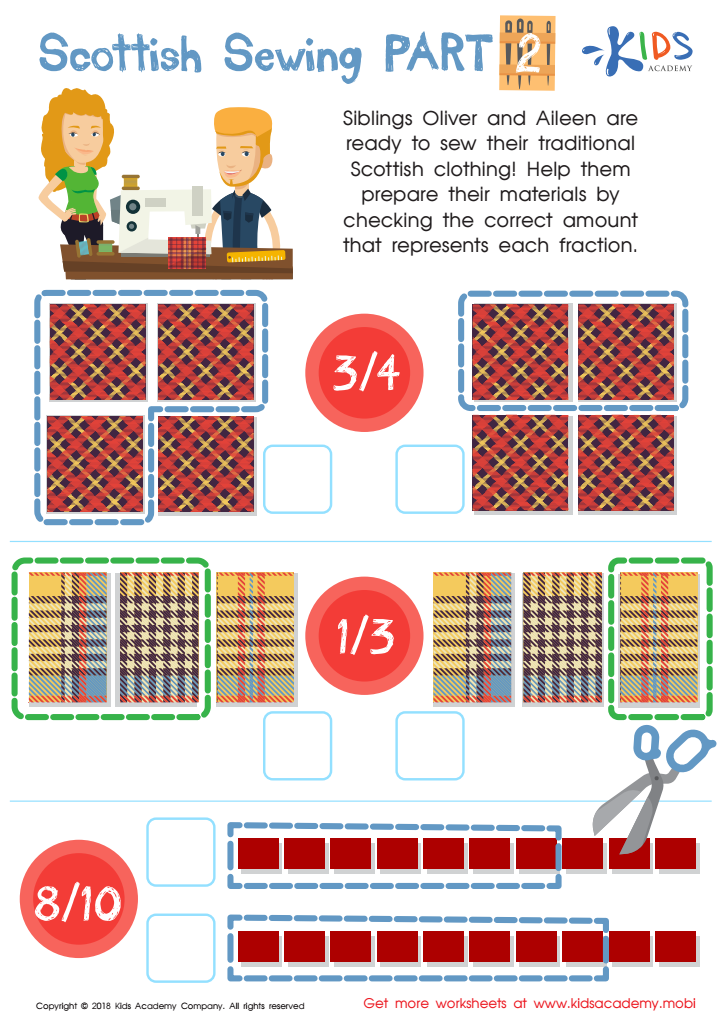
Scottish Sewing Part 2 Worksheet
Oliver and Alleen are sewing traditional Scottish attire. Help your kids count the cloth and check the correct fraction to support them. Have your kids check the correct amount that represents each fraction to help the brother-sister duo prepare their material.
Scottish Sewing Part 2 Worksheet
Worksheet
Join Kids Academy for Free
Who is primarily going to use this learning content?







Pattern recognition in math is crucial for 8-year-olds because it lays the foundation for critical thinking and problem-solving skills essential for future learning. At this age, children's brains are exceptionally adaptable and primed for absorbing new concepts. By recognizing and understanding patterns, children develop a sense of order, which enhances their ability to predict outcomes and understand the world around them.
Firstly, pattern recognition helps improve cognitive skills. When children identify patterns, they exercise their memory, attention, and reasoning abilities. This cognitive workout aids in mental development beyond math, benefiting reading, science, and everyday decision-making.
Moreover, patterns are everywhere in math — from simple sequences in counting (1, 2, 3...) to more complex concepts like multiplication and fractions. Proficiency in spotting these patterns builds a strong mathematical foundation, making advanced topics easier to grasp later on.
Collaboration between parents and teachers in fostering this skill also nurtures a positive attitude toward learning. Engaging activities like puzzles, games, and interactive lessons make math fun, reducing anxiety and boosting confidence.
In essence, focusing on pattern recognition equips children with the tools they need for academic success and practical life skills, setting them up for a lifetime of learning and problem-solving.








