
Time recognition Math Worksheets for 8-Year-Olds
3 filtered results
Difficulty Level
Grade
Age
-
From - To
Subject
Activity
Standards
Enhance your child's time-telling skills with our engaging "Time Recognition Math Worksheets for 8-Year-Olds." Designed to blend fun and learning, these printable worksheets help kids practice reading clocks, understanding hours and minutes, and interpreting time-related scenarios. With a variety of exercises including analog and digital clocks, these resources cater to diverse learning styles, building confidence in time management and daily routines. Perfect for classroom or home use, our worksheets make mastering the concept of time an enjoyable and interactive experience. Equip your child with the essential math and life skills they need through targeted, captivating practice.
Favorites
With answer key
Interactive
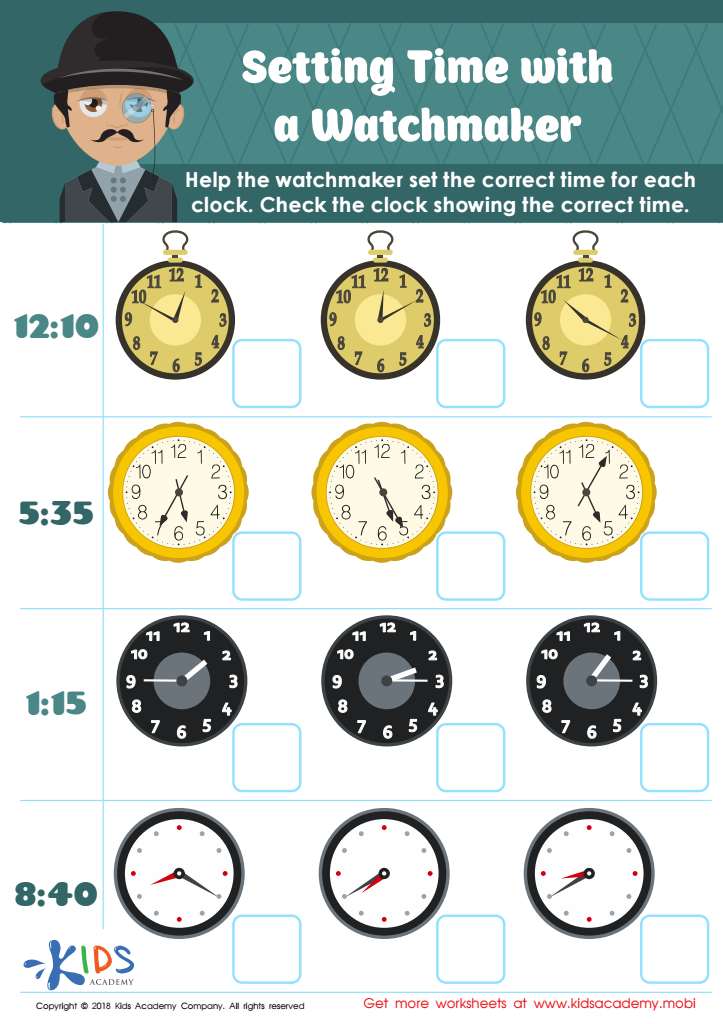
Setting Time with Watchmaker Worksheet
Can your kids tell the time? If so, this worksheet should be easy. Help them set the time for each clock: look at the time written on the left side and find the clock on the right side that matches.
 Assign to My Students
Setting Time with Watchmaker Worksheet
Worksheet
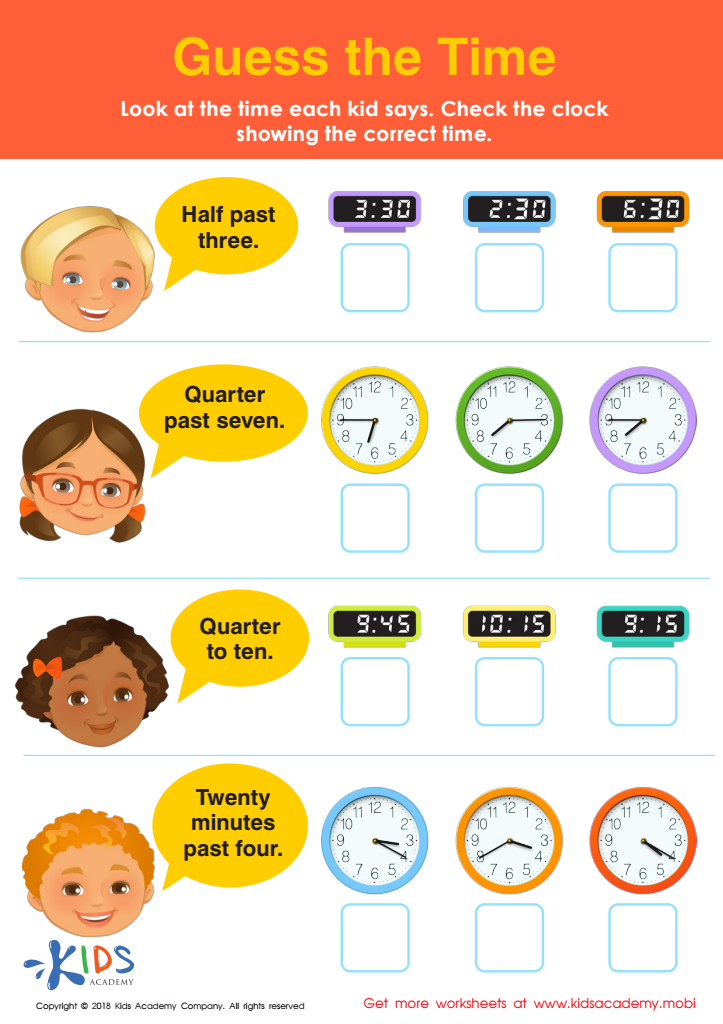
Guess the Time Worksheet
Help students tell the time accurately with this fun exercise. Read the time each person says and find the corresponding clock. Check the options on the left and have students guess the right time. This worksheet is sure to sharpen their time-telling skills.
Guess the Time Worksheet
Worksheet
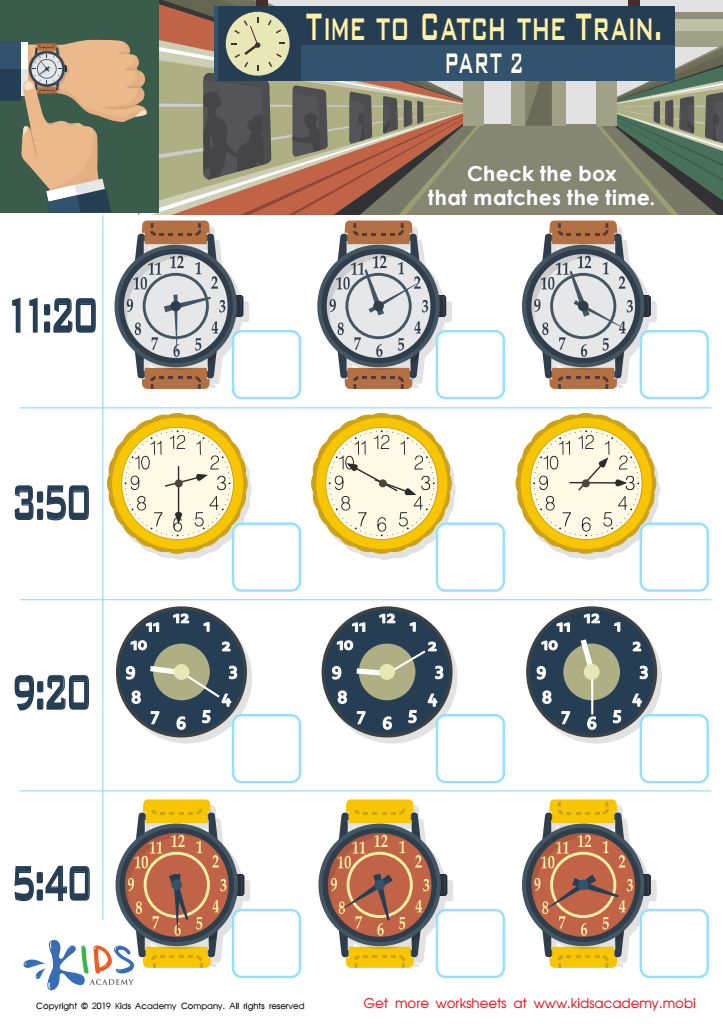
Time to Catch the Train Part 2 Worksheet
Teach your kids the importance of telling time and how to do it. Explain that there are multiple ways to show the time, such as written on the left side or watches in the picture. Guide them to check the box that matches the time. Knowing the time is essential to get things done and create order. Ensure your kids understand this and they will reap the benefits.
Time to Catch the Train Part 2 Worksheet
Worksheet
Join Kids Academy for Free
Who is primarily going to use this learning content?


.jpg)




Time recognition is a crucial skill for 8-year-olds because it lays the groundwork for independence and responsibility. When children grasp the concept of time, they can better manage daily routines such as waking up, eating meals, attending school, and completing homework. This understanding helps them appreciate the importance of punctuality and planning, essential traits that will benefit them throughout their lives.
From an educational perspective, learning to tell time reinforces other critical math skills, such as counting, sequencing, and understanding fractions. For example, the concept of "half past" and "quarter to" integrates basic fraction lessons, enhancing children's numerical fluency and problem-solving abilities.
Beyond academics, understanding time helps children develop a sense of structure and predictability. It offers them a concrete way to understand the day's flow, reducing anxiety about what comes next. This can be particularly comforting for young children still learning to navigate the rhythm of a school day or other structured activities.
Additionally, being able to tell time fosters a child's sense of confidence and accomplishment. Mastering clocks—both digital and analog—provides a tangible measure of achievement, encouraging further learning and curiosity. Therefore, parents and teachers should prioritize time recognition as part of a well-rounded education, ensuring that children are well-equipped to handle academic and life challenges.








