Understanding directions Math Worksheets for 8-Year-Olds
4 filtered results
-
From - To
Enhance your child's math skills with our engaging "Understanding Directions Math Worksheets" designed specifically for 8-year-olds. These worksheets help young learners master essential skills like following verbal and written instructions, interpreting directional words, and applying logical reasoning in problem-solving scenarios. Each activity is tailored to encourage critical thinking while ensuring that learning remains fun and interactive. By engaging with these worksheets, children can boost their confidence in math and improve their ability to decode directions in various contexts. Explore our collection today and watch your child thrive as they learn to navigate mathematical concepts with clarity!
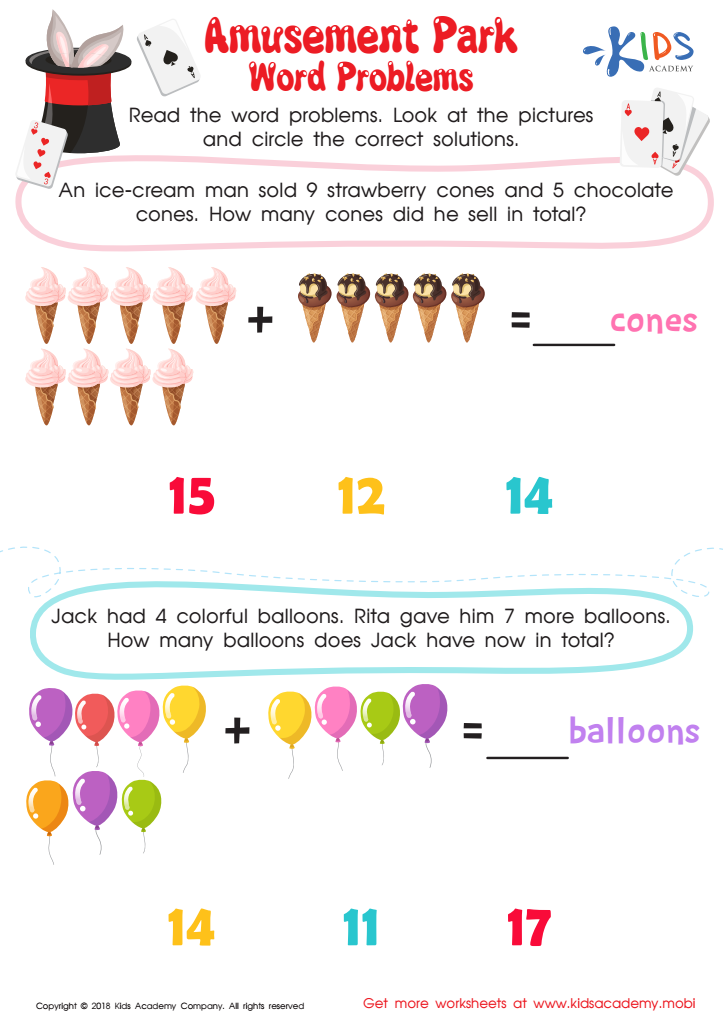
Amusement Park Word Problems Worksheet
 Assign to My Students







Understanding directions in math is crucial for 8-year-olds, as it forms a foundation for their problem-solving abilities and critical thinking skills. By age eight, children are transitioning from concrete math concepts to more abstract thinking. Grasping how to interpret and follow mathematical directions helps them develop essential skills necessary for future learning, not just in math, but in all subject areas.
When children comprehend what is expected in math problems, they build confidence and independence, enabling them to tackle challenges more effectively. This proficiency also fosters a positive learning environment, encouraging them to ask questions and seek help when needed. Additionally, strong directional understanding aids in their ability to follow multi-step instructions, which is crucial for complex problem-solving tasks.
Furthermore, having parents and teachers prioritize these skills ensures that children are not just memorizing procedures, but also understanding the reasons behind them. This deeper understanding cultivates a lifelong love for learning and equips children with the skills to navigate both academic and real-life situations. Ultimately, investing in children’s abilities to understand math directions promotes self-efficacy, resilience, and a proactive mindset essential for future success.








