Understanding equality Math Worksheets for 8-Year-Olds
5 filtered results
-
From - To
Discover our engaging equality math worksheets designed specifically for 8-year-olds to enhance their understanding of equality concepts. These worksheets use fun activities and colorful illustrations to teach children about equations, balancing both sides, and the fundamental principles of equality in a way that's easy to grasp. Our expert-crafted worksheets hone in on critical thinking and problem-solving skills, ensuring your child gains confidence in math while enjoying the learning process. Perfect for classroom use or extra practice at home, these printables help build a strong mathematical foundation. Bring learning to life with our equality math worksheets!
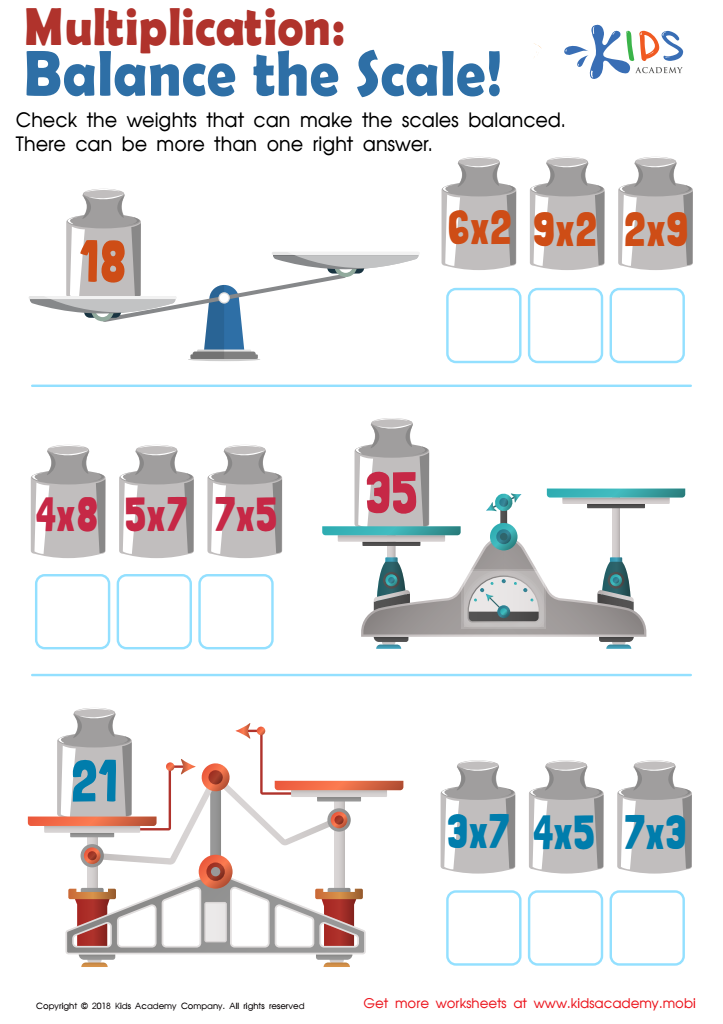
Balance the Scales Multiplication Worksheet
 Assign to My Students
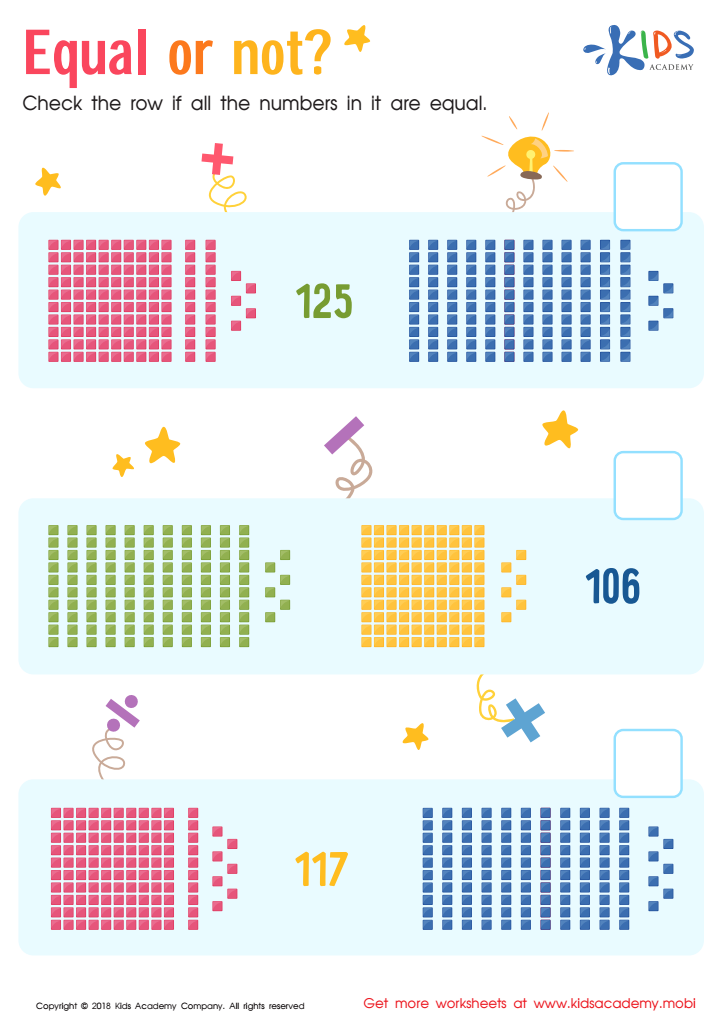
Equal or not Worksheet
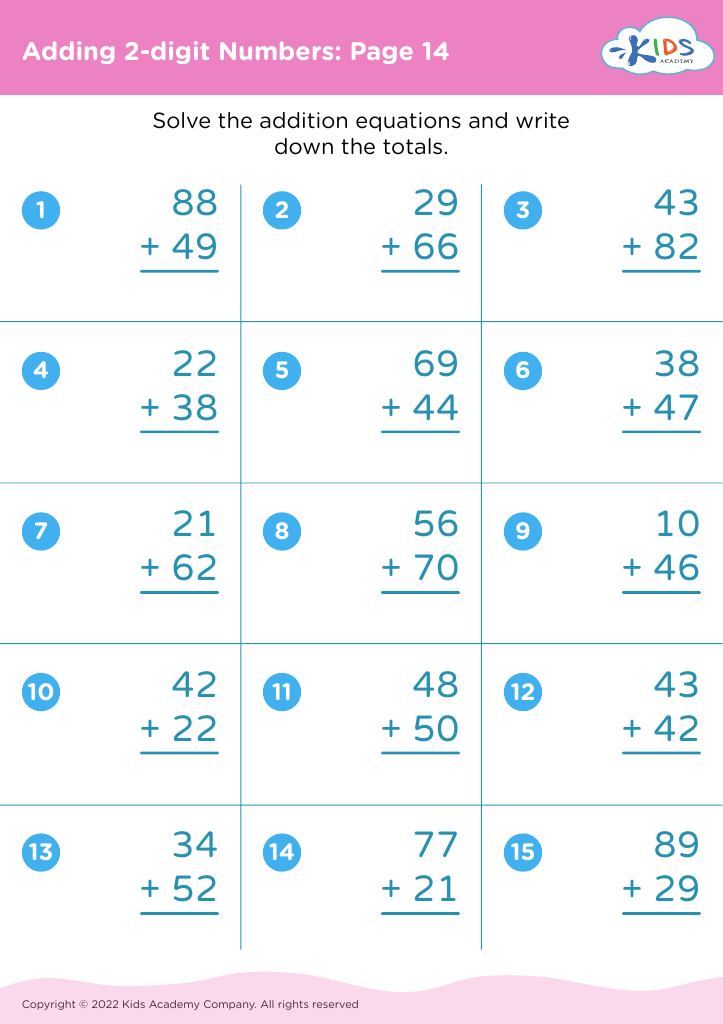
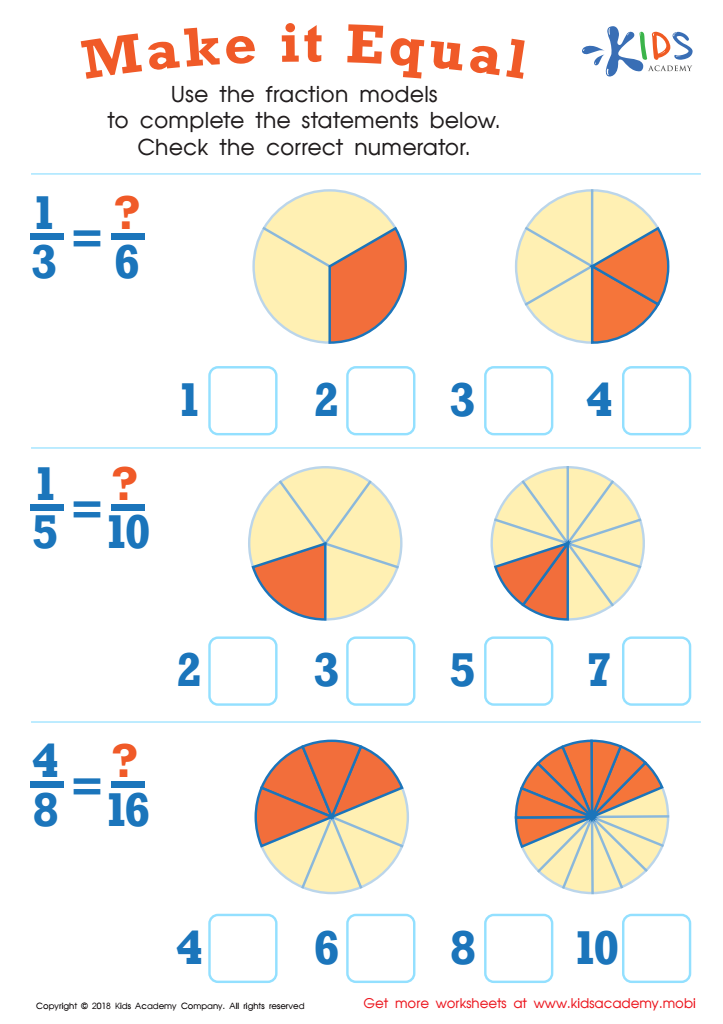
Make It Equal Worksheet
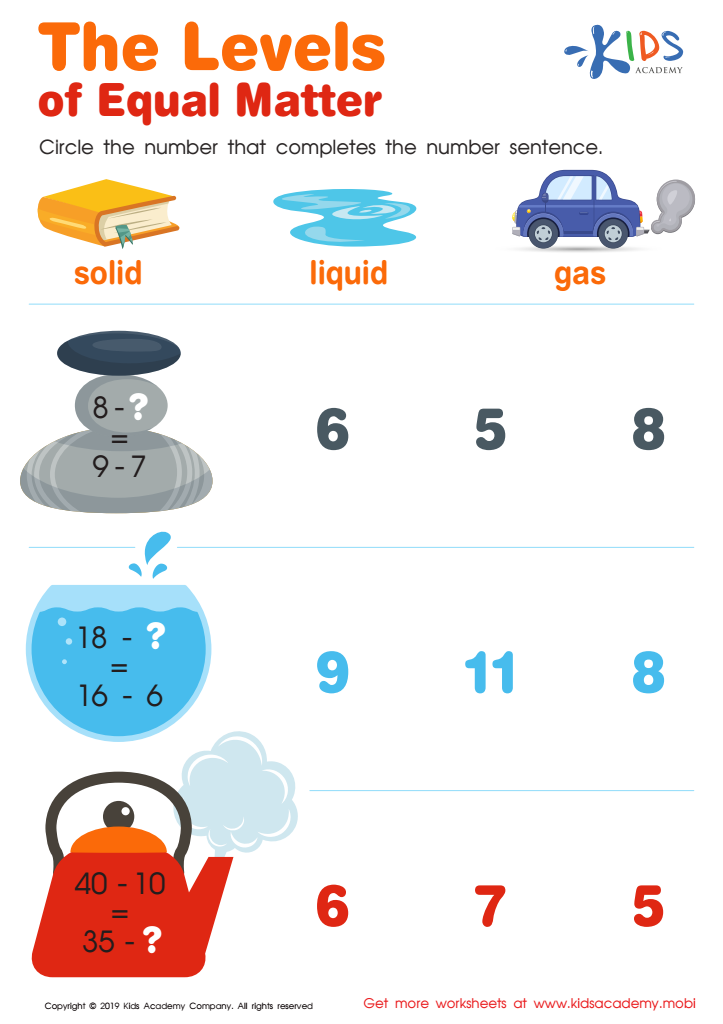
The Levels of Equal Matter Worksheet








Understanding equality in math is crucial for 8-year-olds as it forms a foundational pillar for their future learning and cognitive development. Parents and teachers should care about this because grasping equality helps children develop a sense of balance and fairness, which are essential life skills.
In mathematics, equality ensures that children understand that two different-looking but equivalent expressions hold the same value. For example, understanding that 3 + 4 is the same as 7 helps children develop number sense and arithmetic skills. These concepts are not only the building blocks for more complex mathematical problems but also enhanced logical thinking which is invaluable in subjects beyond math.
Furthermore, grasping the idea of equality boosts confidence and problem-solving abilities. As children navigate through various mathematical concepts like addition, subtraction, and later multiplication and division, recognizing equality helps them check their work and approach problems methodically.
Lastly, awareness of equality goes beyond academics. It imparts early lessons in equity and fairness, reminding kids that different approaches can lead to the same result. Parents and teachers who emphasize these principles foster an environment that champions understanding, tolerance, and patience, thereby nurturing well-rounded individuals. Therefore, helping 8-year-olds understand mathematical equality is an investment in their academic growth and personal development.








