Understanding quantity Math Worksheets for 8-Year-Olds
8 filtered results
-
From - To
"Understanding Quantity Math Worksheets for 8-Year-Olds" are designed to boost children's confidence in handling numbers and basic arithmetic. Our worksheets offer engaging, age-appropriate activities that aid in grasping concepts like comparison, estimation, and number sequences. By practicing these exercises, young learners develop critical thinking and improve their problem-solving skills. Perfect for both classroom use and homeschooling, these worksheets encourage independent learning and make math enjoyable. Explore our collection to support your child's mathematical journey with fun, interactive tasks tailored to enhance their understanding of quantity and build a solid foundation for future math success.
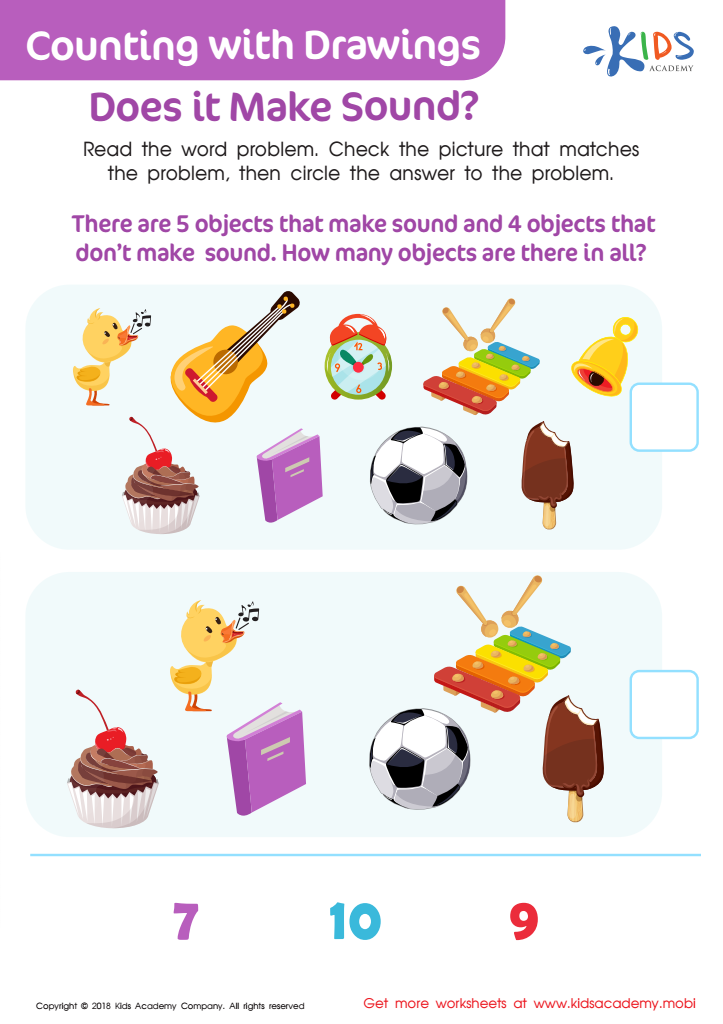
Counting With Drawings. Does It Make Sound? Worksheet
 Assign to My Students
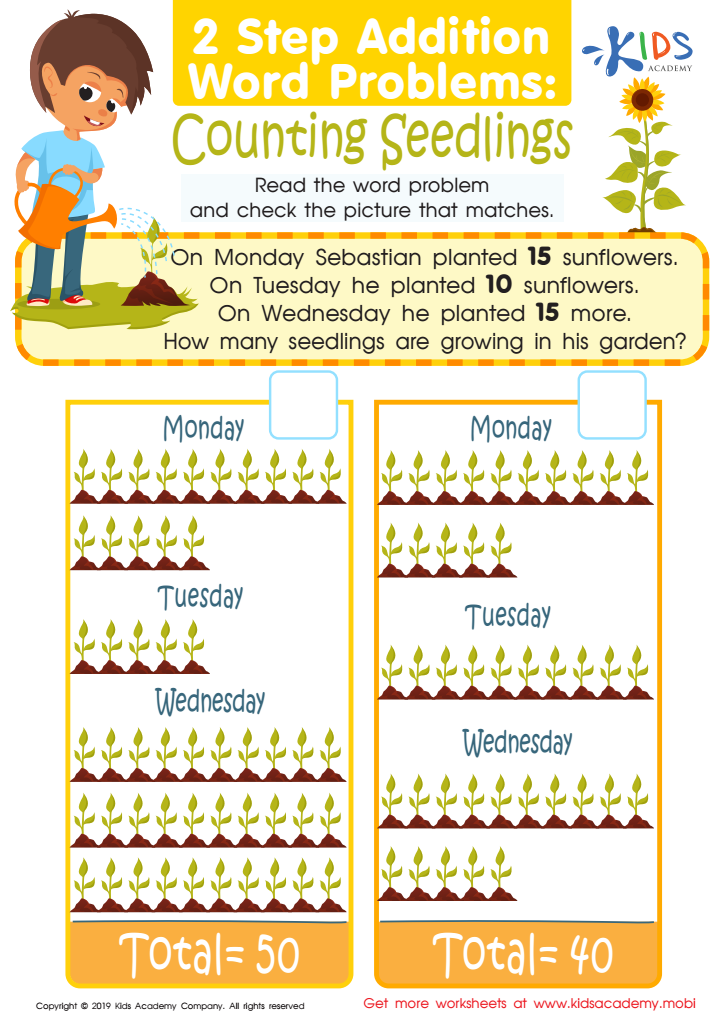
Counting Seedlings Worksheet
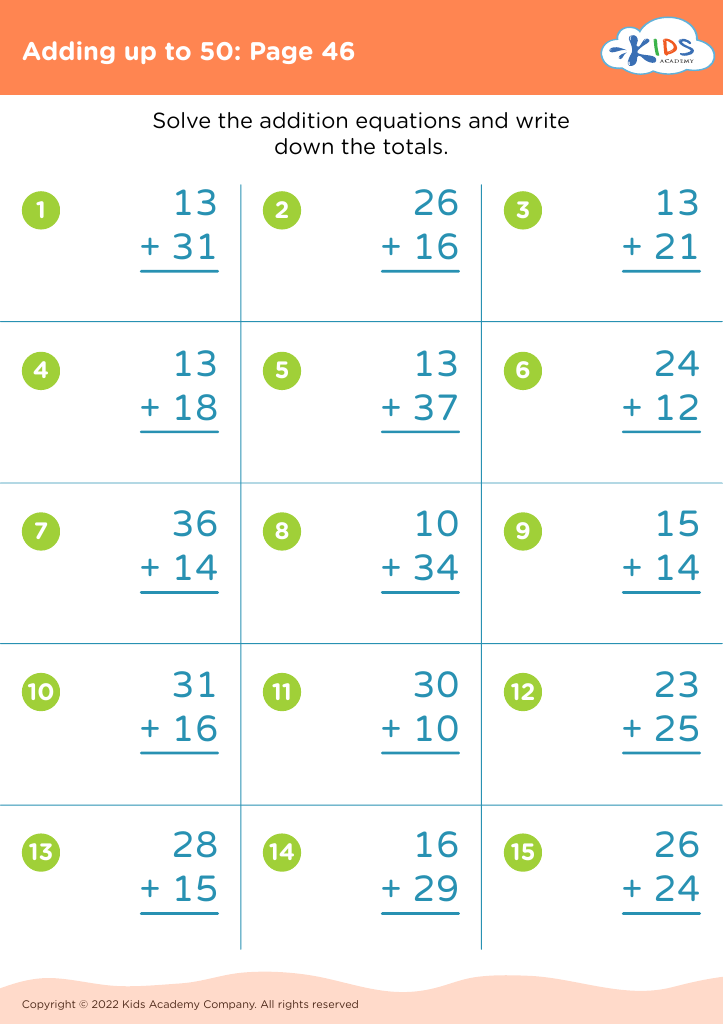
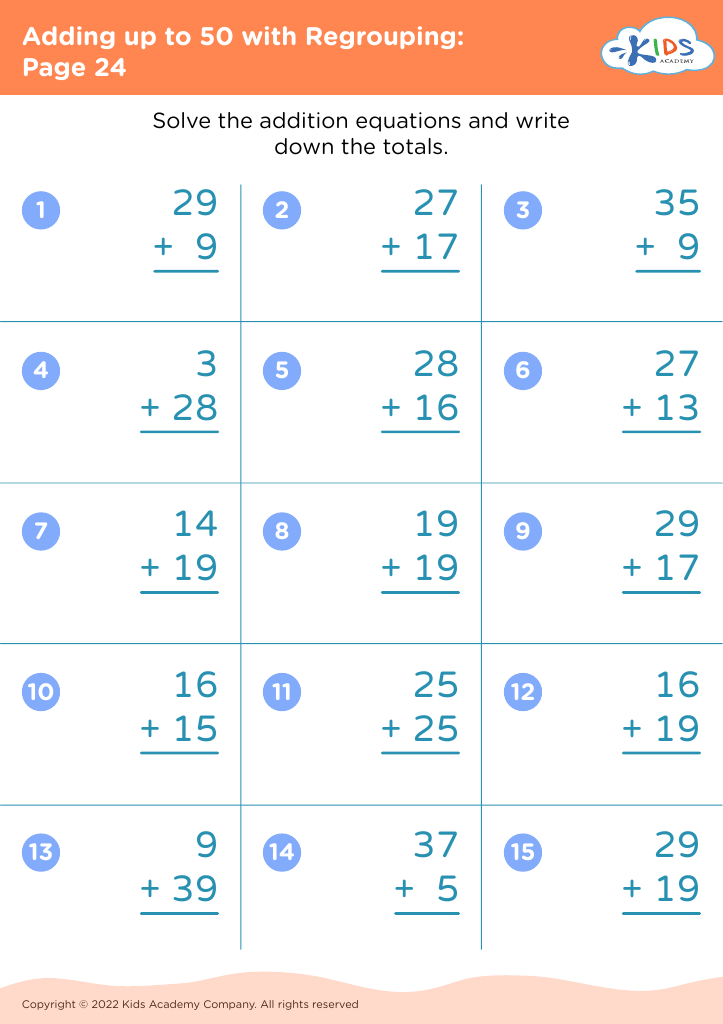
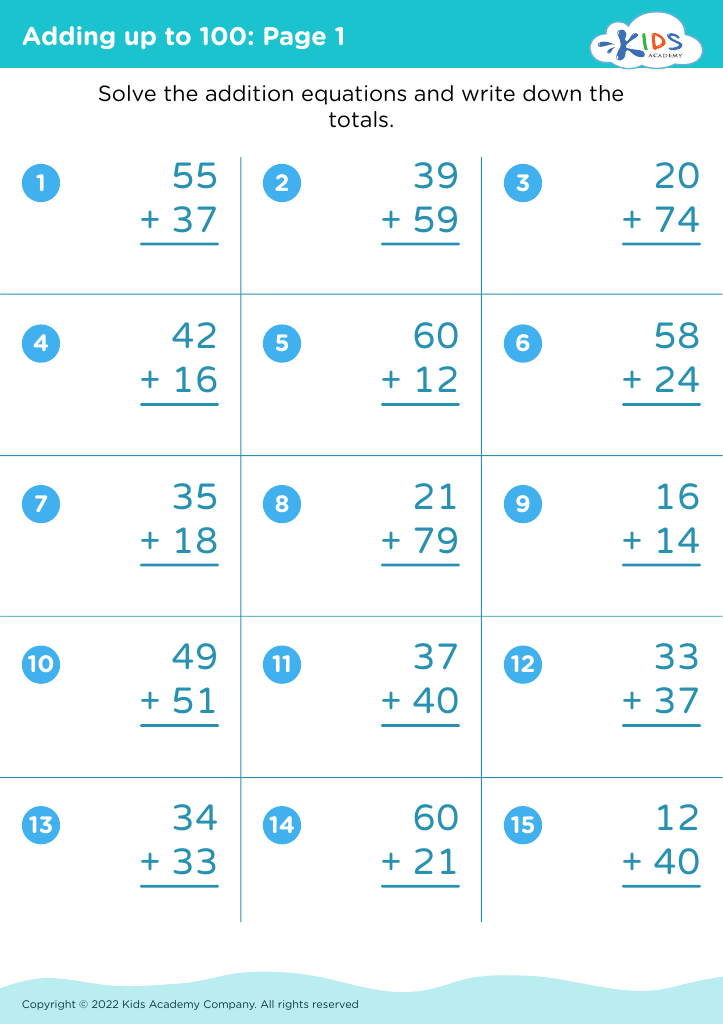
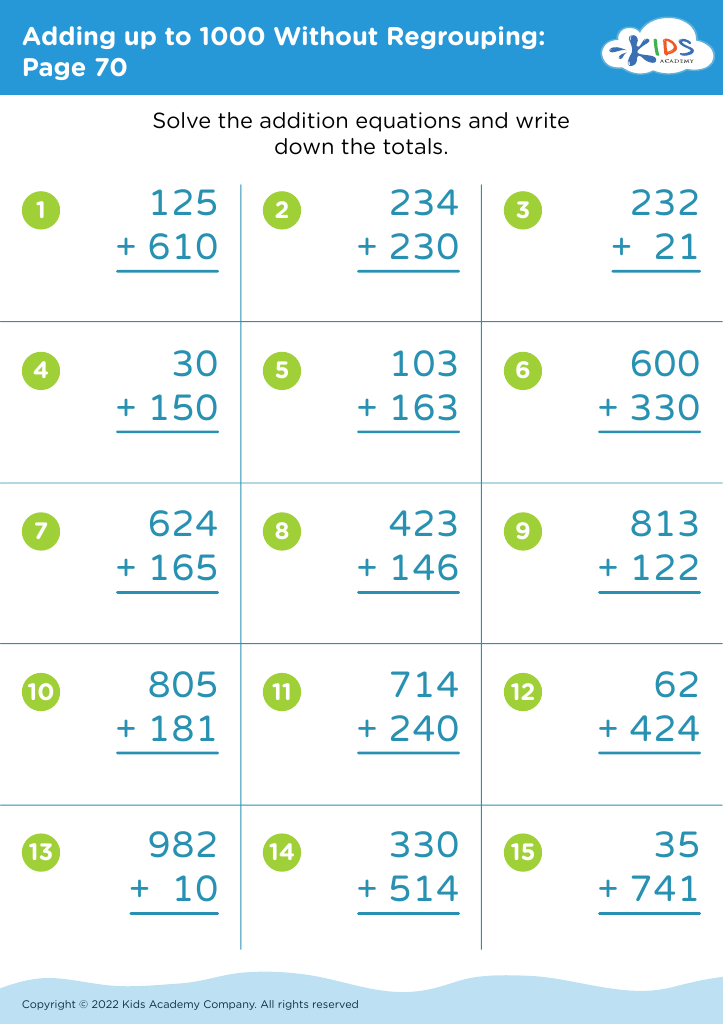




.jpg)


Understanding quantity math for 8-year-olds is crucial for several reasons. First, it forms the foundation of more complex mathematical concepts they will encounter in later school years, such as multiplication, division, and fractions. Grasping the fundamental idea of quantities—how many there are of something, how amounts compare to each other, and how they can be manipulated—enhances a child's numerical literacy.
Second, it aids in the development of problem-solving skills. When children understand quantities, they become better equipped to handle everyday tasks like making change, measuring ingredients for a recipe, or sharing items evenly among friends. These real-world applications make learning relevant and engaging, fostering a positive attitude toward math.
Moreover, early competence in math often correlates with higher overall academic achievement and boosts confidence. Children who can understand and manipulate quantities are likely to approach math problems with a growth mindset, viewing challenges as opportunities rather than obstacles.
For parents and teachers, investing time and energy into helping 8-year-olds grasp quantity math ensures the children become capable, confident, and culturally literate individuals. Resources like manipulatives, visual aids, and interactive activities can make learning quantities fun and effective. Early support sets the stage for lifelong skills that are essential in our numerically-driven society.








