Counting skills Matching Worksheets for 8-Year-Olds
4 filtered results
-
From - To
Enhance your child's counting skills with our engaging Matching Worksheets designed specifically for 8-year-olds! These worksheets provide a fun and interactive way for kids to practice counting, number recognition, and comparative skills. Each exercise encourages critical thinking as learners match quantities to their corresponding numbers and symbols. Ideal for home or classroom use, these worksheets foster both independence and confidence in young mathematicians. Whether it's identifying partners in counting or aligning numbers with visual representations, our Counting Skills Matching Worksheets are perfect for reinforcing foundational math concepts while keeping learning exciting. Get started today to build strong math skills that last a lifetime!
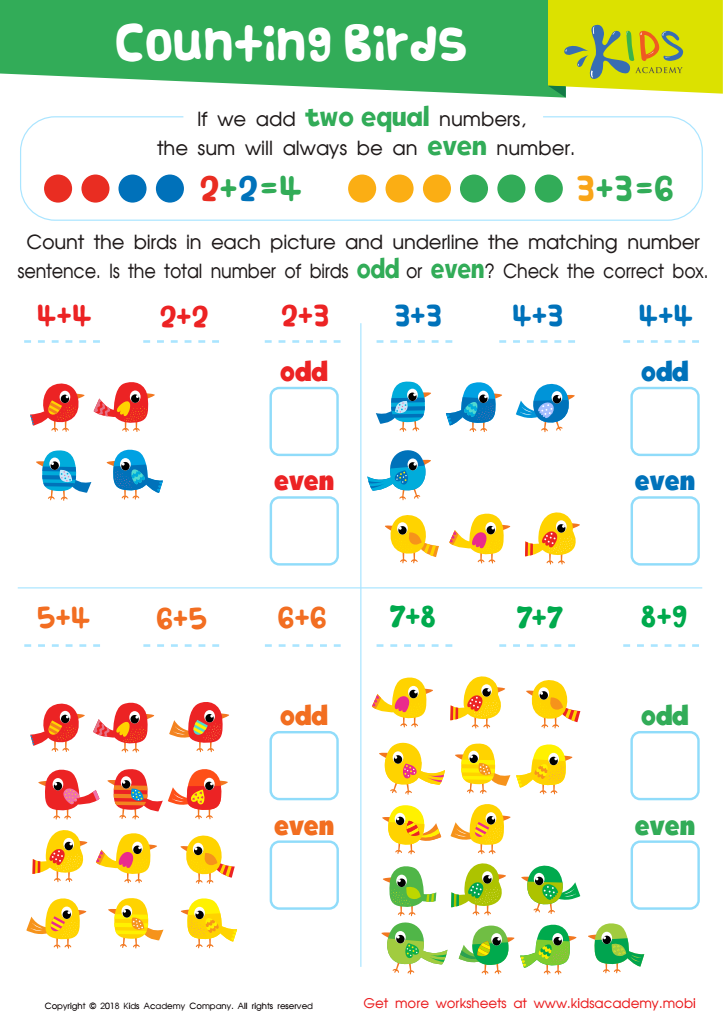
Counting Birds Worksheet
 Assign to My Students
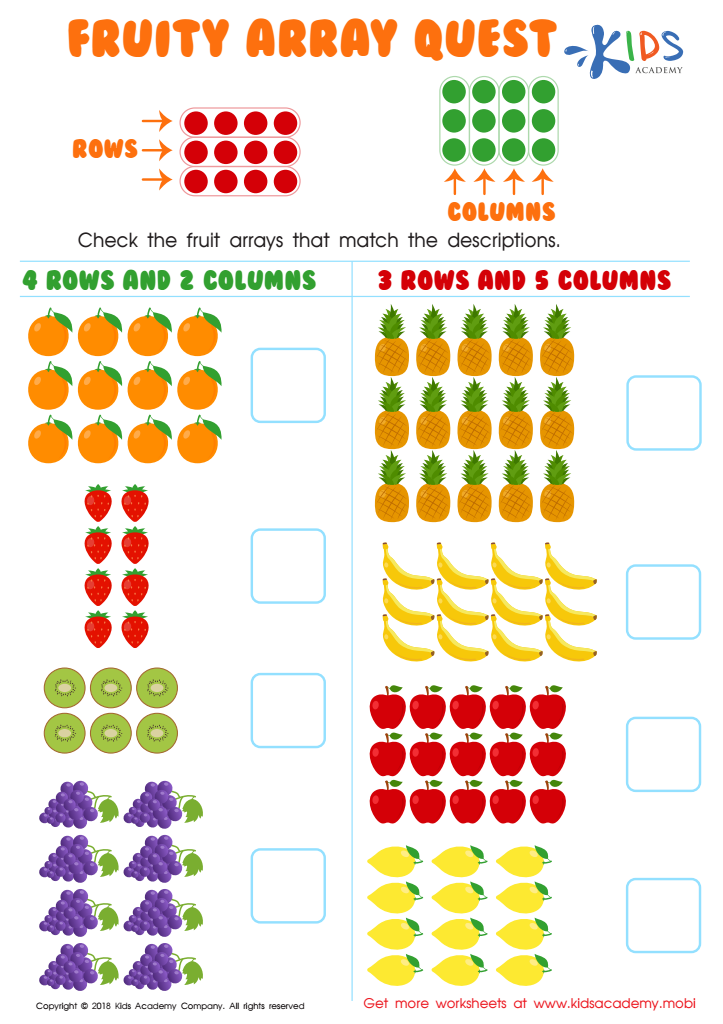
Fruity Array Quest Worksheet
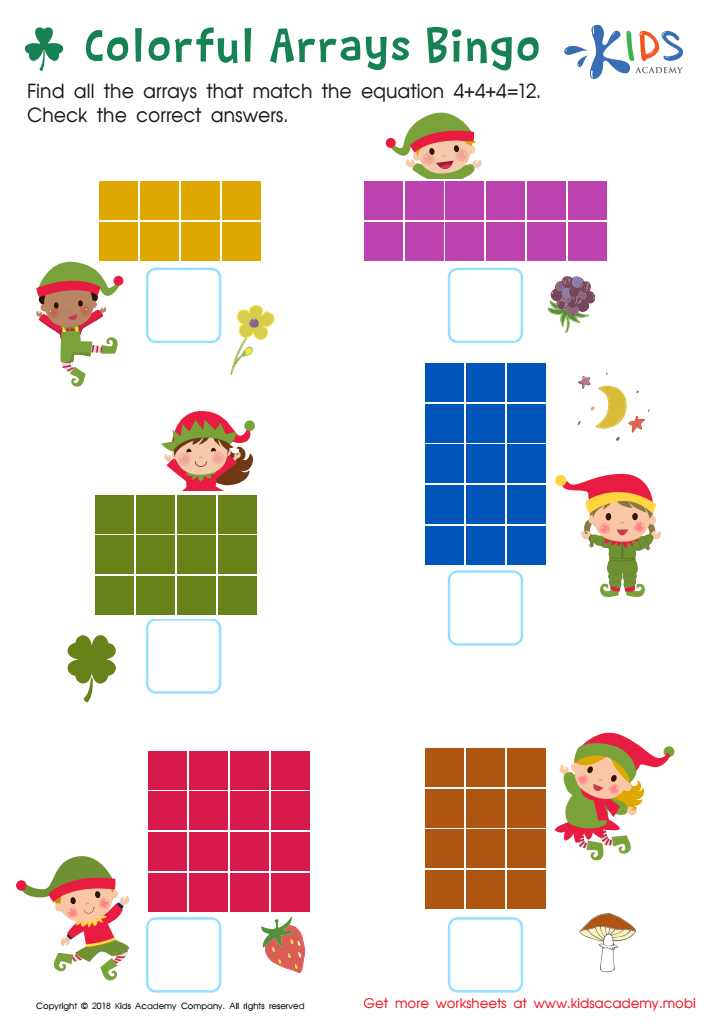
Colorful Arrays Bingo Worksheet
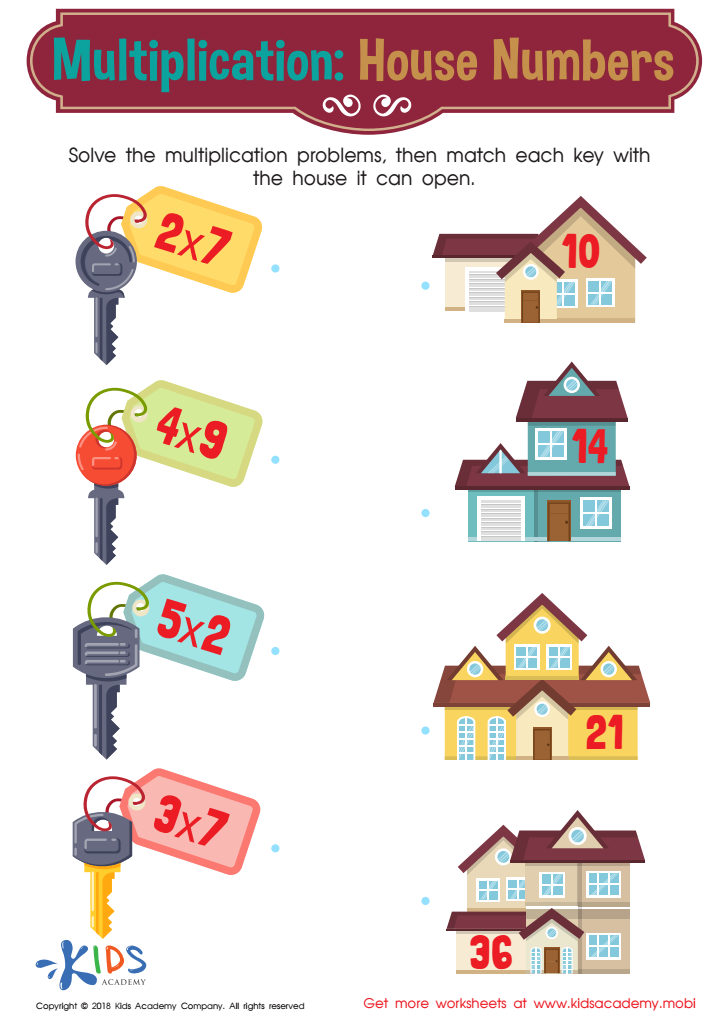
House Numbers Worksheet








Counting skills and matching are foundational components of early mathematics education, particularly for 8-year-olds. At this age, children transition from basic counting to more complex mathematical concepts, including addition, subtraction, and problem-solving. Strong counting skills not only promote numerical understanding but also enhance critical thinking and cognitive development. When children can confidently match quantities with numbers, they develop a more profound sense of number relations, which is essential for future mathematical learning.
For parents and teachers, fostering these skills is crucial. Engaging children in matching and counting activities—whether through games, everyday objects, or classroom exercises—helps reinforce their recognition of numbers and their ability to apply this knowledge contextually. These competencies feed into children's confidence in math, increasing their likelihood of success in higher-grade math concepts.
Moreover, these skills are vital for practical life applications, promoting skills necessary for making financial decisions, understanding measurements, and organizing information. Encouraging counting and matching also enhances fine motor skills when involving tangible materials, promoting overall development. By prioritizing these skills, caregivers and educators foster a solid foundation for lifelong mathematics proficiency and an enjoyment of learning. Ultimately, nurturing these abilities sets children on a positive path toward academic and personal success.








