Data interpretation Measurement Worksheets for 8-Year-Olds
9 filtered results
-
From - To
Discover our engaging Data Interpretation Measurement Worksheets tailored for 8-year-olds at Kids Academy! These carefully crafted worksheets help children develop crucial analytical skills by learning to interpret data through fun and interactive exercises. Designed for young learners, our activities encourage critical thinking and the understanding of various measurement concepts, including length, weight, volume, and time. With visually appealing graphs, charts, and tables, kids can practice drawing meaningful conclusions and enhance their problem-solving abilities. Perfect for homeschool or classroom use, our worksheets make mastering data interpretation an enjoyable and rewarding experience.** Check out Kids Academy to empower your child's math journey today!
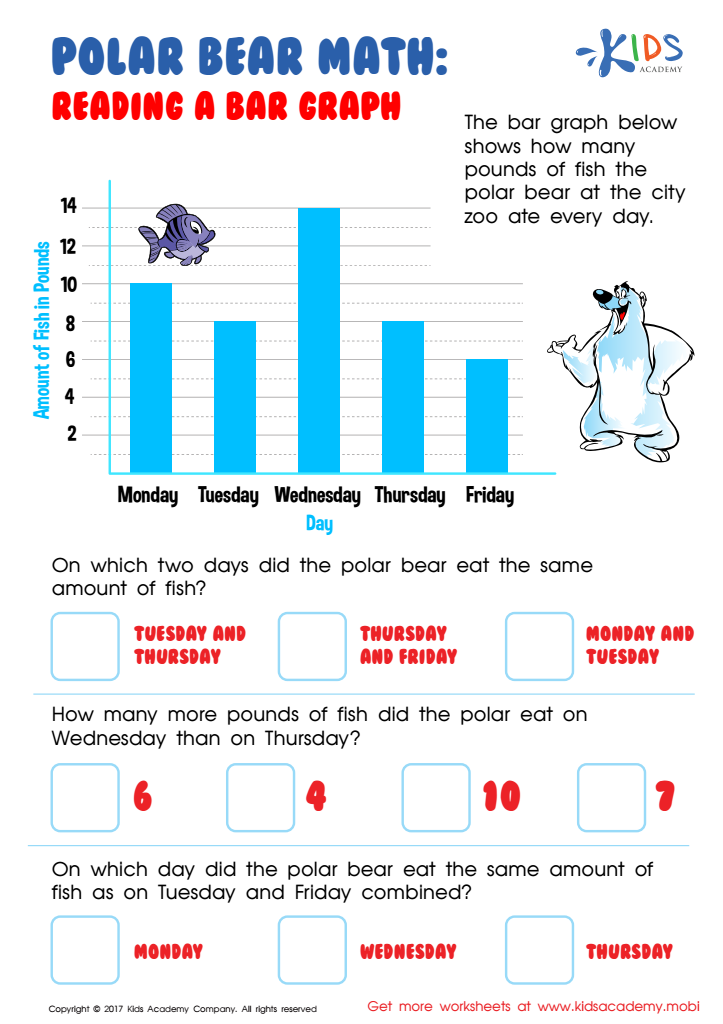
Reading Bar Graph Worksheet
 Assign to My Students
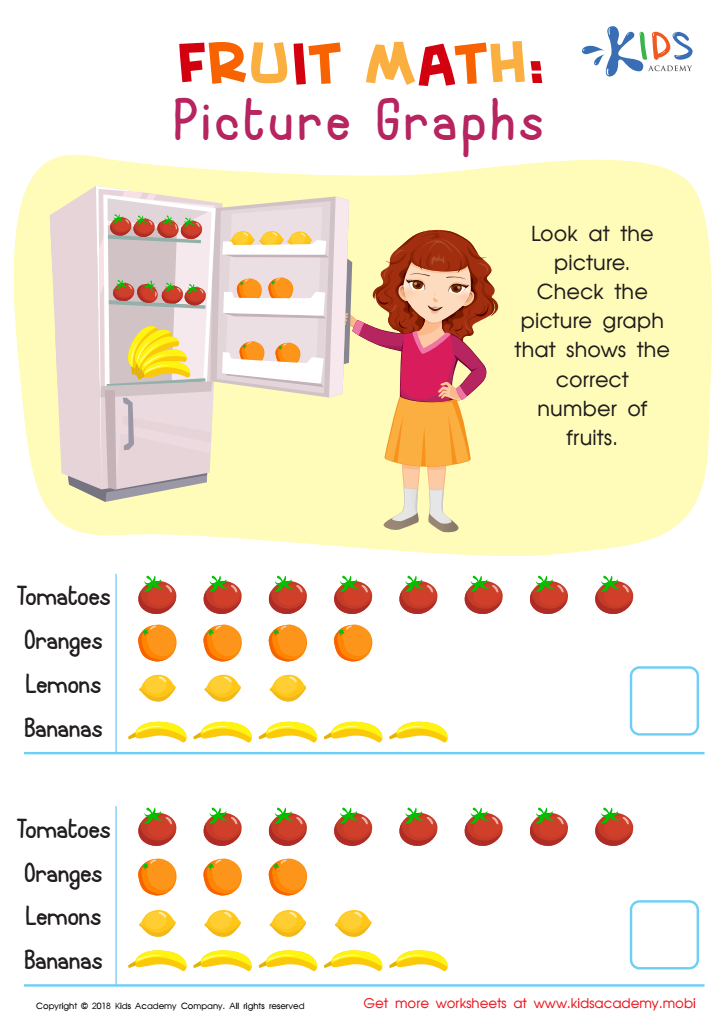
Fruit Math: Picture Graphs Worksheet
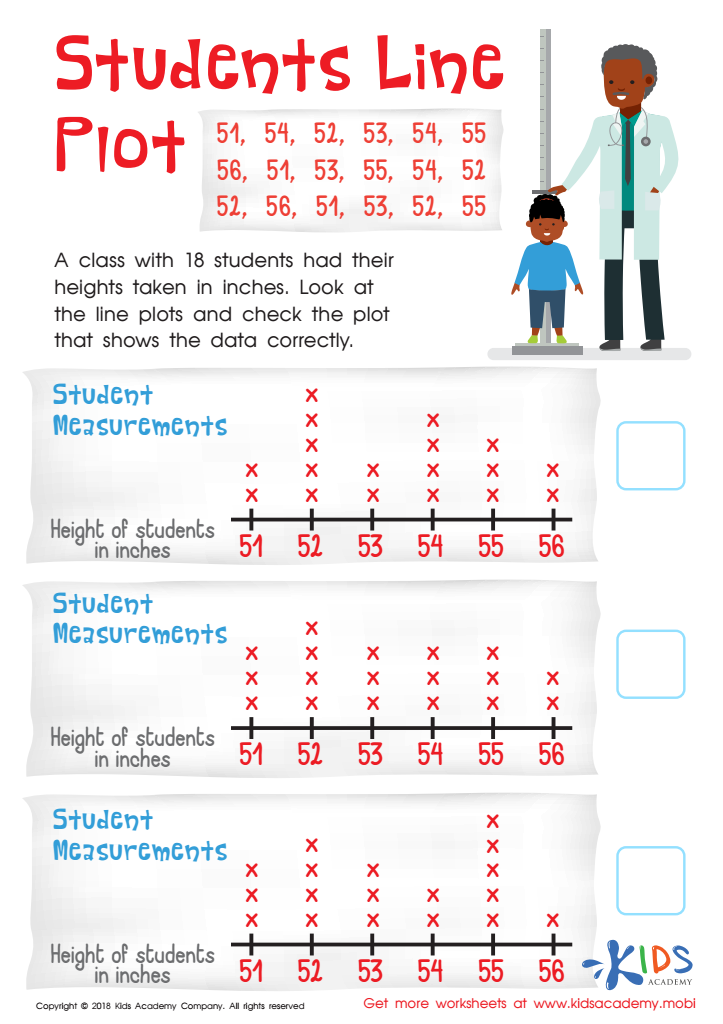
Students Line Plot Worksheet
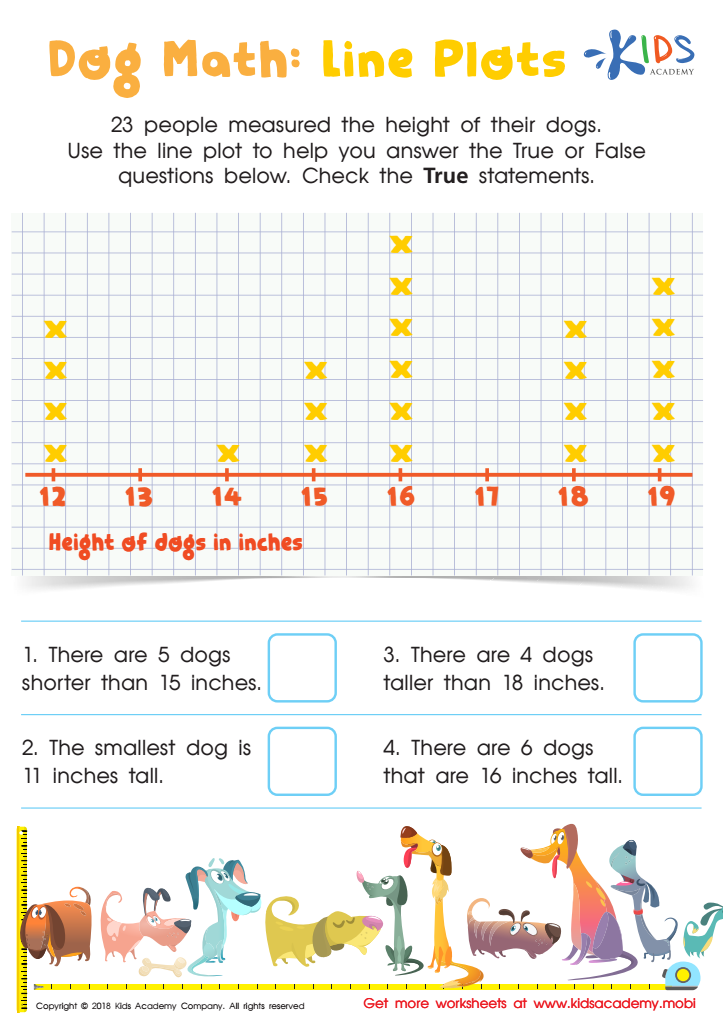
Dog Math: Line Plots Worksheet
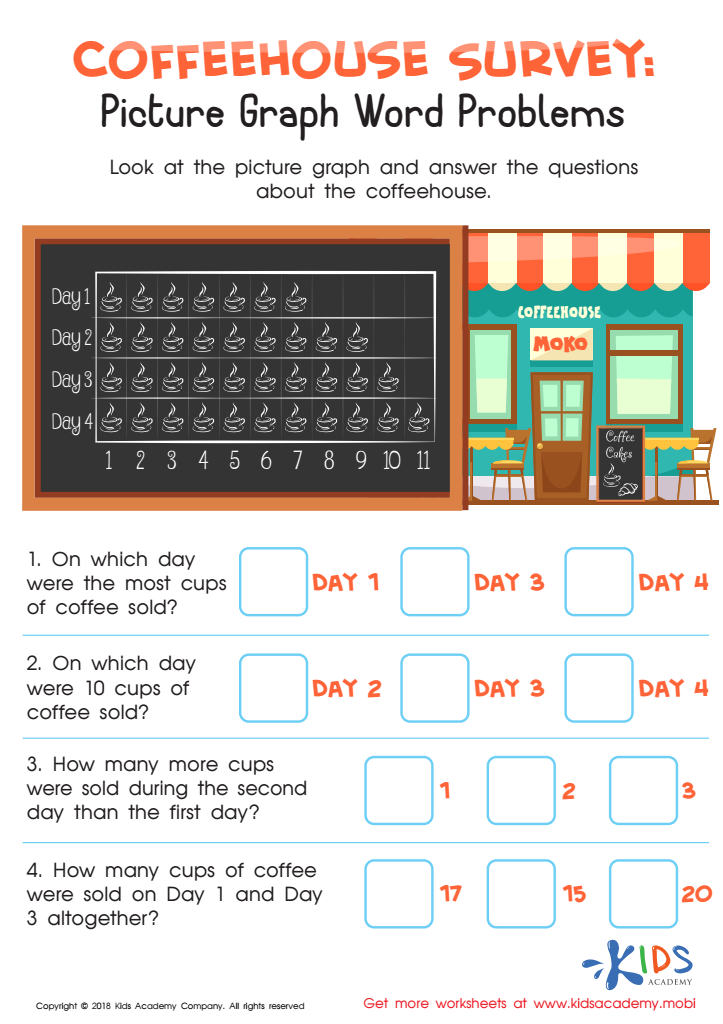
Coffeehouse Survey: Picture Graph Word Problems Worksheet
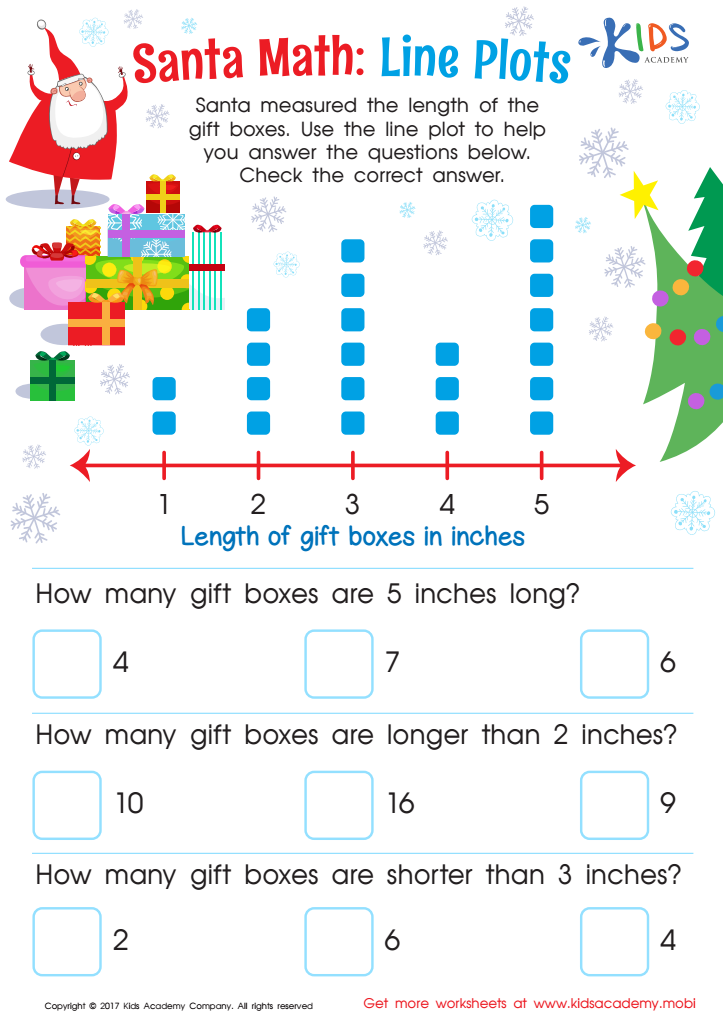
Line Plot Worksheet
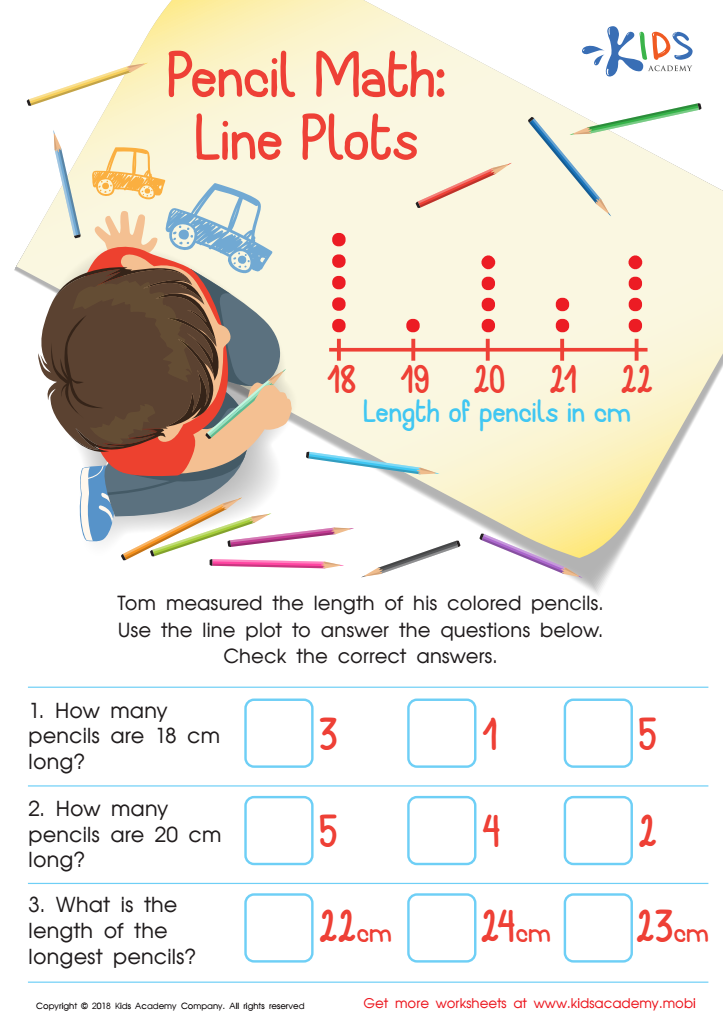
Pencil Math: Line Plots Worksheet
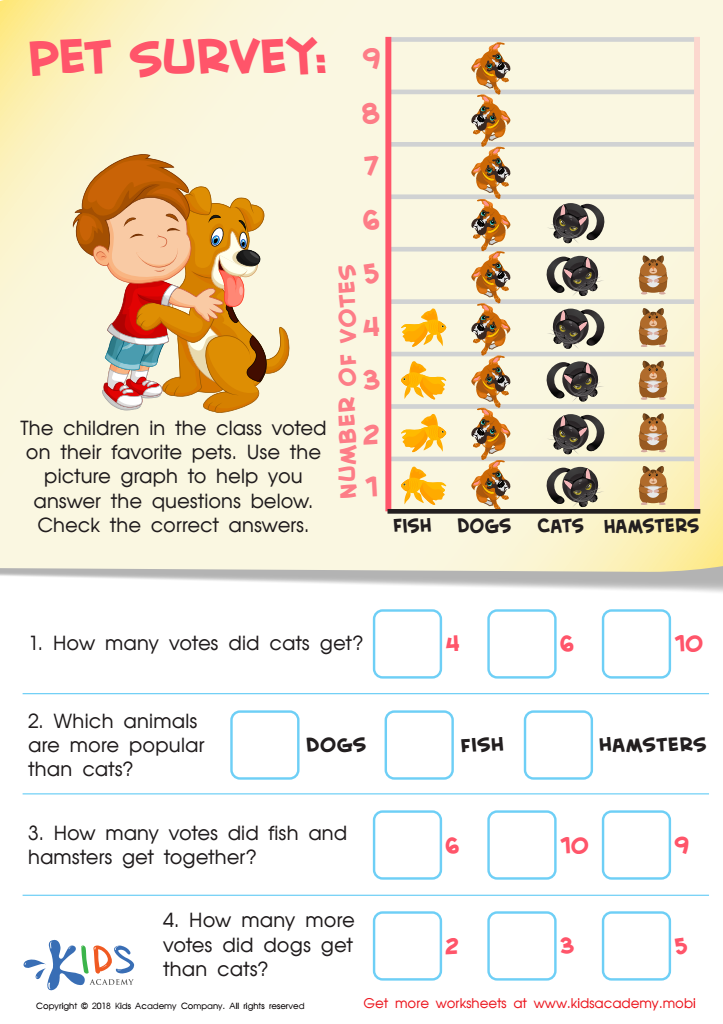
Pet Survey Worksheet
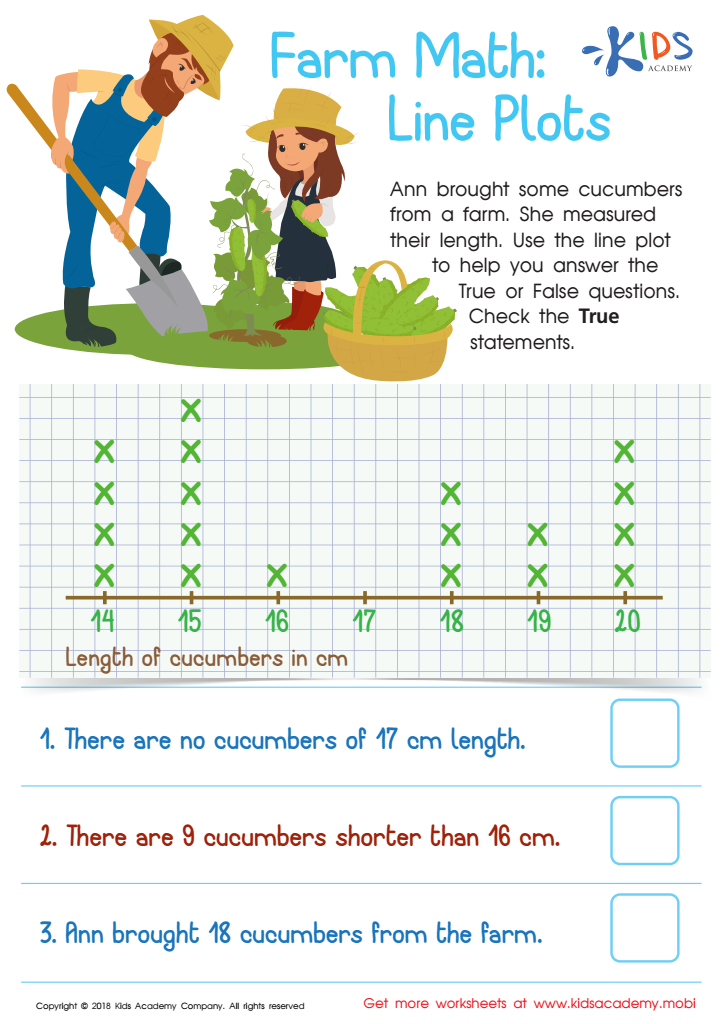
Farm Math: Line Plots Worksheet








Understanding data interpretation and measurement from an early age opens a gateway for children to develop crucial life skills and academic abilities. Parents and teachers should care about these foundational concepts for 8-year-olds for several key reasons.
Firstly, these skills enhance problem-solving abilities. Data interpretation entails analyzing information, identifying patterns, and drawing conclusions, which are essential for making informed decisions. By learning to measure and interpret data, children develop critical thinking skills that extend beyond mathematics.
Secondly, numeracy confidence is fostered. Familiarity with concepts like units of measurement and basic statistics helps children feel more comfortable navigating mathematical problems, instilling a positive attitude towards learning. This confidence lays a strong foundation for future education in STEM (Science, Technology, Engineering, and Mathematics) fields.
Moreover, data interpretation is integral to everyday life. Whether reading a thermometer, following a recipe, or understanding time and distance, these skills are part of daily activities. Teaching these at a young age prepares children for real-world situations, fostering independence and self-sufficiency.
Finally, in our data-driven world, the ability to understand and use data is increasingly valuable. Early exposure equips children with the tools they need to thrive in an information-rich society, setting them up for success in school and life beyond. Therefore, prioritizing these skills in early education is vital for a child’s holistic development.








