Basic Math Skills Building Vocabulary Worksheets for 8-Year-Olds
4 filtered results
-
From - To
Enhance your child's mathematical understanding with our Basic Math Skills Building Vocabulary Worksheets, specially designed for 8-year-olds. These engaging worksheets focus on developing essential math vocabulary while reinforcing foundational concepts such as addition, subtraction, shapes, and measurements. Each worksheet features vibrant illustrations and interactive exercises that make learning fun and enjoyable. Perfect for in-class activities, homework assignments, or at-home practice, our resources encourage children to explore math language confidently. Help your young learners build a strong vocabulary base that supports their overall math skills and inspires a lifelong love for learning. Start your math journey today with Kids Academy!
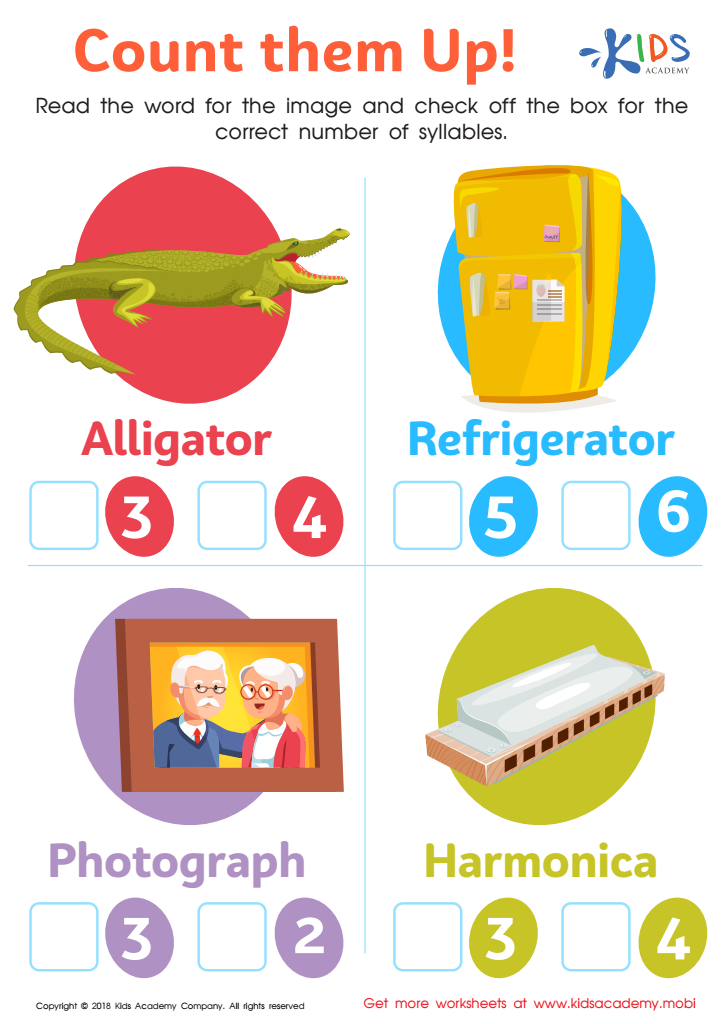
Count Them Up Worksheet
 Assign to My Students











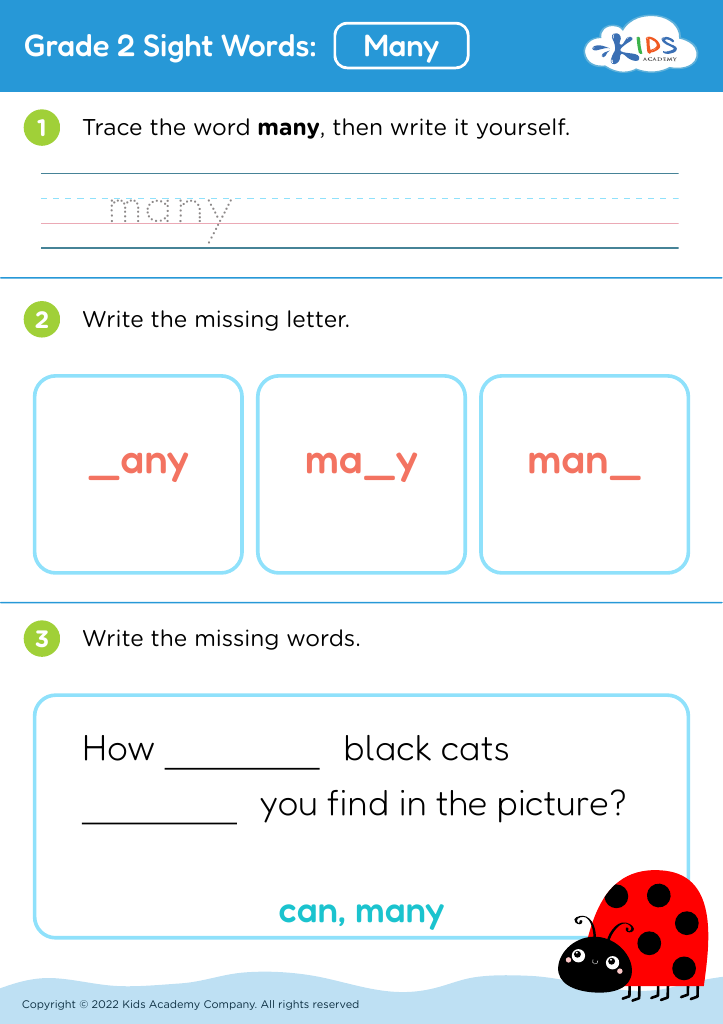
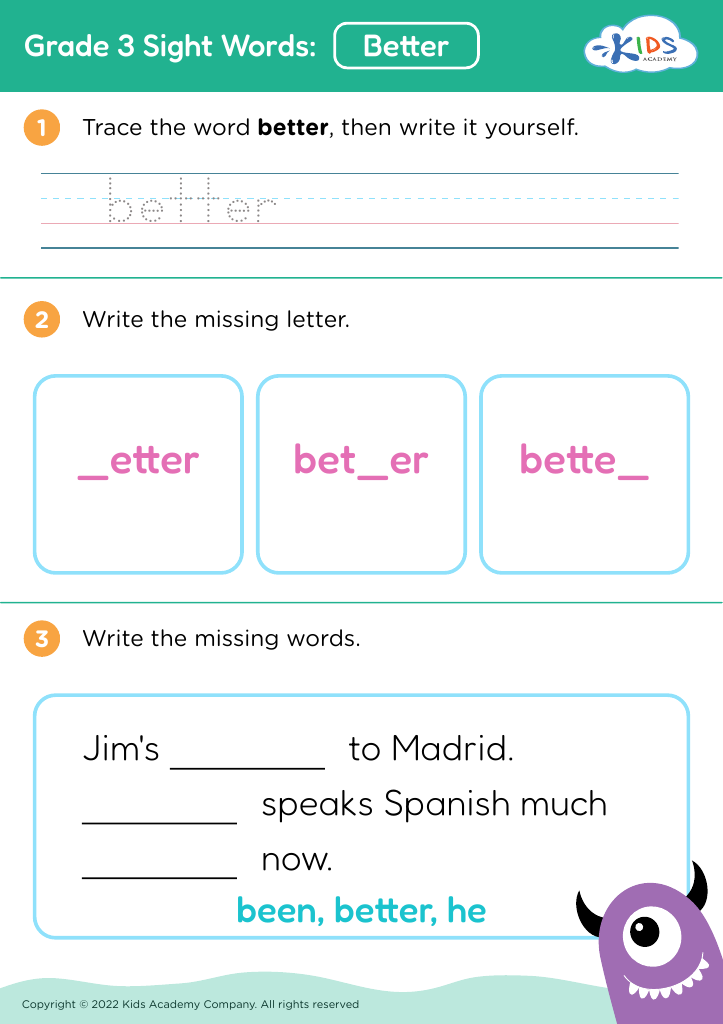
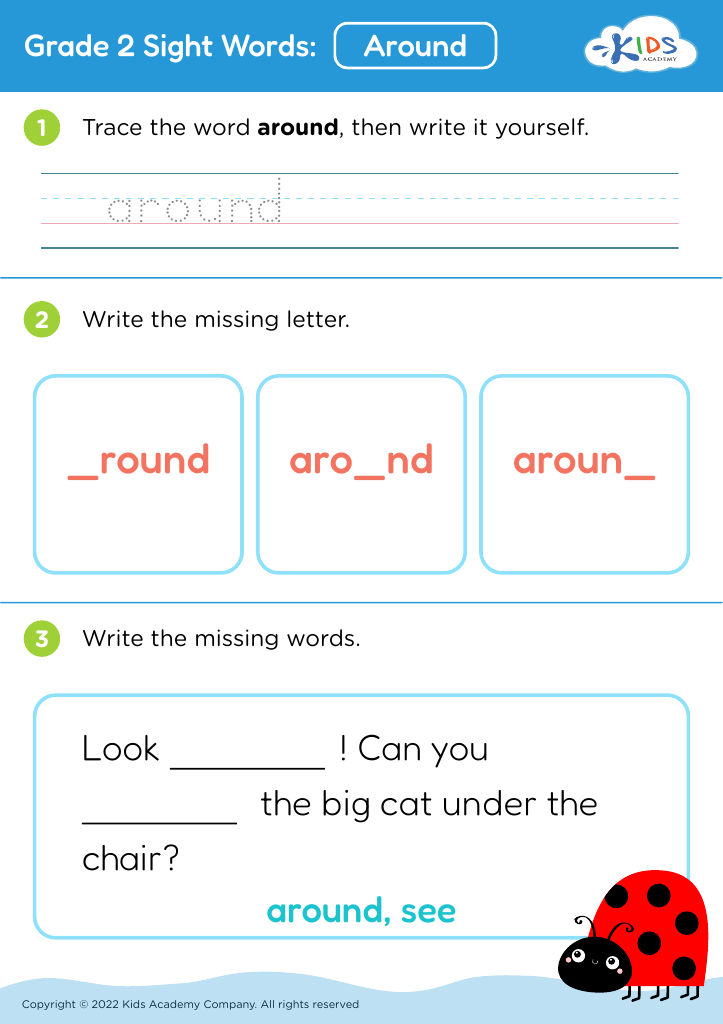








Parents and teachers should prioritize building a solid math vocabulary for 8-year-olds because it lays the groundwork for future mathematical understanding and problem-solving. At this age, children begin to encounter more complex mathematical concepts, such as multiplication, division, and fractions. Familiarity with related terminology—like "sum," "difference," "product," and "quotient"—is crucial for comprehension and effective communication.
A strong math vocabulary enables children to articulate their thought processes, ask clarifying questions, and engage in discussions about math problems. This communication is vital as it fosters a deeper understanding of the concepts being learned, aiding retention and application. Moreover, children who have developed a robust math vocabulary tend to feel more confident and motivated in their abilities, reducing anxiety around mathematics.
Furthermore, integrating math vocabulary into everyday conversations and activities can enhance overall language skills, contributing to a child's cognitive development. By emphasizing the importance of developing math vocabulary, parents and teachers can equip children with essential tools for academic success and promote a positive attitude toward learning mathematics long into the future. Ultimately, this foundational skill supports children not just in math, but in all areas of learning and critical thinking.








