Number identification Building Vocabulary Worksheets for 8-Year-Olds
3 filtered results
-
From - To
Enhance your child's learning journey with our Number Identification Building Vocabulary Worksheets designed specifically for 8-year-olds! Our engaging resources help young learners master number recognition while expanding their vocabulary. These worksheets integrate fun activities that promote critical thinking, number association, and are aligned with educational standards. Through interactive exercises, children strengthen their understanding of numbers in various contexts, making math enjoyable and engaging. Ideal for both classroom and home use, these worksheets foster a love for learning and help develop essential skills that pave the way for future academic success. Explore our collection today and watch your child thrive!
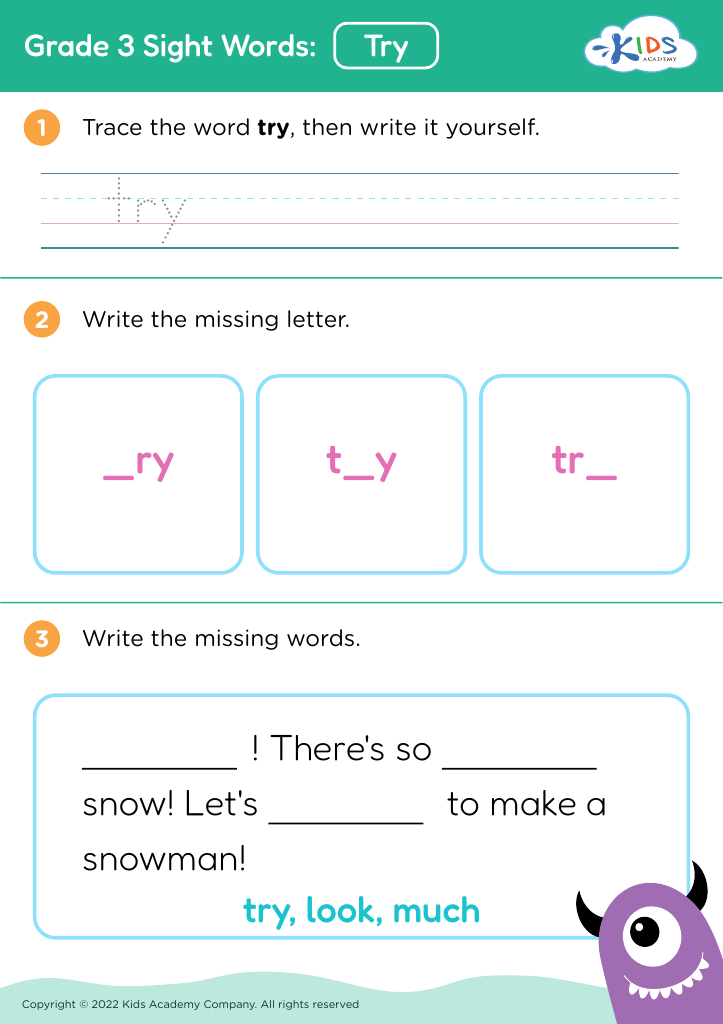











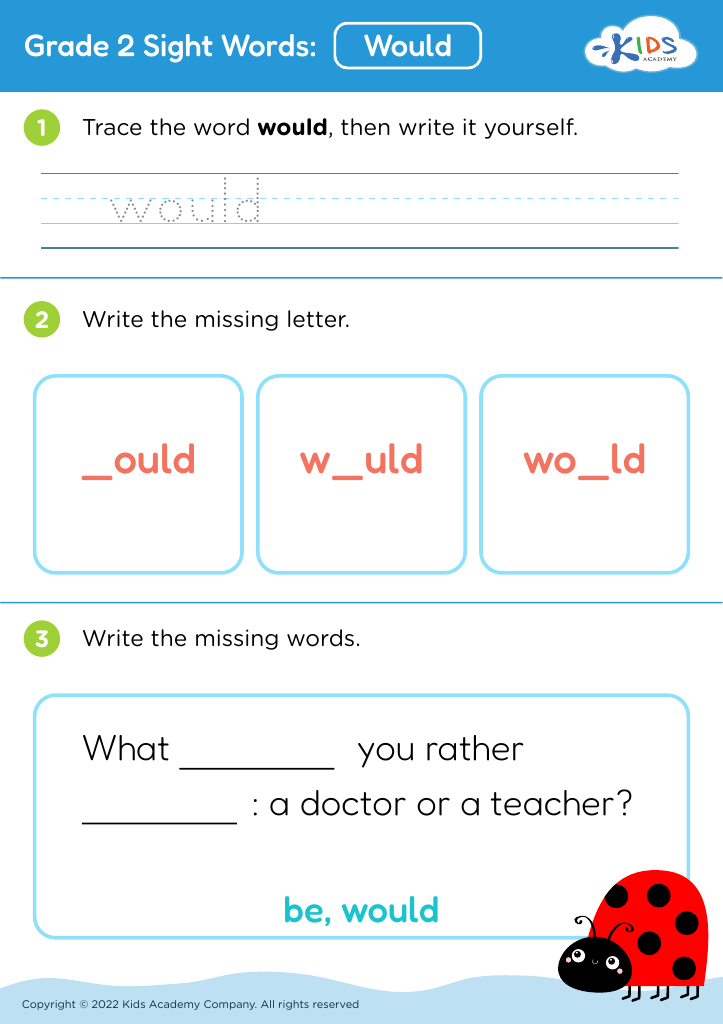
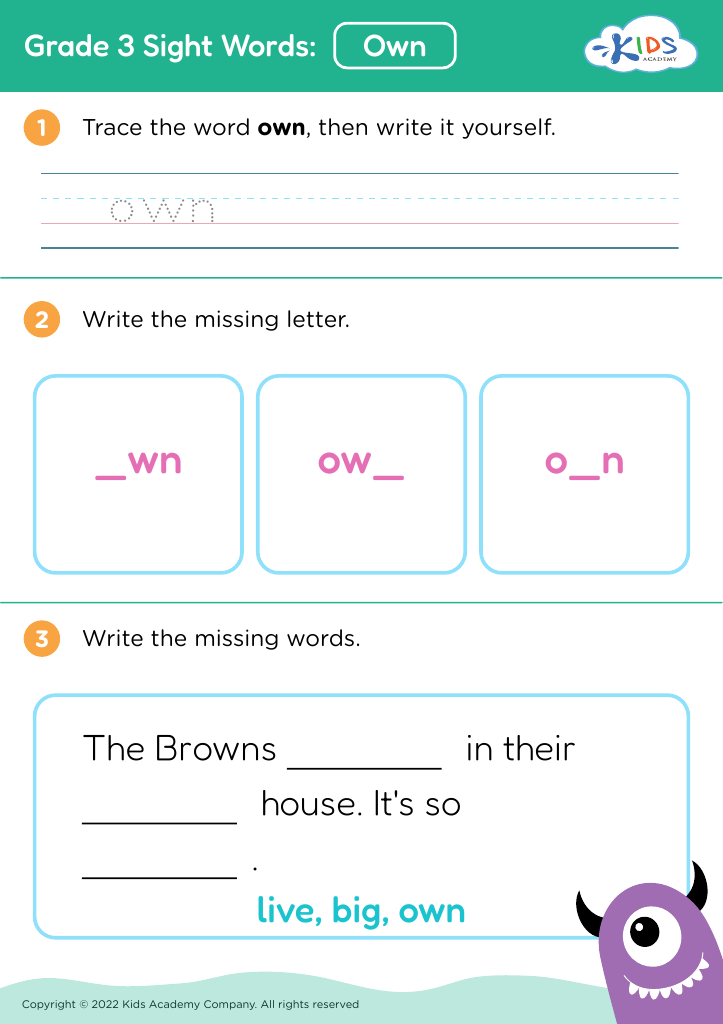




.jpg)



Number identification and vocabulary building are essential for the holistic development of 8-year-olds and should be a primary focus for parents and teachers. At this age, children are transitioning from basic mathematical concepts to deeper understanding, where identifying numbers accurately lays the foundation for more complex arithmetic. Mastering number recognition boosts their capacity to solve problems, leading to better performance in math across various disciplines.
Simultaneously, vocabulary building at this age plays a pivotal role in literacy development. A rich vocabulary enhances comprehension skills, enabling children to express their thoughts more clearly and understand instructions and texts more effectively. As kids begin to read and write more independently, the ability to grasp and utilize a wide array of words becomes crucial for academic success.
Additionally, strong number identification skills coupled with a robust vocabulary foster critical thinking and creativity. Engaging children in activities that promote both numeracy and language skills can spark curiosity and encourage a love for learning. Therefore, parents and teachers should prioritize these areas to equip children with the tools needed for future success, both in and out of the classroom. By focusing on these aspects, they contribute to building a well-rounded educational experience and lifelong learning foundation.








