
Logical thinking Reading Worksheets for 8-Year-Olds
4 filtered results
Difficulty Level
Grade
Age
-
From - To
Subject
Activity
Standards
Boost your 8-year-old's cognitive skills with our engaging Logical Thinking Reading Worksheets! These worksheets are meticulously designed to blend stimulating reading materials with exercises that enhance critical thinking, problem-solving, and comprehension. Featuring age-appropriate stories, puzzles, and questions, they foster analytical and logical reasoning skills essential for academic success. Our resources not only make learning fun but also develop crucial abilities that contribute to lifelong learning. With vibrant illustrations and intriguing content, your child will eagerly look forward to each reading session. Make reading an adventure with our Logical Thinking Reading Worksheets for 8-Year-Olds!
Favorites
With answer key
Interactive
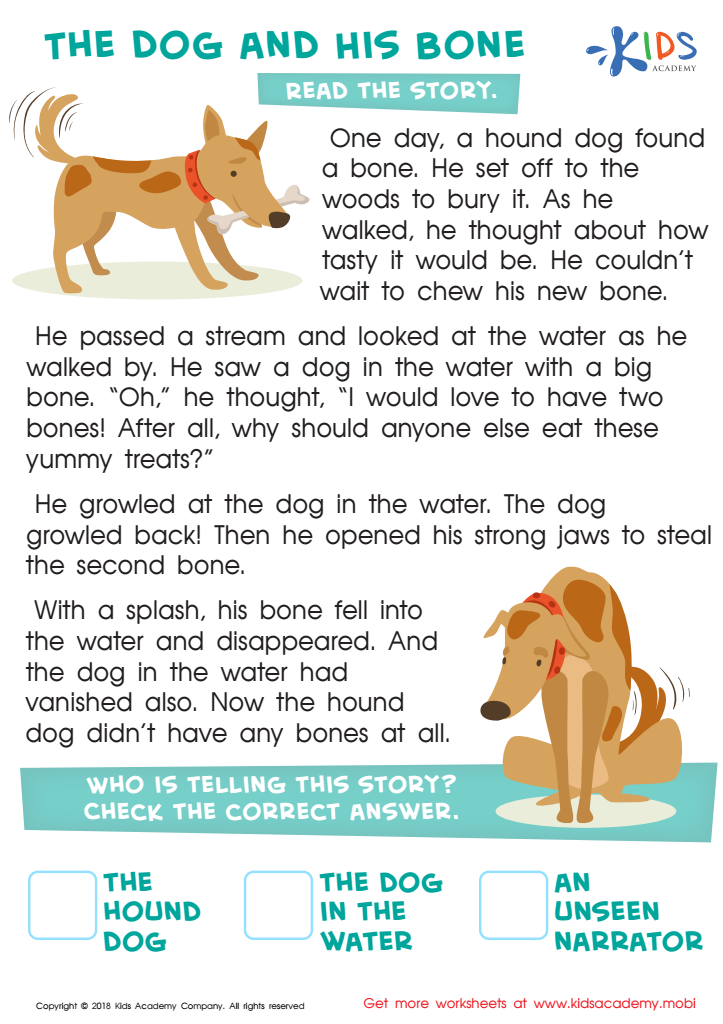
The Dog and His Bone Worksheet
Read the story of The Dog and His Bone to your kids, making sure they take in the details. Ask them the questions in this worksheet and help them check the answers. Encourage them to think carefully.
 Assign to My Students
The Dog and His Bone Worksheet
Worksheet
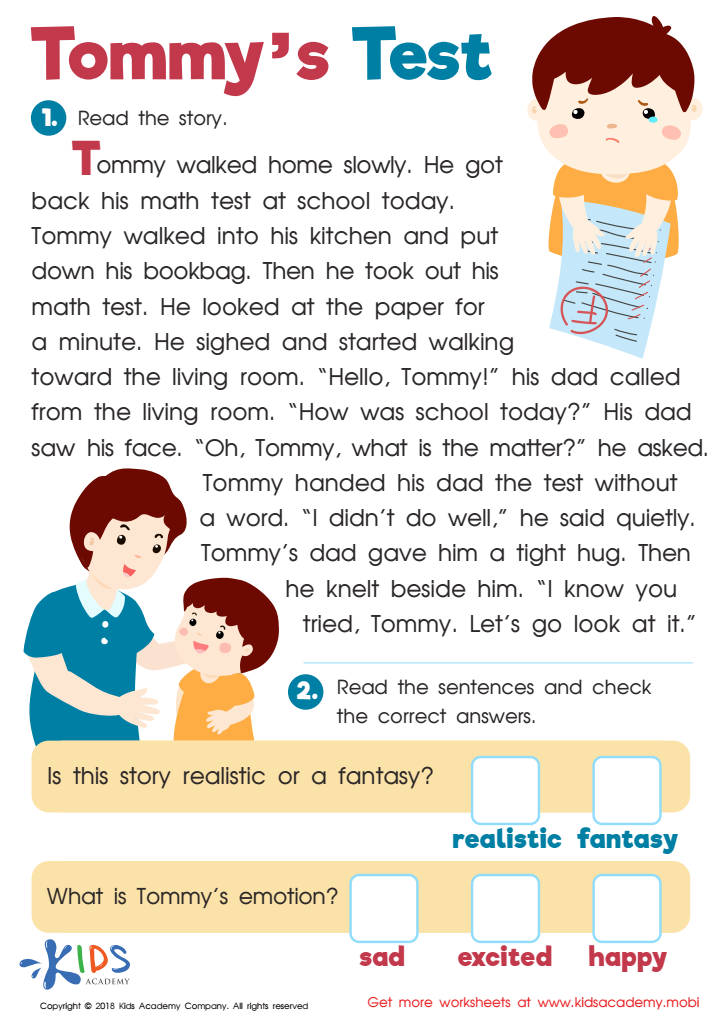
Tommys Test Worksheet
Reading short stories to your students builds a bond, teaches new words and lessons. Read the story aloud and then have them listen for details. Ask them the questions at the bottom and help them check the answers.
Tommys Test Worksheet
Worksheet
Join Kids Academy for Free
Who is primarily going to use this learning content?








Parents and teachers should prioritize logical thinking reading for 8-year-olds because it lays the foundation for critical cognitive development and problem-solving skills. At this age, children's brains are exceptionally receptive to learning patterns, sequences, and connections between ideas. Engaging with texts that require logical thinking helps improve their comprehension, analytical abilities, and decision-making processes.
Logical thinking reading encourages children to predict outcomes, recognize cause-and-effect relationships, and draw inferences from the context—skills essential for academic success across all subjects. Furthermore, it nurtures creativity and reasoning, as children learn to approach problems methodically and think outside the box to solve them. This evidence-based approach also promotes a deeper interest and engagement in reading, fostering a lifelong love of learning.
For parents, this focus aids in developing independent thinkers who question, understand, and analyze information critically. For teachers, implementing logical thinking reading strategies supports differentiated instruction, ensuring each child can progress according to their unique learning pace and needs. Ultimately, cultivating these skills at a young age equips children not only for the rigors of further education but also for making informed decisions in daily life, setting them on a path to becoming thoughtful, capable adults.








