Rhyme recognition Reading Worksheets for 8-Year-Olds
4 filtered results
-
From - To
Boost your child's phonemic awareness with our engaging Rhyme Recognition Reading Worksheets for 8-Year-Olds. Carefully designed for young learners, these colorful worksheets help kids identify and generate rhyming words, enhancing their reading fluency and vocabulary. Through playful activities and creative exercises, children will develop essential skills for decoding words and improving their overall reading comprehension. Perfect for both classroom and home use, our rhyme recognition worksheets make learning fun and effective. Download now from Kids Academy to give your child a head start in their reading confidence and literacy success!
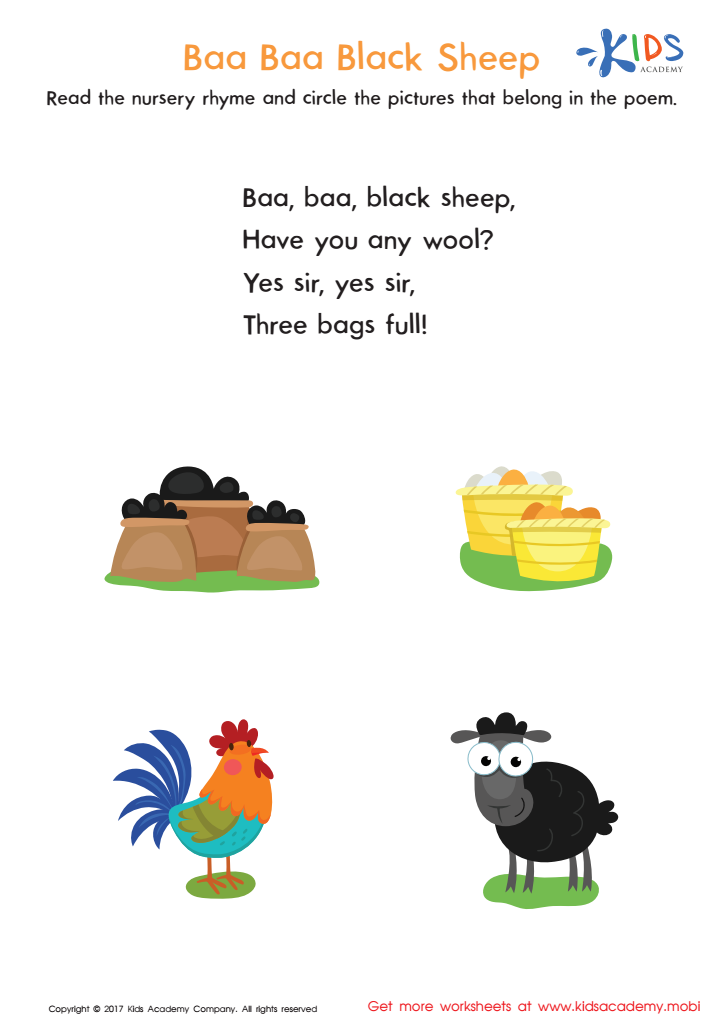
Baa Baa Black Sheep Printable
 Assign to My Students
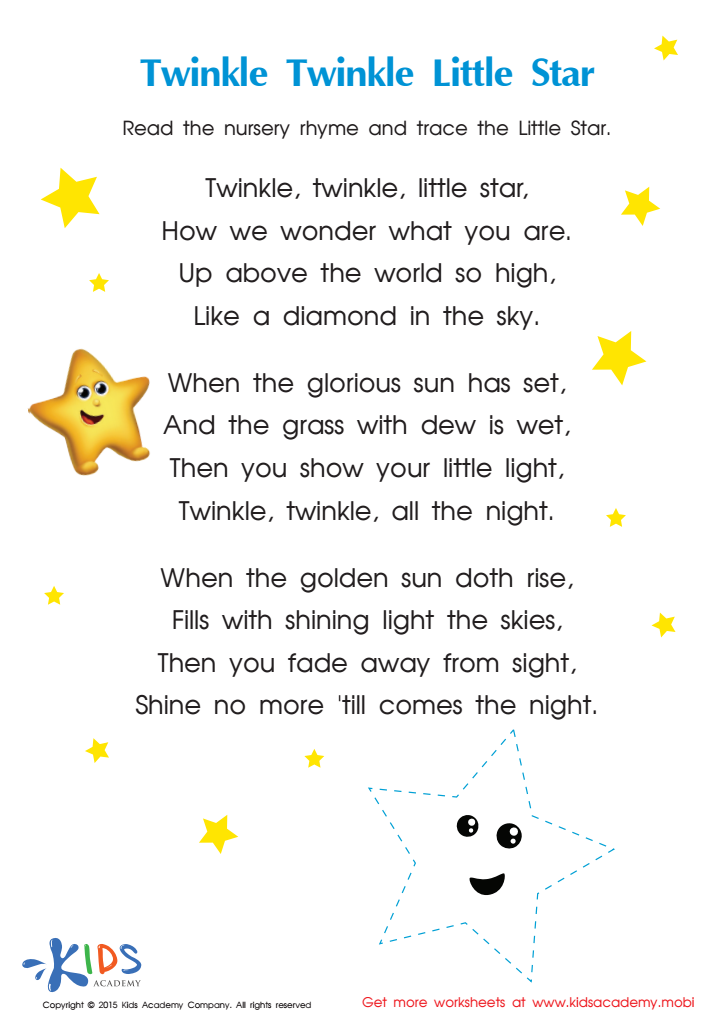
Nursery Rhymes: Twinkle Little Star Worksheet
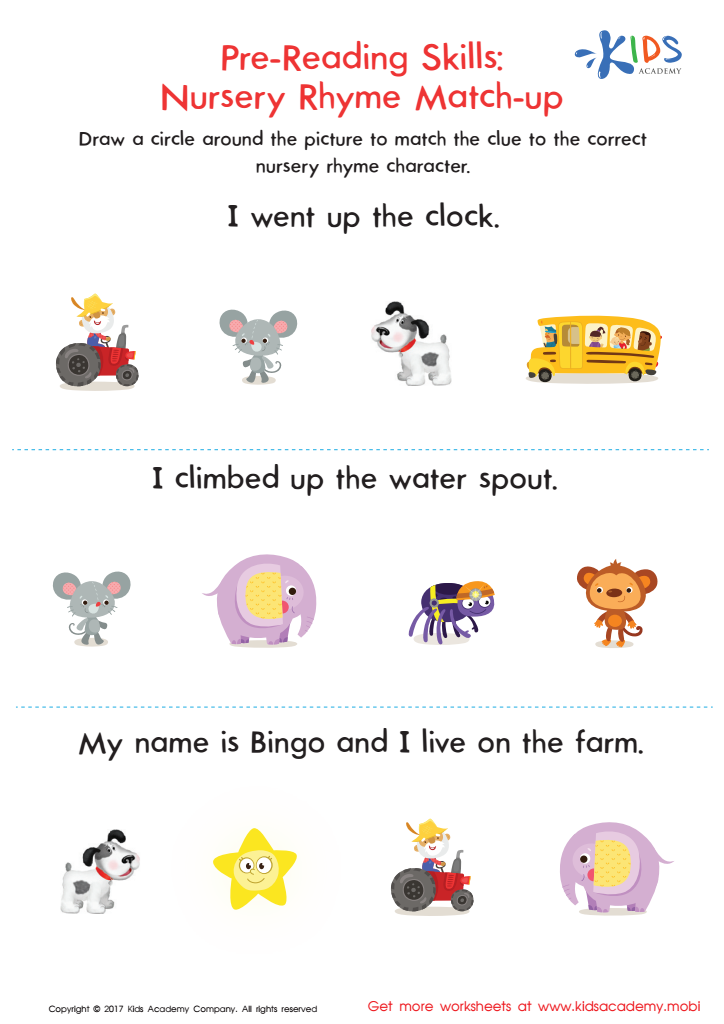
Nursery Rhyme Match–Up Worksheet
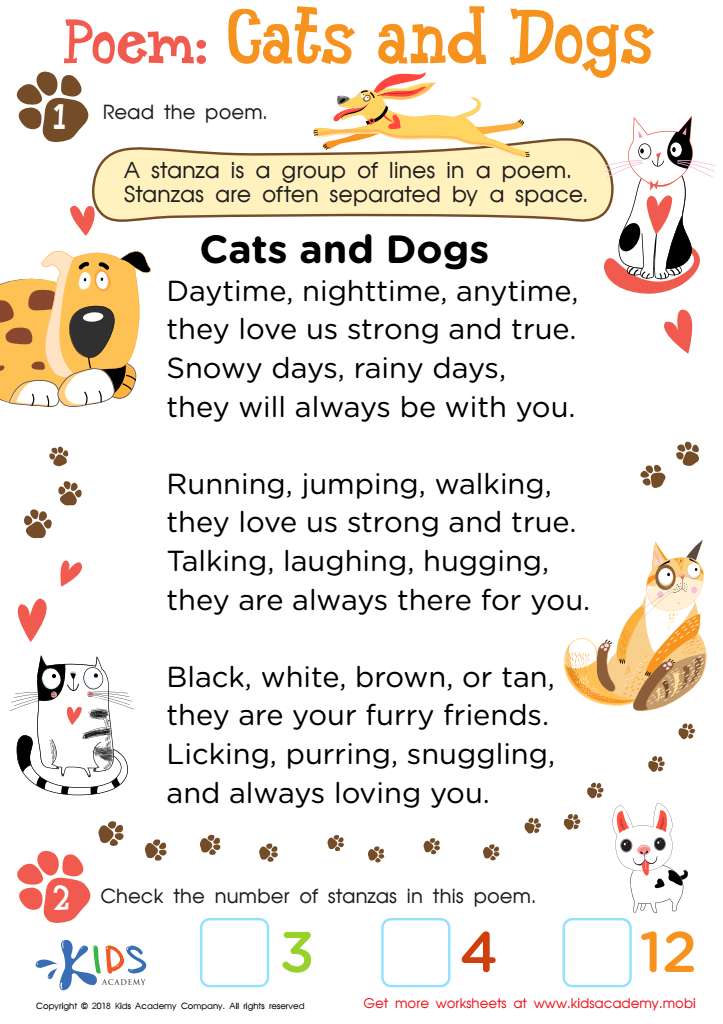
Poem: Cats and Dogs Worksheet




.jpg)



Rhyme recognition is a crucial aspect of early reading that significantly benefits eight-year-olds. Parents and teachers should prioritize this skill due to its strong correlation with phonological awareness, which is foundational for reading success. When children recognize rhymes, they become adept at discerning sound patterns and word structures, enhancing their ability to decode new words. This phonetic familiarity ultimately contributes to improved spelling and reading fluency, laying a reliable groundwork for future literacy skills.
Additionally, rhyme recognition makes reading enjoyable and engaging. Rhyming texts captivate children, fostering a love for reading. This motivation is critical; eager readers are more likely to practice and improve their skills. Rhyming exercises also stimulate memory and cognitive development by challenging children to identify patterns and predict word endings, reinforcing mental agility.
Furthermore, recognizing rhymes supports vocabulary expansion. As children engage with rhyming words, they encounter varied and new vocabulary in a structured yet enjoyable format, enriching their language repertoire.
In essence, rhyme recognition is a multifaceted tool in a young reader’s journey that bolsters vital phonological skills, encourages a passion for reading, and aids in vocabulary growth. By emphasizing this practice, parents and teachers lay a comprehensive educational foundation that primes children for lifelong literacy and learning enjoyment.








