
Rhyming skills Reading Worksheets for 8-Year-Olds
3 filtered results
Difficulty Level
Grade
Age
-
From - To
Subject
Activity
Standards
Enhance your child's reading abilities with our engaging Rhyming Skills Reading Worksheets for 8-year-olds! Designed to boost vocabulary and phonemic awareness, these worksheets encourage kids to explore the fun world of rhymes. Carefully crafted activities help children identify, create, and match rhyming words, fostering their reading confidence and creativity. Each worksheet provides a variety of exercises to cater to different learning styles, ensuring a comprehensive approach to skills development. Perfect for classroom use or supplemental home learning, these resources make practicing rhymes enjoyable and rewarding. Empower your child’s reading journey today with our dynamic collection of educational worksheets!
Favorites
With answer key
Interactive
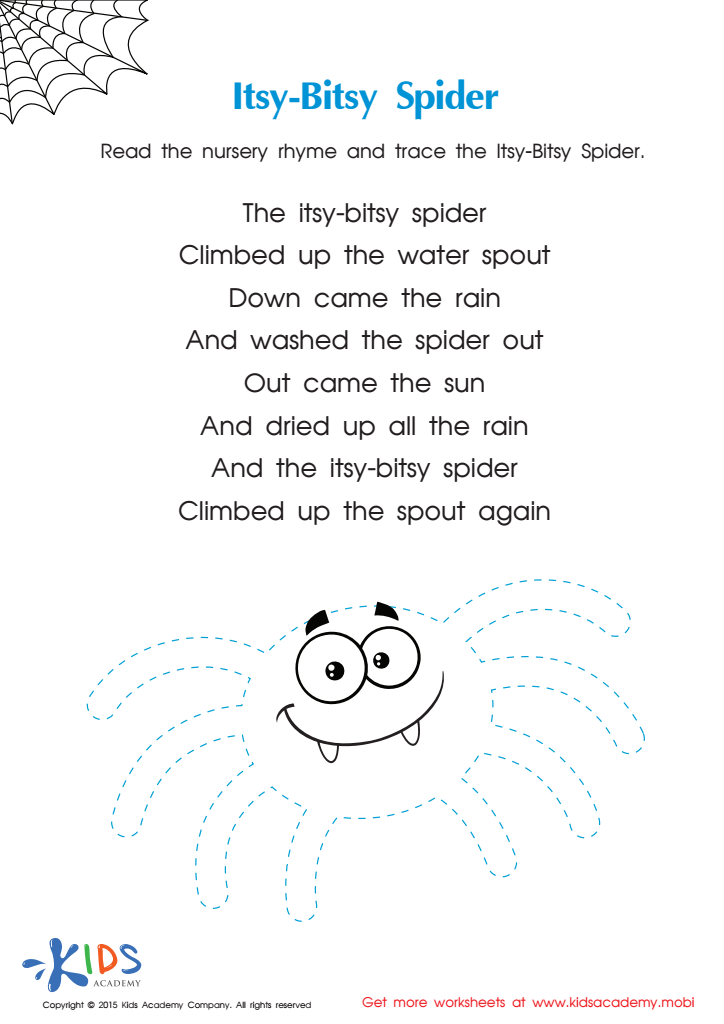
Itsy Bitsy Spider Nursery Rhyme PDF Worksheet
Introduce your child to the classic nursery rhyme with this worksheet. They'll learn the song, develop their motor skills, and find and count the letters 'A'. Pick up your crayons and add some color to the missing spider!
 Assign to My Students
Itsy Bitsy Spider Nursery Rhyme PDF Worksheet
Worksheet
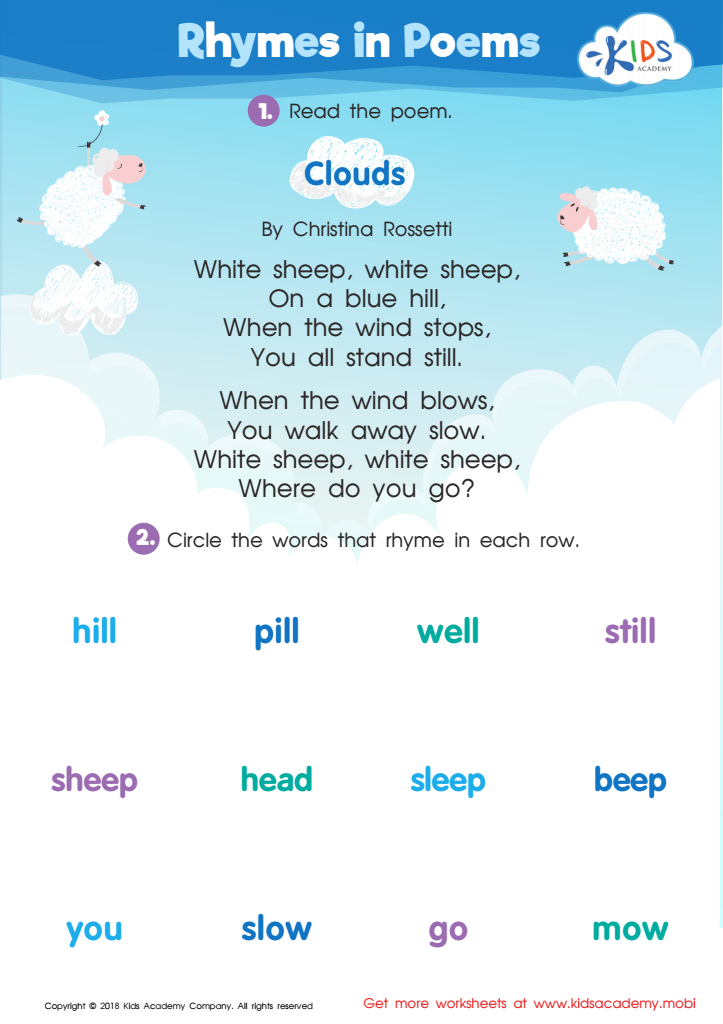
Rhymes in Poems Worksheet
Poems are lovely works of literature; some with rhymes, and some without. This poem for kids is full of rhymes and tells the tale of a sheep. Read it aloud to your kids, then help them circle the rhyming words.
Rhymes in Poems Worksheet
Worksheet
Join Kids Academy for Free
Who is primarily going to use this learning content?







Rhyming skills play a crucial role in developing reading proficiency for 8-year-olds, making it essential for parents and teachers to prioritize this skill. First and foremost, rhyming enhances phonological awareness, which is the ability to identify and manipulate sounds in words. This foundational skill is vital as it aids children in decoding words while reading, ultimately leading to improved reading fluency.
Furthermore, exposure to rhymes helps build vocabulary and language skills. Poems, songs, and rhyming books introduce children to new words in a fun and engaging manner, allowing them to explore various linguistic structures. As children recognize and produce rhymes, they not only enhance their speech and writing but also foster a love for language and literature.
Additionally, rhyming can support comprehension skills. Rhyming texts often contain patterns and structures that make it easier for children to predict what comes next, aiding in understanding and retention of the material.
In nurturing rhyming abilities, parents and teachers foster a joyful learning environment that motivates children, builds confidence, and lays the groundwork for future literacy. By prioritizing rhyming skills, adults play a pivotal role in cultivating engaged and capable readers.








