Filters

32 filtered results

Clear all filters
Favorites
With answer key
Interactive

32 filtered results

Difficulty Level

Grade


Check out this FREE Trial Lesson on Reading for age 8!

Identify Irregular Past Tense Verbs Standard

Favorites
With answer key
Interactive
  • 8
  • Spelling practice
  • Reading
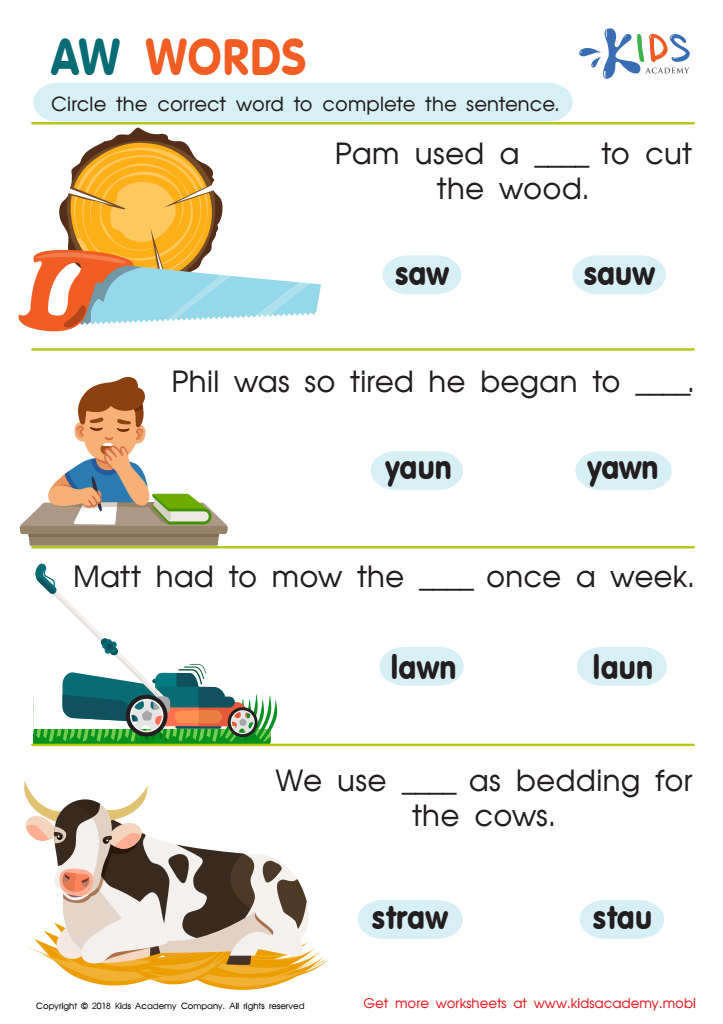
Reading: AW Words Worksheet

Reading: AW Words Worksheet

Practice decoding the /aw/ digraph with this printable. Students read sentences and select the word with the correct spelling to complete each one. Note, /aw/ is sometimes spelled /au/, so this worksheet helps prevent confusion. Have fun, and practice hard!
Reading: AW Words Worksheet
Worksheet
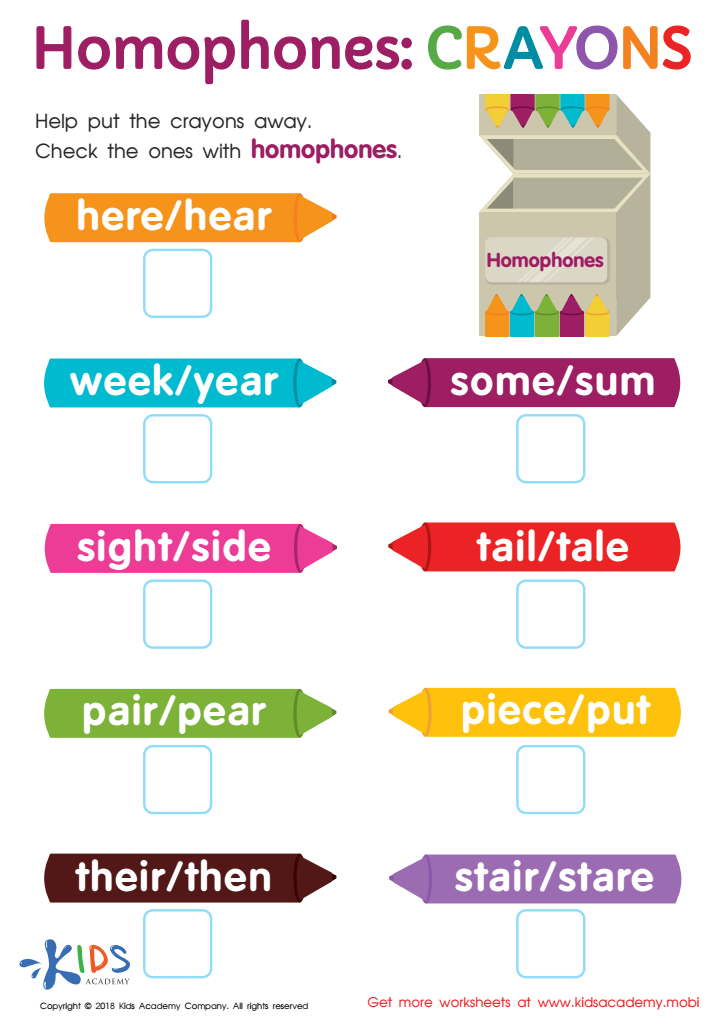
Homophones: Crayons Worksheet
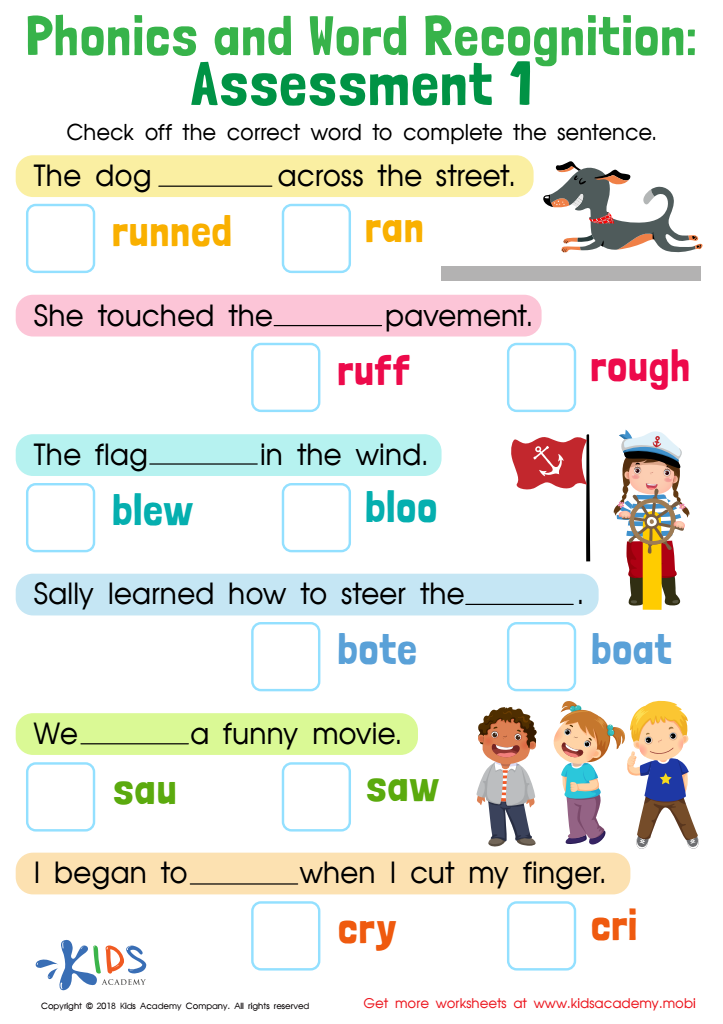

Homophones: Crayons Worksheet

Ask your kids: "What are homophones?" Explain that homophones are words that sound alike but have different meanings, like 'dare' and 'deer'. Ask them to identify homophones by putting the crayons in this printout away according to the words.
Homophones: Crayons Worksheet
Worksheet
Phonics and Word Recognition: Assessment 1 Worksheet
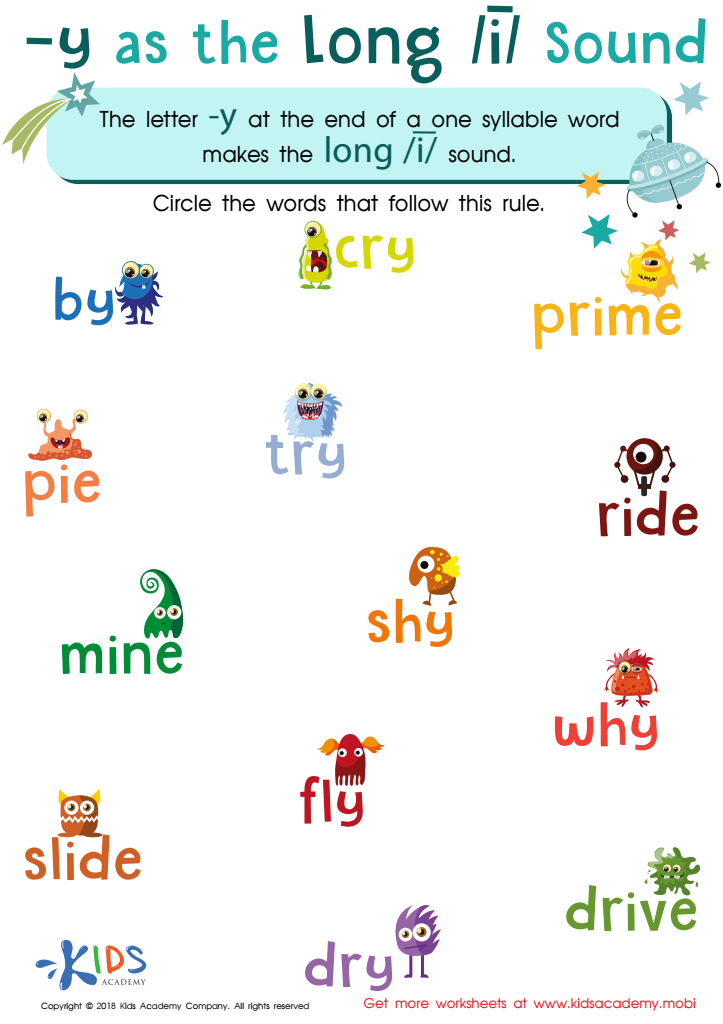

Phonics and Word Recognition: Assessment 1 Worksheet

This worksheet tests phonetics and word recognition. Students should be familiar with past tense verbs. Read incomplete sentences, then read multiple options and help students select the correct one.
Phonics and Word Recognition: Assessment 1 Worksheet
Worksheet
Reading: Y as Long I Worksheet
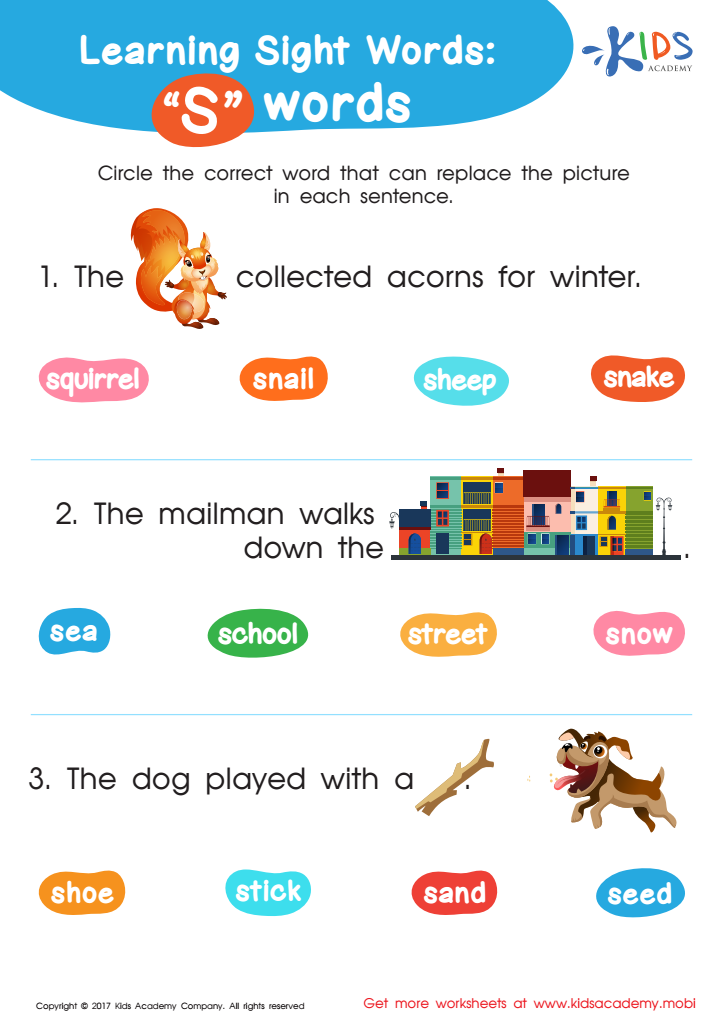

Reading: Y as Long I Worksheet

Students need practice and exposure to letters that make different sounds for decoding and reading success. This printable is a great resource for language arts classes: it explains that words ending with Y and having only one syllable make the long I sound. Students will circle all words with Y that have this sound.
Reading: Y as Long I Worksheet
Worksheet
2nd grade sight words worksheet- s words

S Words Sight Words Worksheet

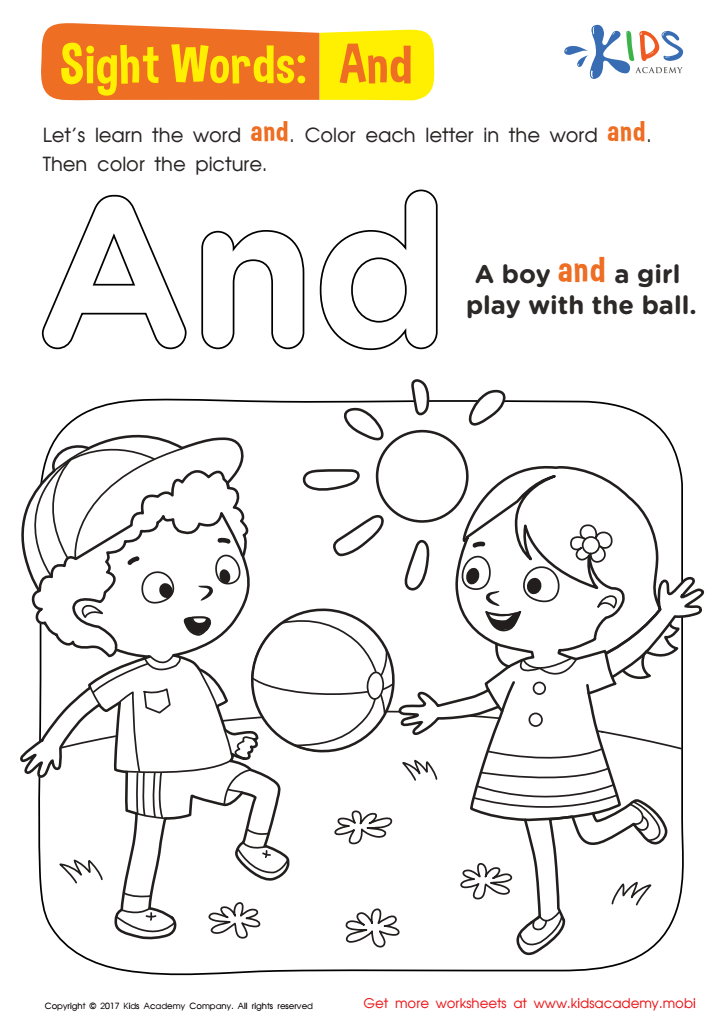
This 2nd grade worksheet encourages kids to practice using context clues when identifying sight words that begin with 's'. Engage them with colorful pictures to enhance the learning, helping them to understand the context of each sentence and choose the correct word.
S Words Sight Words Worksheet
Worksheet
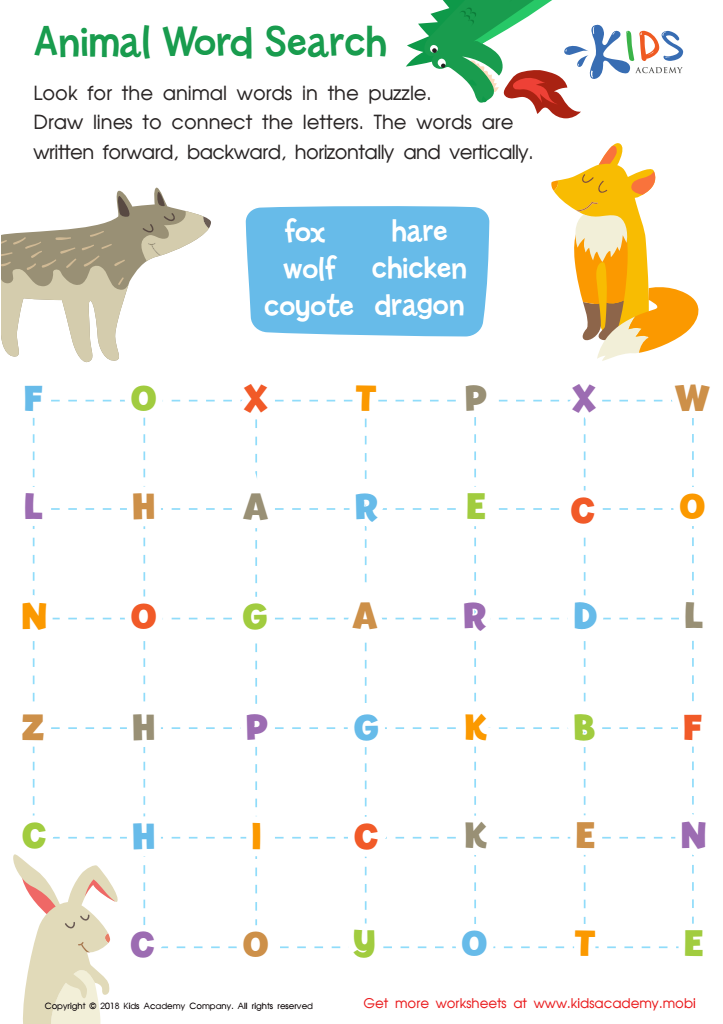
Animal Word Search Worksheet

Animal Word Search Worksheet

Students can have fun and strengthen spelling and vocabulary skills with this word search worksheet. Search for animal words and circle the letters in the puzzle. Words can be found forwards, backwards, horizontally or vertically, providing a great challenge to foster critical thinking skills. An enriching activity for all ages!
Animal Word Search Worksheet
Worksheet
And Worksheet Sight Words Worksheet

And Worksheet Sight Words Worksheet

Help your child get a jumpstart on reading with sight words! Print out this fun worksheet and get your child to read the sentence. Point out the word "and", then color the word and enjoy the rest of the scene! It's a great way to introduce sight words and get their early reading skills going!
Download (PDF)
Assign to My Students
And Worksheet Sight Words Worksheet
Worksheet
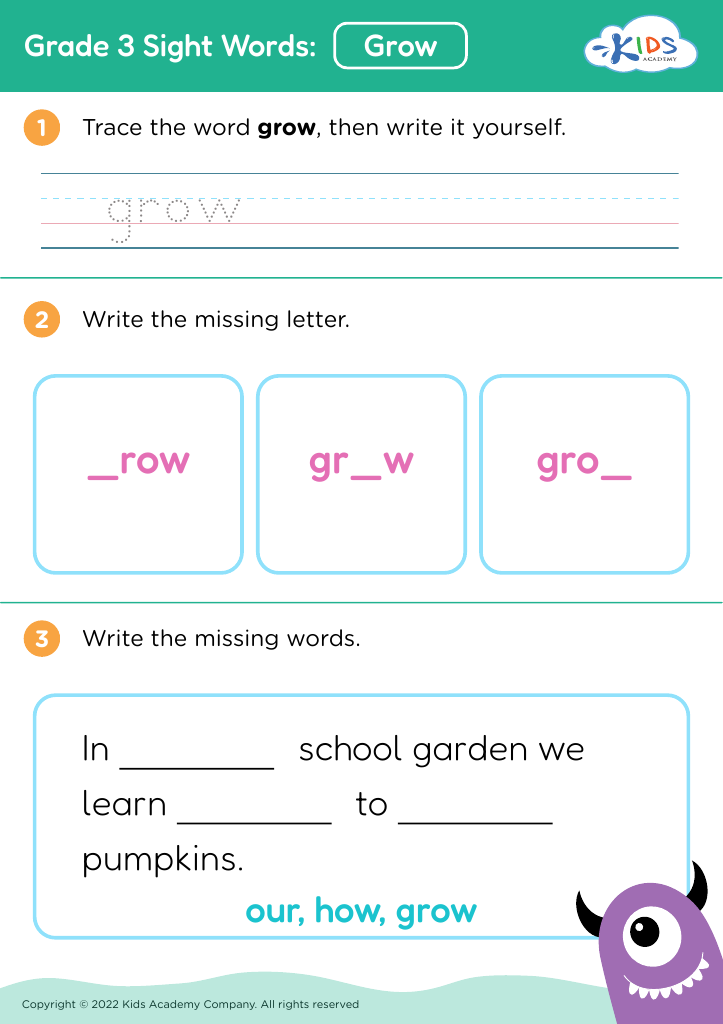
Grade 3 Sight Words: Grow

Grade 3 Sight Words: Grow

Grade 3 Sight Words: Grow
Worksheet


Parents and teachers should prioritize spelling practice and reading for 8-year-olds because these foundational skills are crucial for their overall literacy development. At this age, children are transitioning from basic to more advanced reading and writing tasks. Mastering spelling helps children understand the relationship between letters and sounds, enhancing their ability to decode new words. This skill is integral to reading fluency, which is the smoothness and accuracy of reading. A fluent reader can focus on comprehension rather than struggling to pronounce each word, which supports learning across all subjects.

Regular reading practice expands a child's vocabulary and exposes them to different sentence structures and storytelling techniques, fostering creativity and critical thinking. When children encounter new or complex words in their reading, spelling exercises reinforce their memory and understanding of these words, thereby improving both their written and spoken language skills.

Moreover, proficiency in reading and spelling boosts a child's confidence in their academic abilities. Struggling in these areas can lead to frustration and a negative attitude toward school, whereas competence can foster a love for learning. Supporting these skills at a young age sets a strong foundation for future educational success and opens the door to a world of knowledge and imagination.