Understanding life cycles Reading Worksheets for 8-Year-Olds
3 filtered results
-
From - To
Explore our engaging reading worksheets designed to help 8-year-olds understand life cycles in an interactive way! These educational resources offer captivating stories and activities focused on the stages of various life processes, from butterflies to plants. Each worksheet includes comprehension questions, vocabulary builders, and fun facts that foster critical thinking and enhance reading skills. Perfect for classroom use or home study, these worksheets encourage young learners to connect with nature and develop a deeper appreciation for the world around them. Download and dive into the fascinating journey of life cycles today, nurturing curiosity and a love for reading!
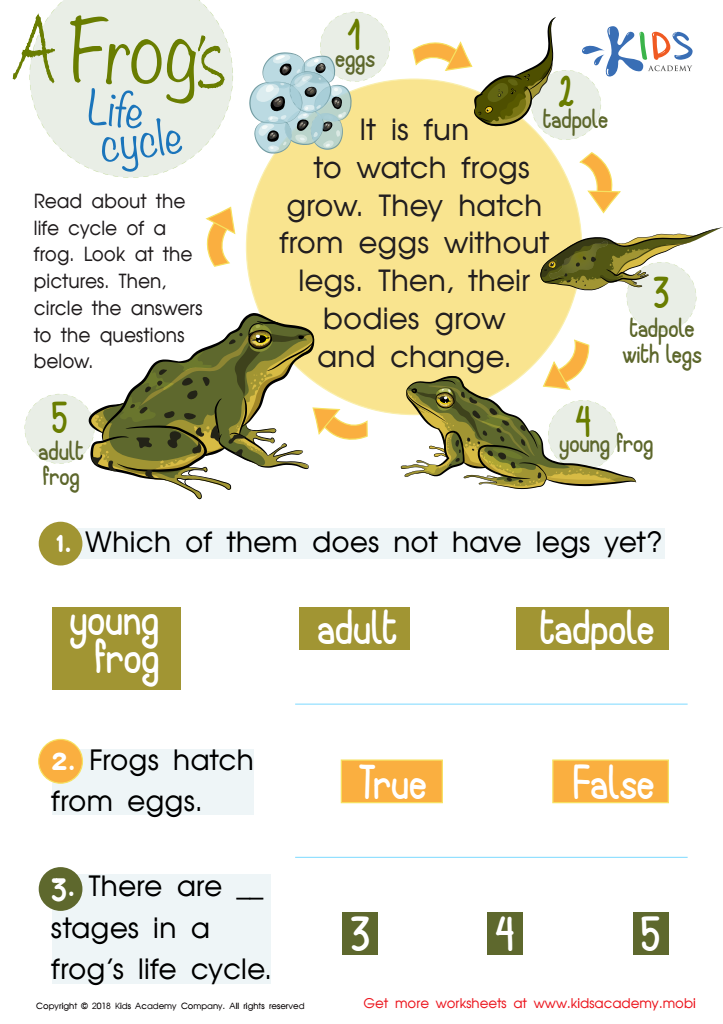
A Frog’s Life Cycle Worksheet
 Assign to My Students
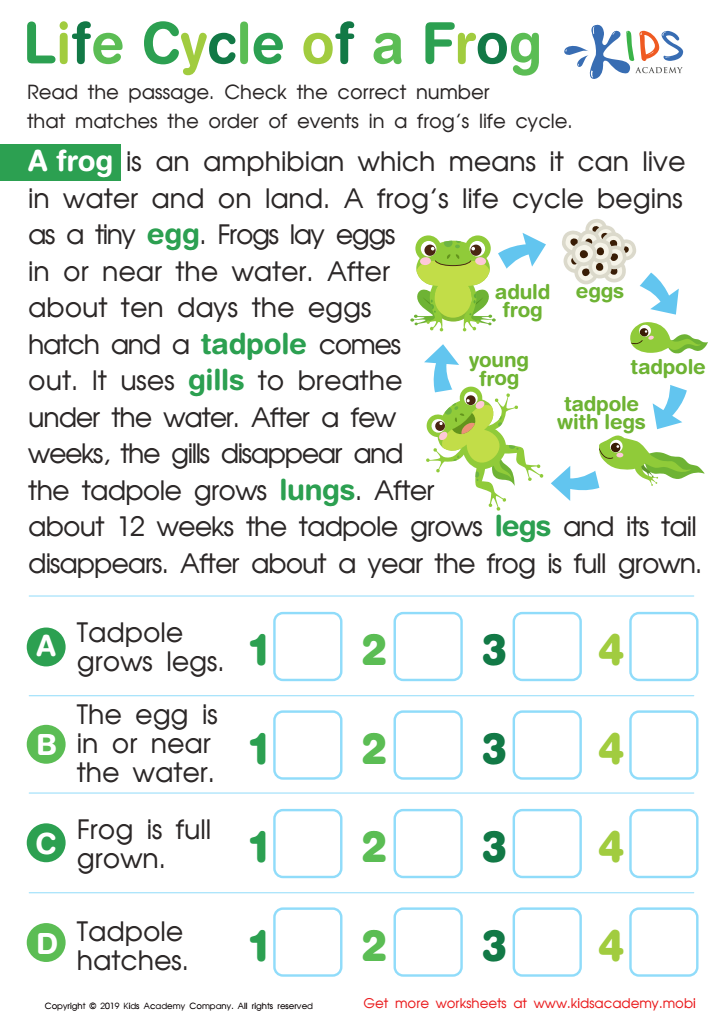
Life Cycle of a Frog Worksheet
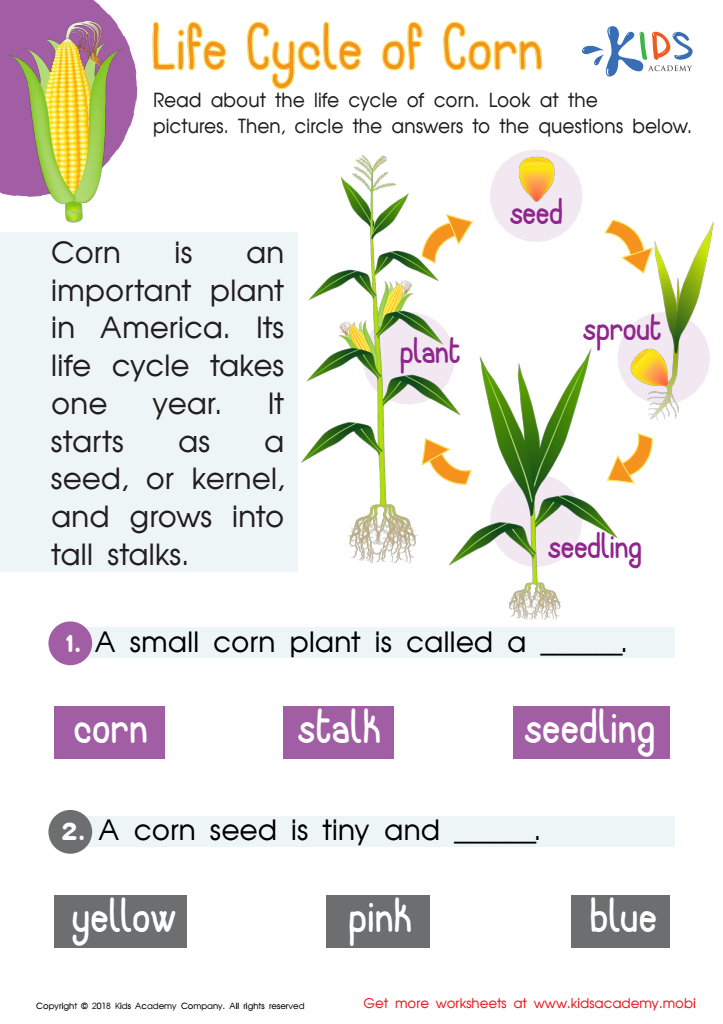
Life Cycle of Corn Worksheet







Understanding life cycles is crucial for 8-year-olds as it enriches their knowledge of the natural world and fosters critical thinking. At this age, children are naturally curious about the environment, and comprehending life cycles helps them appreciate how living organisms develop and interact within ecosystems. By teaching children about the stages of growth—such as egg, larva, pupa, and adult in insects—they can grasp the broader concepts of change and adaptation that are vital in science.
For parents and teachers, supporting children in learning about life cycles aligns with educational standards and enhances STEM (Science, Technology, Engineering, and Mathematics) skills. It initiates discussions about biology, ecology, and conservation, promoting a sense of responsibility towards the environment. Furthermore, integrating reading about life cycles into their curriculum fosters literacy skills by introducing scientific vocabulary and concepts in an engaging way.
Encouraging exploration and inquiry through reading not only supports cognitive development but also emphasizes critical thinking and problem-solving skills. Ultimately, an understanding of life cycles promotes awareness of the interconnectedness of life, nurturing a generation that respects and understands the fragile balance of ecosystems. This foundational knowledge will serve them well in their ongoing education and as environmentally conscious citizens.








