Map reading skills Geography Worksheets for 8-Year-Olds
4 filtered results
-
From - To
Enhance your child's geography skills with our engaging Map Reading Skills worksheets designed specifically for 8-year-olds! These worksheets focus on teaching young learners essential map skills, such as understanding symbols, interpreting legends, and recognizing cardinal directions. Interactive and fun, our resources encourage kids to explore maps while developing critical thinking and problem-solving abilities. Tailored to align with educational standards, these worksheets foster a love for geography and support classroom learning at home. Inspire adventure and curiosity in your child as they navigate the world of maps! Download our comprehensive worksheets today and watch them explore new horizons!
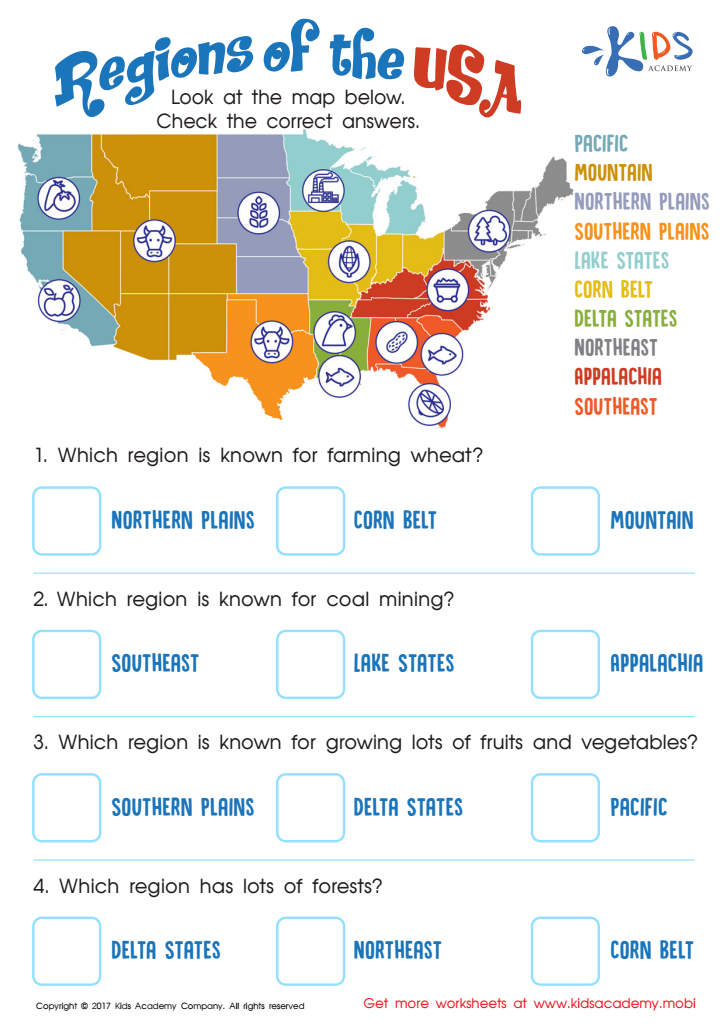
Regions of the USA Worksheet
 Assign to My Students
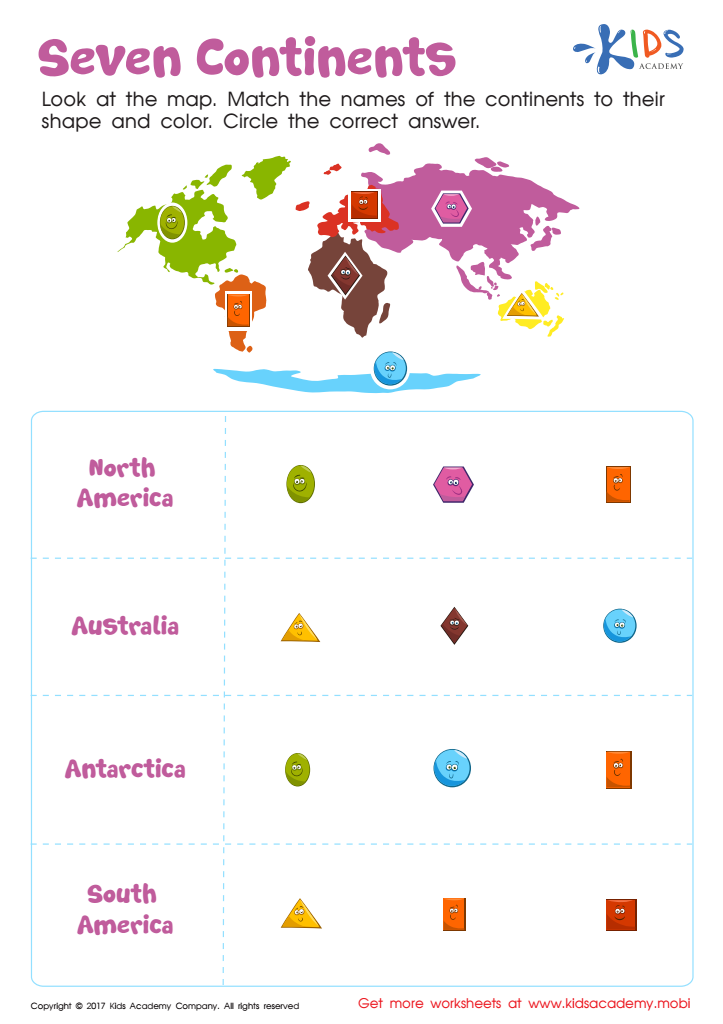
Seven Continents Worksheet
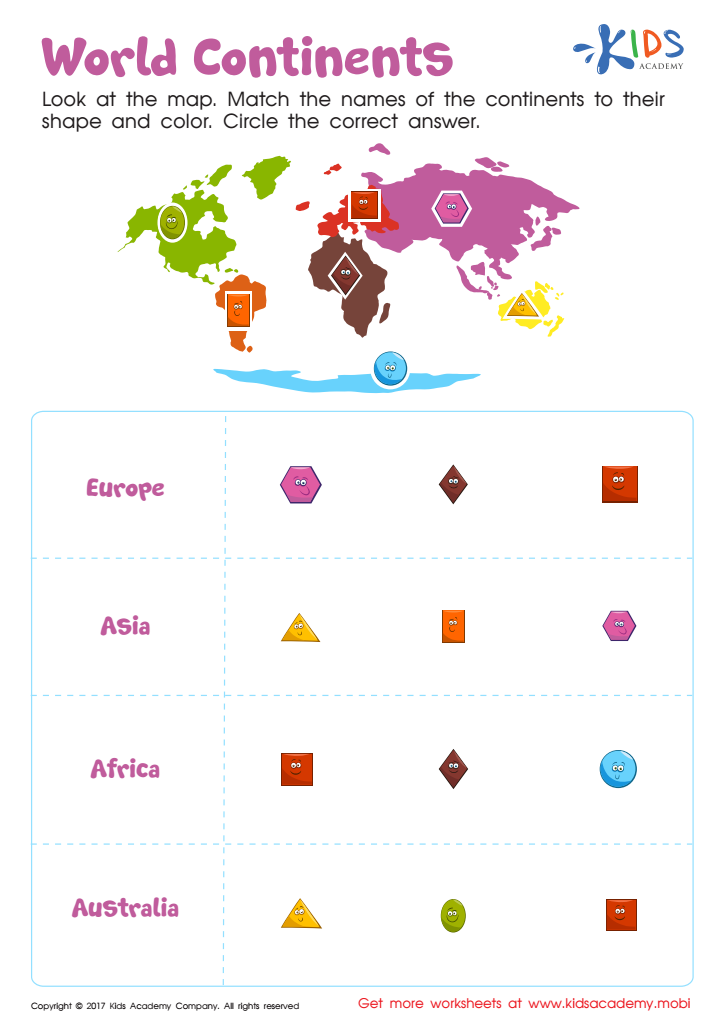
World Continents Worksheet
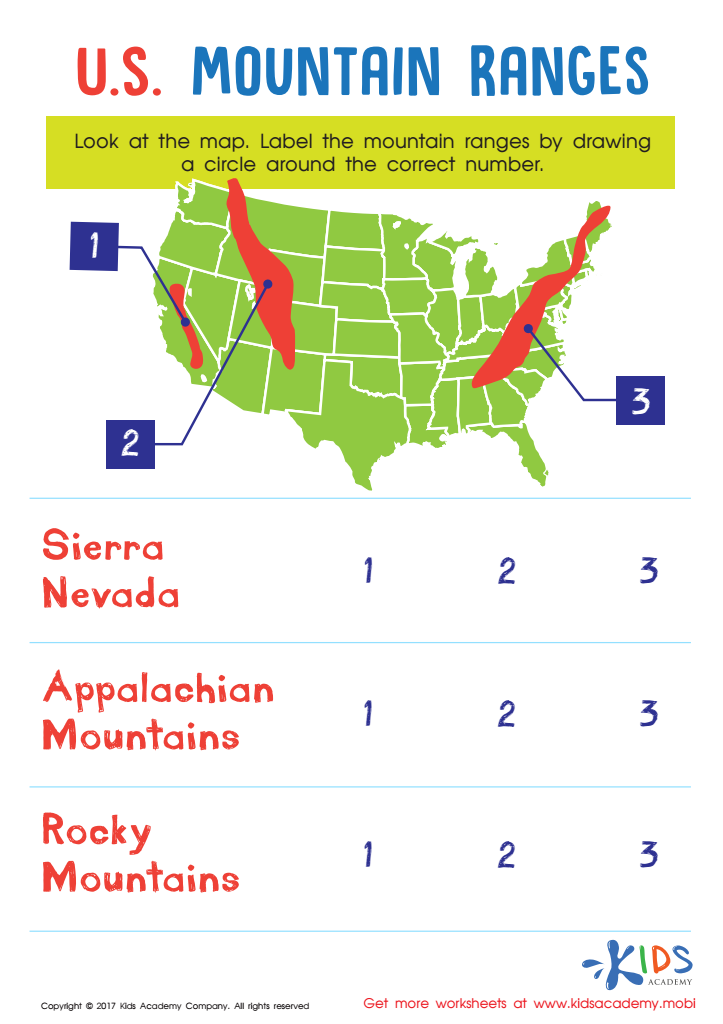
US Mountain Ranges Worksheet






Map reading skills are crucial for 8-year-olds as they foster essential cognitive, social, and practical skills that enrich a child's understanding of the world. Firstly, learning to read maps enhances critical thinking and spatial awareness, helping children to visualize their environment and understand relative distances and locations. This foundational knowledge supports their learning in geography and encourages curiosity about different cultures, landscapes, and regions.
Secondly, maps are tools for problem-solving and navigation, teaching kids how to interpret symbols, legends, and directions. Proficiency in these skills not only supports geography lessons but also cultivates independence, a key attribute for personal growth and everyday decision-making. The ability to read a map promotes outdoor adventure and exploration, enabling children to connect with nature and their surroundings.
Moreover, in an increasingly digital world, understanding traditional map reading can complement technological literacy. Since many digital navigation tools derive their information from traditional maps, early familiarity aids comprehension of these technologies. Ultimately, fostering map reading skills equips children with confidence and self-reliance, setting a strong foundation for lifelong learning and exploration. Parents and teachers should prioritize this area to prepare children for an interconnected world, enhancing their analytical abilities and promoting active participation in the broader community.