Multiplication practice History Worksheets for 8-Year-Olds
8 filtered results
-
From - To
Unlock the power of learning with our "Multiplication Practice History Worksheets" designed specifically for 8-year-olds. Merging mathematical skills with engaging historical content, these worksheets provide a unique blend of multiplication practice while exposing students to important historical events and figures. Each activity is crafted to enhance critical thinking and reinforce multiplication concepts, making learning both fun and educational. Perfect for classroom exercises or at-home practice, these worksheets are tailored to keep young learners motivated. Explore the fascinating world of history while strengthening essential math skills, setting a strong foundation for future academic success. Dive in and watch your child thrive!
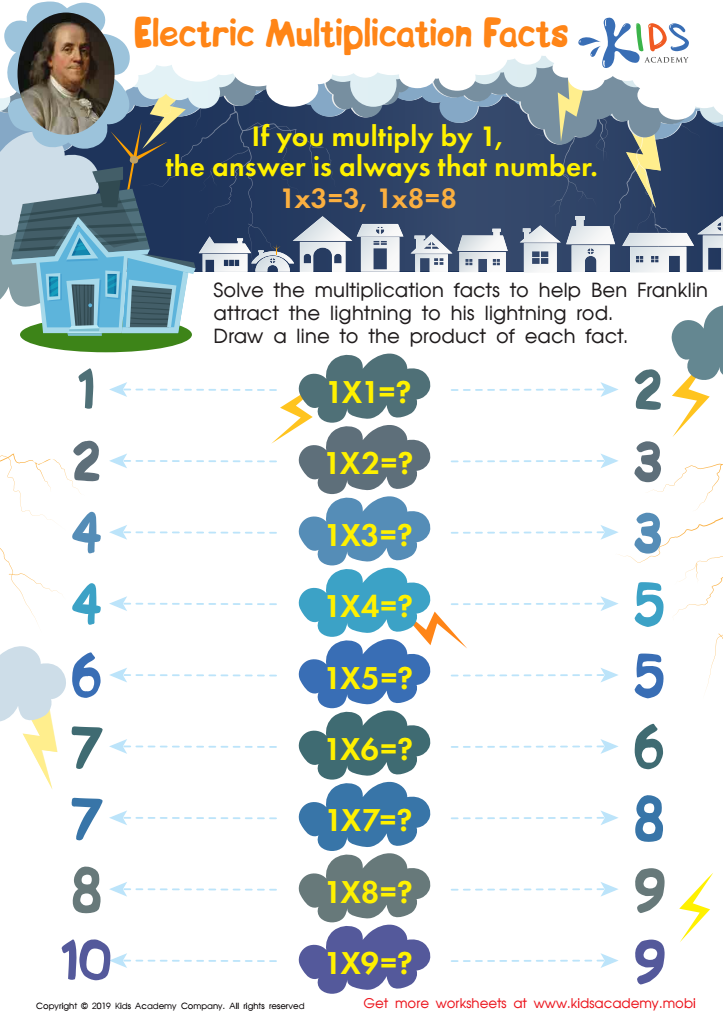
Electric Multiplication Facts Worksheet
 Assign to My Students
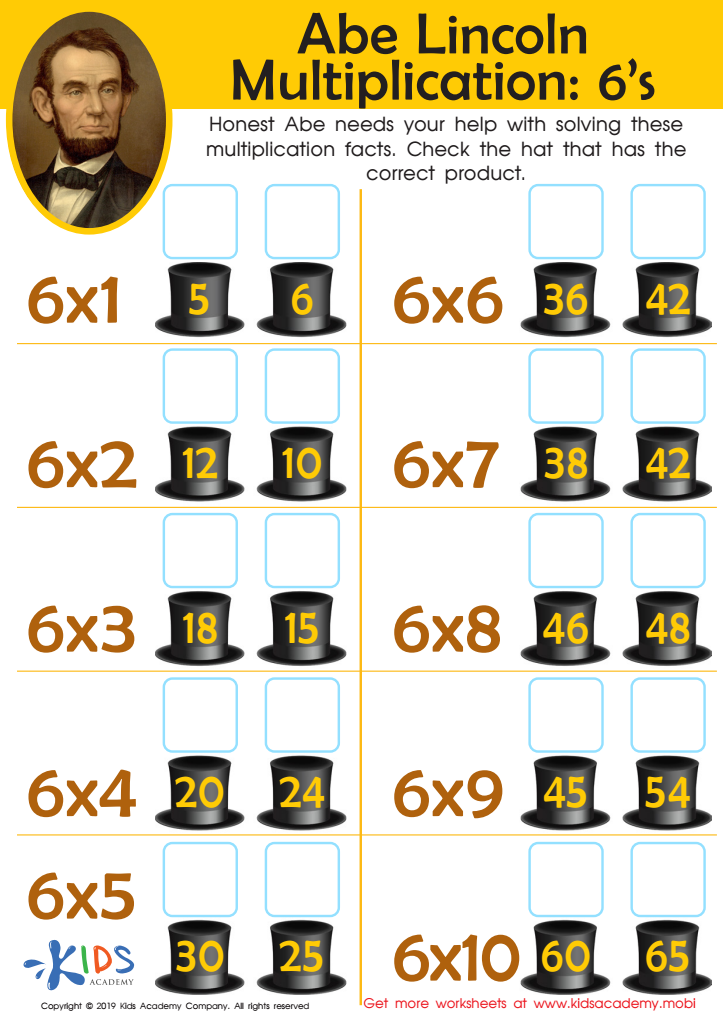
Abe Lincoln Multiplication: 6’s Worksheet
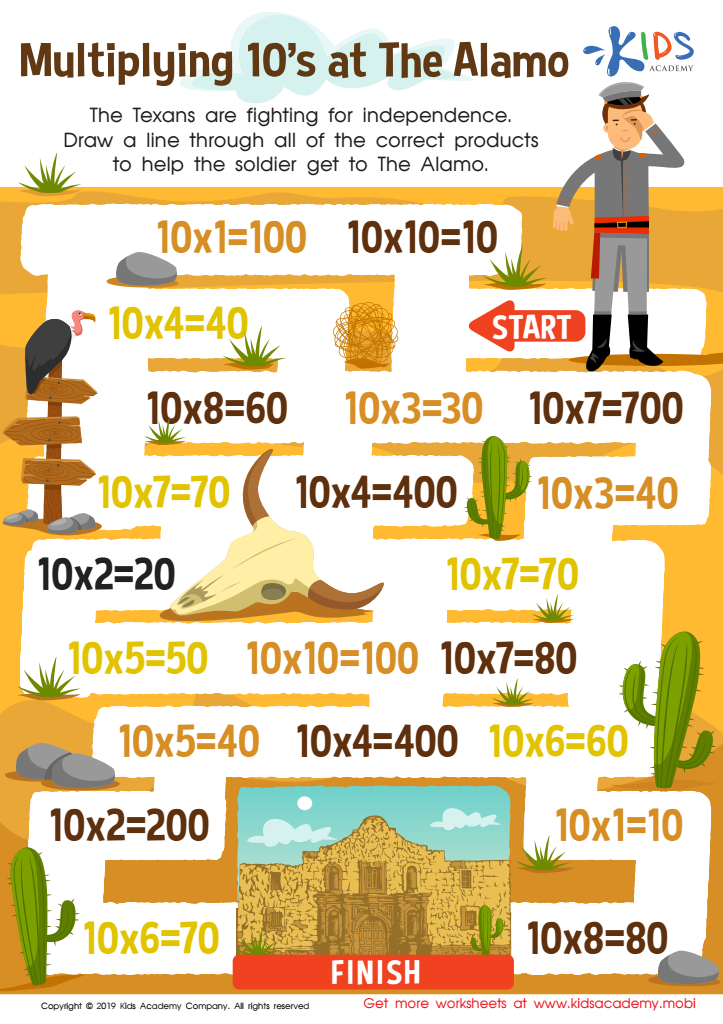
Multiplying 10’s at The Alamo Worksheet
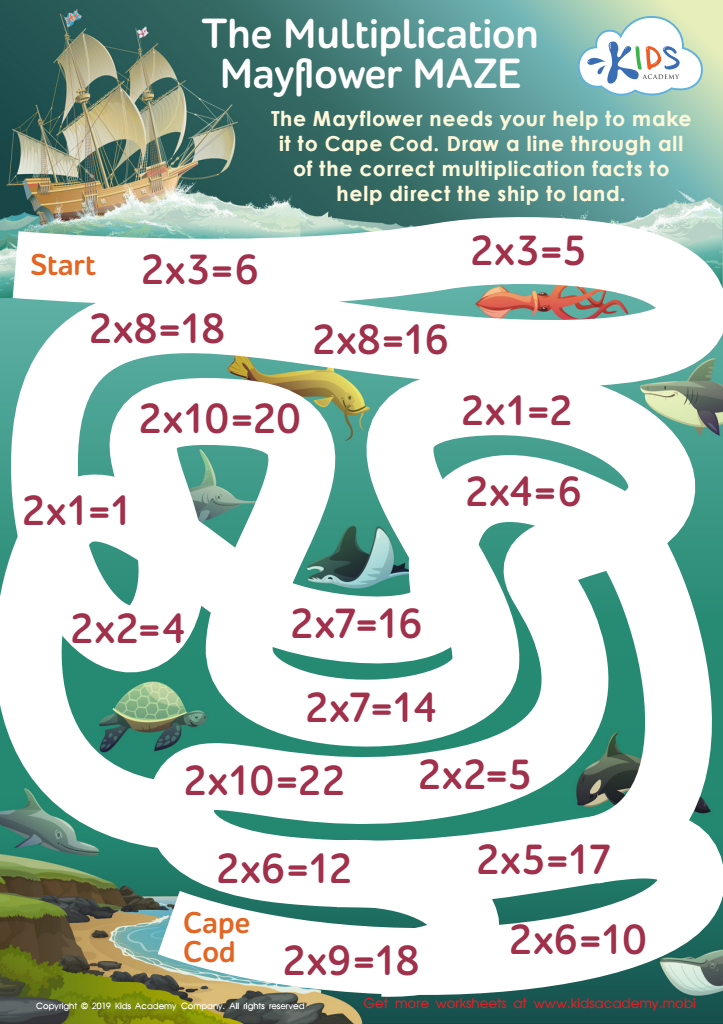
The Multiplication Mayflower Maze Worksheet
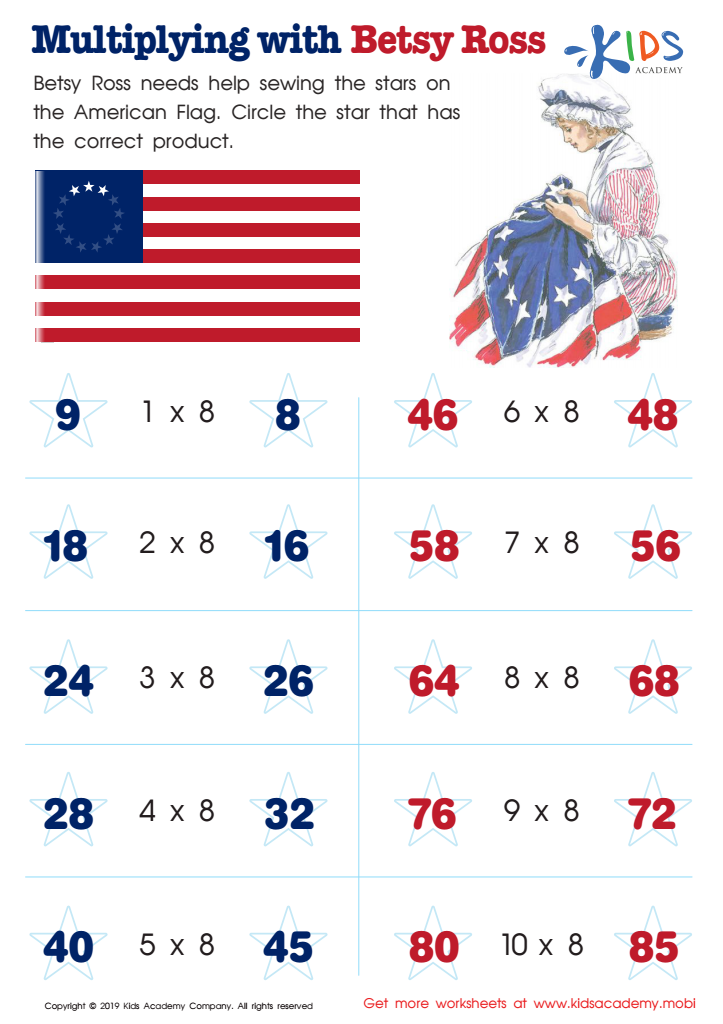
Multiplying with Betsy Ross Worksheet
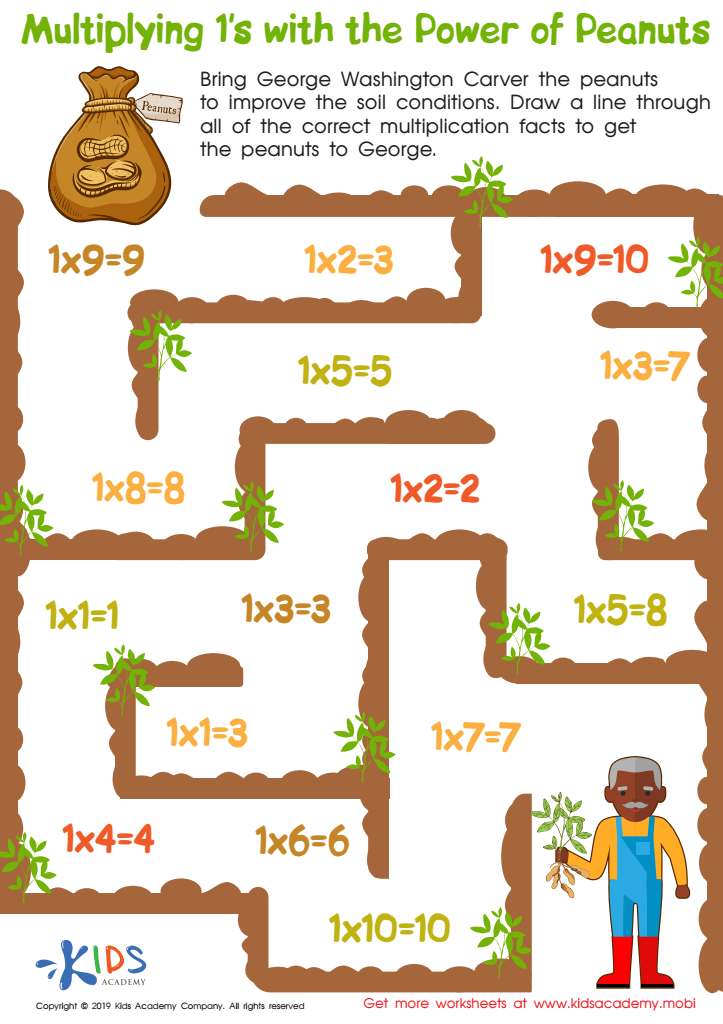
Multiplying 1’s With the Power of Peanuts Worksheet
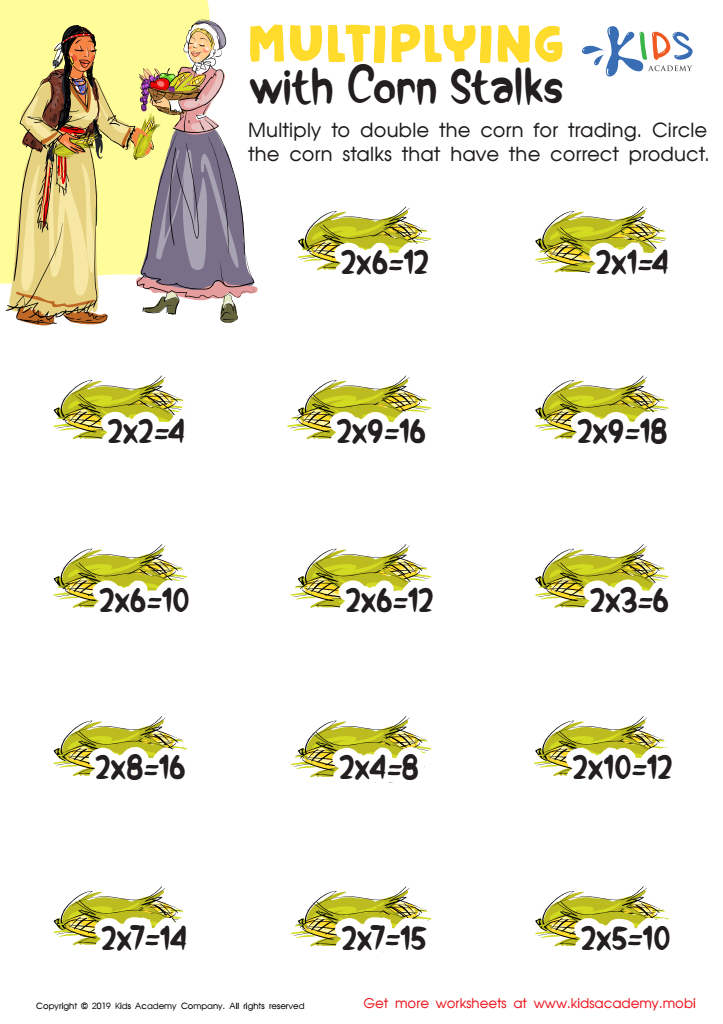
Multiplying With Corn Stalks Worksheet
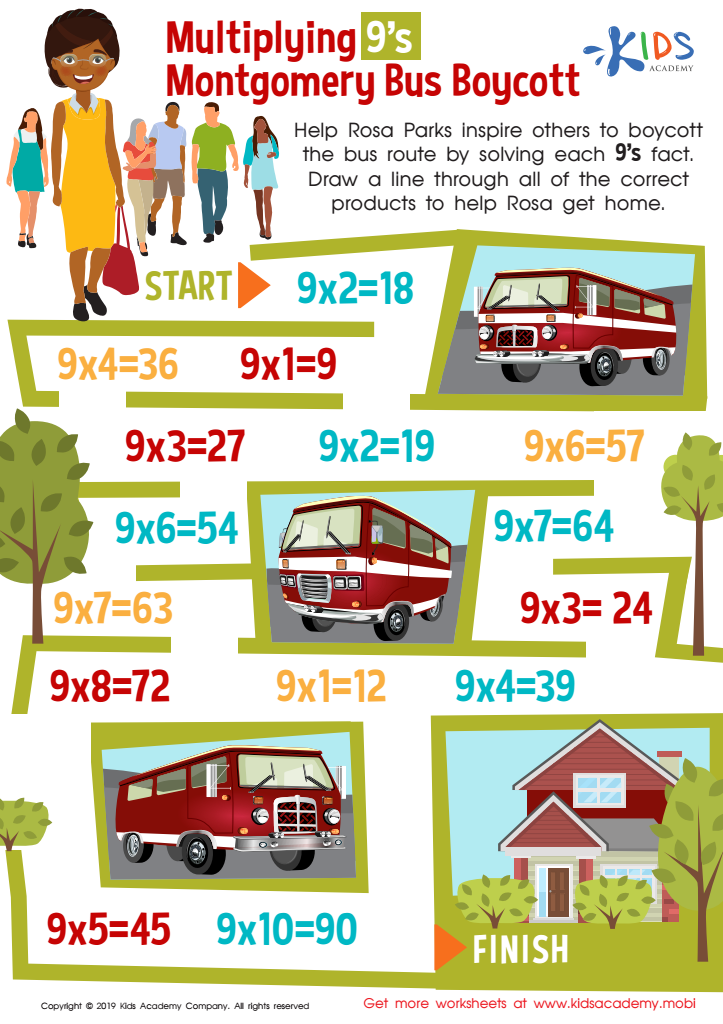
Multiplying 9’s Montgomery Bus Boycott Worksheet








Parents and teachers play a crucial role in an 8-year-old’s development, particularly when it comes to foundational math skills like multiplication. Understanding multiplication is not just about memorizing facts; it's about developing critical thinking and problem-solving skills. At this age, children are transitioning from simple arithmetic to more complex mathematical concepts, making multiplication practice essential for their academic growth.
Multiplication is the basis for many advanced math topics, including division, fractions, and algebra. Mastering multiplication facts allows children to solve problems more efficiently, instilling confidence and reducing math anxiety. Furthermore, fluency in multiplication enables students to engage with real-world applications—whether it's managing money, cooking, or understanding time.
Practicing multiplication in diverse and engaging ways can make learning enjoyable and foster a positive attitude towards math. Parents and teachers can utilize games, visual aids, and interactive activities to reinforce these skills. Moreover, demonstrating the relevance of multiplication skills in everyday life can motivate children to see math as a valuable tool rather than a chore.
Investing time in multiplication practice not only aids in academic success but also lays the groundwork for lifelong learning, making it imperative for both parents and teachers to prioritize this essential skill.