Understanding patterns History Worksheets for 8-Year-Olds
3 filtered results
-
From - To
Our "Understanding Patterns History Worksheets for 8-Year-Olds" are thoughtfully designed to make learning history engaging and accessible. Through fun and interactive activities, children explore historical patterns, understanding how events and developments are connected over time. These worksheets help young learners recognize repetition, sequence, and the cause-and-effect relationships in history. With a focus on building critical thinking and analytical skills, our patterns worksheets enable kids to grasp key historical concepts while fostering a love for learning. Ideal for home or classroom use, these resources support the development of foundational social studies skills in a creative and enjoyable way.
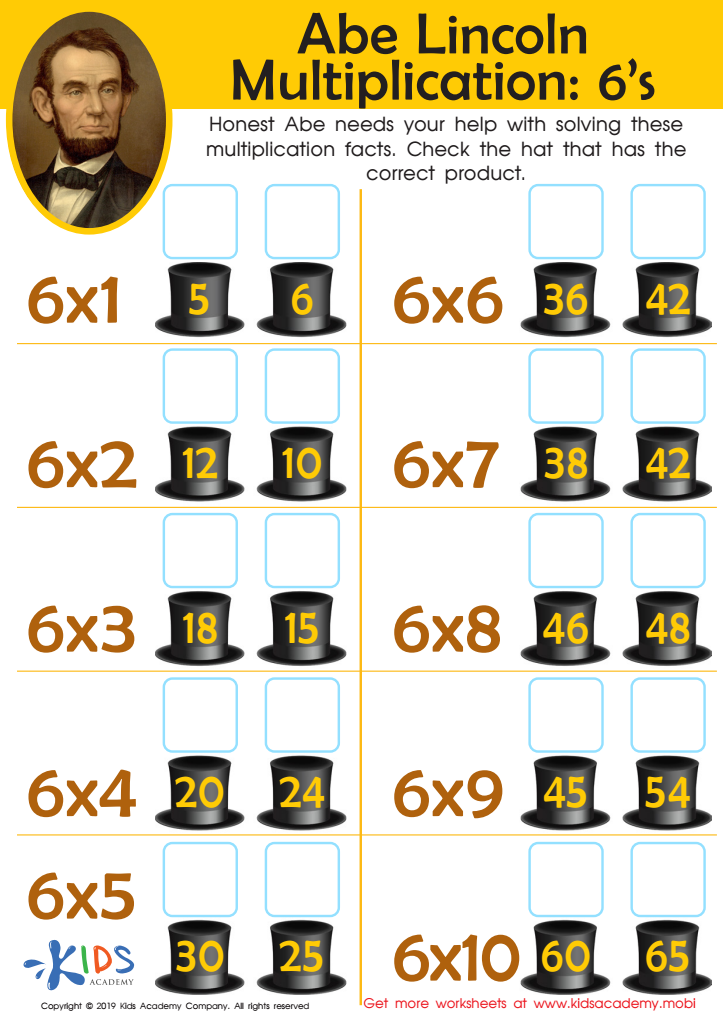
Abe Lincoln Multiplication: 6’s Worksheet
 Assign to My Students
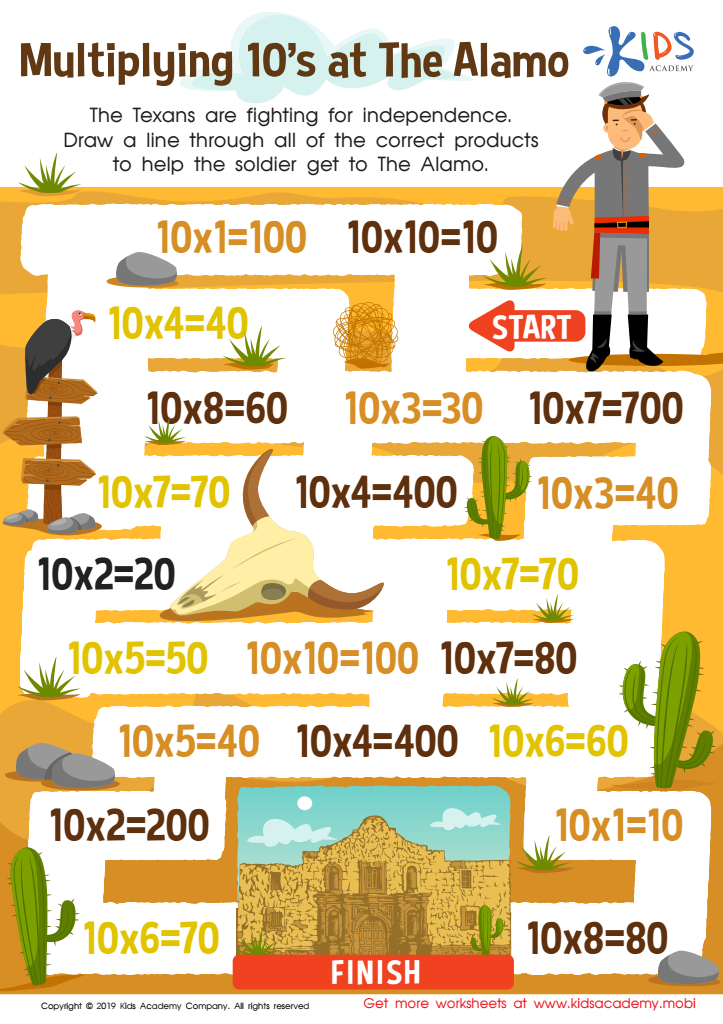
Multiplying 10’s at The Alamo Worksheet
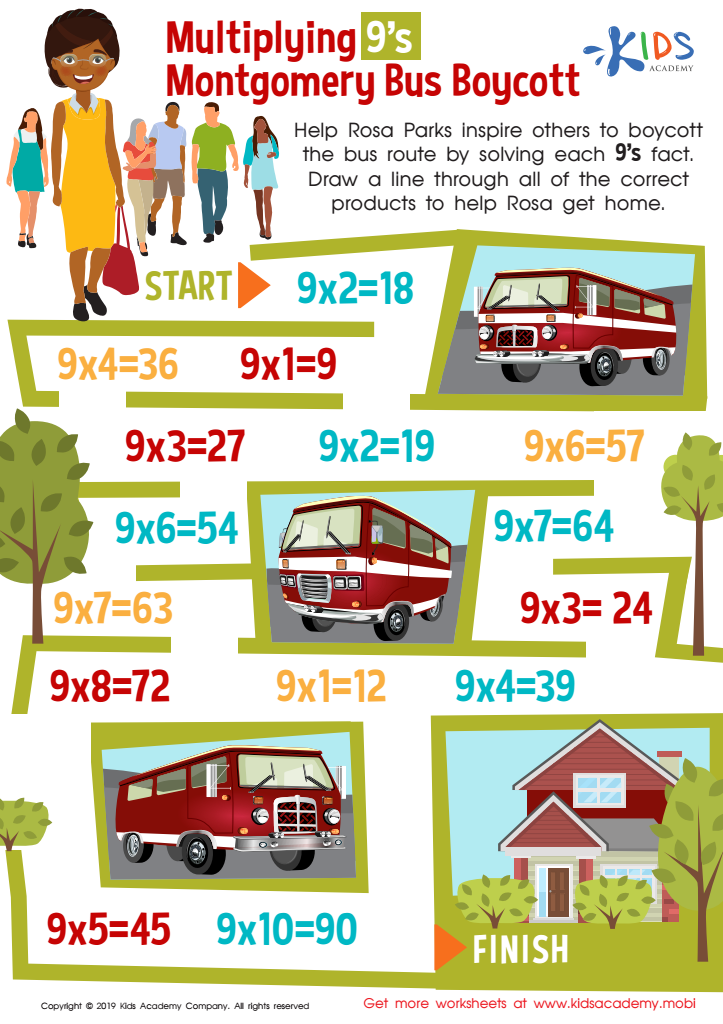
Multiplying 9’s Montgomery Bus Boycott Worksheet







Understanding patterns in history is immensely valuable for 8-year-olds, educationally and developmentally. At this age, children are at a critical developmental stage where they begin to comprehend more complex sequences and relationships. Introducing historical patterns allows them to see beyond isolated facts and dates, and grasp the broader narrative of human society and progress. This cultivates their analytical skills, enabling them to recognize cause and effect, compare different events, and understand the progression of time.
Parents and teachers can leverage this understanding to instill deeper critical thinking and inquisitiveness. For instance, discussing how different societies have evolved, comparing the causes and outcomes of various historical events, or seeing how we learn from past mistakes teaches kids lessons about perseverance, resilience, and the importance of communities. It aids in building a child's identity and fosters a sense of belongingness by connecting them to the broader human story.
Recognizing patterns also helps kids relate past experiences to current situations, enhancing their problem-solving abilities. They learn that current events are part of bigger cycles and trends, preparing them for thoughtful, informed participation in future society. In sum, a deep engagement with history equips children with invaluable intellectual tools, an appreciation for diverse cultures, and a foundation to develop as informed, responsible citizens.