Grammar skills Writing Worksheets for 8-Year-Olds
3 filtered results
-
From - To
Unlock the power of effective writing with our Grammar Skills Writing Worksheets for 8-Year-Olds. These worksheets are expertly crafted to enhance your child's understanding of grammar, punctuation, and sentence structure. Each activity is designed to make learning fun and engaging, helping young learners to develop strong writing skills that are crucial for their academic success. Perfect for second graders, our resources aim to build confidence and mastery in writing. Equip your child today with foundational grammar skills for lifelong literacy excellence. Explore our collection and watch your child's writing abilities soar!
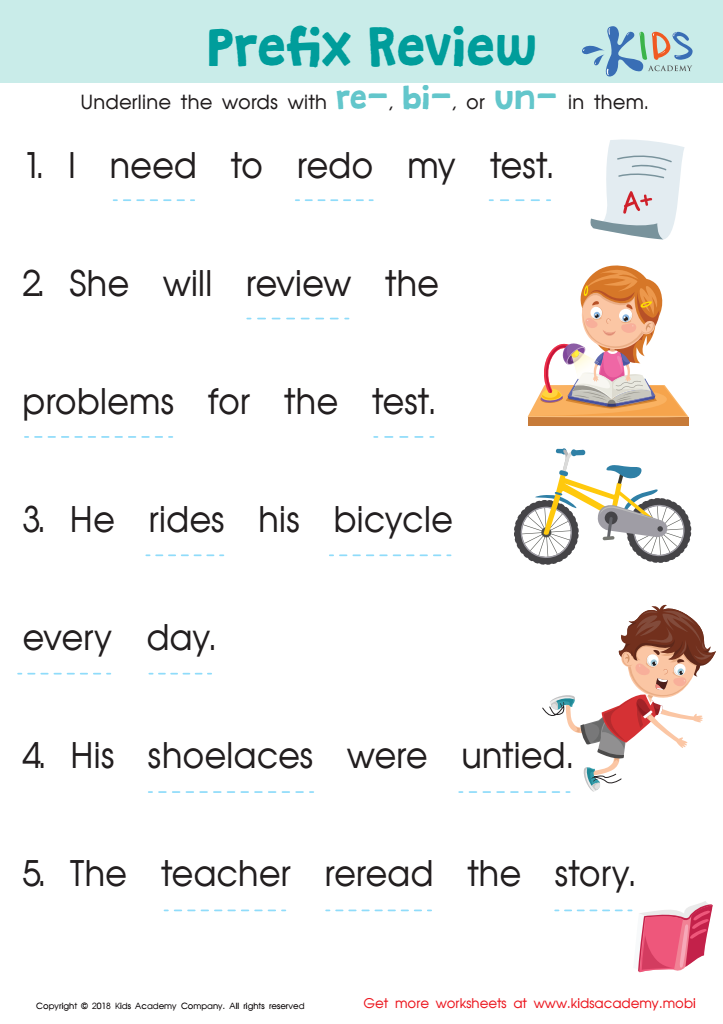
Prefix Review Worksheet
 Assign to My Students
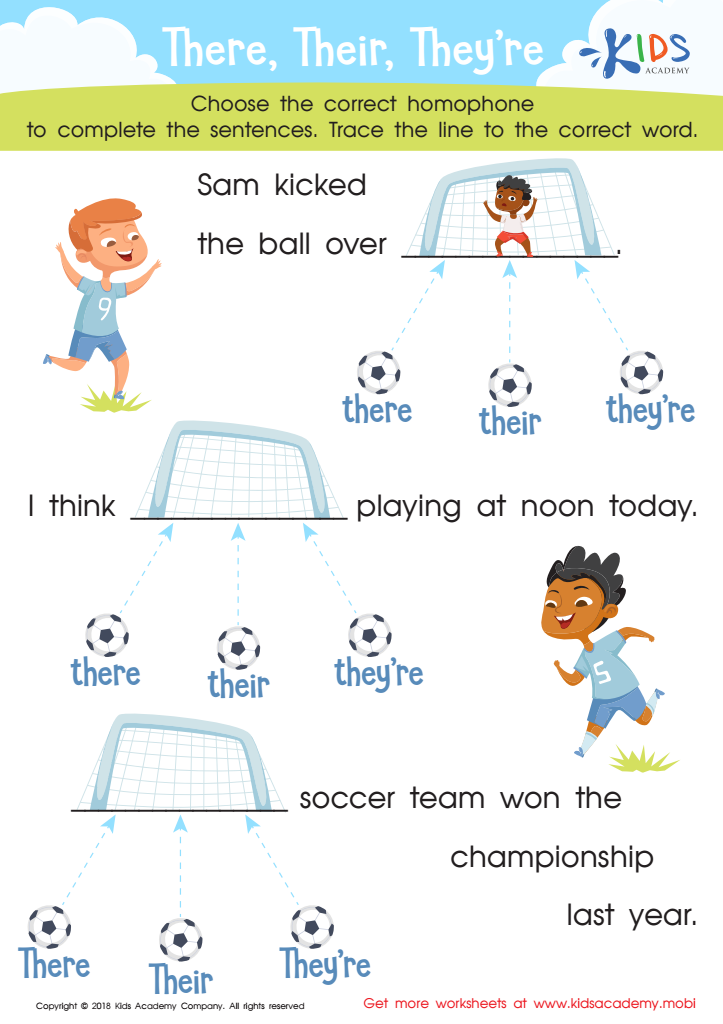
There, Their, They're Worksheet
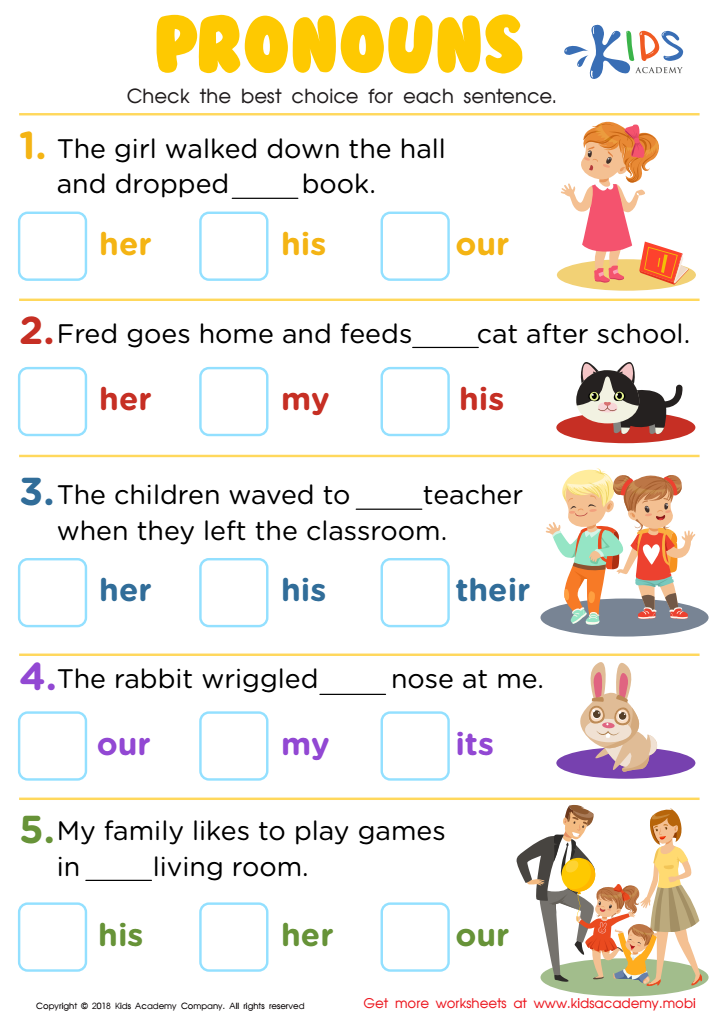
Pronouns Worksheet








Improving grammar skills in 8-year-olds is crucial for both parents and teachers because it forms the foundation for effective communication and lifelong learning. At this age, children are just beginning to develop their writing skills. Proper grammar helps them construct clear and understandable sentences, enabling them to express their thoughts accurately and confidently.
Underpinning academic success, grammar skills correlate strongly with reading comprehension and vocabulary development. As children understand and apply correct grammar, they also enhance their ability to decode complex texts. This comprehensive grasp of language is indispensable for succeeding in other subjects in school, such as science and social studies, where clear, precise writing becomes essential.
Moreover, strong grammar skills foster better social interactions. Children with good command over grammar can make their points during discussions more effectively and are less likely to be misunderstood. This can be immensely beneficial in building self-esteem and assertiveness in social contexts.
Involving parents in grammar learning not only supports classroom activities but also integrates daily learning routines — like storytelling or simple writing exercises at home. Thus, a combined effort from both parents and teachers nurturing grammar skills helps mold proficient writers and effective communicators, setting the stage for their future academic and personal success.








