
Vocabulary development Writing Worksheets for 8-Year-Olds
5 filtered results
Difficulty Level
Grade
Age
-
From - To
Subject
Activity
Standards
Enhance your child's vocabulary with our engaging writing worksheets designed specifically for 8-year-olds. These worksheets focus on expanding word knowledge and usage while fostering creativity through fun writing exercises. Each printable resource encourages children to explore new words, identify synonyms and antonyms, and practice using vocabulary in sentences. Ideal for reinforcing language skills in a structured yet enjoyable way, these activities support your child's learning journey. Dive into our collection and watch your 8-year-old become a confident communicator, equipped with the tools to express themselves clearly and effectively. Perfect for both home and classroom environments!
Favorites
With answer key
Interactive
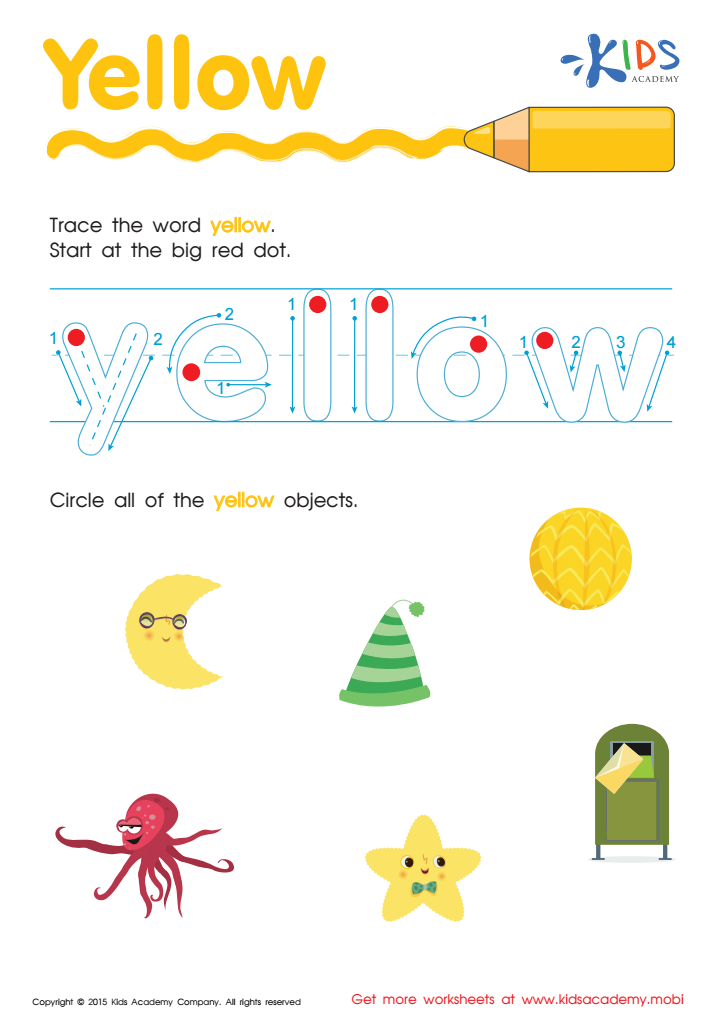
Yellow Tracing Color Words Worksheet
Tracing is a great way to start learning handwriting! Our printable worksheet helps your kindergartener practice and master the basics. They'll trace lines and fill in the word "yellow" with bright colors, sure to captivate and inspire them for more practice. Check out here for more tracing of color words.
 Assign to My Students
Yellow Tracing Color Words Worksheet
Worksheet
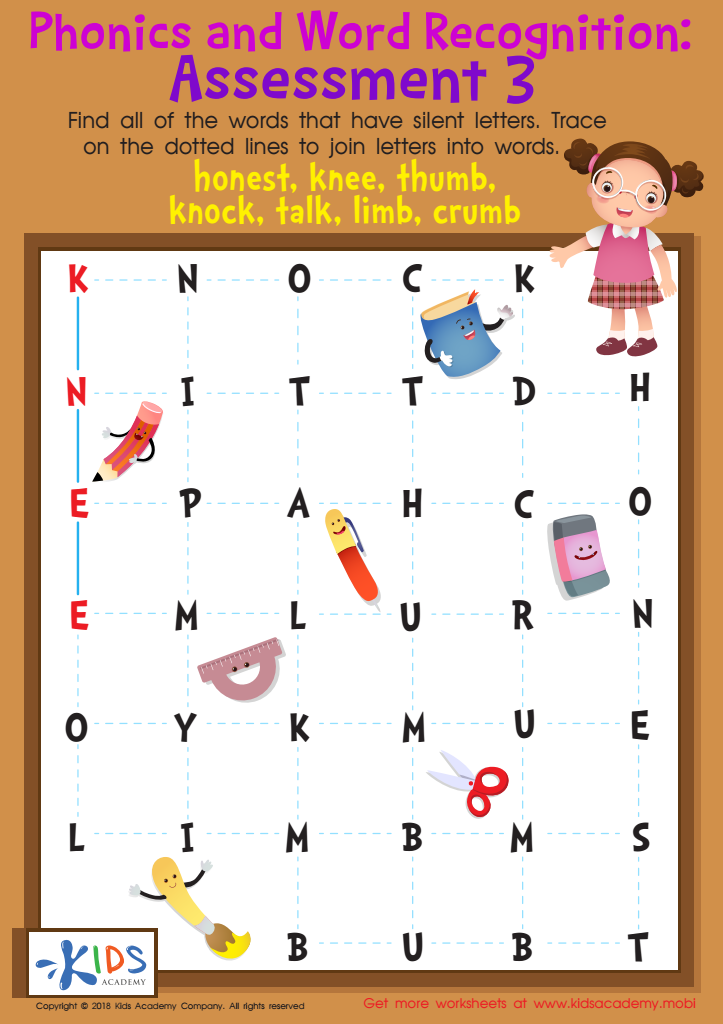
Phonics and Word Recognition: Assessment 3 Worksheet
Silent letters can be tricky for kids learning to read and write. Show them how they work with words like 'knee' and 'dumb'. Then, challenge them to come up with their own. Give them a worksheet with silent letters and trace the lines to join the letters into words.
Phonics and Word Recognition: Assessment 3 Worksheet
Worksheet
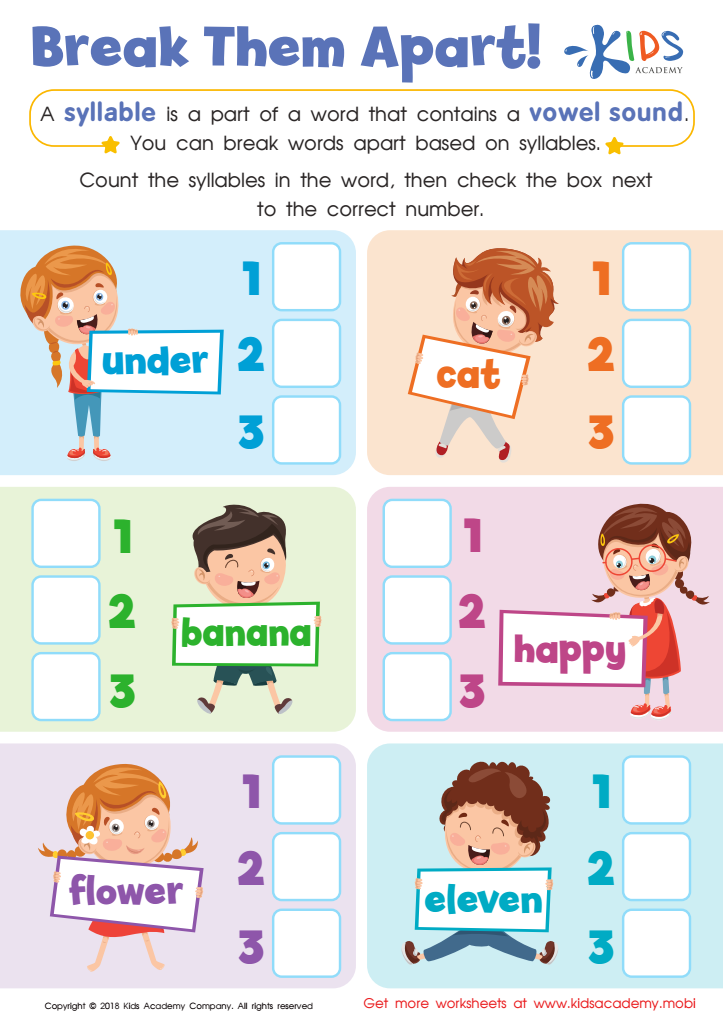
Reading: Break Them Apart Worksheet
See if students understand syllables with this fun worksheet. It teaches them that a syllable is a word part with a vowel sound. Kids read each word and choose how many parts it has. Doing this often helps them decode new words and gain confidence.
Reading: Break Them Apart Worksheet
Worksheet
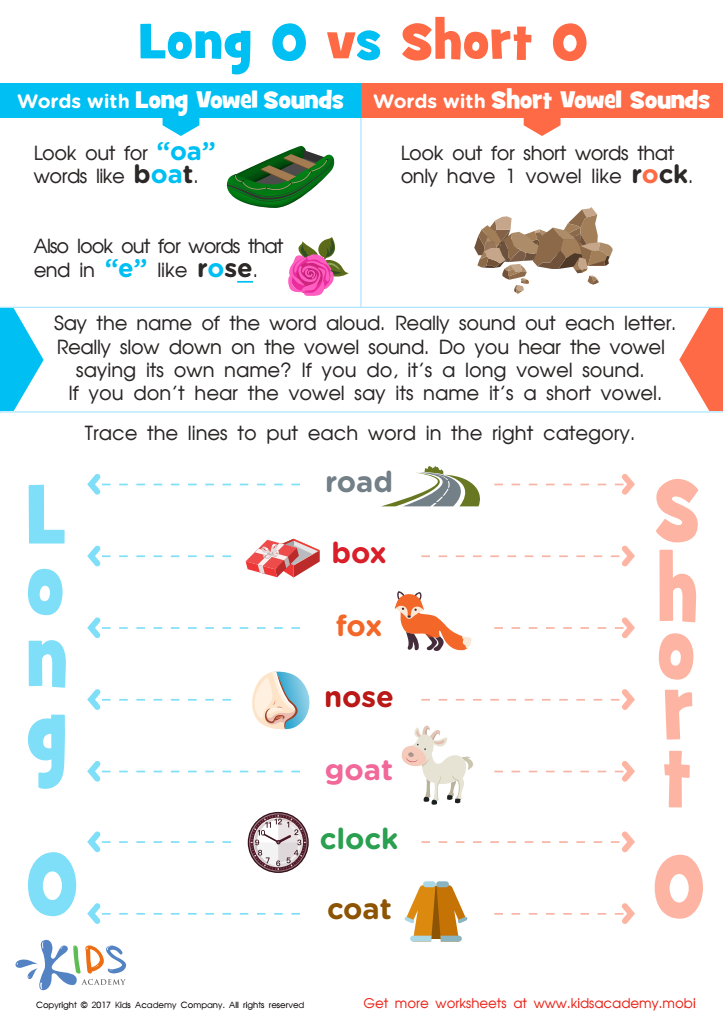
Long and Short Vowel O Spelling Worksheet
This colorful worksheet teaches kids to distinguish tricky "O" words. It's easy to spot the long "O" sound by looking for an extra vowel. Kids practice by viewing examples and sounding out each word. Help your child master long and short vowel "O" sounds!
Long and Short Vowel O Spelling Worksheet
Worksheet
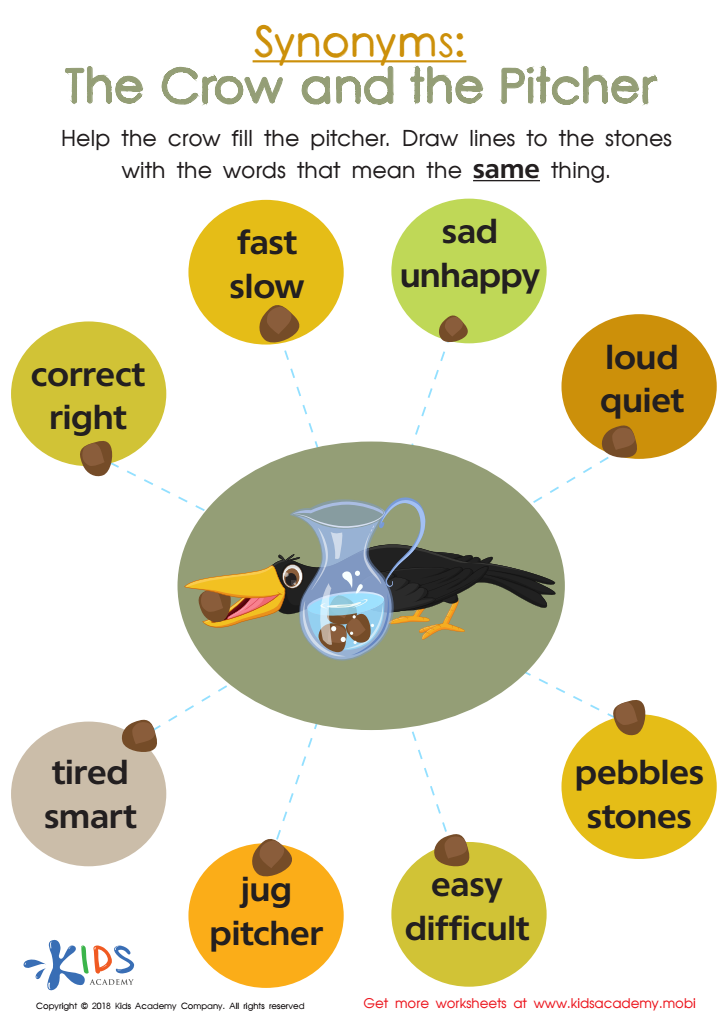
The Crow and the Pitcher Synonyms Worksheet
Give your child the building blocks for effective communication with an ELA lesson! Help the crow in this Kids Academy worksheet find the correct stones to fill the pitcher - only those next to synonym pairs! This is a fun way for kids to learn and expand their vocabulary and language skills.
The Crow and the Pitcher Synonyms Worksheet
Worksheet
Join Kids Academy for Free
Who is primarily going to use this learning content?





.jpg)

Vocabulary development is crucial for 8-year-olds, as it plays a pivotal role in their overall language skills and academic success. At this age, children are transitioning from learning to read to reading to learn, making vocabulary knowledge essential for comprehension and communication. A rich vocabulary enhances their ability to express thoughts clearly and creatively in writing, fostering self-expression and critical thinking.
Parents and teachers should care deeply about vocabulary development because it impacts a child's confidence and motivation in both writing and other subjects. A well-developed vocabulary allows students to engage more richly with texts, expanding their understanding and appreciation of literature. Additionally, strong vocabulary skills facilitate participation in discussions, collaborative projects, and various forms of writing—from stories to reports—thereby enhancing their learning experiences.
Moreover, a robust vocabulary lays a solid foundation for future academic achievement. As children progress in their education, a diverse vocabulary is linked to improved reading scores, writing proficiency, and even standardized test performance. Investing time and effort into vocabulary development now can lead to significant benefits that extend well beyond the classroom, preparing children for lifelong learning and success in various endeavors.








