
Understanding patterns Worksheets for 9-Year-Olds
19 filtered results
Difficulty Level
Grade
Age
-
From - To
Subject
Activity
Standards
Discover our engaging "Understanding Patterns Worksheets" designed for 9-year-olds to enhance their pattern recognition and logical thinking skills. These printable worksheets offer a range of activities that encourage children to identify, create, and extend patterns using shapes, colors, and numbers. By exploring various challenges, kids develop critical thinking and problem-solving abilities essential for their academic growth. Our worksheets are crafted to make learning fun, interactive, and effective, ensuring a comprehensive understanding of patterns in mathematics and everyday life. Perfect for classroom use or at-home practice, these resources are ideal for reinforcing key concepts while fostering a love for learning. Start exploring today!
Favorites
With answer key
Interactive
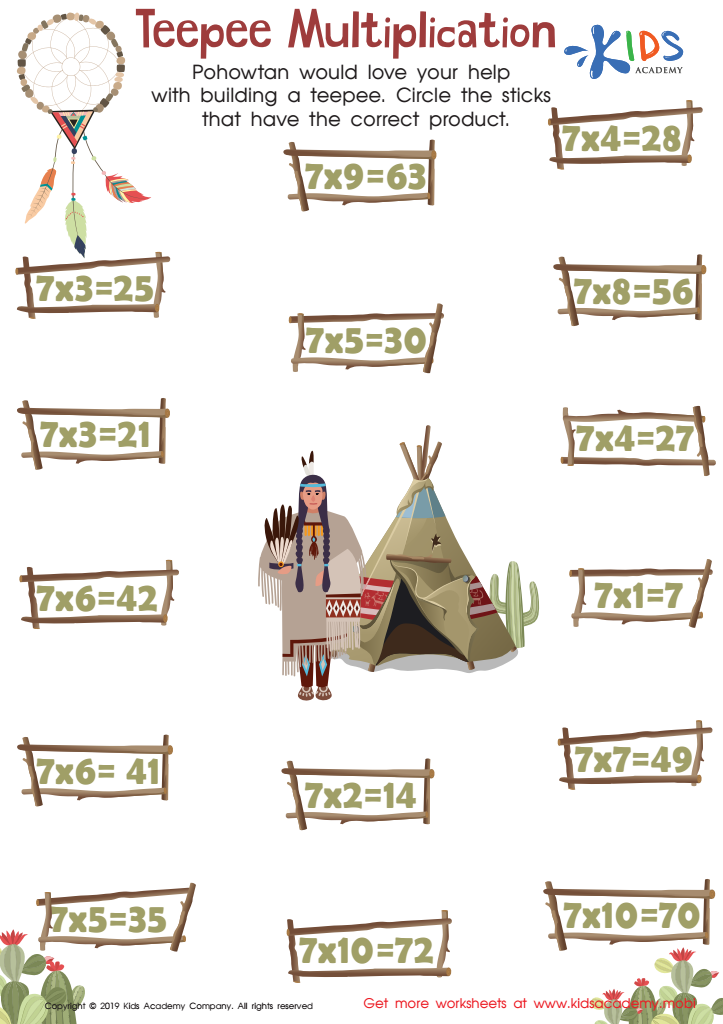
Teepee Multiplication Worksheet
Help the Native American man build his teepee by checking multiplication facts! Learners are given purpose and excitement with this fun math worksheet. Check each set of sticks, find, and circle the ones with the correct product to complete.
 Assign to My Students
Teepee Multiplication Worksheet
Worksheet
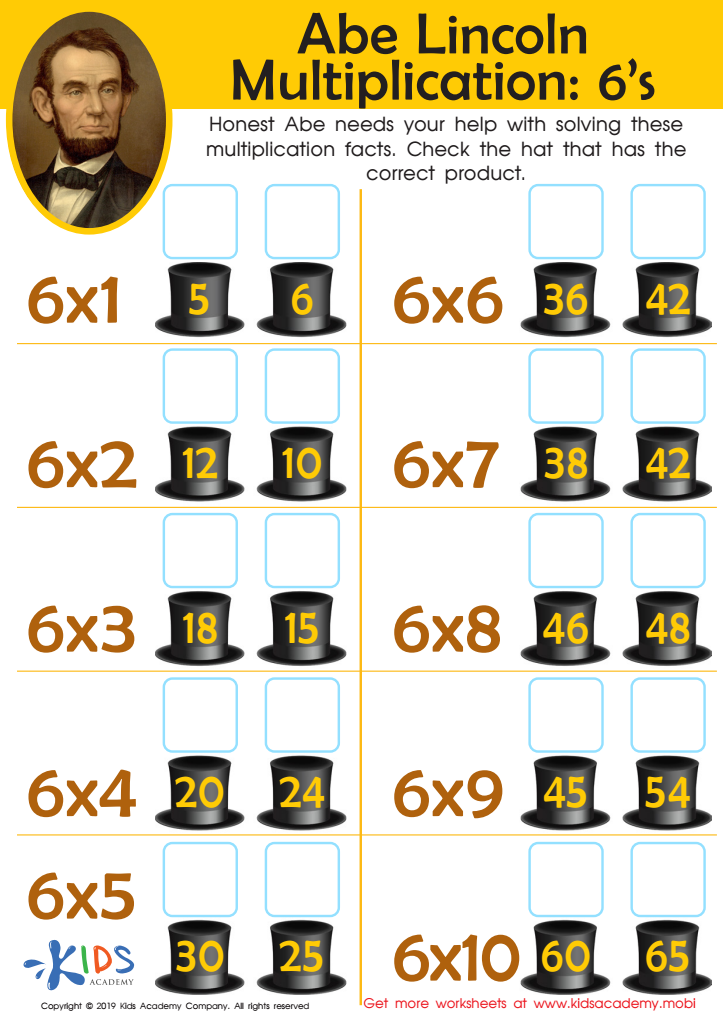
Abe Lincoln Multiplication: 6’s Worksheet
Abraham Lincoln is a key figure in US history. Remind your kids of his contributions and challenge them with this multiplication worksheet! Ask them to solve the facts in the picture and check the hat with the correct product.
Abe Lincoln Multiplication: 6’s Worksheet
Worksheet
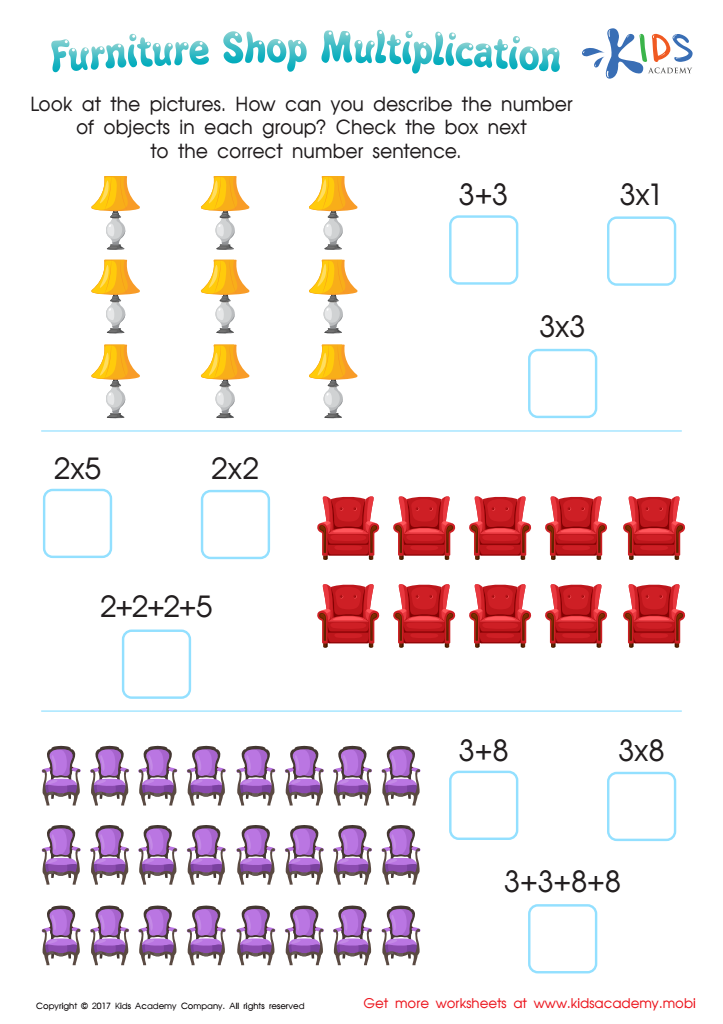
Furniture Shop Worksheet
Our multiplication PDF worksheets for 3rd grade use a visual strategy to help kids understand multiplication. Fun and colorful furniture engages kids as they use number sentences to describe each picture, aiding in memorizing multiplication tables.
Furniture Shop Worksheet
Worksheet
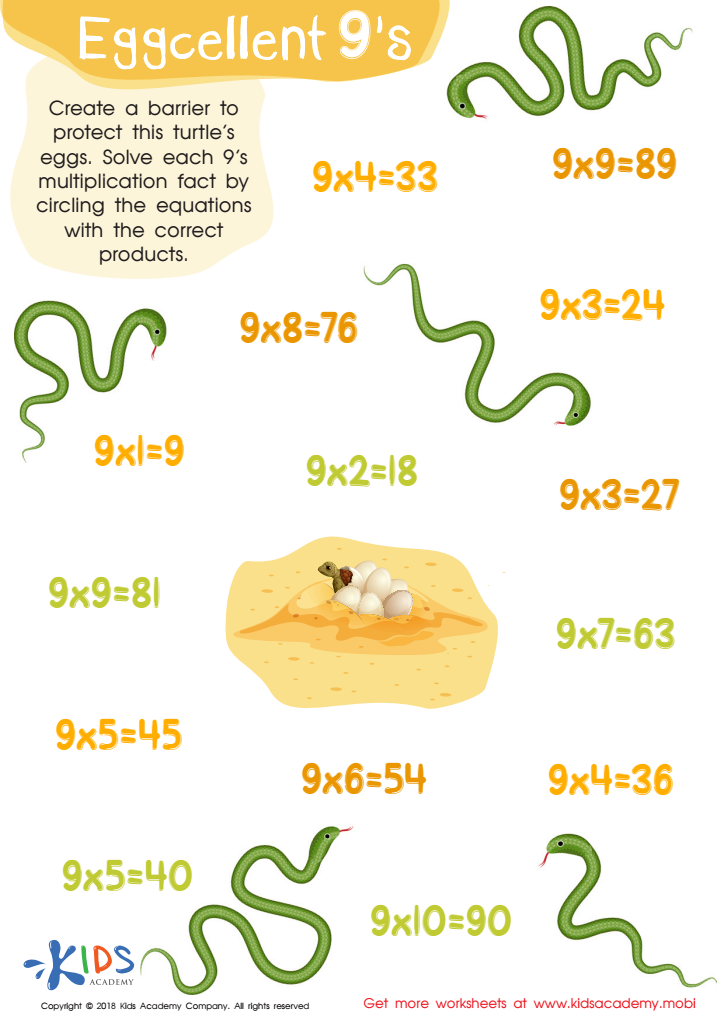
Eggcellent 9’s Worksheet
Help your kids save turtle eggs in this worksheet! Have them create a barrier by solving 9's multiplication facts, then circling the equations with the correct product. Finish up this exercise and show them how they can help protect turtle eggs from predators.
Eggcellent 9’s Worksheet
Worksheet
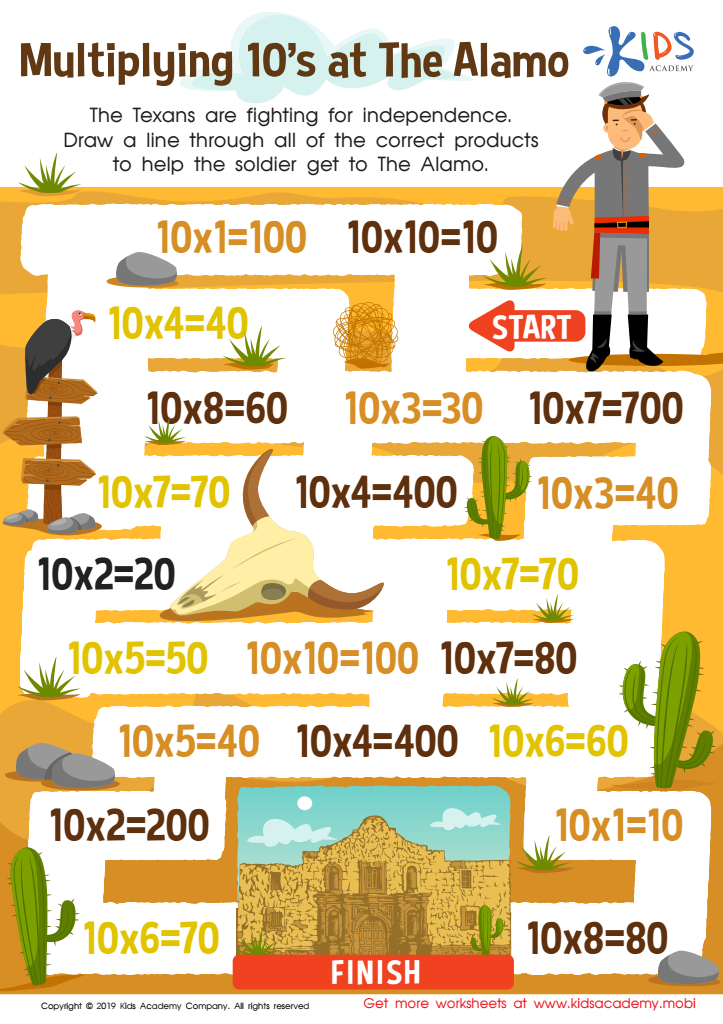
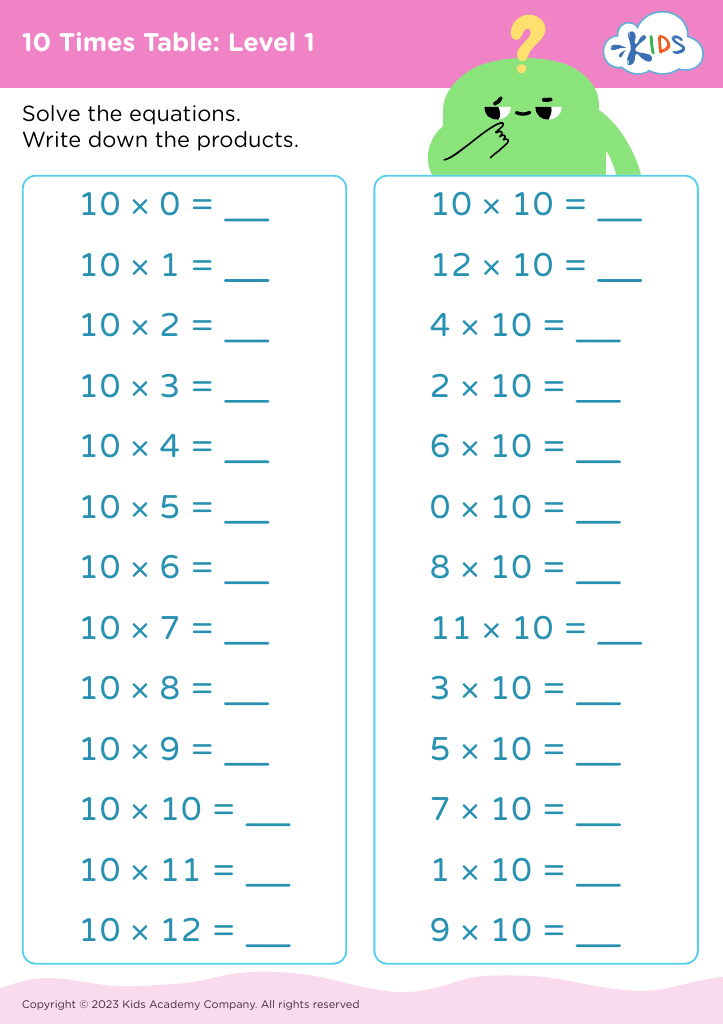
Multiplying 10’s at The Alamo Worksheet
Teach your kids easy tricks to simplify any multiplication problem. For example, when multiplying any number by 10, the result will always end in a zero. To help the Texans in this worksheet, draw a line through all of the correct products to get them to The Alamo.
Multiplying 10’s at The Alamo Worksheet
Worksheet
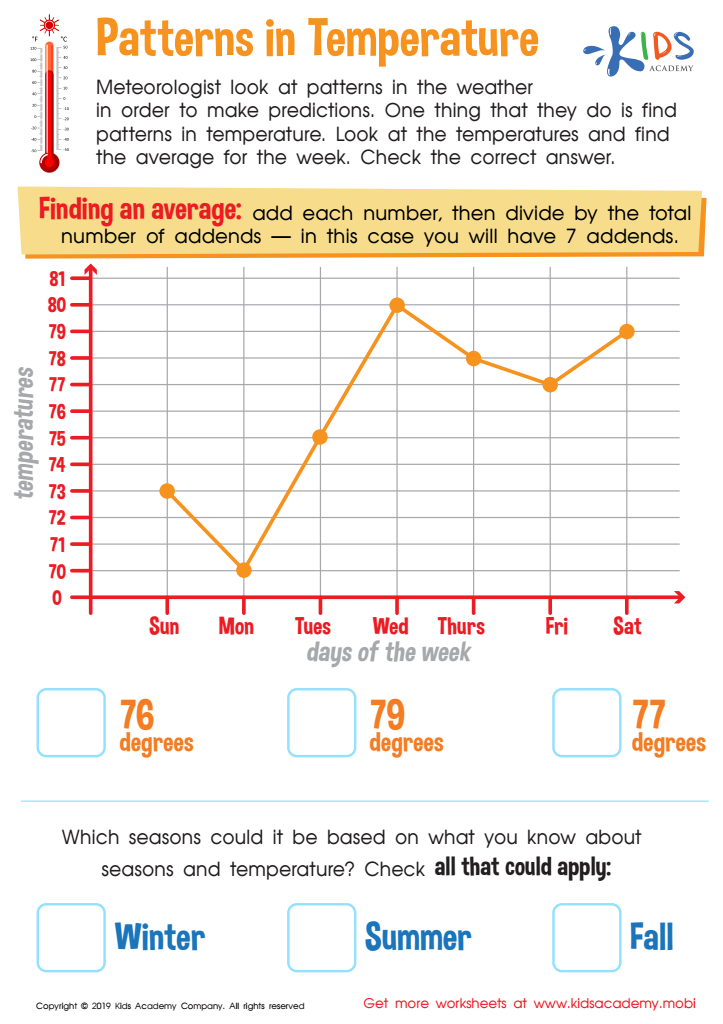
Patterns in Temperature Worksheet
Kids need to learn how to read and interpret data from graphs and charts. This free worksheet on temperature patterns helps them to do just that. They'll practice finding averages and answer questions in multiple-choice format. Plus, it provides a great learning experience!
Patterns in Temperature Worksheet
Worksheet
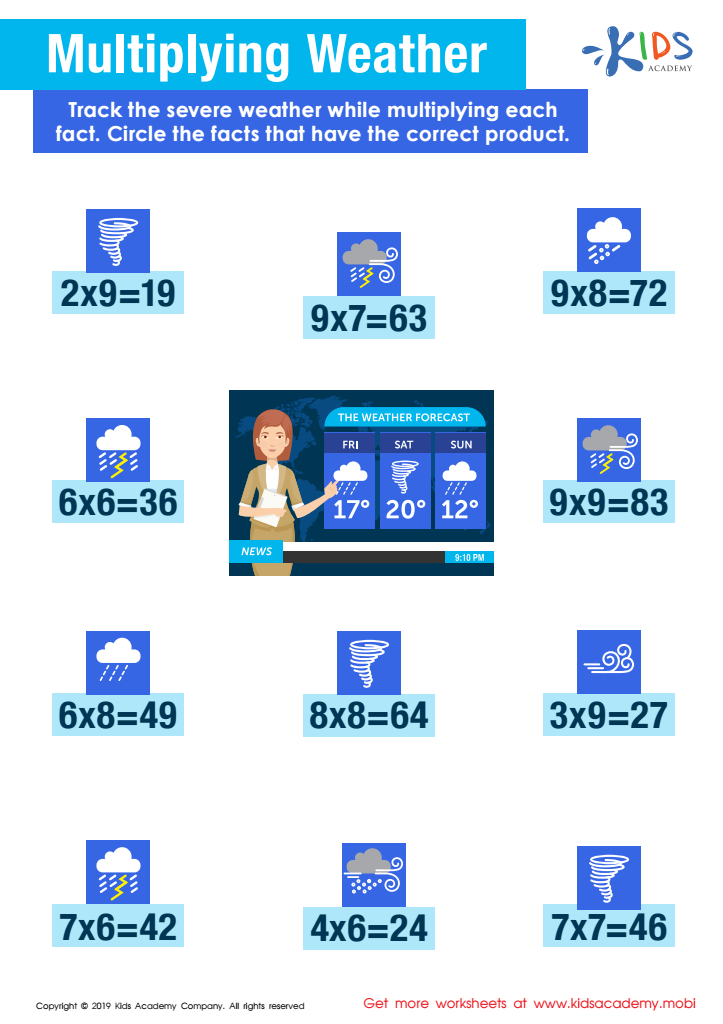
Multiplying Weather Worksheet
Most kids love playing outdoors, but weather can affect what we can do. Rain and snow can keep us from getting outside and even cancel school! Weather forecasters help us prepare for the day. In this worksheet, multiply facts to track severe weather and circle the ones with the right answer.
Multiplying Weather Worksheet
Worksheet
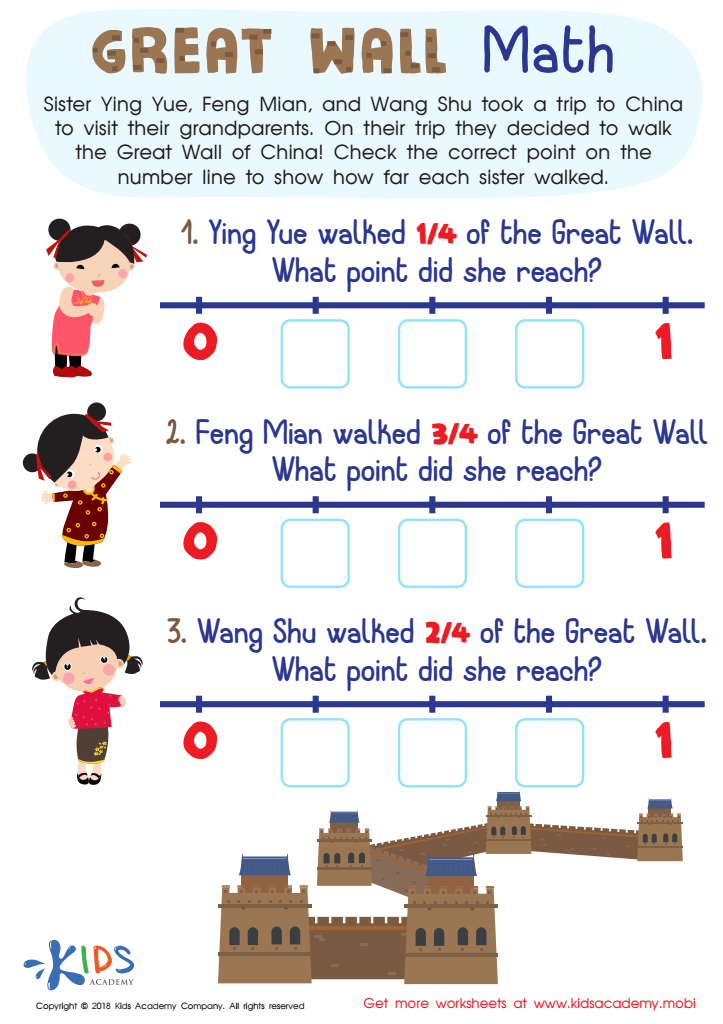
Great Wall Math Worksheet
Let your kids learn about fraction and history with this printout about the Great Wall of China. Three sisters take a trip to China to visit their grandparents and decide to walk the Great Wall. Ask them to study the pictures and pick the correct point on the number line to show how far each sister went. How about you: has your child ever been to China?
Great Wall Math Worksheet
Worksheet
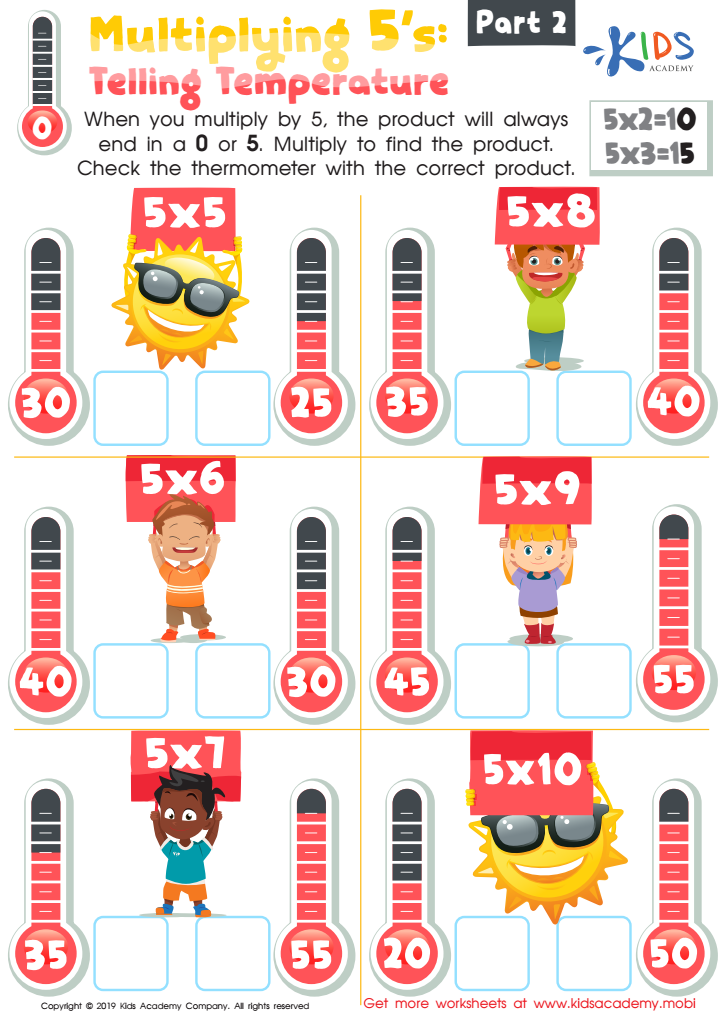
Multiplying 5’s: Telling Temperature Part 2 Worksheet
To help your child with multiplication, teach them some simple tricks. For example, when multiplying 10's the product always ends in a 0, and when multiplying by 5, the product will end in 0 or 5. Look at the problems in this worksheet and help your child find the product. Then, check the thermometer with the correct answer.
Multiplying 5’s: Telling Temperature Part 2 Worksheet
Worksheet
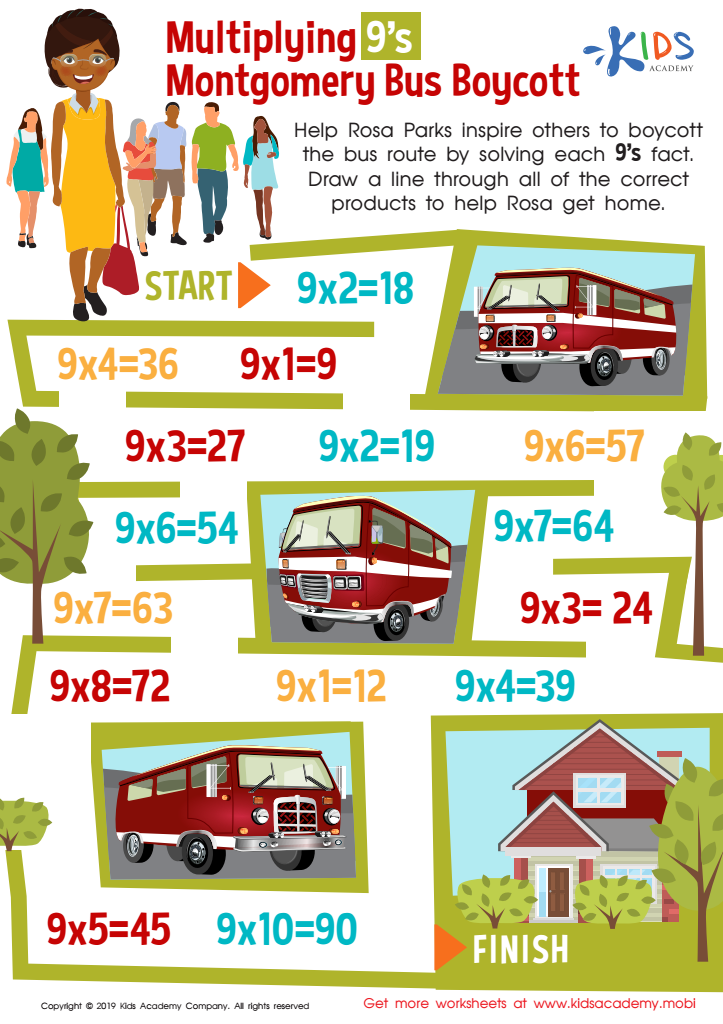
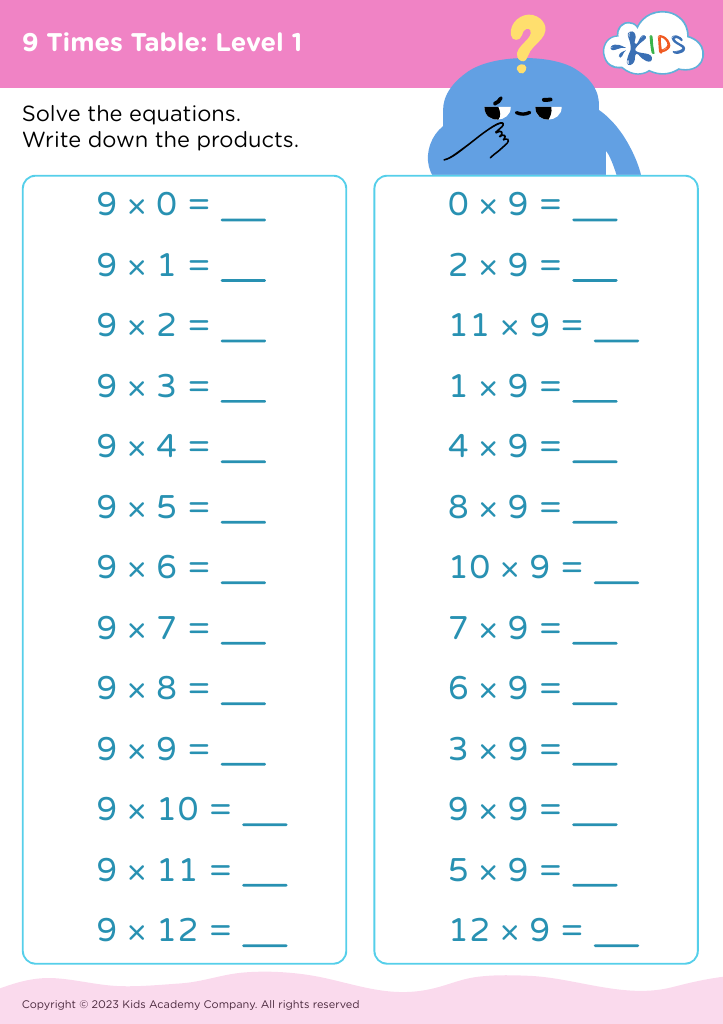
Multiplying 9’s Montgomery Bus Boycott Worksheet
As your students learn math, the numbers get bigger. This worksheet is great for learning the nine times table. Help Rosa Park get home - ask them to solve each multiplication fact, then draw a line through the correct products. Encourage your students to stand up for what's right!
Multiplying 9’s Montgomery Bus Boycott Worksheet
Worksheet
Join Kids Academy for Free
Who is primarily going to use this learning content?








Understanding patterns is essential for 9-year-olds as it lays the foundation for critical thinking and problem-solving skills. At this age, children are increasingly exposed to mathematics and science concepts that require pattern recognition, such as multiplication, algebra, and even scientific observations. Recognizing patterns helps them predict outcomes, decipher relationships, and develop logical reasoning.
Additionally, patterning plays a significant role beyond mathematics; it enhances literacy skills as children learn to notice themes, sequences, and sounds in language, reinforcing their reading and comprehension abilities. Engaging with patterns, whether through art, music, or everyday activities, promotes creativity while boosting cognitive development.
For parents and teachers, fostering an environment where patterns are explored can immensely benefit children’s confidence and engagement with learning. Using real-life examples like weather changes, seasons, or even daily routines can make learning about patterns relatable and fun. When children can identify patterns, they are more likely to excel academically and develop a love for learning. Ultimately, nurturing this skill assists in preparing them for more advanced subjects in school, ensuring they have a robust foundation for lifelong learning. Therefore, cultivating an understanding of patterns should be a priority in parents' and educators' approaches to child development.








