Understand number relationships Addition & Subtraction Worksheets for 9-Year-Olds
3 filtered results
-
From - To
Unlock your child's mathematical potential with our "Understand Number Relationships: Addition & Subtraction Worksheets for 9-Year-Olds." Designed to enhance their comprehension of number relationships, these worksheets focus on critical skills that lay the foundation for advanced math concepts. Kids will engage with a variety of fun and challenging activities that promote an intuitive understanding of addition and subtraction. This approach not only helps students grasp the connections between numbers but also boosts their confidence in problem-solving. Perfect for at-home learning or classroom reinforcement, our worksheets will inspire a love for math while strengthening essential arithmetic skills. Dive into learning today!
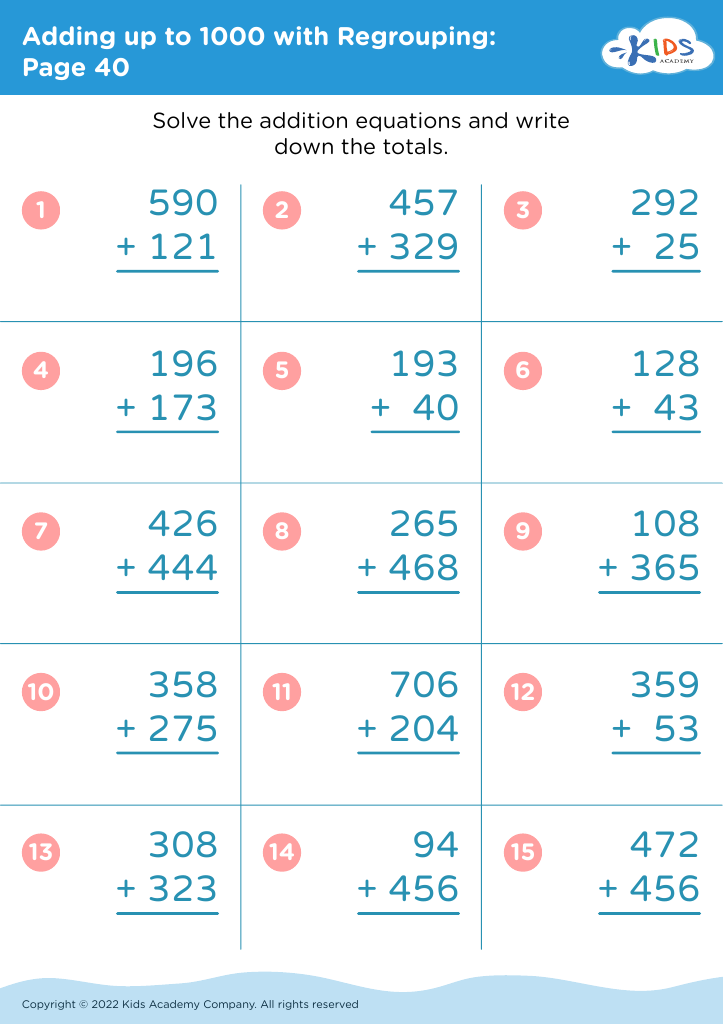
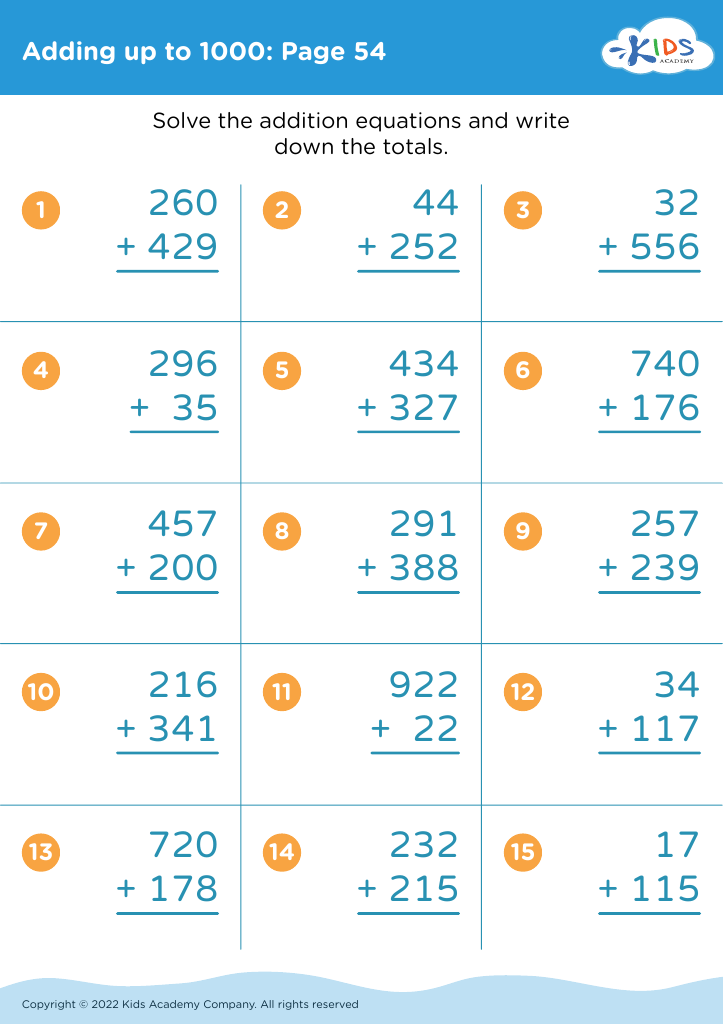
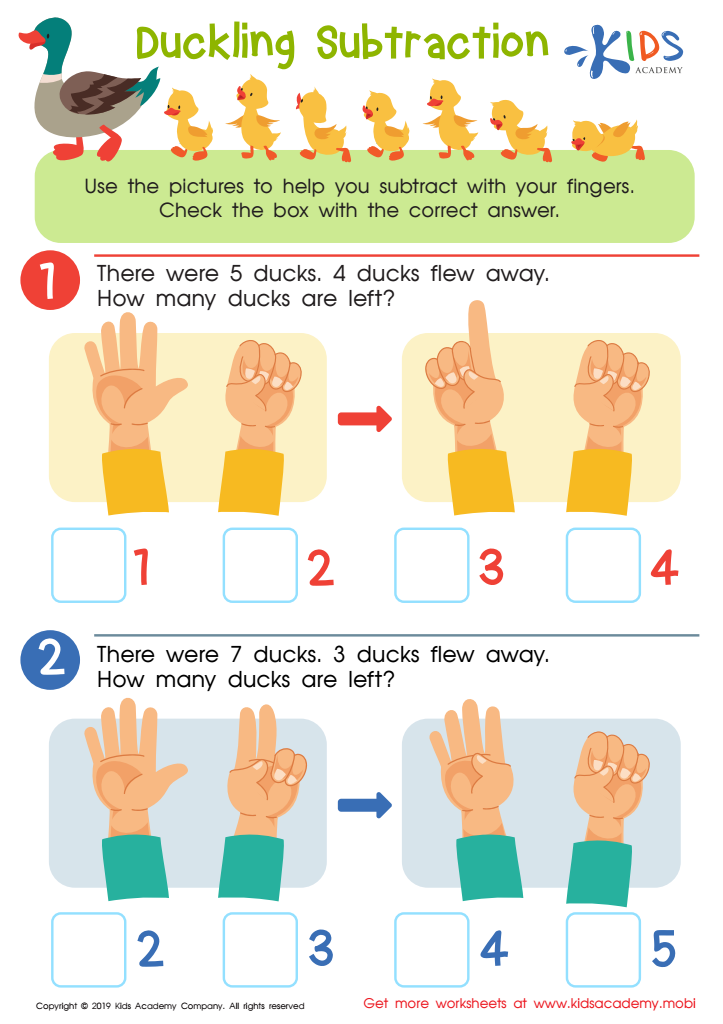
Duckling Subtraction Worksheet
 Assign to My Students








Understanding number relationships in addition and subtraction is crucial for 9-year-olds as it lays the foundation for their mathematical development. At this age, children transition from basic arithmetic to more complex problem-solving. Comprehending how numbers relate to one another helps children develop critical thinking skills. When they grasp concepts like the relationship between addition and subtraction (for instance, knowing that if 8 + 4 = 12, then 12 - 4 = 8), they build a stronger number sense that is essential for tackling advanced mathematics in the future.
Moreover, recognizing patterns and relationships enhances their ability to estimate and make predictions—skills that are valuable beyond the classroom. Parents and teachers should be invested in fostering this understanding, as it can boost a child’s confidence in their mathematical abilities, encouraging them to engage with numbers in everyday life.
Ensuring proficiency in these skills not only supports academic achievement but also equips children with critical life skills, such as budgeting, measurement, and problem-solving. When parents and teachers collaborate in emphasizing these concepts, they play a vital role in a child's overall cognitive development, paving the way for future academic and personal success.








