Visual Learning Addition & Subtraction Worksheets for 9-Year-Olds
6 filtered results
-
From - To
Discover our engaging Visual Learning Addition and Subtraction Worksheets designed specifically for 9-year-olds! These worksheets help young learners grasp essential math concepts through visually stimulating graphics, making tricky equations easy to comprehend. Our resources focus on strengthening problem-solving abilities while boosting confidence in mathematics. Ideal for classroom use or home practice, these worksheets reinforce addition and subtraction skills, enhancing visual learning. Encourage your child's mathematical journey with fun, interactive tasks that motivate and inspire learning. Explore our collection today and watch your 9-year-old master math with enthusiasm and enjoyment! Suitable for various learning styles and perfect for self-paced study.
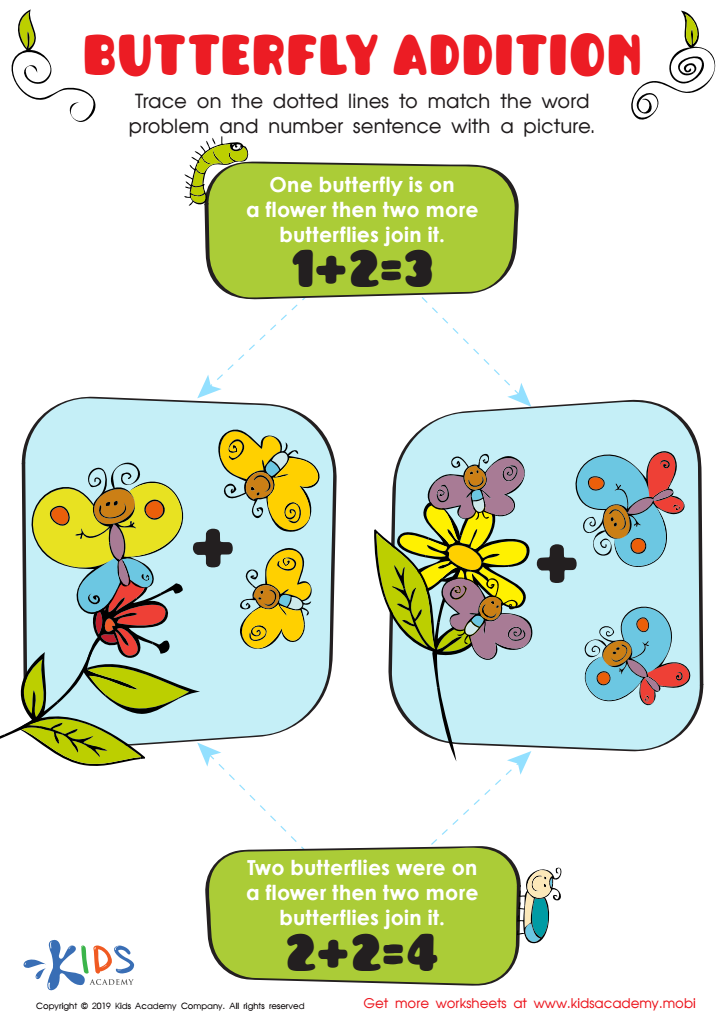
Butterfly Addition Worksheet
 Assign to My Students
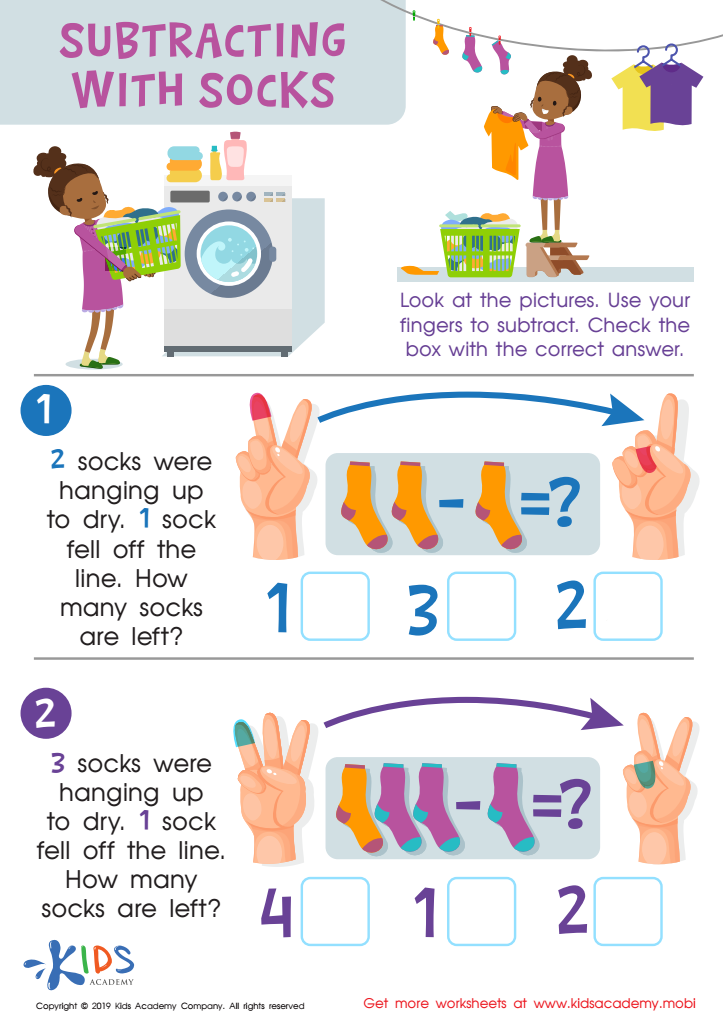
Subtracting Socks Worksheet
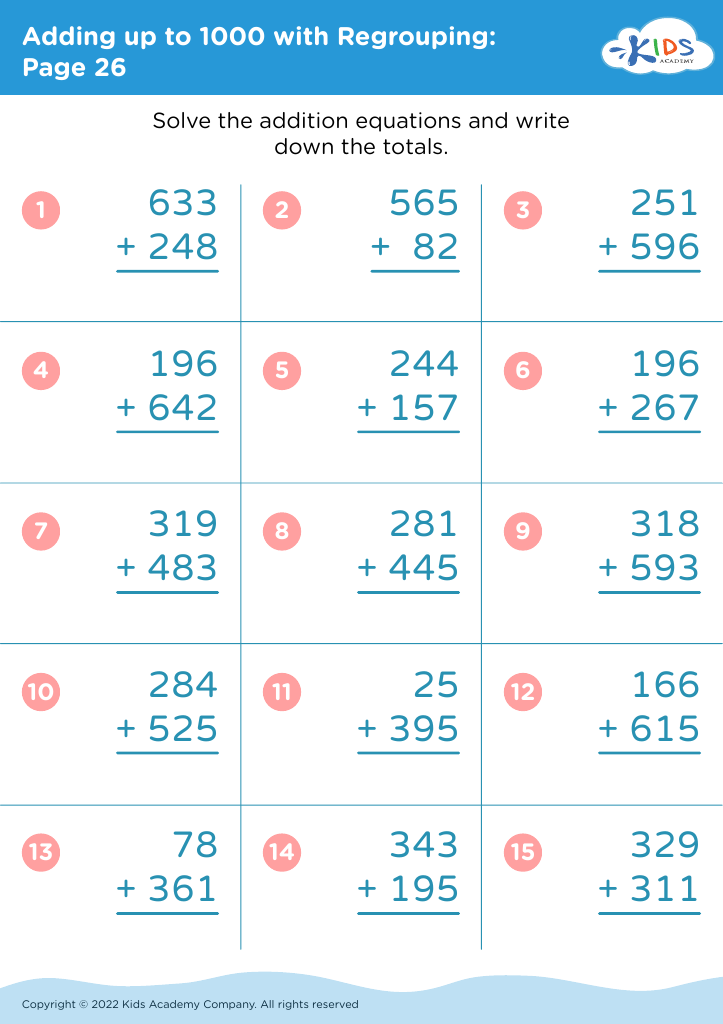
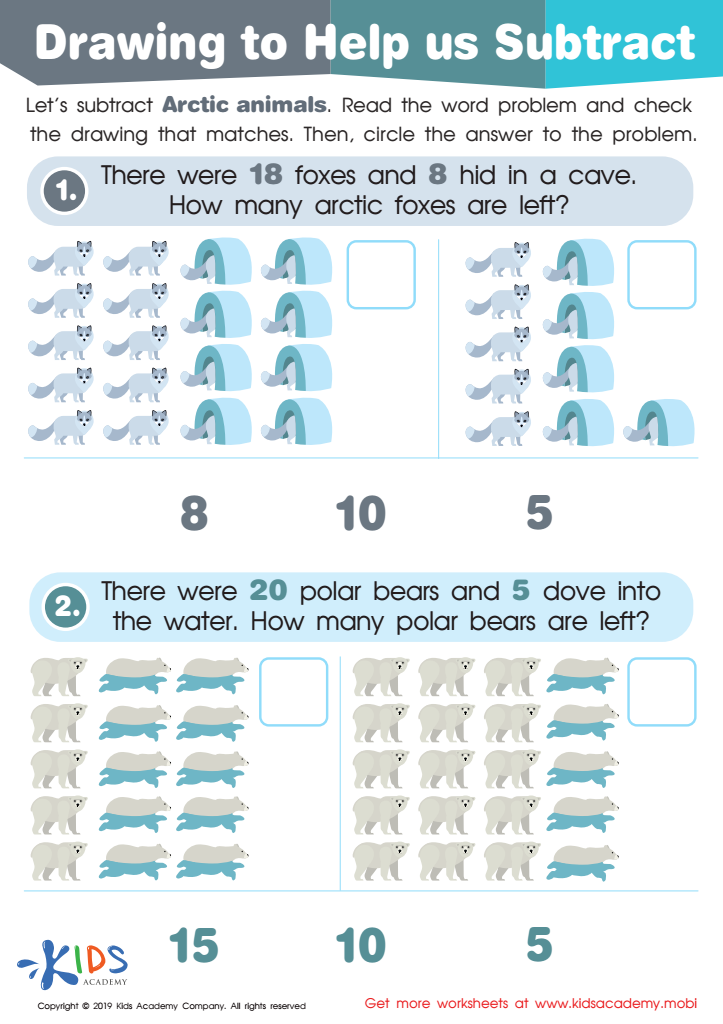
Drawing to Help Us Subtract Worksheet
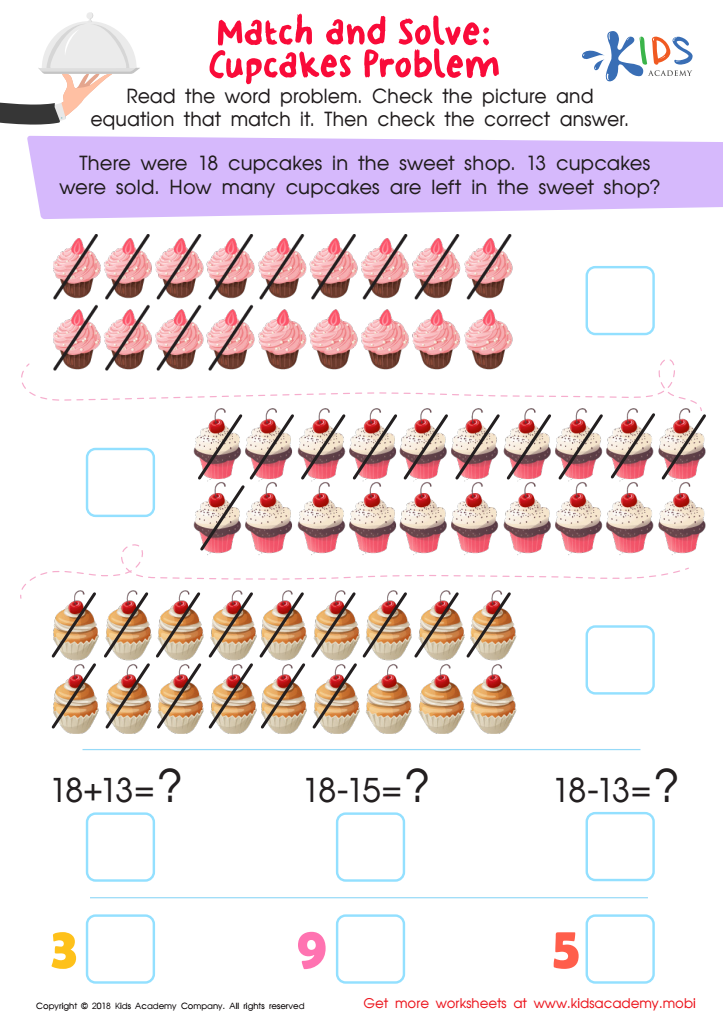
Match and Solve: Cupcakes Problem Worksheet
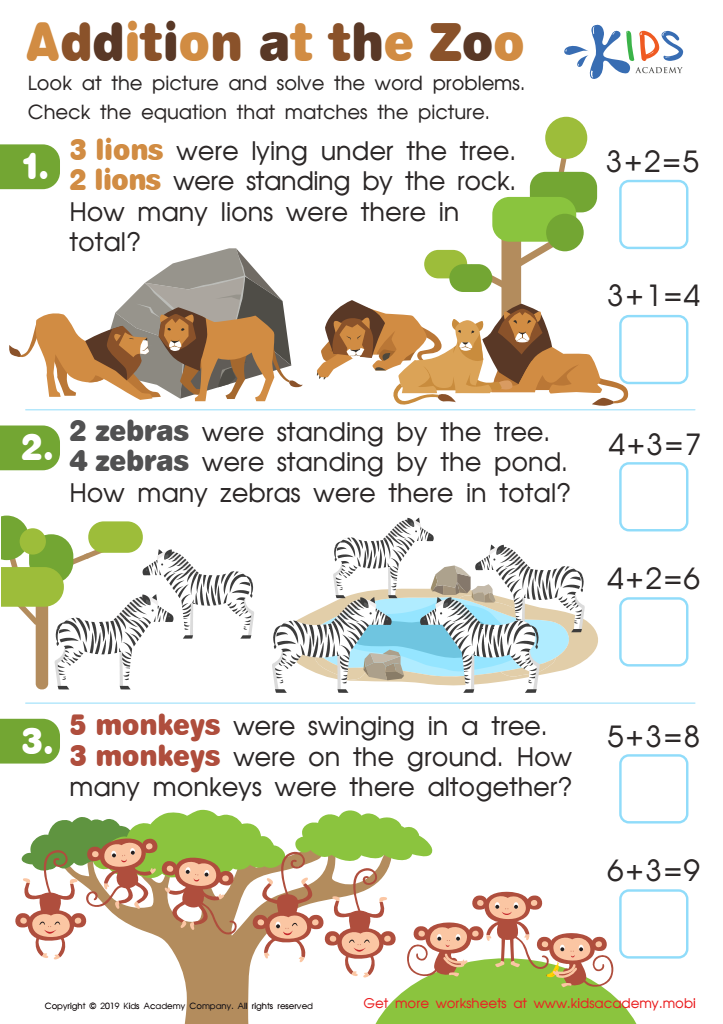
Addition at the Zoo Worksheet








Visual learning addition and subtraction is crucial for 9-year-olds as it harnesses their developmental stage, where they start to think more abstractly but still benefit from tangible, concrete representations. Engaging children in visual methods—using diagrams, charts, manipulatives, or illustrations—can significantly enhance their understanding and retention of mathematical concepts.
Parents and teachers should care about this approach because visual learning caters to diverse learning styles. Not every child grasps math concepts through traditional methods; some may struggle with purely numerical problem-solving. Visual aids make mathematics more accessible and intuitive, aiding in the mastery of fundamental skills critical for future mathematical learning.
Moreover, utilizing visual tools encourages critical thinking and problem-solving skills. Children learn to visualize numbers and the relationships between them, fostering deeper comprehension rather than rote memorization. This method also nurtures a positive attitude toward mathematics, reducing anxiety and building confidence.
Integrating visual learning into the curriculum not only enriches a child’s academic journey but also prepares them for higher-level math, enhancing their overall educational experience. Therefore, both parents and teachers play an essential role in advocating for and implementing these strategies in learning environments.








