Understanding area Geometry Worksheets for 9-Year-Olds
3 filtered results
-
From - To
Welcome to our "Understanding Area Geometry Worksheets" for 9-year-olds! These engaging and interactive worksheets are designed to help young learners grasp the concept of area through practical exercises and playful challenges. With colorful visuals and clear instructions, students will explore different shapes, learn to calculate area, and apply their skills to real-world scenarios. Our resources cater to various learning styles, ensuring every child can build a solid understanding of geometry. Perfect for both classroom and home use, these worksheets make learning about area fun and accessible. Start your child's mathematical journey today and watch their confidence grow!
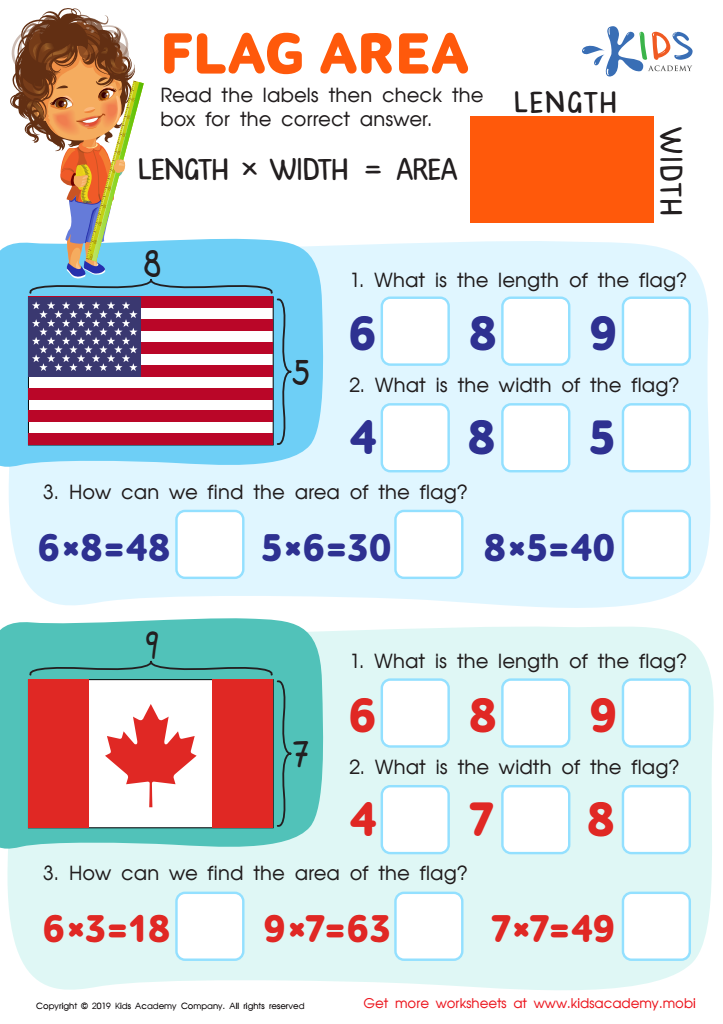
Flag Area Worksheet
 Assign to My Students











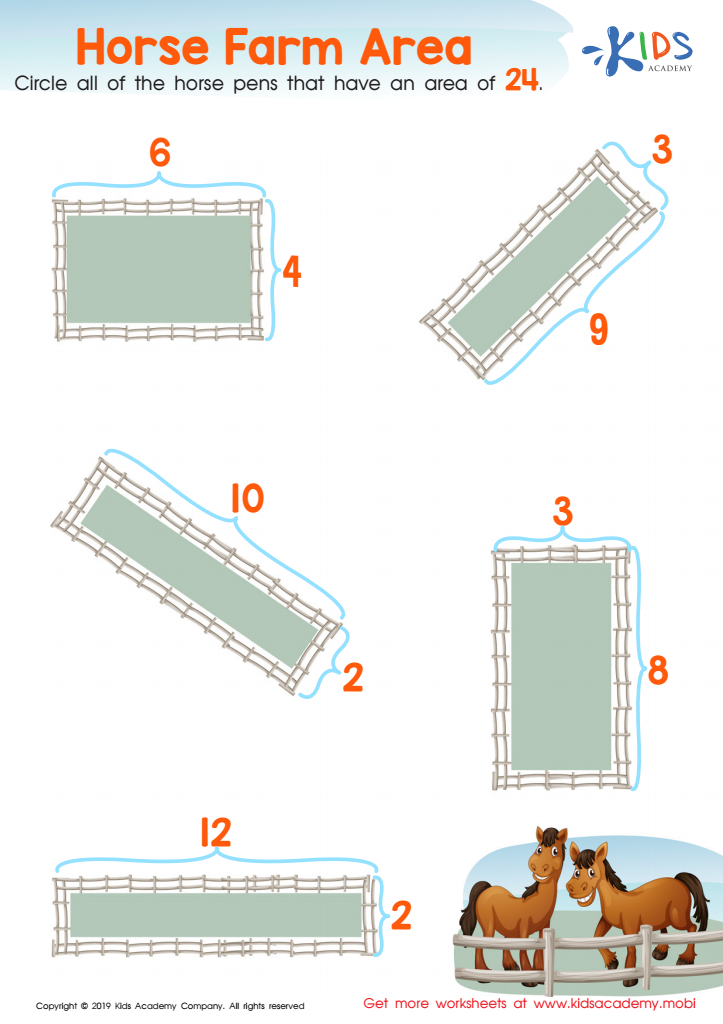
Horse Farm Area Worksheet
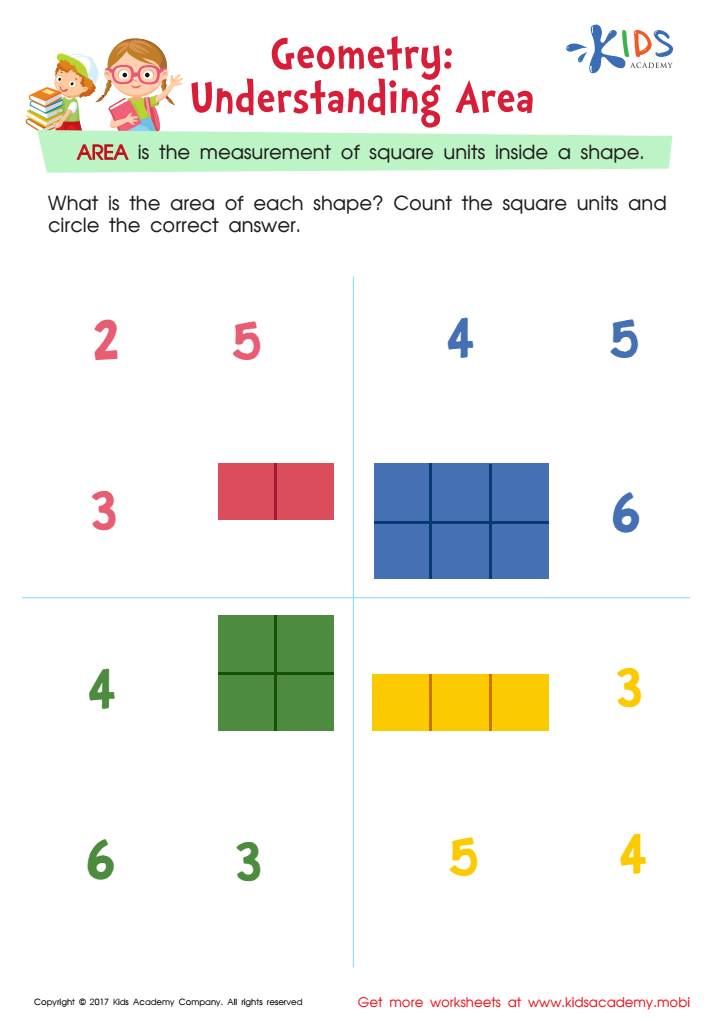
Understanding Area Worksheet








Understanding area and geometry is crucial for 9-year-olds as it lays the foundation for their mathematical skills and reasoning. At this age, children transition from basic arithmetic to solving more complex problems, and geometry is central to this development. Learning about area helps them grasp essential concepts such as measurement, spatial reasoning, and problem-solving skills.
When parents and teachers emphasize geometry and area, they enable children to visualize and manipulate shapes, which enhances their cognitive abilities. For instance, understanding how to calculate the area of a rectangle or square fosters critical thinking and encourages them to explore the world around them, leading to improved observational skills.
Moreover, geometry is often applicable to real-world scenarios, such as understanding space in their home or during outdoor activities. This practical application makes learning engaging and relevant, particularly in subjects like science and art.
Lastly, a strong foundation in geometry and area cultivates confidence and sets the stage for more advanced math topics in the future. By encouraging interest and proficiency in these concepts, parents and teachers actively contribute to a child's overall academic success and their ability to navigate a world that increasingly relies on mathematical understanding.








