Problem-Solving Skills Math Worksheets for 9-Year-Olds - Page 5
102 filtered results
-
From - To
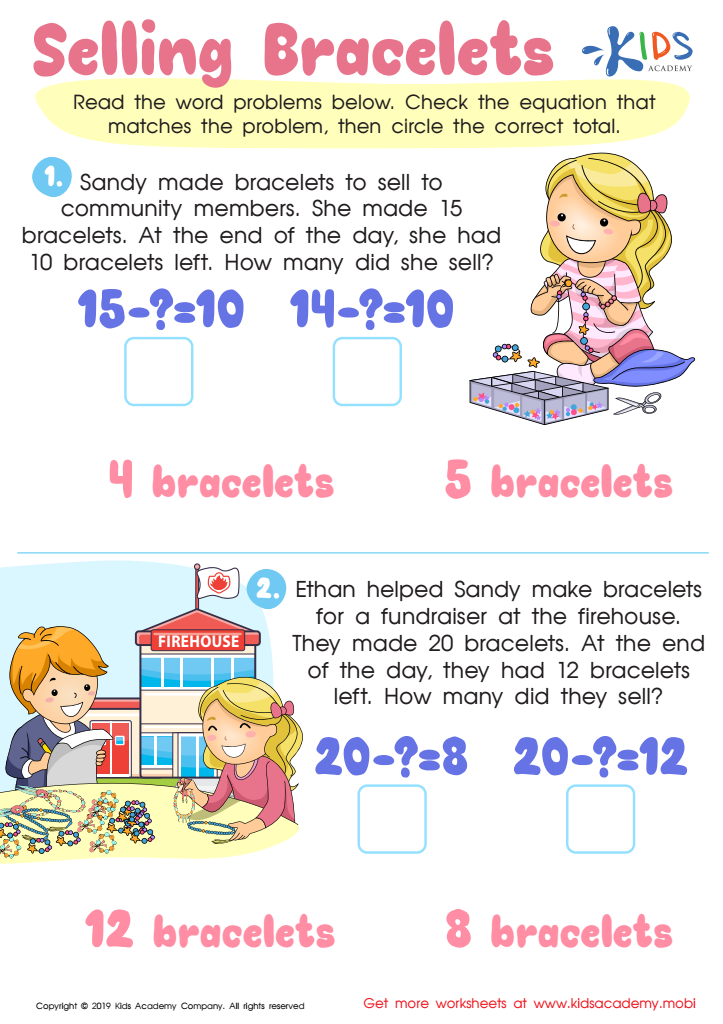
Selling the Bracelets Worksheet
 Assign to My Students
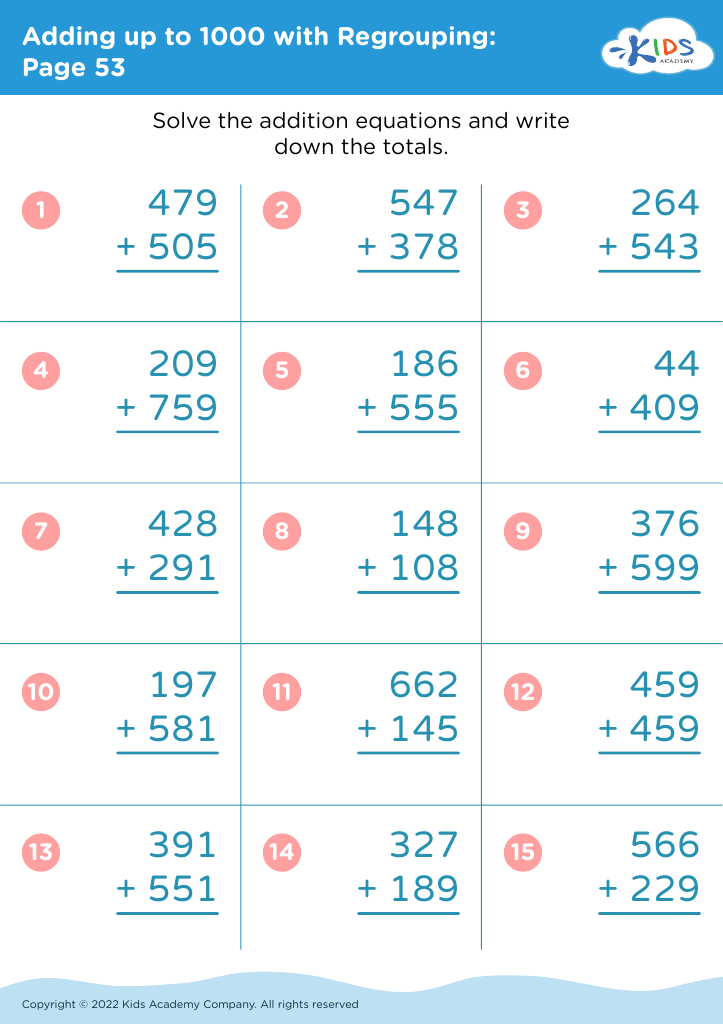
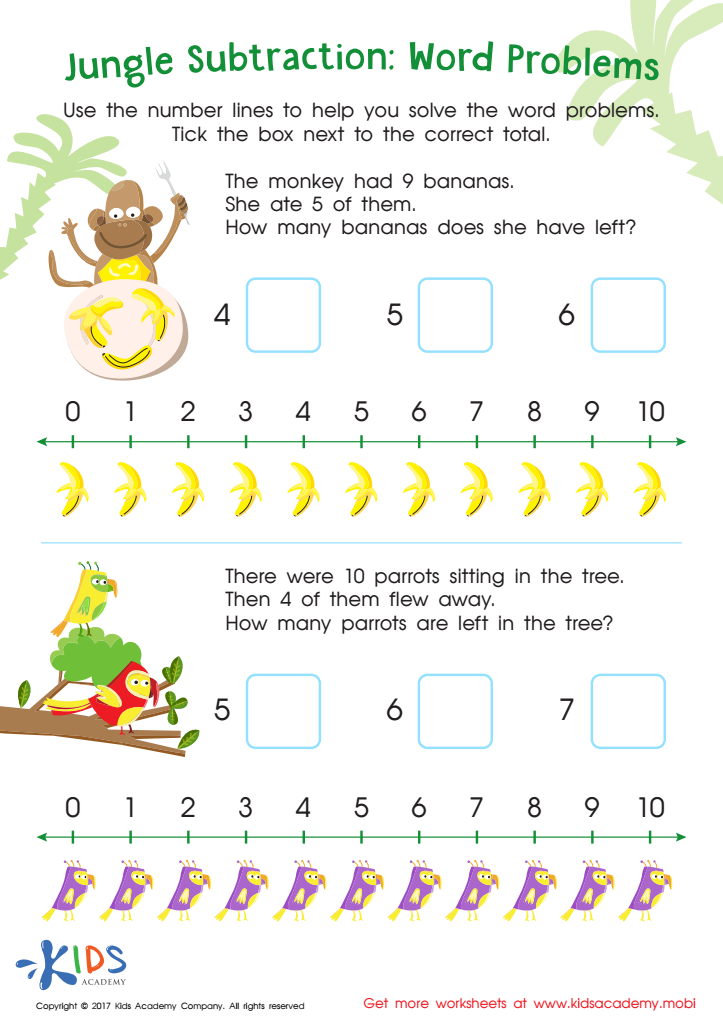
Jungle Subtraction Word Problems Substraction Worksheet
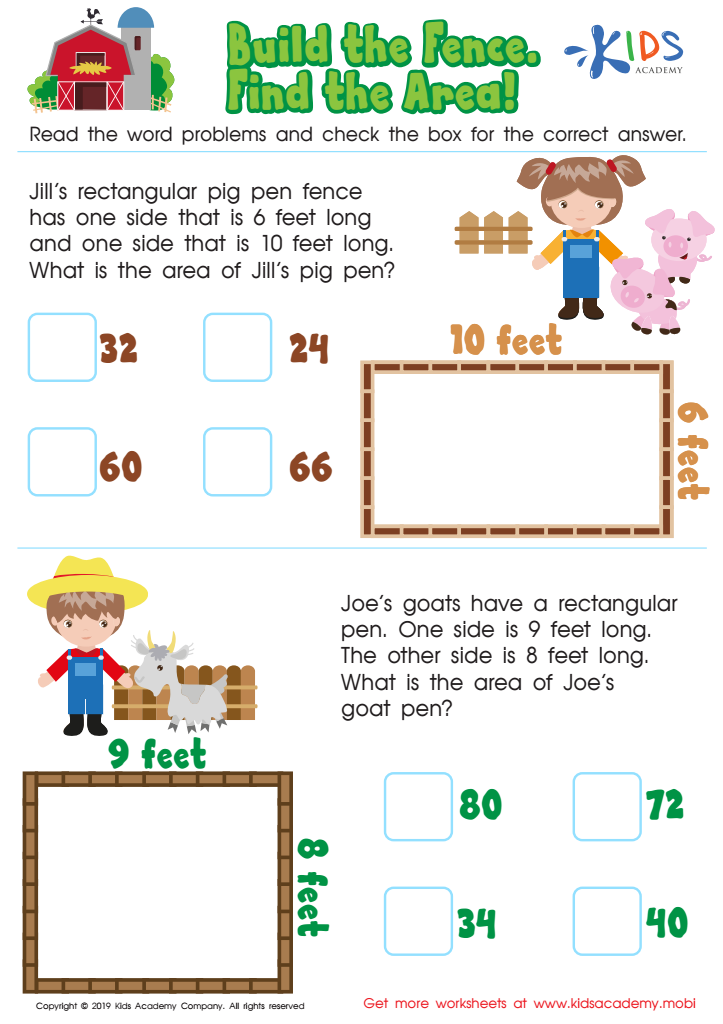
Build the Fence, Find the Area Worksheet
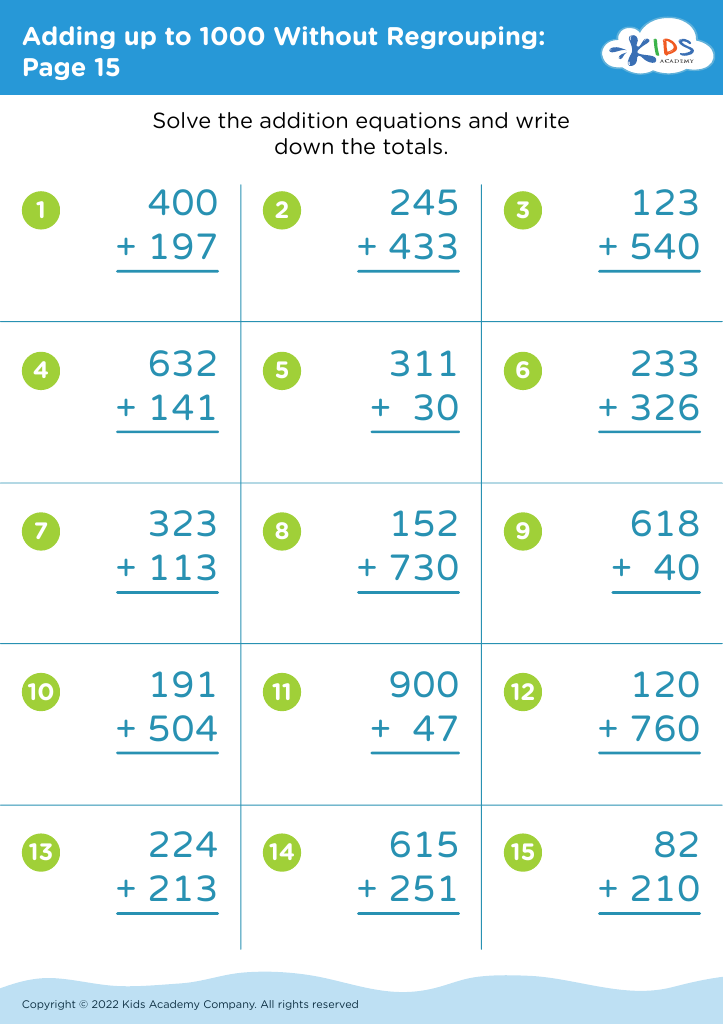
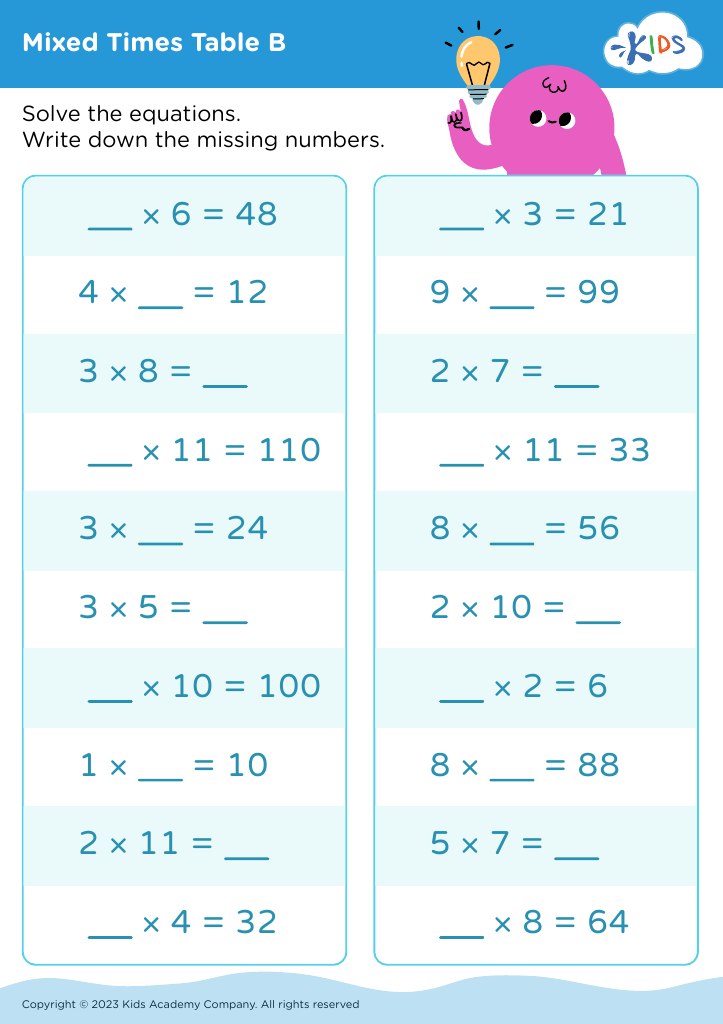








Problem-solving skills in mathematics are crucial for 9-year-olds as they lay the foundation for critical thinking, analytical skills, and real-world applications. At this age, children are transitioning from basic arithmetic to more complex concepts, making the development of these skills essential. Engaging children in problem-solving helps them learn to approach challenges methodically, break them down into manageable parts, and develop persistence.
Parents and teachers should care because these skills contribute significantly to a child's academic performance across all subjects, not just math. Strong problem-solving abilities enhance creativity and innovation, preparing children for future challenges. Moreover, these skills foster confidence and independence, enabling children to tackle complex tasks without fear of failure.
Beyond academics, the ability to solve problems effectively is crucial in everyday life–from managing personal finances to navigating social situations. By nurturing problem-solving skills, parents and teachers equip children with tools essential for lifelong learning and success. Therefore, it's vital to create opportunities for young learners to practice and develop these skills through engaging activities, discussions, and encouraging questions. Encouraging a growth mindset in problem-solving reinforces resilience—a key trait for both academic success and personal development.








