
Simplifying Fractions Math Worksheets for 9-Year-Olds
10 filtered results
Difficulty Level
Grade
Age
-
From - To
Subject
Activity
Standards
Explore our engaging and educational simplifying fractions math worksheets designed specifically for 9-year-olds! These interactive worksheets help young learners understand and master the concept of simplifying fractions through fun activities and clear explanations. Kids will develop their math skills with practice problems that encourage them to identify common factors and reduce fractions to their simplest forms. Our worksheets are tailored to support classroom learning or at-home practice, making math enjoyable and accessible. Enhance your child's mathematical confidence and understanding with our resources, ensuring they build a strong foundation in fractions and prepare for more complex math concepts ahead.
Favorites
With answer key
Interactive
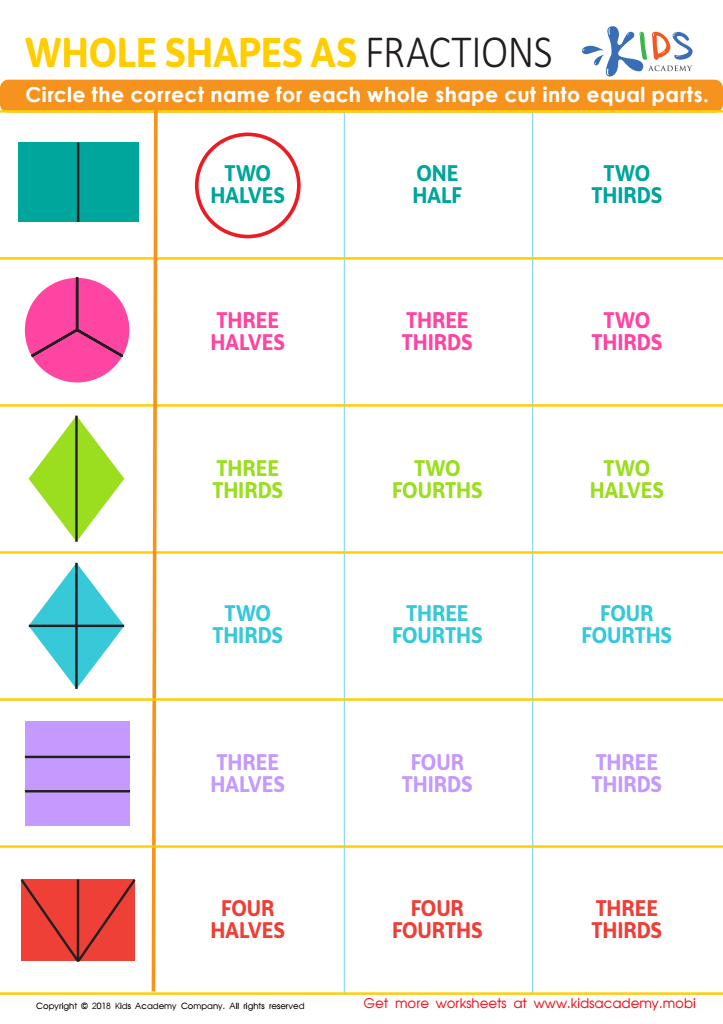
Whole Shapes as Fractions Worksheet
Introduce your child to fractions! After they can draw whole shapes, have them represent them as fractions using a simple worksheet. This will help improve their understanding of naming whole shapes cut into equal parts.
 Assign to My Students
Whole Shapes as Fractions Worksheet
Worksheet
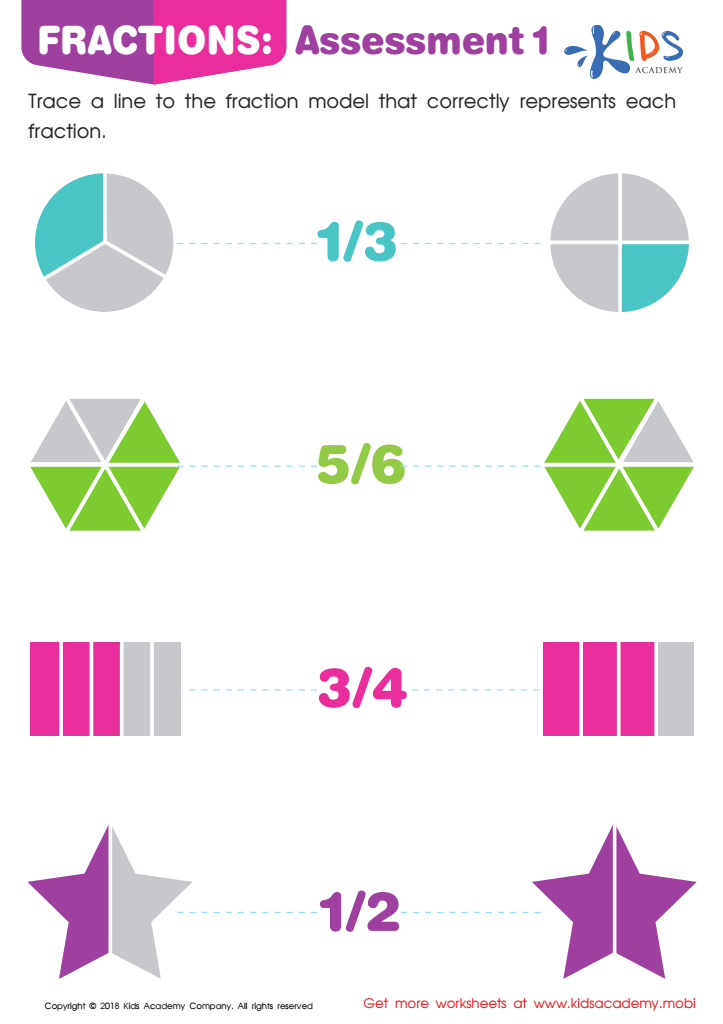
Fractions: Assessment 1 Worksheet
Master fractions easily with this worksheet! It has four sets of fraction models and fraction equations with two models each. Guide your kids to trace a line to the correct fraction model for each equation.
Fractions: Assessment 1 Worksheet
Worksheet
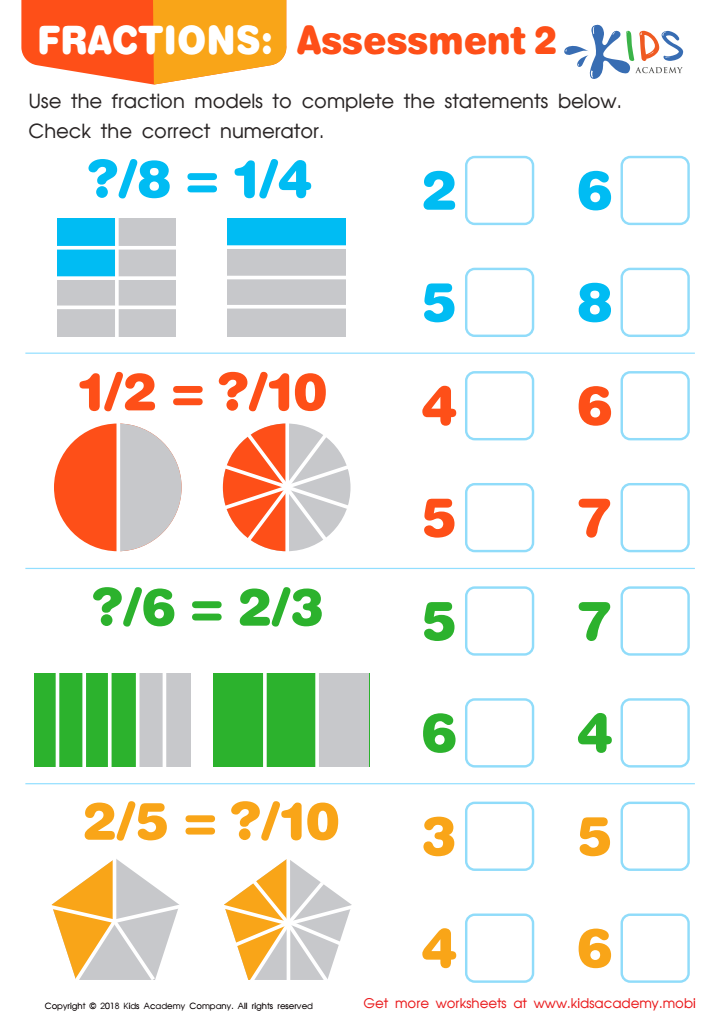
Fractions: Assessment 2 Worksheet
Help your kids understand fractions better with this worksheet. Ask them to complete the fraction statements using the fraction models on the left and then check the correct numerators. This can help clear up any confusion they may have with fractions and fraction models.
Fractions: Assessment 2 Worksheet
Worksheet
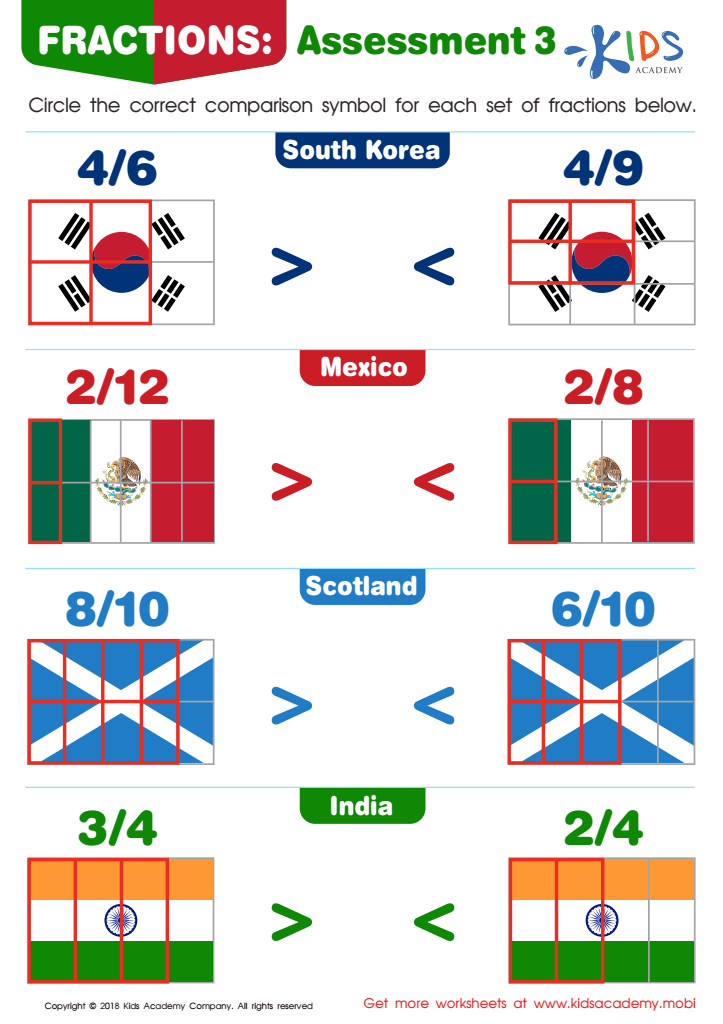
Fractions: Assessment 3 Worksheet
This worksheet helps teach kids about fractions and introduces them to countries and their flags. Have them read the country names and point to the flags. Then help them assess the fractions, and ask them to circle the symbol that shows their values.
Fractions: Assessment 3 Worksheet
Worksheet
Join Kids Academy for Free
Who is primarily going to use this learning content?






Simplifying fractions is a crucial math skill for 9-year-olds that empowers them in various ways, making it essential for parents and teachers to prioritize this concept. Firstly, simplifying fractions enhances a child's arithmetic skills, promoting a clear understanding of numbers and their relationships. It fosters critical thinking as children learn to identify common factors and apply problem-solving strategies.
Moreover, mastering simplifying fractions lays a solid foundation for future mathematical concepts, including ratio, proportion, and even algebra. Without this fundamental skill, students may struggle later. Additionally, simplifying fractions can develop perseverance and patience, as it often involves trial and error—a vital life skill.
Furthermore, understanding fractions is essential for real-world applications, such as cooking, measuring, and budgeting, preparing children for practical, everyday situations. Engaging parents actively in their child’s learning about fractions can also strengthen relationships by promoting learning opportunities at home, full of fun and interaction.
Ultimately, simplifying fractions is not just about performing tasks in math class; it nurtures essential problem-solving skills, a solid foundational understanding of mathematics, and practical life skills. Focusing on this area can strongly influence a child's academic trajectory and their confidence in handling math throughout their education.








