Understanding area Math Worksheets for 9-Year-Olds
3 filtered results
-
From - To
Unlock the world of area calculation with our "Understanding Area Math Worksheets" designed specifically for 9-year-olds! These engaging worksheets help young learners grasp the concept of area through fun activities and real-life applications. They encourage skills in measuring, calculating, and comparing different shapes, making math both approachable and enjoyable. Ideal for classroom use or at-home practice, our comprehensive resources build confidence in mathematical understanding. With vibrant visuals and step-by-step guidance, children will develop problem-solving skills while enhancing their spatial awareness. Explore our interactive exercises today and support your child's journey to becoming a math whiz!
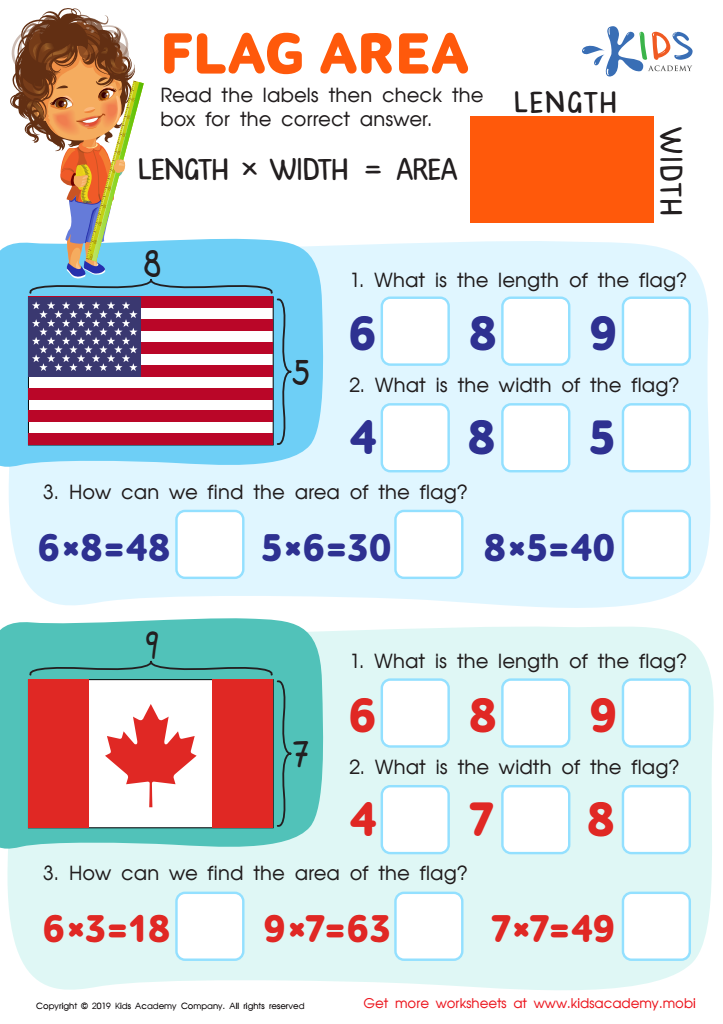
Flag Area Worksheet
 Assign to My Students
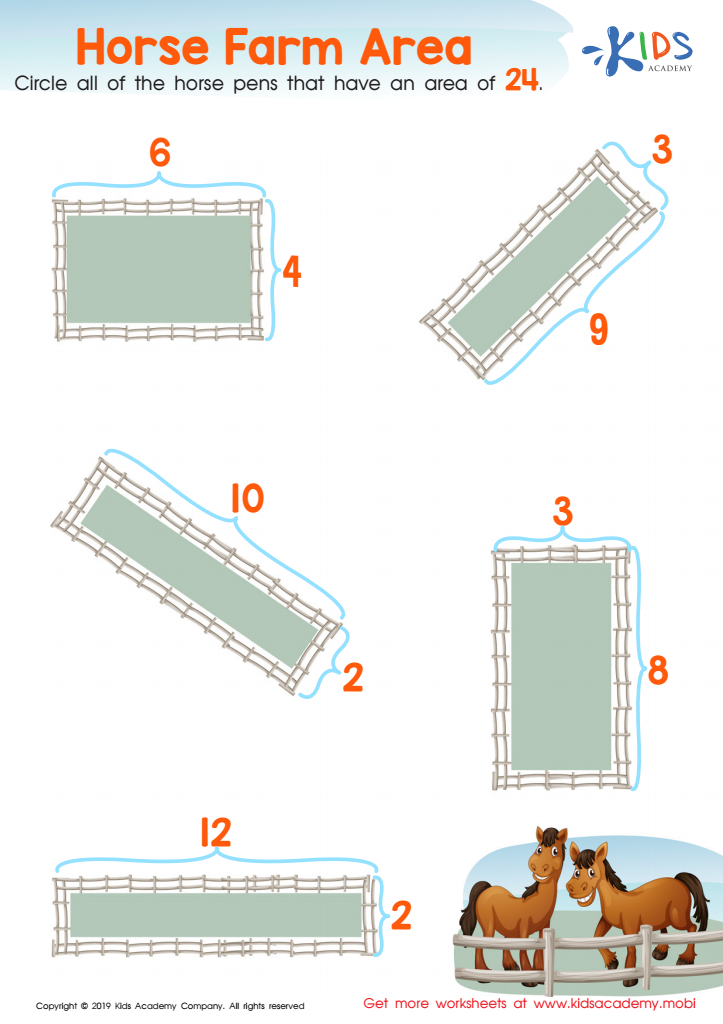
Horse Farm Area Worksheet
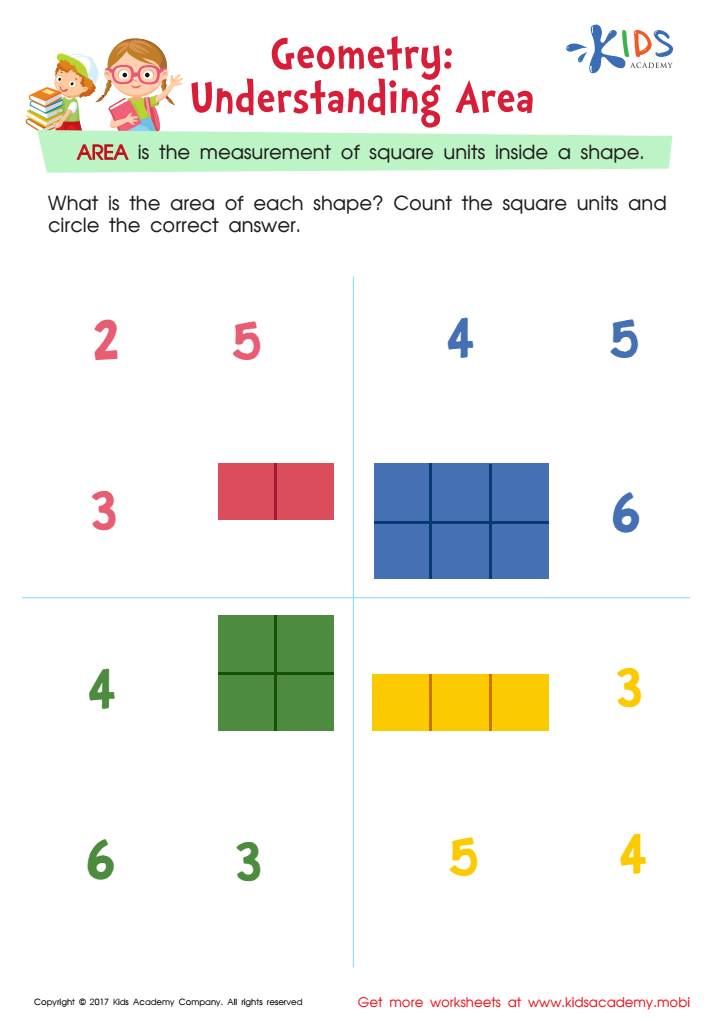
Understanding Area Worksheet







Understanding area is a fundamental concept in mathematics that holds significant importance for 9-year-olds, with implications that extend beyond the classroom. For parents and teachers, nurturing a solid grasp of area not only enhances students' math skills but also cultivates critical thinking and real-world problem-solving abilities.
At this age, children are developing their spatial awareness and interpretation skills. By learning about area—how to measure and calculate it in different shapes—children gain a better understanding of the world around them. This knowledge is applicable in various everyday contexts, such as planning spaces, crafting, or gardening. Furthermore, a firm grasp of area builds a strong foundation for more advanced math concepts, including geometry and algebra, which they will encounter in higher grades.
Additionally, teaching area encourages collaborative and hands-on learning experiences. Engaging students through activities and projects not only makes math enjoyable but also fosters teamwork and communication. As children explore concepts of space and measurement together, they build social skills as well as academic ones. In essence, parents and teachers play a pivotal role in shaping children's mathematical understanding, which ultimately supports their overall development and future success in both academic and practical realms.








