Story sequencing Reading Comprehension Worksheets for 9-Year-Olds
3 filtered results
-
From - To
Enhance your 9-year-old's reading skills with our Story Sequencing Reading Comprehension Worksheets! These engaging, expertly-designed printables help kids hone their ability to understand and reorganize the sequence of events in a story. By focusing on this critical element of reading comprehension, children learn to recognize plot structure, improve recall, and ensure they grasp the full narrative. Ideal for both classroom and home use, these worksheets feature age-appropriate texts and fun, colorful illustrations to keep young readers engaged. Start today and watch your child's reading confidence and comprehension abilities soar!
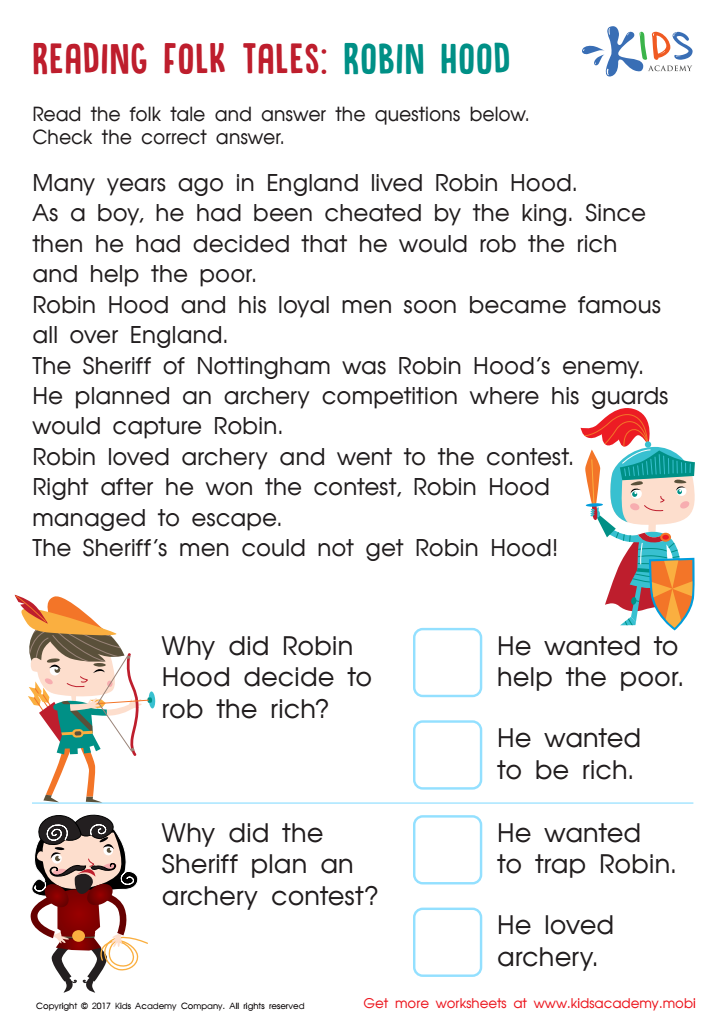
Robin Hood Folktale Worksheet
Folktales Printable PDF Worksheet: The 3 Little Pigs
 Assign to My Students
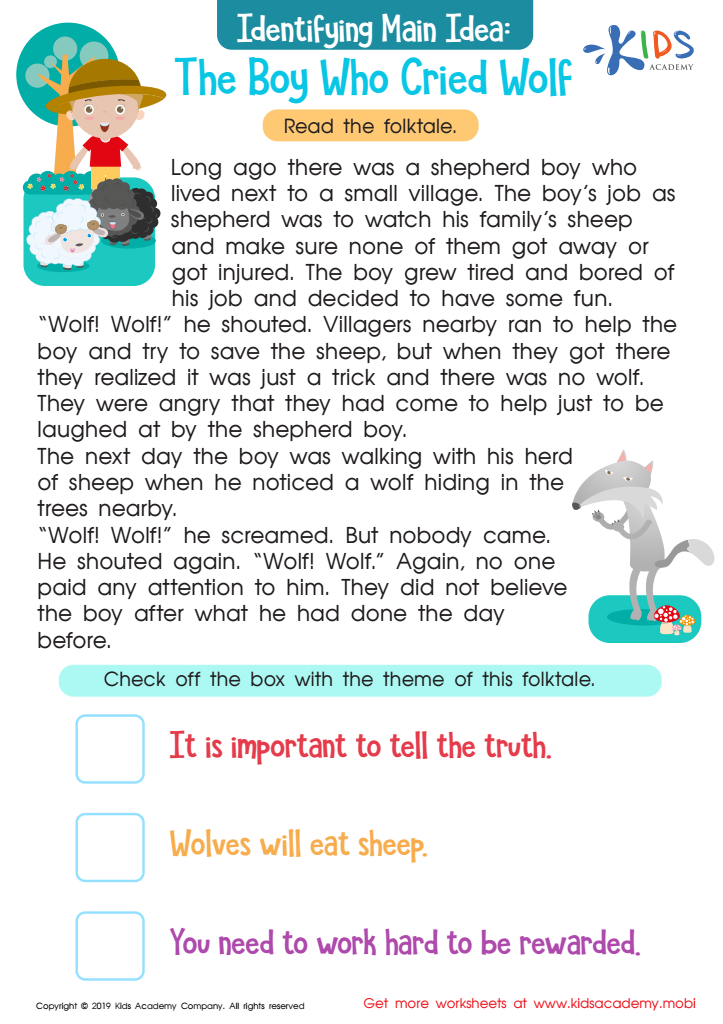
The Boy Who Cried Wolf Part 2 Worksheet








Story sequencing is a fundamental skill in early reading comprehension, and parents and teachers should prioritize it for 9-year-olds to support their literacy development. At this age, children's brains are expanding quickly, making it a critical period for reinforcing reading skills.
First, understanding the sequence of events in a story helps children grasp the plot and recognize cause-and-effect relationships. This skill translates to better overall comprehension, enabling students to understand and retell stories accurately. Furthermore, sequencing promotes critical thinking, allowing children to predict outcomes and understand the logical progression of events.
For academic success, these skills are directly linked to improved performance in all subjects. Clear comprehension and the ability to organize information sequentially support both reading and writing tasks required in the classroom.
Sequencing also enhances memory and organization skills, which are essential for effective studying and knowledge retention. Encouraging children to think about what happens first, next, and last in a story can set a foundation for understanding more complex texts as they grow.
From a social perspective, discussing story events with peers promotes communication skills and confidence. Ultimately, strong reading comprehension, fortified by effective story sequencing, sets children on a path toward lifelong literacy and academic achievement.








