
Analyzing data Science Worksheets for 9-Year-Olds
4 filtered results
Difficulty Level
Grade
Age
-
From - To
Subject
Activity
Standards
Unlock the wonders of science for 9-year-olds with our engaging "Analyzing Data Science Worksheets." Designed to ignite curiosity and foster critical thinking, these worksheets guide young learners in understanding data analysis through fun and interactive activities. Kids will explore concepts like data collection, interpretation, and graphical representation, promoting skills essential for scientific inquiry. With clear instructions and age-appropriate content, our worksheets ensure that children grasp key scientific principles while enjoying the learning process. Perfect for classrooms or at-home practice, these resources nurture an appreciation for science and prepare students for future academic success. Start inspiring future scientists today!
Favorites
With answer key
Interactive
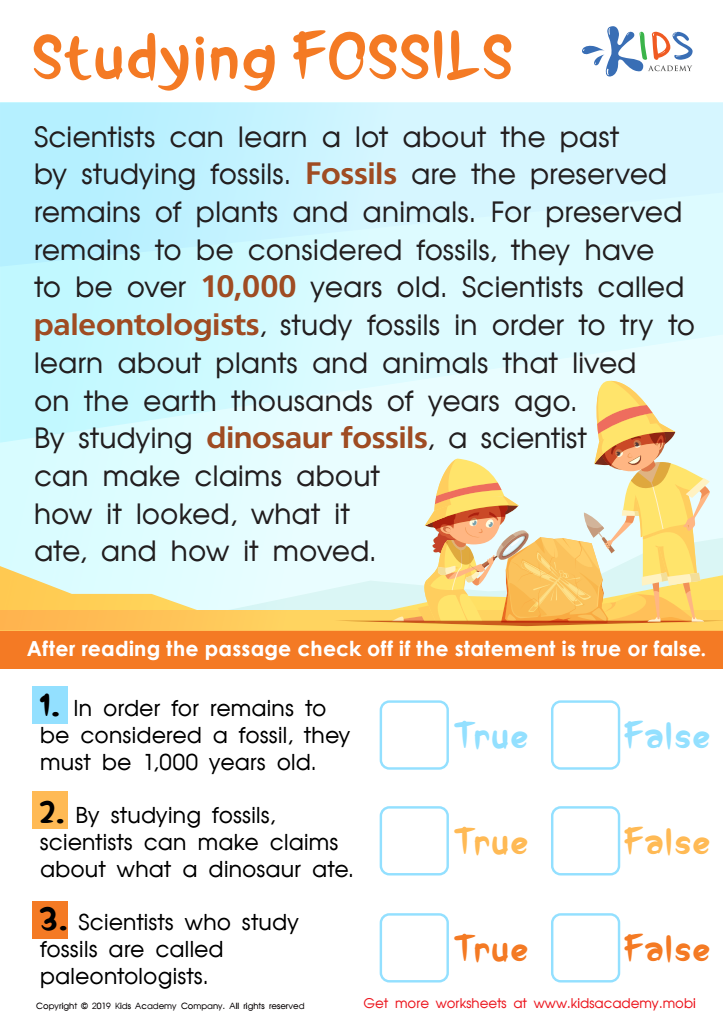
Studying Fossils Worksheet
Fossils captivate children! It's no wonder why; when we learn about them, we are getting a glimpse into history and uncovering old mysteries! With this free download, kids will understand what a paleontologist is and how they use fossils to learn about long-gone plants and animals. They'll discover that old bones are priceless and that exploring ancient history can be exciting!
 Assign to My Students
Studying Fossils Worksheet
Worksheet
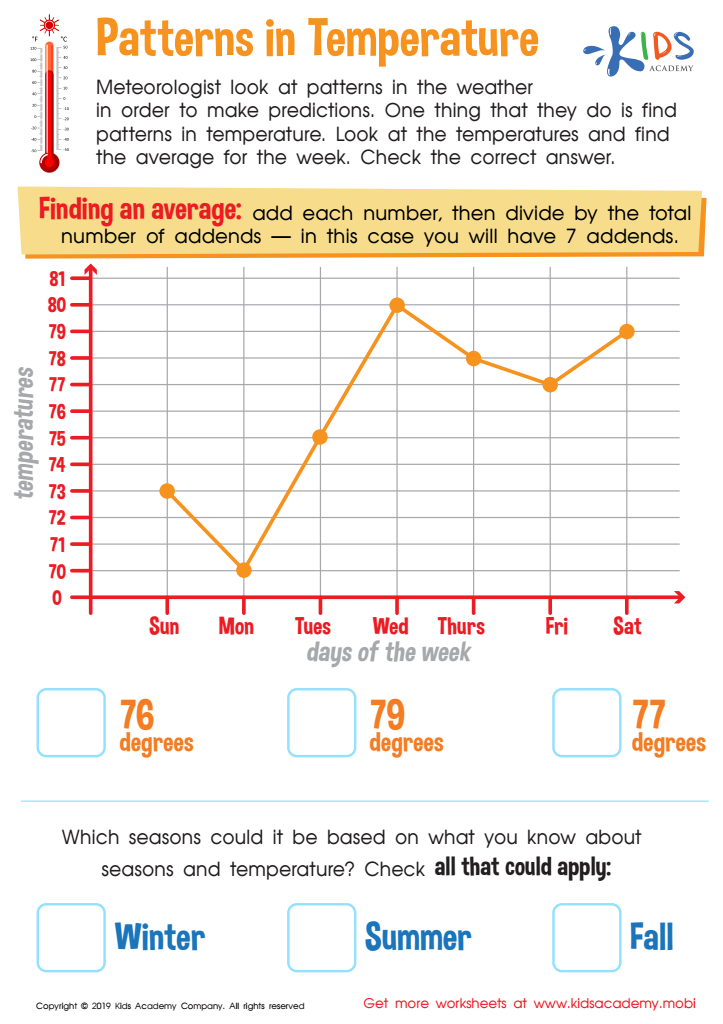
Patterns in Temperature Worksheet
Kids need to learn how to read and interpret data from graphs and charts. This free worksheet on temperature patterns helps them to do just that. They'll practice finding averages and answer questions in multiple-choice format. Plus, it provides a great learning experience!
Patterns in Temperature Worksheet
Worksheet
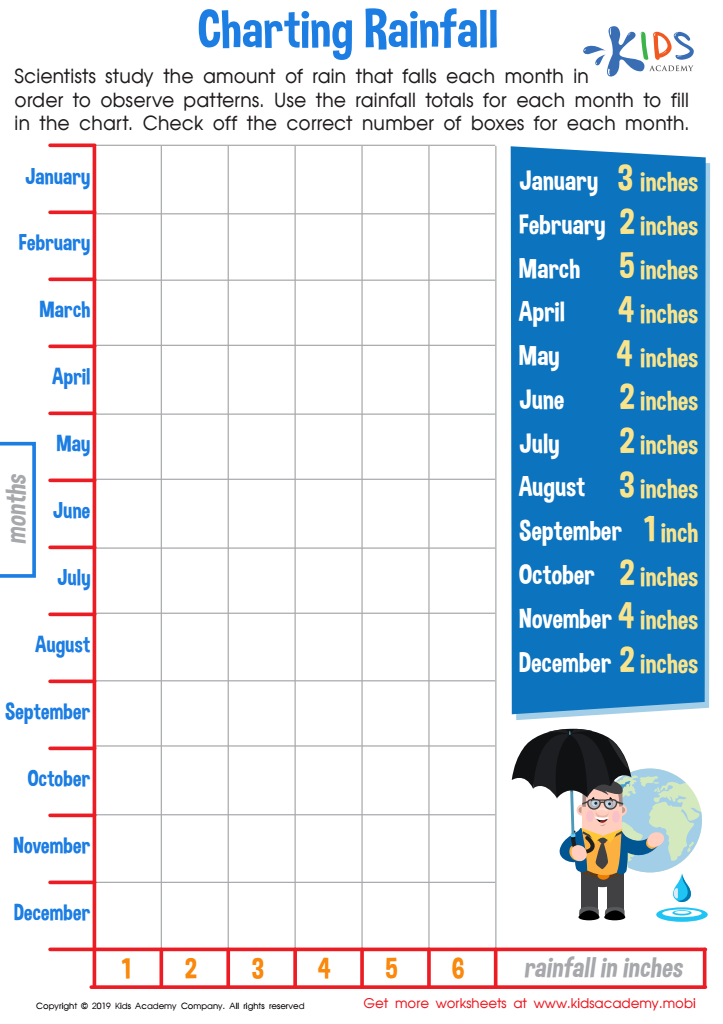
Charting Rainfall Worksheet
Kids need to learn how to graph info in order to understand the world. This rainfall worksheet gives them an opportunity to act as statisticians, charting the amount of rain each month. It also helps them practice data storage and analysis for future math concepts.
Charting Rainfall Worksheet
Worksheet
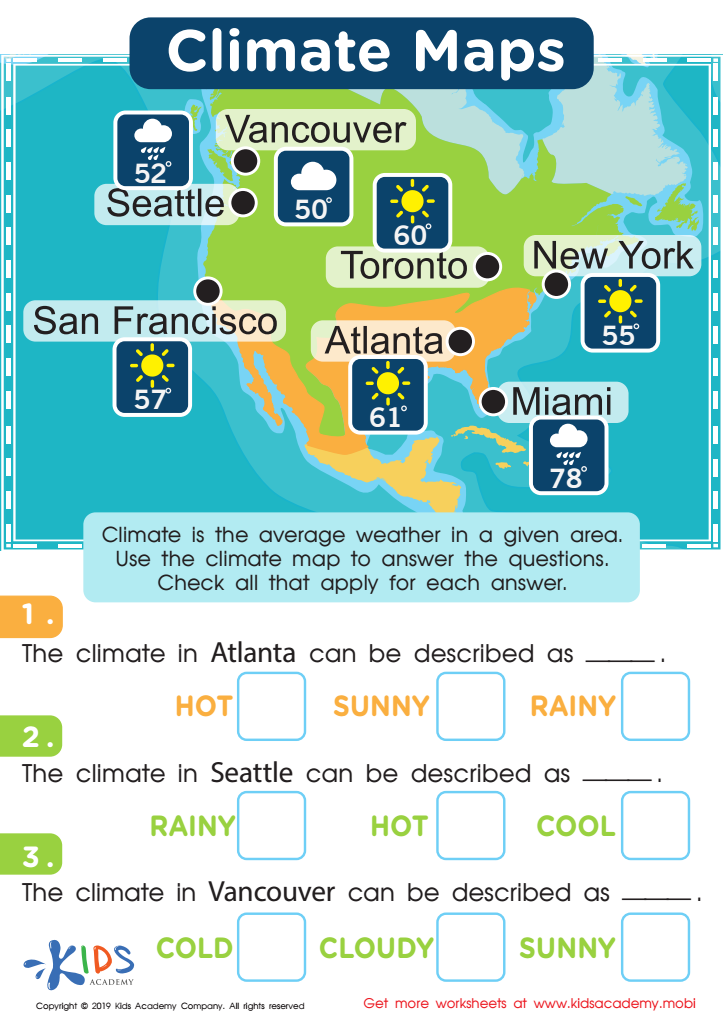
Climate Maps Worksheet
This map offers a fun way to teach kids about the varying climates across North America. They'll learn that Seattle and Miami have different temperatures, yet the same amount of rainfall. Plus other weather facts. This prepares them to answer reading comprehension questions with success!
Climate Maps Worksheet
Worksheet
Join Kids Academy for Free
Who is primarily going to use this learning content?








Analyzing data science is vital for 9-year-olds for several reasons that benefit both parents and teachers. First, in an increasingly data-driven world, early exposure equips children with fundamental skills necessary for critical thinking and problem-solving. By understanding data, children learn how to ask questions, interpret information, and make informed decisions, fostering analytical skills that can be applied across various subjects, from maths to social sciences.
Additionally, teaching data science encourages curiosity and innovation. Children learn to collect, organize, and visualize data, sparking interest in STEM (science, technology, engineering, and math) fields. This foundational knowledge can inspire future pursuits in technology and research.
Moreover, data analysis fosters collaboration and communication. Young learners engage in discussions, work on group projects, and present findings, enhancing their ability to articulate ideas clearly and work as a team.
Finally, parents and teachers should recognize that data science literacy is essential for civic engagement. Understanding how to analyze and interpret data helps children become informed citizens capable of navigating societal issues influenced by statistics, from health to environment. By investing in data science education for young learners, we are preparing them for a resilient future where analytical abilities are paramount.







