
Critical thinking development Science Worksheets for 9-Year-Olds
3 filtered results
Difficulty Level
Grade
Age
-
From - To
Subject
Activity
Standards
Enhance your 9-year-old’s critical thinking skills with our engaging science worksheets! These carefully designed activities encourage young learners to analyze, evaluate, and apply scientific concepts. From problem-solving exercises to interactive challenges, each worksheet fosters curiosity and creativity while reinforcing core scientific principles. Perfect for at-home learning or classroom use, our worksheets inspire independent thinking and improve comprehension. Let your child explore the wonders of science while developing essential skills that will benefit them across all subjects. Dive into our collection today and watch their critical thinking abilities flourish!
Favorites
With answer key
Interactive
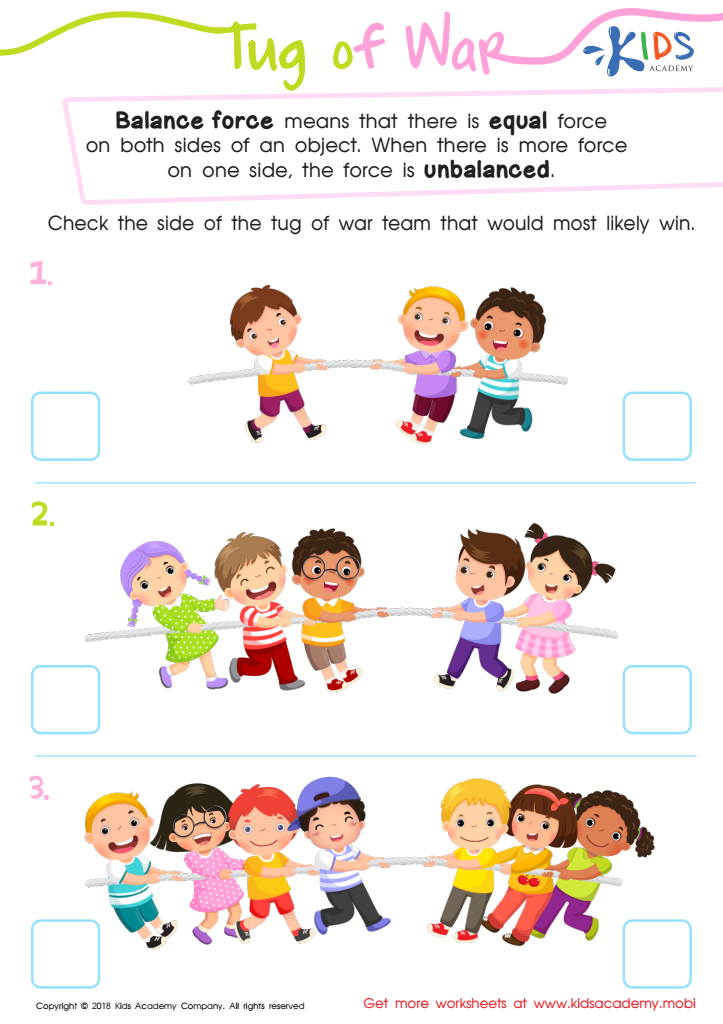
Balanced Forces Worksheet
Ready for a fun game? This worksheet will balance the forces so your kids can decide who will win their tug of war! With the right number of kids on each side of the rope, the forces will be equal. Help your little ones decide who will prevail in the game. Ready, set, go!
 Assign to My Students
Balanced Forces Worksheet
Worksheet
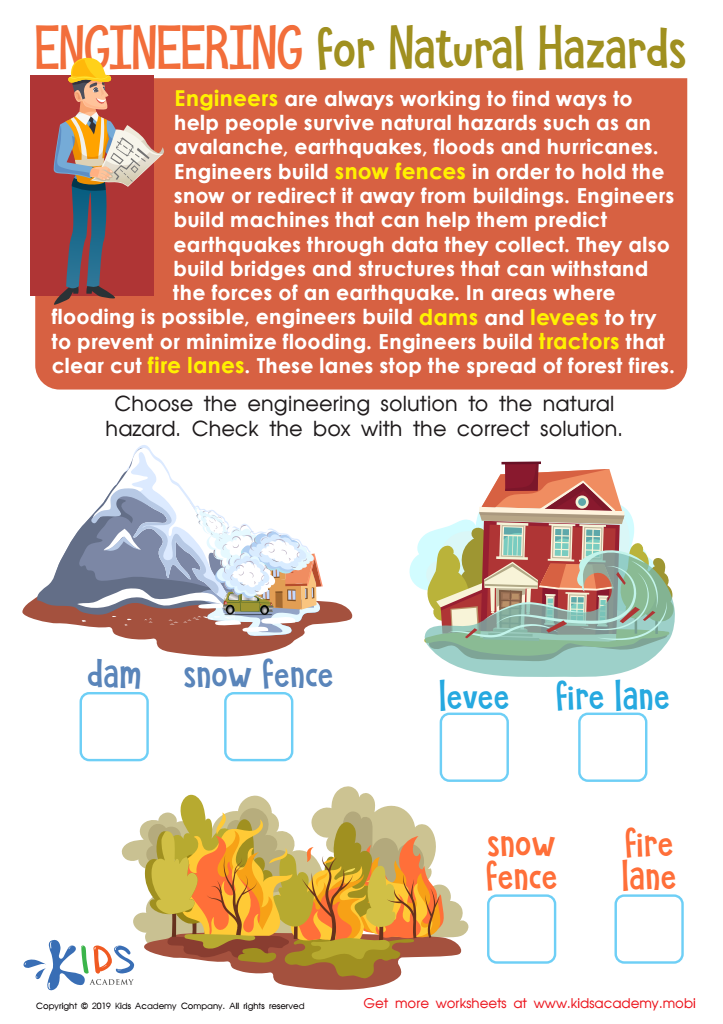
Engineering Natural Hazards Worksheet
Natural hazards can be lessened with precautions. This free worksheet engages kids with informative text on how engineers protect us and lets them practice reading comprehension by choosing the right option.
Engineering Natural Hazards Worksheet
Worksheet
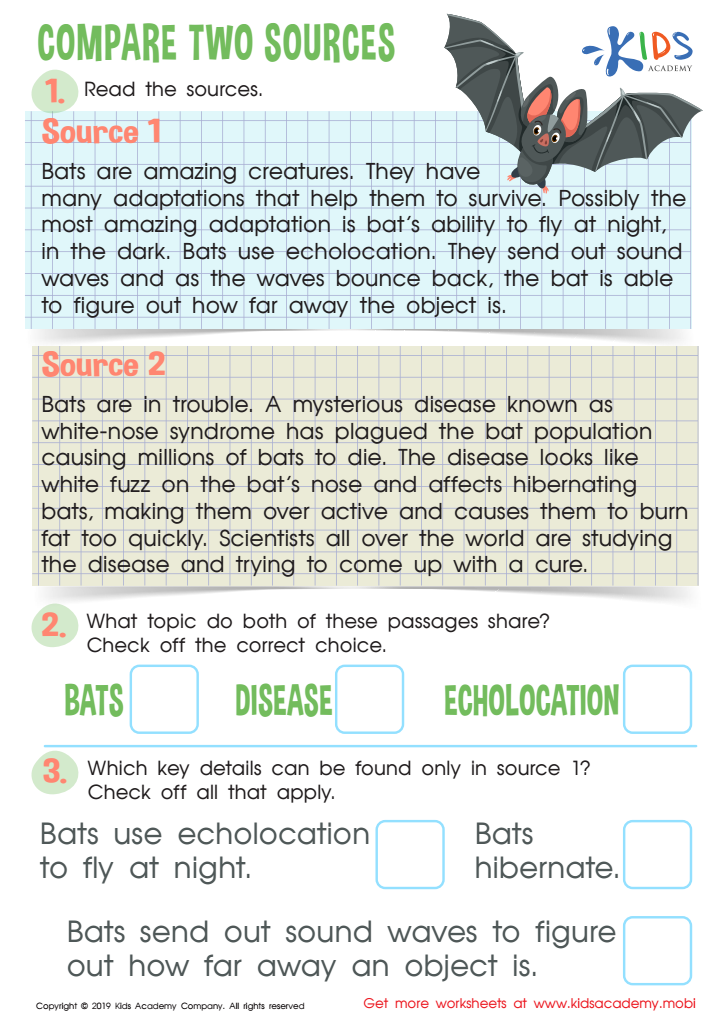
Compare Two Sources Worksheet
Reading exposes us to new words, spelling, and info about different topics. Kids can practice their reading skills, and learn about bats, with this worksheet. Read the two sources in the picture, then help your kids answer the questions at the bottom.
Compare Two Sources Worksheet
Worksheet
Join Kids Academy for Free
Who is primarily going to use this learning content?








Critical thinking development in science for 9-year-olds is essential for several reasons. At this age, children are naturally curious and possess a strong desire to explore the world around them. Fostering critical thinking in science allows them to nurture that curiosity, helping them learn how to ask questions, form hypotheses, and analyze data. These skills not only enhance their scientific understanding but also promote problem-solving abilities applicable in everyday life.
Moreover, critical thinking empowers children to differentiate between evidence and opinion. In an era where misinformation is prevalent, teaching young learners to evaluate information critically equips them with tools to navigate and interpret the vast amount of content they encounter in media and social platforms.
Engaging with scientific concepts also encourages collaboration and communication as students discuss ideas, share findings, and defend their reasoning. It lays the groundwork for informed citizenship, where future adults can make reasoned decisions about pressing global challenges, such as climate change and health.
Ultimately, supporting the development of critical thinking in 9-year-old learners isn't solely about achieving academic success; it's about shaping inquisitive, thoughtful individuals who are prepared to engage with and contribute positively to society.







