Understanding patterns Science Worksheets for 9-Year-Olds
4 filtered results
-
From - To
Discover our "Understanding Patterns Science Worksheets" designed specifically for 9-year-olds to enhance their analytical skills and critical thinking. These engaging worksheets encourage young learners to recognize, analyze, and create patterns in various scientific contexts. Each resource is aligned with educational standards, ensuring comprehension of essential concepts such as cycles, sequences, and relationships in nature. With a mix of fun activities, visuals, and scenarios, kids will excel in identifying patterns in everyday experiences, fostering a deeper understanding of the world around them. Perfect for classroom use or at-home learning, these worksheets make science both enjoyable and educational!
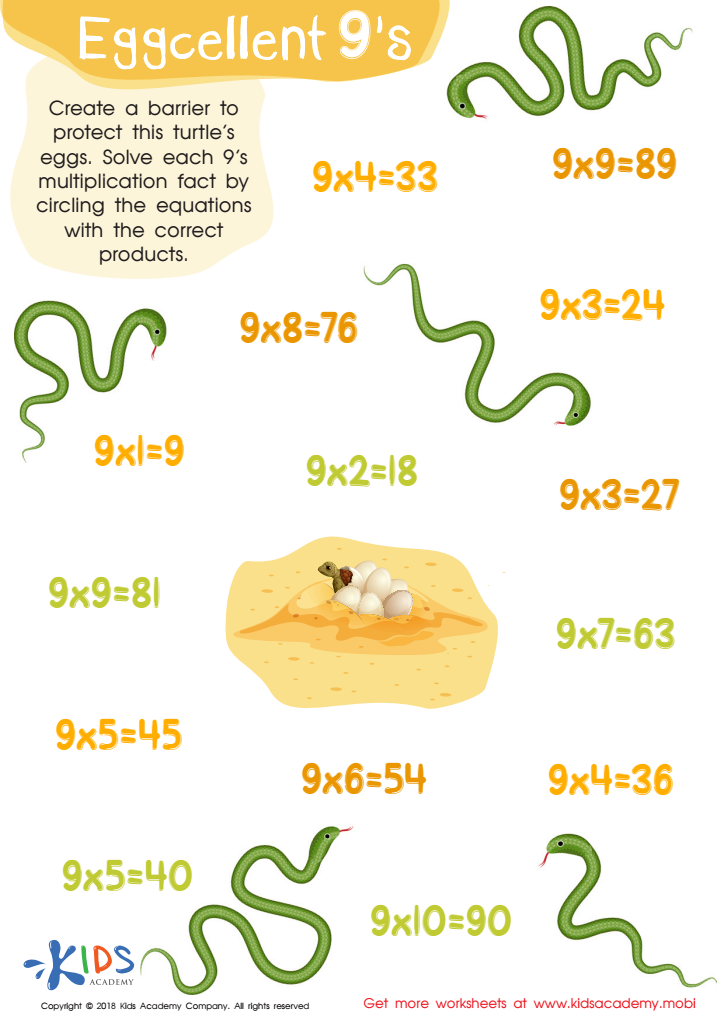
Eggcellent 9’s Worksheet
 Assign to My Students
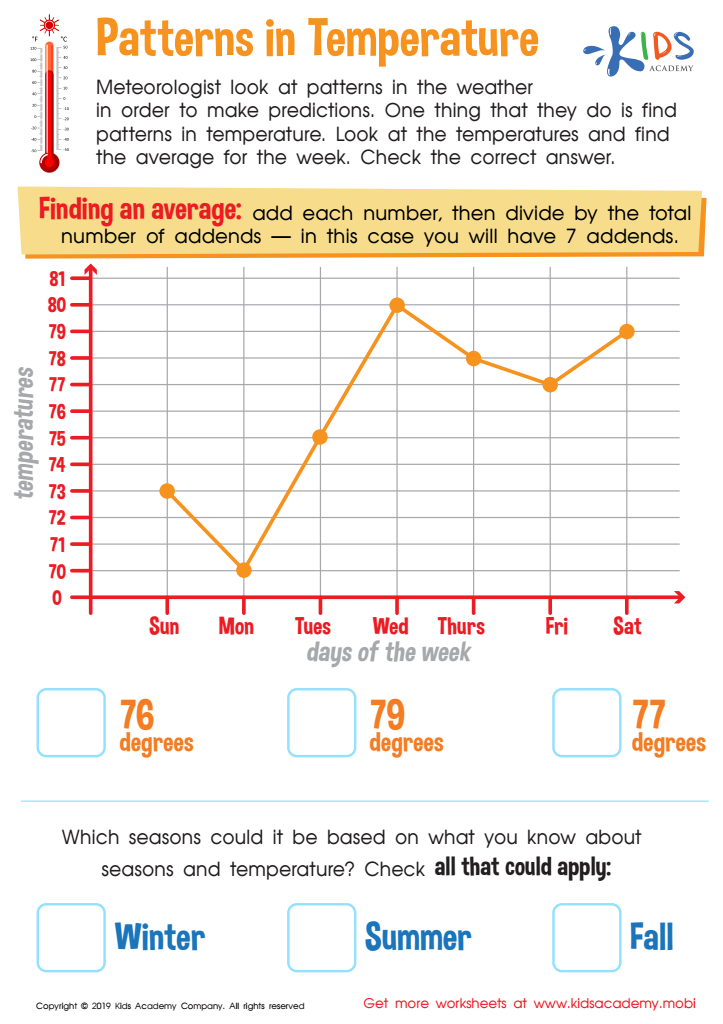
Patterns in Temperature Worksheet
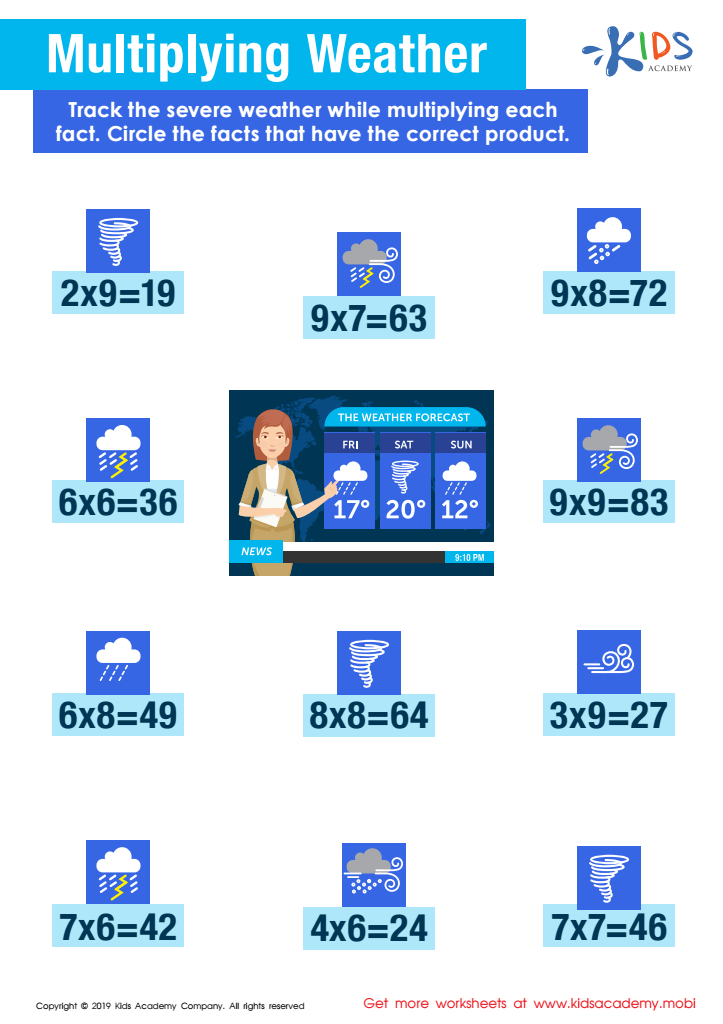
Multiplying Weather Worksheet
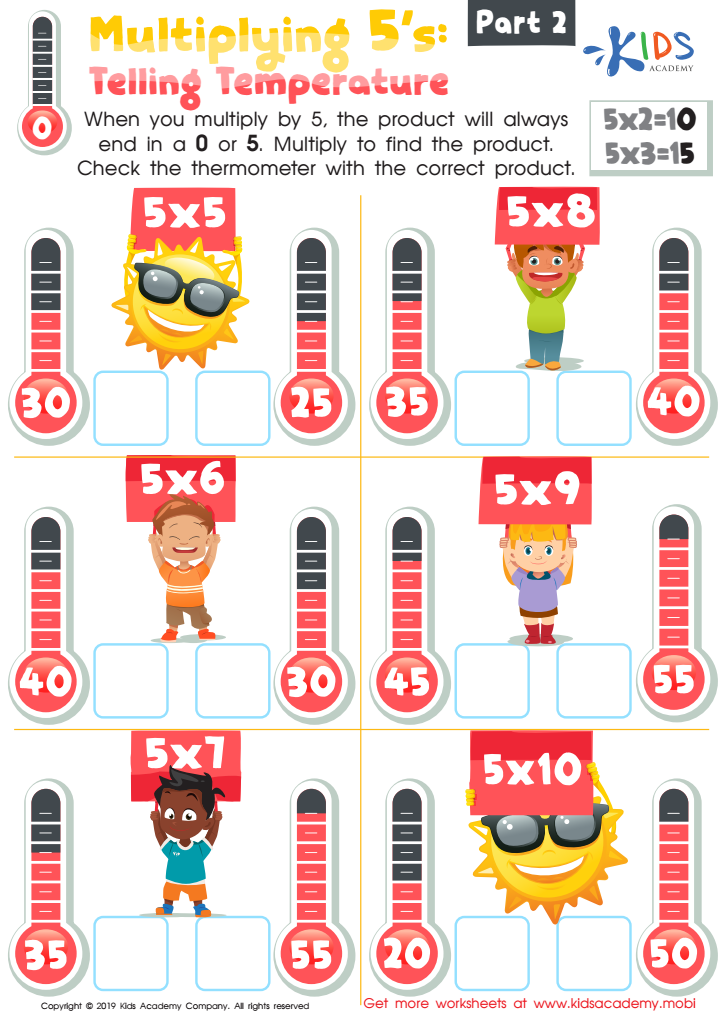
Multiplying 5’s: Telling Temperature Part 2 Worksheet








Understanding patterns in science is crucial for 9-year-olds, as it lays the foundational skills necessary for comprehension in various subjects. Patterns help children make connections between different pieces of information, enabling them to recognize relationships and predict future outcomes based on established rules. By engaging with patterns in scientific contexts, children develop critical thinking skills and enhance their ability to analyze data, which are essential in a world increasingly driven by technology and science.
Parents and teachers should care because the ability to identify and understand patterns can accelerate a child’s learning process. For instance, in subjects like mathematics, recognizing number patterns helps children solve problems more effectively. In science, patterns can lead to a better understanding of natural phenomena, such as weather changes and life cycles. Furthermore, teaching children to notice and manipulate patterns cultivates curiosity and a love for inquiry, which are pivotal for lifelong learning. Encouraging children to explore patterns fosters creativity and problem-solving abilities, preparing them for future academics and life challenges. Ultimately, strengthening pattern recognition in 9-year-olds cultivates a generation of thinkers who are equipped to tackle complex issues in our rapidly evolving world.







