
Reading comprehension Plants and Animals Worksheets for 9-Year-Olds
6 filtered results
Difficulty Level
Grade
Age
-
From - To
Subject
Activity
Standards
Enhance your child’s learning experience with our engaging "Reading Comprehension Plants and Animals Worksheets" designed specifically for 9-year-olds. These worksheets provide a fun yet educational approach to understanding the ecosystems of plants and animals. Your child will develop critical reading skills while exploring informative texts, answering comprehension questions, and applying their knowledge to real-world scenarios. Perfect for classroom use or at-home learning, these resources cater to diverse learning styles. Foster a love for reading and science with our carefully crafted activities that stimulate curiosity and deepen understanding of nature's wonders. Start enriching your child's early education journey today!
Favorites
With answer key
Interactive
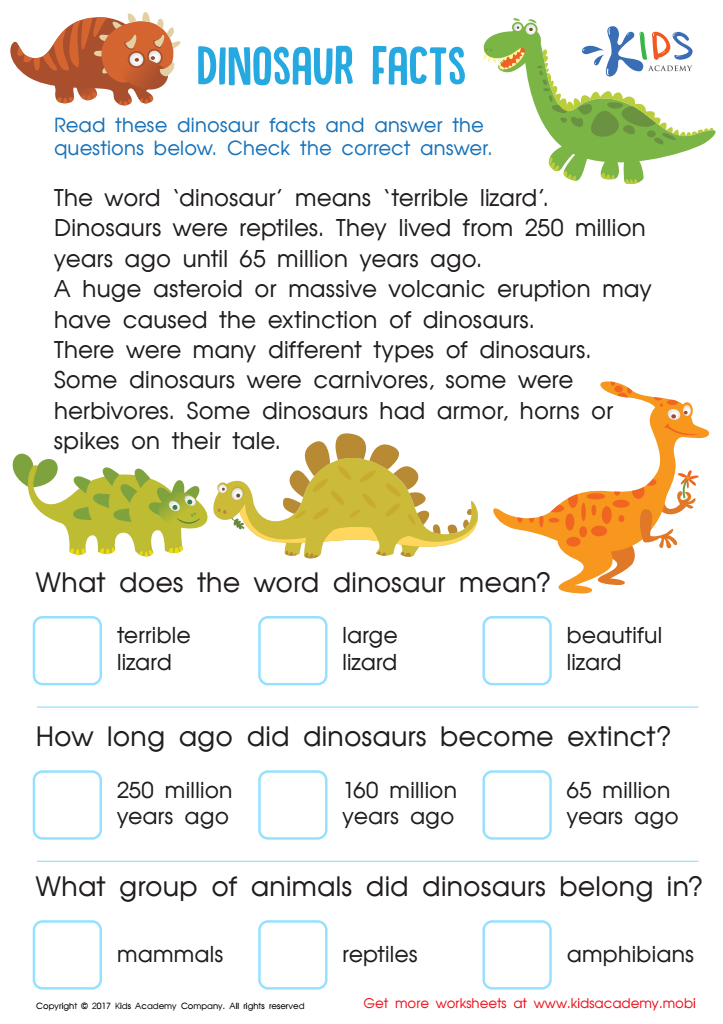
Dinosaur Facts Worksheet
Help your child improve reading skills with engaging nonfiction texts! This dinosaur facts worksheet will teach fun information and test kids on the key details. It'll keep them motivated and ready to learn!
 Assign to My Students
Dinosaur Facts Worksheet
Worksheet











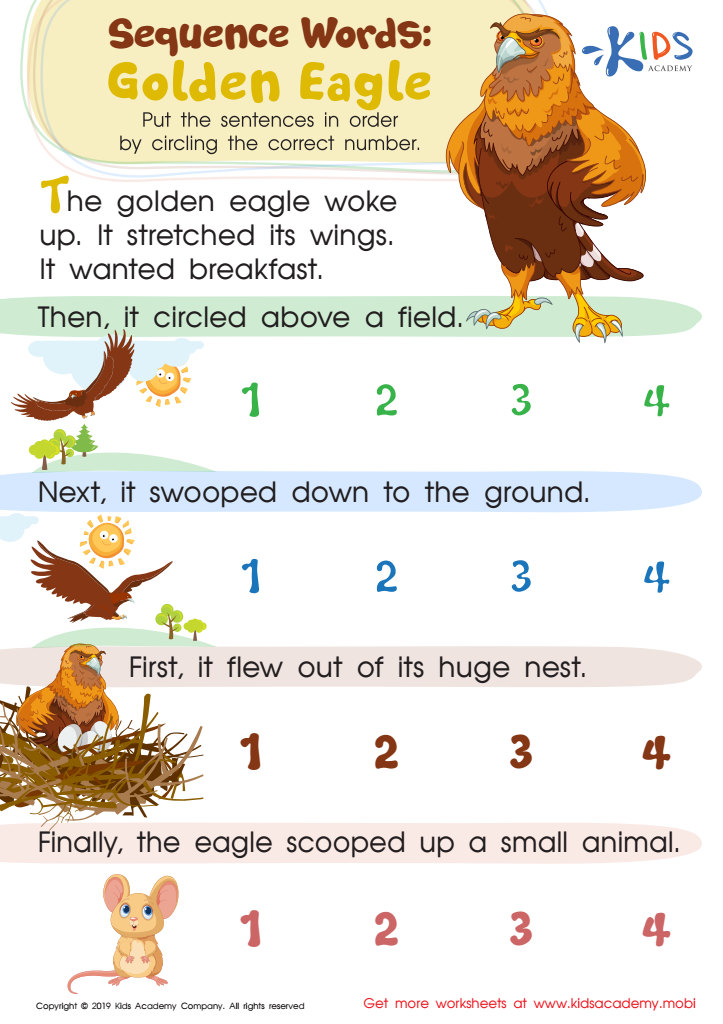
Sequence Word Eagle Worksheet
Help your child brush up on reading and writing with this fun worksheet. Read the story of the golden eagle's day, then have the child circle the numbers in the right order. Point out the sequence words that tell the order of events. This helps learners understand how to make their writing clear and understandable to others.
Sequence Word Eagle Worksheet
Worksheet
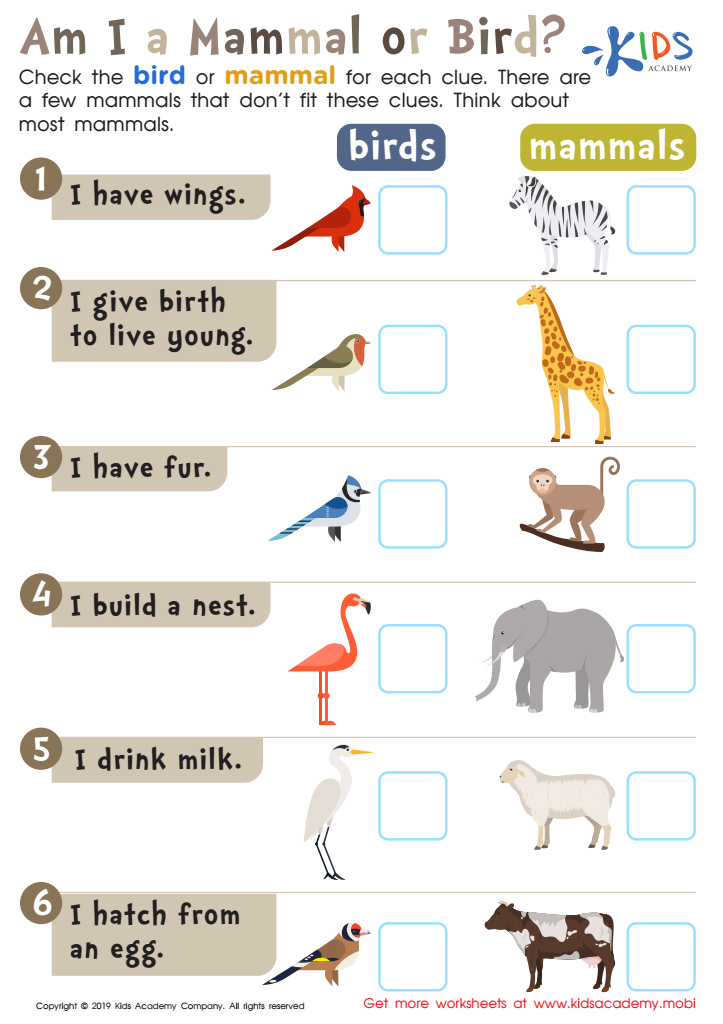
Am I a Mammal or Bird? Worksheet
We categorize animals into groups such as mammals, birds, reptiles, etc. This worksheet helps kids understand the difference between birds and mammals. Read through the clues and think about each one. Then decide if it describes a bird or mammal, check the box and complete!
Am I a Mammal or Bird? Worksheet
Worksheet
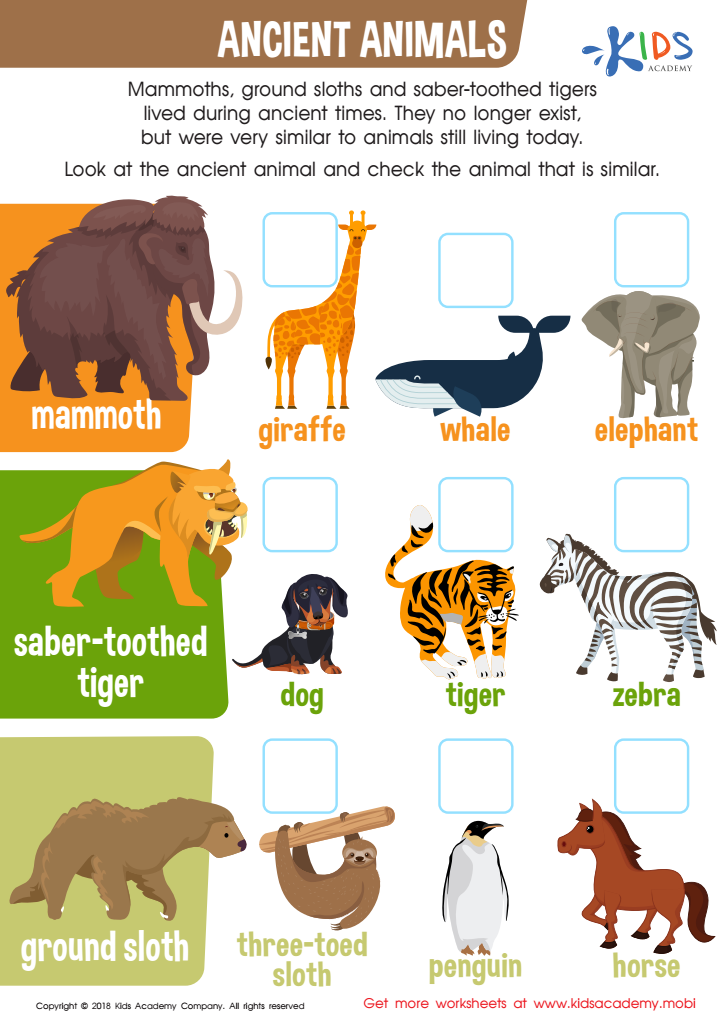
Ancient Animals Worksheet
Kids can explore prehistoric days with a fun, downloadable worksheet. They'll look at pictures of ancient animals like mammoths, ground sloths and saber-toothed tigers and then choose the animal of today that most closely resembles their ancestor. Through this sheet, they can make connections between today's animals and the past.
Ancient Animals Worksheet
Worksheet
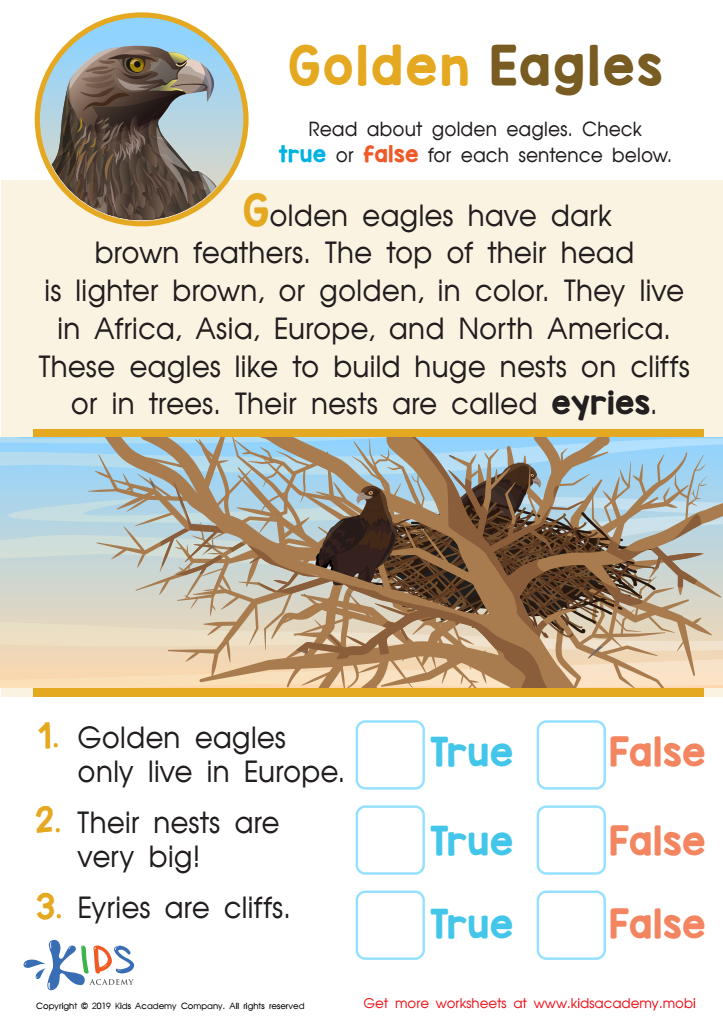
Golden Eagles Worksheet
Check your child's reading comprehension with this fascinating worksheet! Read the passage at the top of the page and discuss what was learned about golden eagles. Then, read the statements at the bottom and ask if they are true or false. Guide your child to circle the correct answer then read the text to back up the answer.
Golden Eagles Worksheet
Worksheet
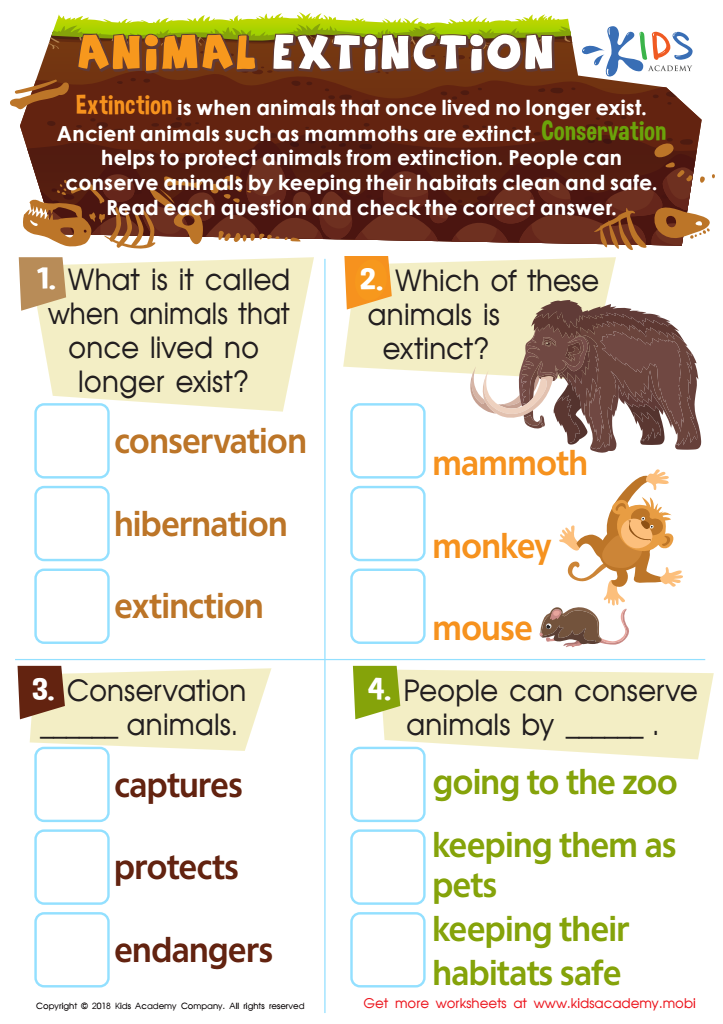
Animal Extinction Worksheet
Children can learn how their actions can help endangered animals with this free PDF worksheet. It explains extinction, looks at the mammoth as an example, and poses questions about conservation. Keeping habitats clean and safe is key to protecting animals and keeping them abundant. Learning about this now can make a huge difference for future generations.
Animal Extinction Worksheet
Worksheet
Join Kids Academy for Free
Who is primarily going to use this learning content?






Reading comprehension skills are essential for 9-year-olds, especially when engaging with subjects like Plants and Animals. At this age, children are transitioning from learning to read to reading to learn, making it critical to develop strong comprehension abilities.
Understanding texts about plants and animals not only fosters an appreciation for the natural world but also enhances critical thinking and analytical skills. When children can summarize, interpret, and analyze information regarding biodiversity, ecosystems, and life cycles, they build a foundation for scientific literacy necessary for future learning.
Moreover, fostering comprehension in this area encourages curiosity and inquiry, motivating children to explore the environment around them. This exploration helps link classroom learning to real-life experiences, making science more relatable and engaging.
Additionally, comprehension skills translate to improved academic performance across all subjects. Parents and teachers who prioritize reading comprehension recognize its impact on a child's overall educational journey, equipping them with the tools they need to succeed academically and personally.
In summary, promoting reading comprehension around topics like Plants and Animals is not just about literacy; it cultivates a more informed, curious, and environmentally conscious generation. It urges educators and parents to invest time and effort into this vital aspect of learning.








