Understanding food chains Plants and Animals Worksheets for 9-Year-Olds
3 filtered results
-
From - To
Explore the fascinating world of food chains with our engaging "Understanding Food Chains: Plants and Animals Worksheets" designed specifically for 9-year-olds! These worksheets provide a fun and interactive way for young learners to grasp the essential concepts of ecosystems, food webs, and the roles of different organisms. Through colorful illustrations and hands-on activities, students will identify producers, consumers, and decomposers, enhancing their understanding of how energy flows in nature. Perfect for home or classroom use, these worksheets encourage critical thinking and reinforce scientific vocabulary, making learning about ecology enjoyable and accessible. Dive into the science of food chains today!
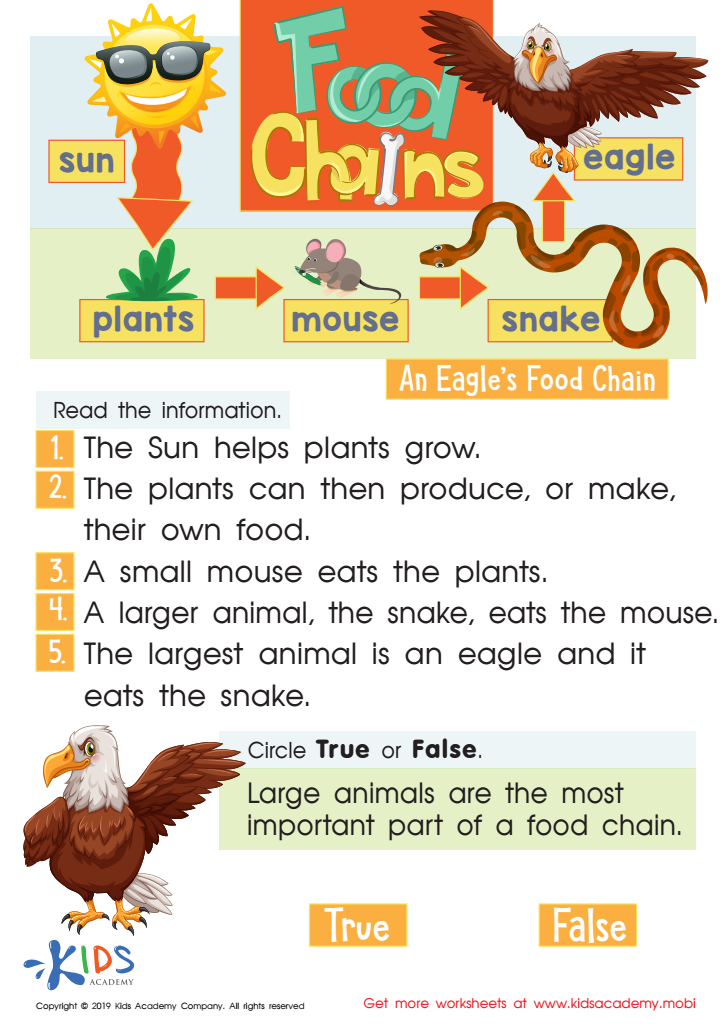
Food Chains Worksheet
 Assign to My Students











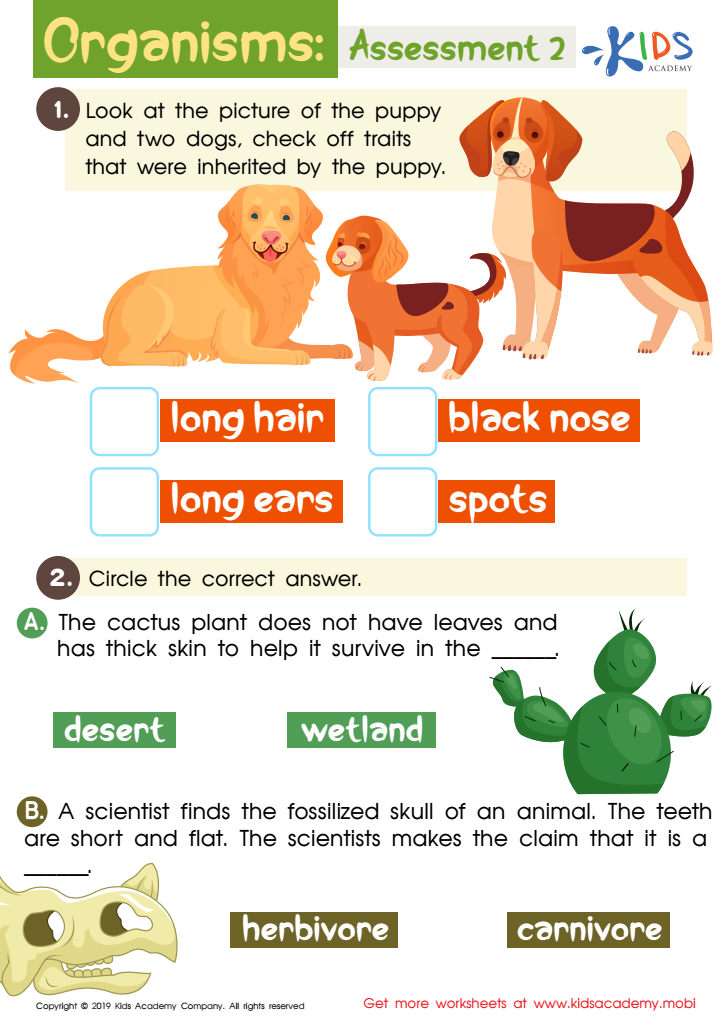
Organisms: Assessment 2 Worksheet
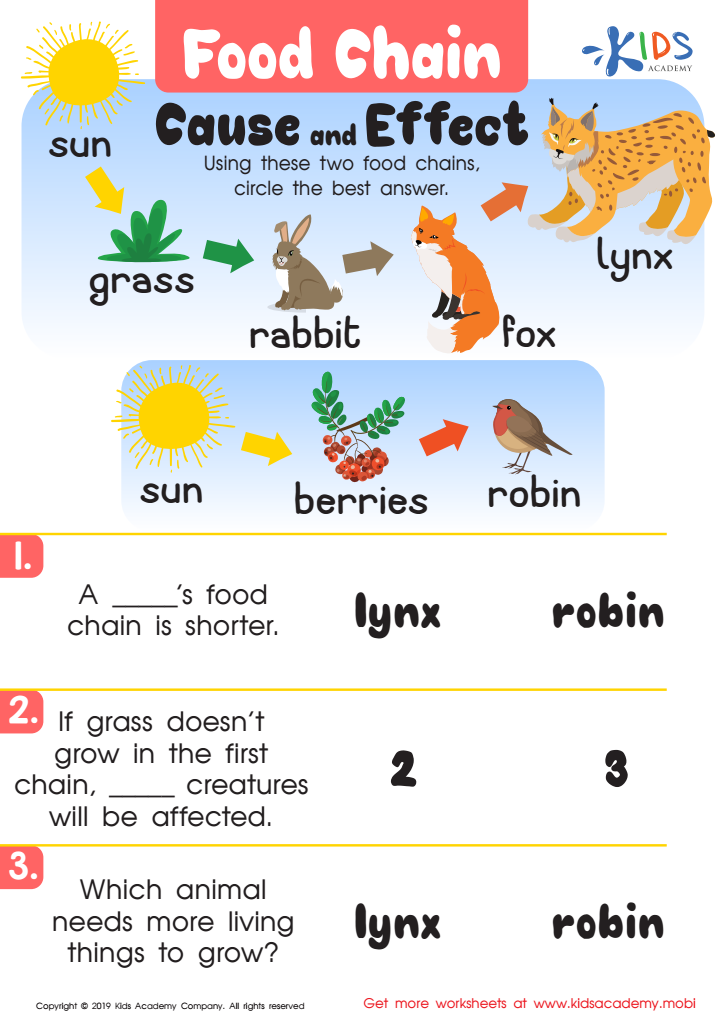
Food Chain Cause Worksheet







Understanding food chains is essential for 9-year-olds because it helps them grasp the interconnectedness of ecosystems, emphasizing how plants and animals rely on one another for survival. This knowledge fosters a sense of responsibility and stewardship towards the environment. By learning about producers, consumers, and decomposers within food chains, children can better appreciate the role of plants in producing oxygen and food, and understand how animals contribute to ecosystem balance.
Moreover, discussing food chains encourages curiosity and critical thinking. It becomes a gateway to exploring topics like biodiversity, habitat preservation, and the impact of human activity on ecosystems. As students visualize the flow of energy and nutrients, they begin to comprehend more complex concepts in science, paving the way for enhanced literacy in environmental issues.
Parents and teachers should also recognize that discussions about food chains stimulate interactive learning experiences, ideal for promoting teamwork and communication skills. Through activities like creating posters or engaging in role-playing exercises representing different organisms, children enhance their collaborative abilities. Ultimately, understanding food chains equips young learners with essential knowledge that nurtures curiosity about the natural world and instills values of sustainability that are crucial for the future.








