Understanding timelines Social Studies Worksheets for 9-Year-Olds
4 filtered results
-
From - To
"Understanding Timelines Social Studies Worksheets for 9-Year-Olds" are engaging educational tools designed to help young learners comprehend chronological order and historical events. These worksheets from Kids Academy provide interactive and visually appealing activities that simplify complex time concepts. Tailored for 9-year-olds, they facilitate understanding through exercises on sequence, dates, and key events, fostering critical thinking and time management skills. Perfect for both classroom and home learning, these worksheets make mastering timelines enjoyable and accessible, ensuring children build a solid foundation in social studies while having fun. Explore a smarter way to teach history with Kids Academy!
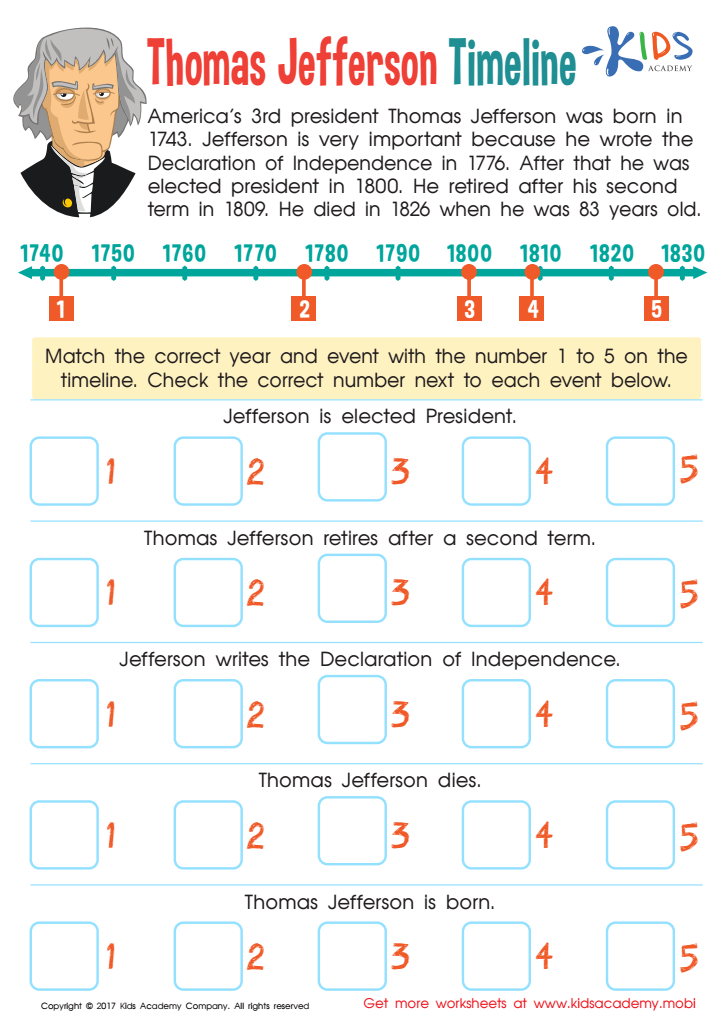
Thomas Jefferson Timeline Worksheet
 Assign to My Students
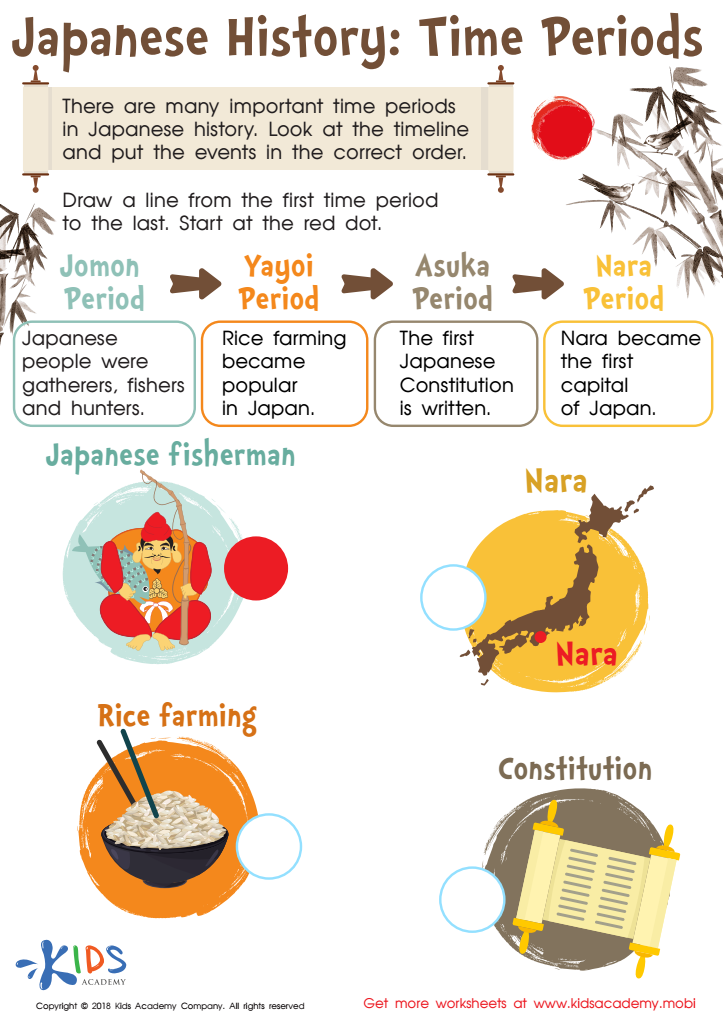
Japanese History: Time Periods Worksheet
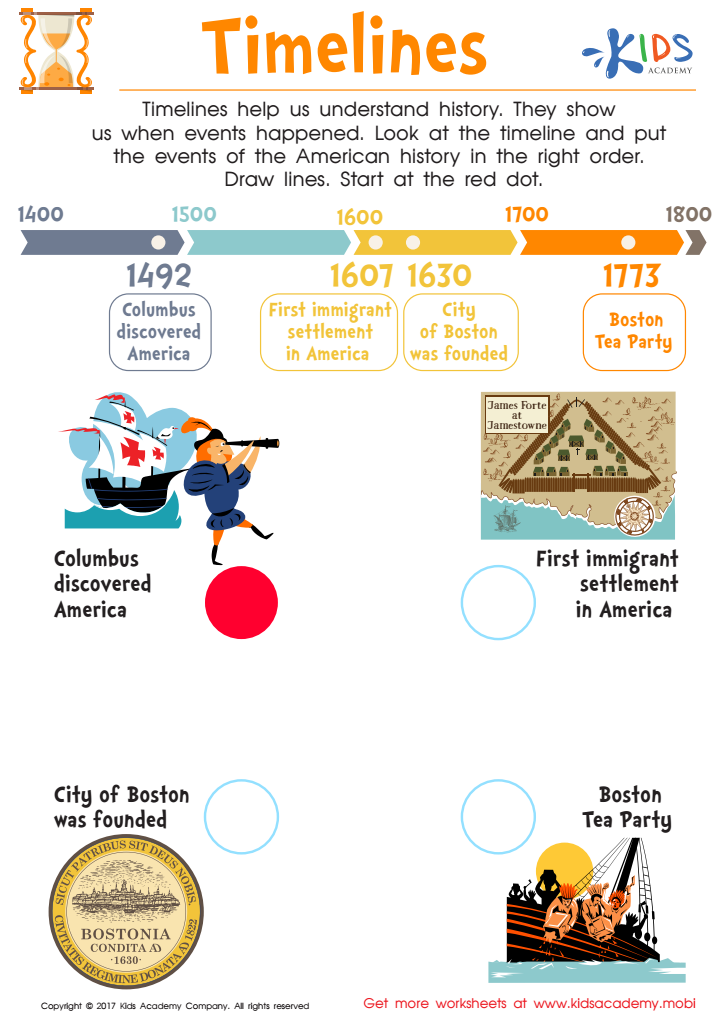
American History Timeline Worksheet
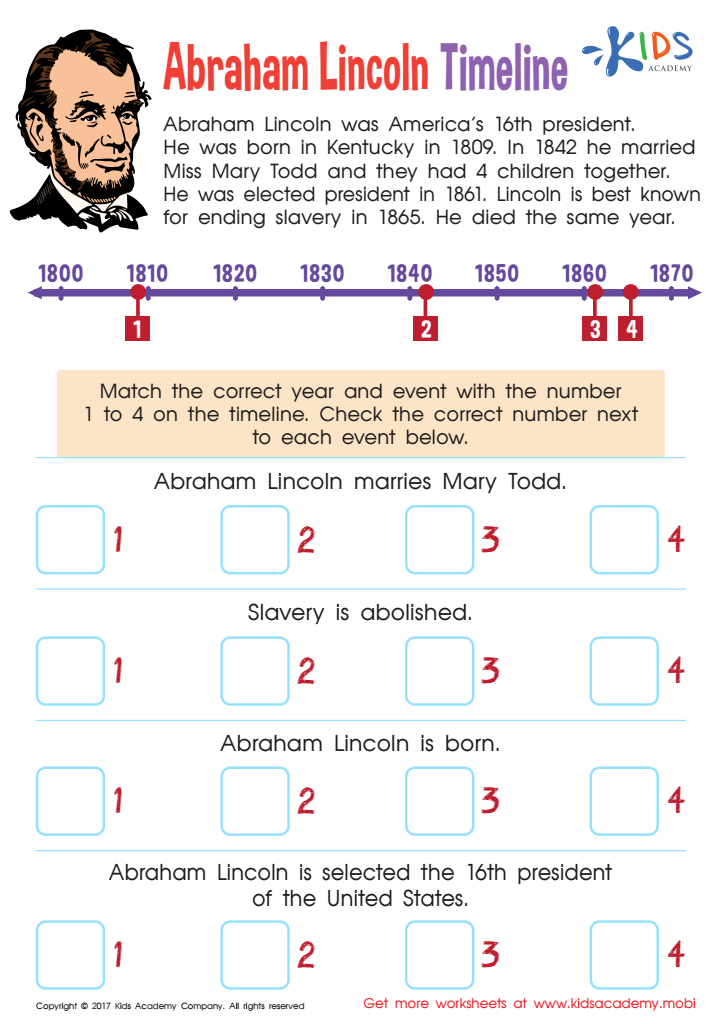
Abraham Lincoln Timeline Worksheet




.jpg)


Understanding timelines in social studies is fundamental for 9-year-olds as it roots them in the context of time, fostering a sense of history and sequence. Parents and teachers should care about this because timelines help children grasp the chronological order of events, making it easier for them to understand how one event leads to another. This skill is crucial for developing a comprehensive understanding of history, as it places historical events in a relatable framework.
Timelines also aid in developing children’s critical thinking and organizational skills. When children learn to organize events chronologically, they practice sorting information logically, a skill essential in many aspects of learning and everyday life. They begin to understand cause and effect relationships, which enhances their analytical abilities.
Additionally, appreciating historical timelines fosters a deeper respect for cultural heritage and global developments. This knowledge equips them with a broader perspective, promoting empathy and understanding of how past events shape the contemporary world.
For nine-year-olds, who are in a pivotal stage of cognitive development, engaging with timelines can stimulate curiosity and a love for learning. It encourages them to ask questions about the past, present, and future, driving a lifelong interest in history and social studies. Hence, understanding timelines is not just about memorizing dates, but about building a more knowledgeable and insightful future generation.