Sound-letter correlation Phonics Worksheets
3 filtered results
-
From - To
Enhance early reading skills with Sound-Letter Correlation Phonics Worksheets from Kids Academy! These expertly designed resources help young learners connect letters with their corresponding sounds, building a critical foundation for fluent reading. Engaging and interactive, our worksheets feature fun activities, vibrant illustrations, and easy-to-follow instructions, making learning enjoyable for children. Perfect for classroom or homeschool settings, these tools support kids as they master this essential skill. Improve your child's phonemic awareness today with Kids Academy’s effective and user-friendly worksheets! Visit our page for more details and to download the perfect materials for your little reader.
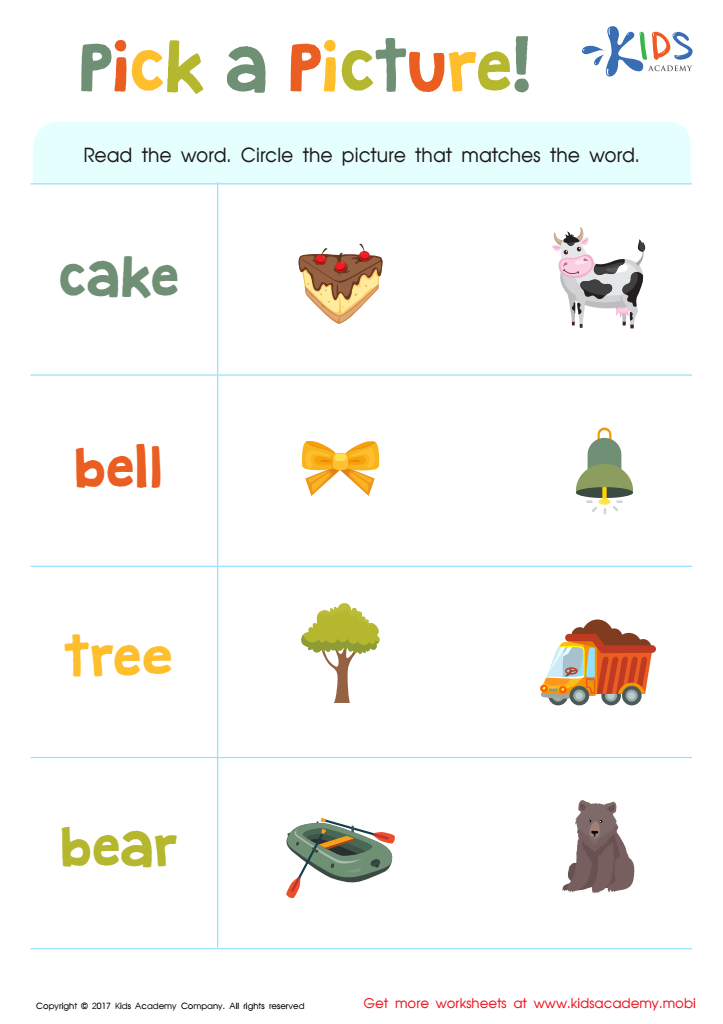
Pick a Picture Word Recognition Worksheet
 Assign to My Students
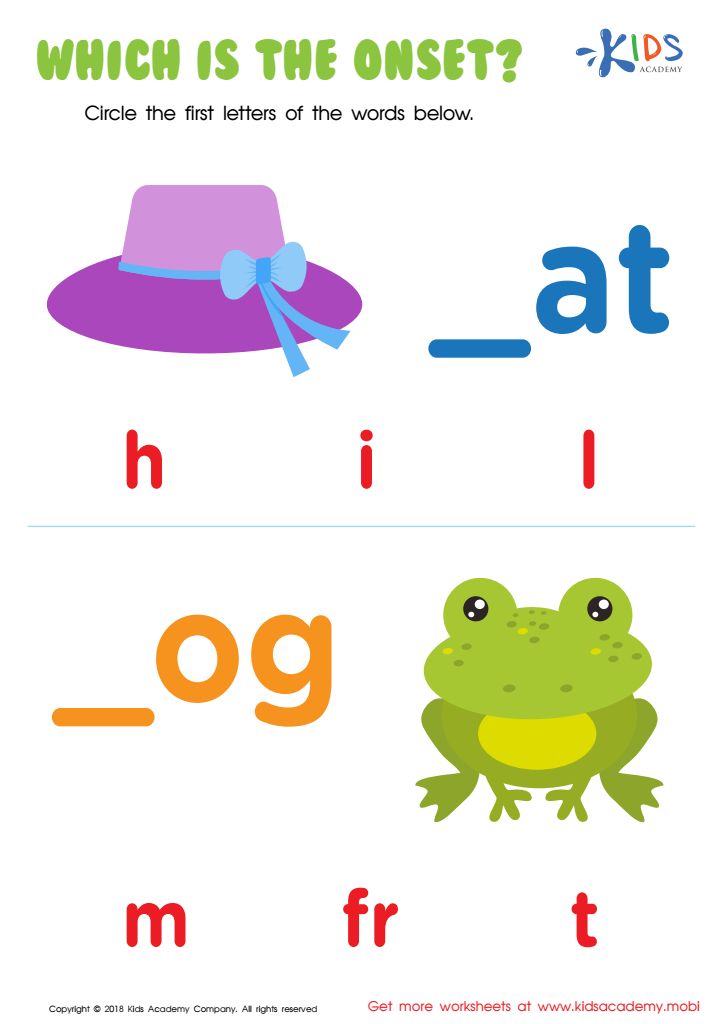
Which Is the Onset? Worksheet
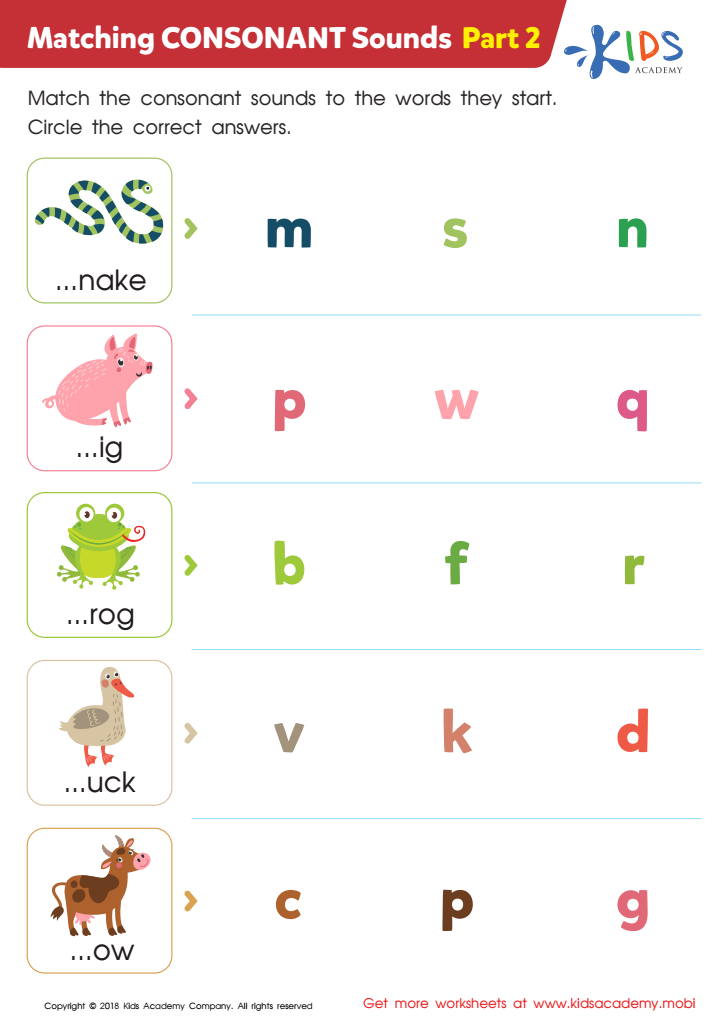
Matching Consonant Sounds: Part 2 Worksheet








Understanding sound-letter correlation, or phonics, is crucial for early literacy development in children. Phonics refers to the relationship between sounds (phonemes) and their corresponding written symbols (graphemes). Teaching phonics helps children grasp the foundation of reading and spelling, leading to stronger language skills.
For parents and teachers, emphasizing phonics is vital because it equips children with the tools needed to decode words independently. When children understand that letters represent specific sounds, they can sound out new words and develop reading fluency. This independent decoding skills enhance comprehension, allowing kids to focus more on understanding the meaning rather than struggling with word recognition.
Moreover, strong phonics skills contribute to better spelling since children learn to connect sounds with their written forms. This builds confidence in writing and can stimulate a love for reading and learning.
Without a good grasp of phonics, children may face difficulties in reading and writing, leading to frustration and academic challenges across various subjects. Therefore, integrating systematic phonics instruction in early education gives children a solid start, setting them up for long-term academic success and a positive attitude toward learning. Parents’ and teachers’ engagement in teaching phonics can make a significant difference in a child’s educational journey.







