
Physical Science Worksheets Activities With Answers for Ages 3-6
4 filtered results
Difficulty Level
Grade
Age
-
From - To
Subject
Activity
Standards
Discover a fantastic collection of engaging Physical Science worksheets and activities tailored for kids aged 3-6! Our worksheets are designed to foster curiosity about the world through fun, interactive learning experiences. Each activity encourages young learners to explore fundamental concepts of physical science while developing essential skills. You'll find colorful illustrations and captivating questions that make science discovery both exciting and educational. Plus, include easy-to-follow answers to ensure smooth learning and support for parents and teachers. Perfect for classroom use or home learning, these resources are a valuable tool in nurturing a lifelong love of science in your little learners!
Favorites
With answer key
Interactive
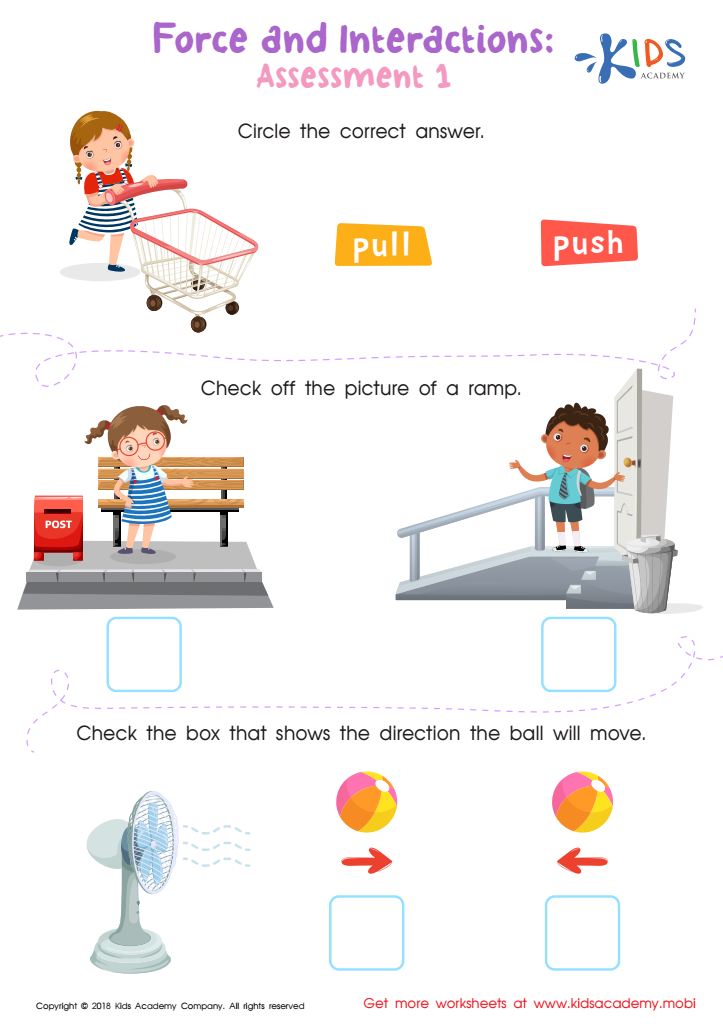
Force and Interactions: Assessment 1 Worksheet
Test your students' knowledge of pushing, pulling, ramps and wind with this worksheet. The first task requires them to identify push or pull pictures. The second asks them to identify a ramp and the third to explain which direction a ball will move when exposed to wind.
 Assign to My Students
Force and Interactions: Assessment 1 Worksheet
Worksheet
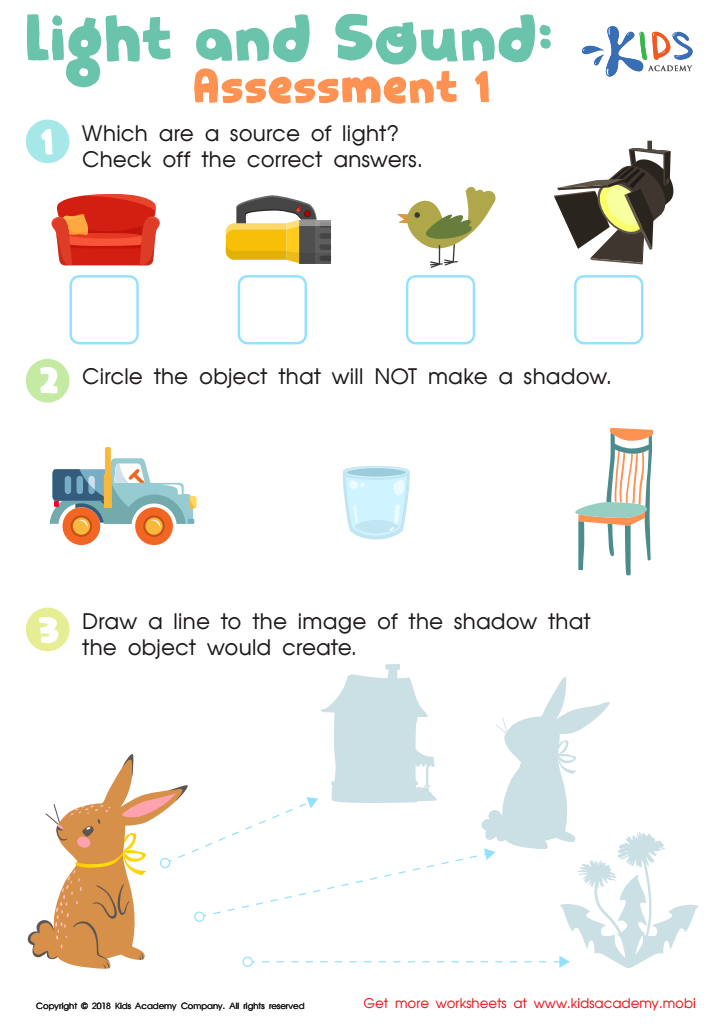
Light and Sound: Assessment 1 Worksheet
Can your kids name a light source? Challenge them to name the sun and moon, then point out objects they use when the sun sets. Look through the worksheet with them and ask them to identify the light sources. Help them check off the correct answers.
Light and Sound: Assessment 1 Worksheet
Worksheet
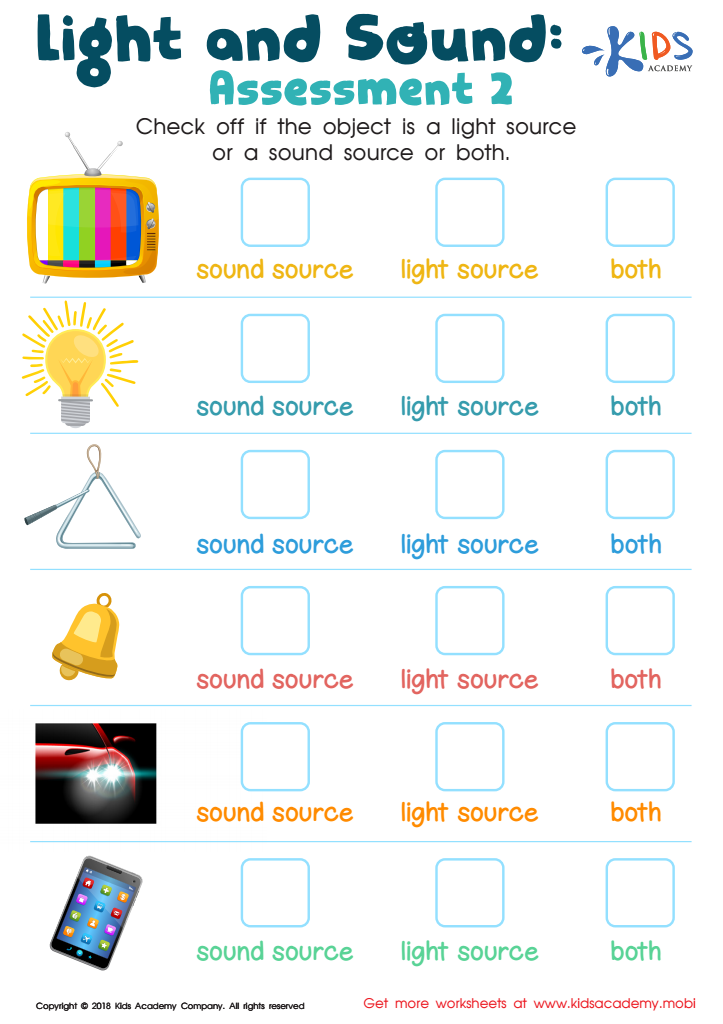
Light and Sound: Assessment 2 Worksheet
This worksheet introduces your kids to light and sound, with common sources of each. Identify the objects and help them check if it's a light source, a sound source, or both. Colourful and simple, it's a great way to teach your little ones! (80 words)
Light and Sound: Assessment 2 Worksheet
Worksheet
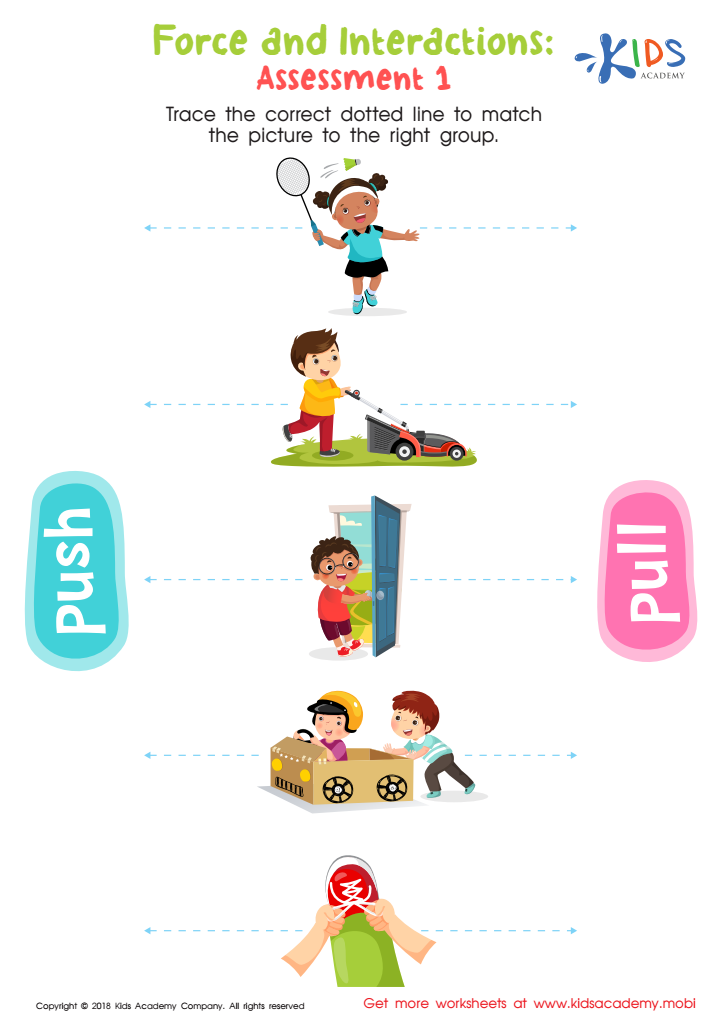
Force and Interactions: Assessment 2 Worksheet
Help your child see the difference between push and pull with this fun worksheet. Ask them to match each picture to the right group. The "push" is on the left and the "pull" is on the right. Assist them in tracing the activities and explain what it is the people are doing.
Force and Interactions: Assessment 2 Worksheet
Worksheet
Join Kids Academy for Free
Who is primarily going to use this learning content?






Parents and teachers should prioritize Physical Science activities for children aged 3-6 because these formative years are crucial for cognitive and emotional development. Engaging in hands-on science activities helps young learners develop critical thinking, problem-solving skills, and a sense of curiosity about the world around them.
Physical science, which encompasses concepts like matter, energy, and force, provides foundational knowledge that can be built upon in later education. Through fun and interactive experiments, children can explore scientific concepts in a playful manner, making learning enjoyable and memorable.
Moreover, structured activities encourage collaborative play, fostering social skills and teamwork as children work together to observe and discover. This type of engagement not only promotes a scientific mindset but also supports fine motor skills and cognitive flexibility.
Parents and teachers should also appreciate that early exposure to science can spark a lifelong interest in the subject, encouraging future explorations in STEM fields. When children learn that science is fun and accessible, they are more likely to retain knowledge, nurture an inquisitive nature, and develop resilience by embracing trial-and-error learning. Overall, incorporating Physical Science activities into the early education curriculum is a vital step in nurturing well-rounded, curious, and capable learners.








