Reading Non-Fiction Worksheets Activities With Answers for Ages 3-8
4 filtered results
-
From - To
Explore our engaging "Reading Non-Fiction Worksheets Activities With Answers for Ages 3-8", designed to enrich young learners' understanding of real-world topics. These worksheets provide entertaining, age-appropriate exercises that spark curiosity and foster critical thinking skills in early readers. Each activity is structured to enhance comprehension, vocabulary, and literacy, featuring fun facts and interactive challenges. Additionally, easy-to-follow answer keys ensure a seamless learning experience for both educators and parents. Perfect for classroom use or at-home learning, these resources will inspire little minds to delve into the fascinating world of non-fiction. Start your child's educational journey today!
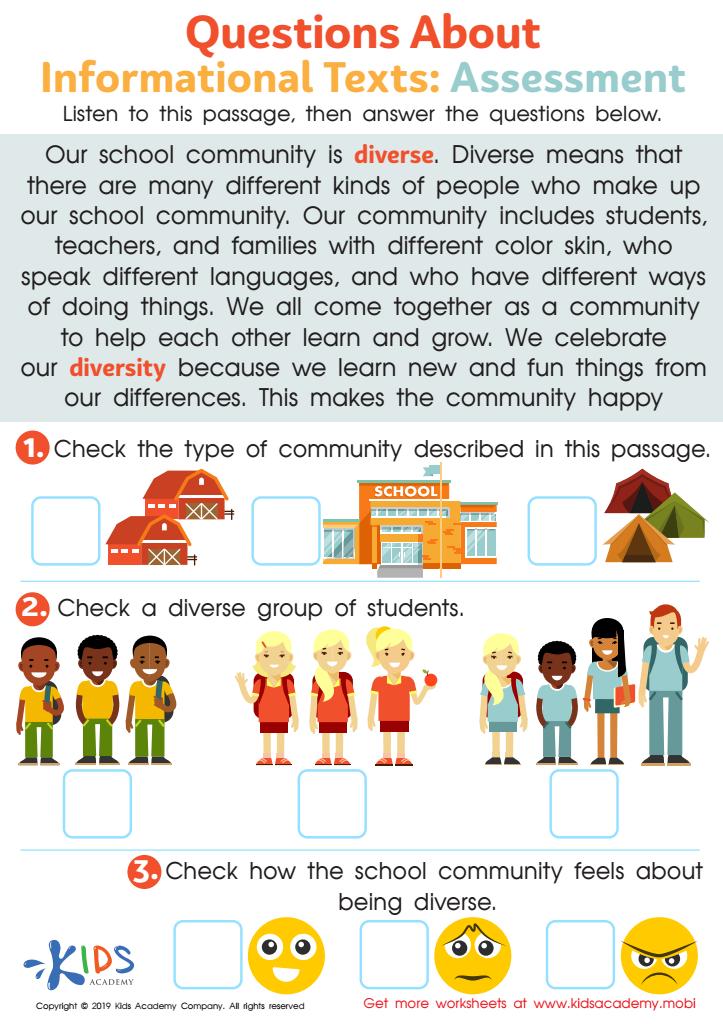
Questions About Informational Texts: Assessment 1 Worksheet
 Assign to My Students
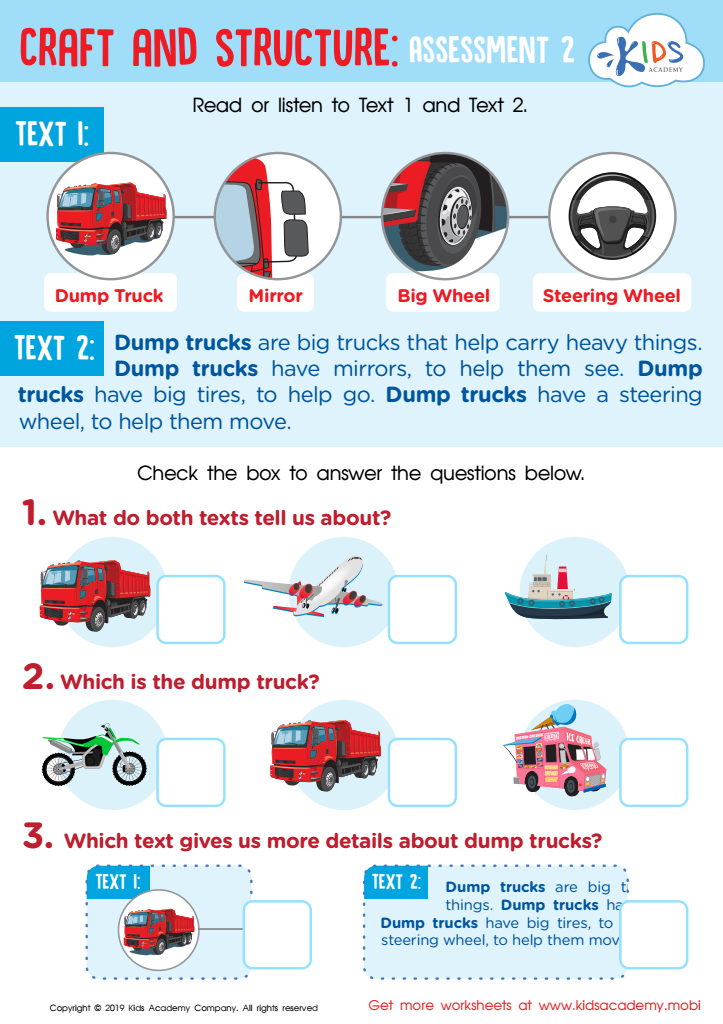
Craft and Structure: Assessment 2 Worksheet
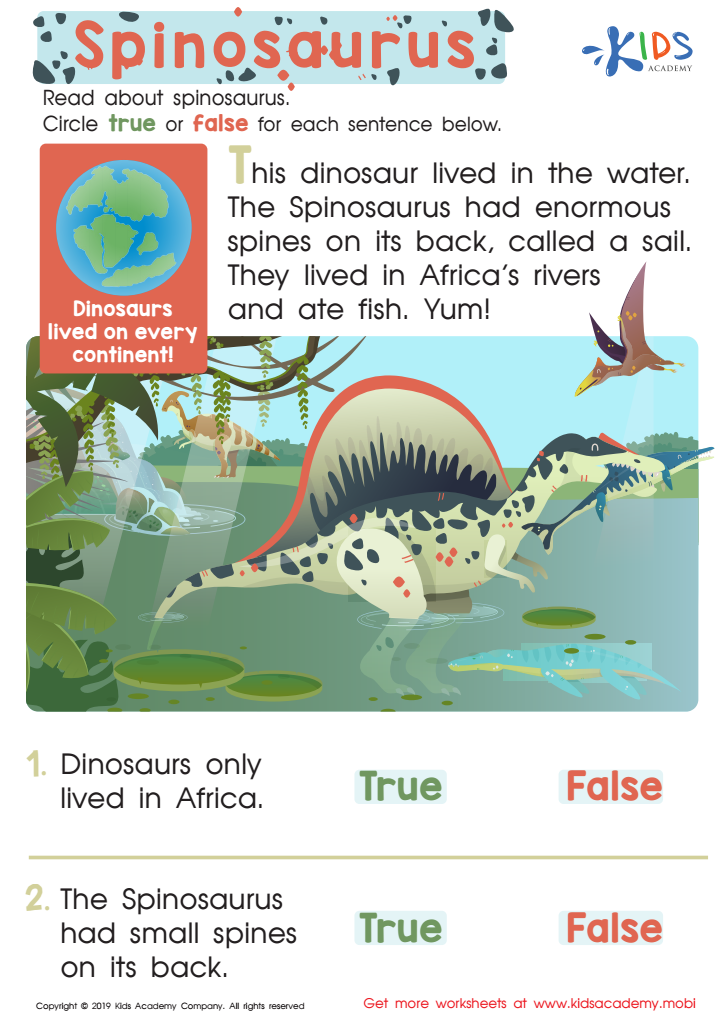
Spinosaurus Assessment Worksheet
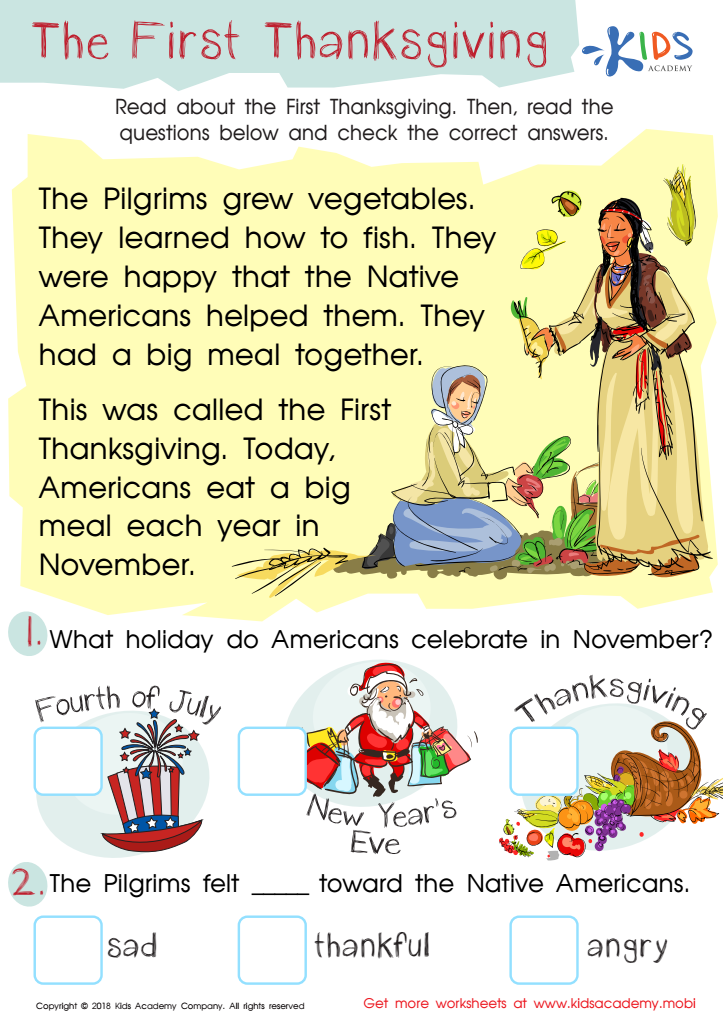
Assessment: First Thanksgiving Worksheet







Reading non-fiction activities for children ages 3-8 is crucial for several reasons. First, these activities introduce young learners to factual information about the world, helping expand their vocabulary and comprehension skills. Non-fiction texts often cover topics such as animals, space, or cultures, sparking curiosity and nurturing a sense of wonder.
Such reading fosters critical thinking, encouraging children to ask questions, develop perspectives, and understand how to differentiate between facts and opinions. Engaging with non-fiction also builds foundational knowledge, which is essential for future academic success across subjects.
Moreover, structured reading activities with answers provide parents and teachers with valuable tools to assess comprehension. These activities often involve interactive elements, making learning enjoyable and engaging. They can also promote discussions at home or in the classroom, enhancing the learning experience.
Encouraging reading non-fiction at an early age sets the stage for lifelong learning, instilling a love of reading and inquiry. Additionally, it equips children with the skills they need to navigate an information-rich world, fostering informed engagement as they grow. Thus, prioritizing non-fiction activities shouldn't just be an option but rather an integral part of early education.








