Phonics Worksheets Activities With Answers for Ages 3-9 - Page 2
25 filtered results
-
From - To
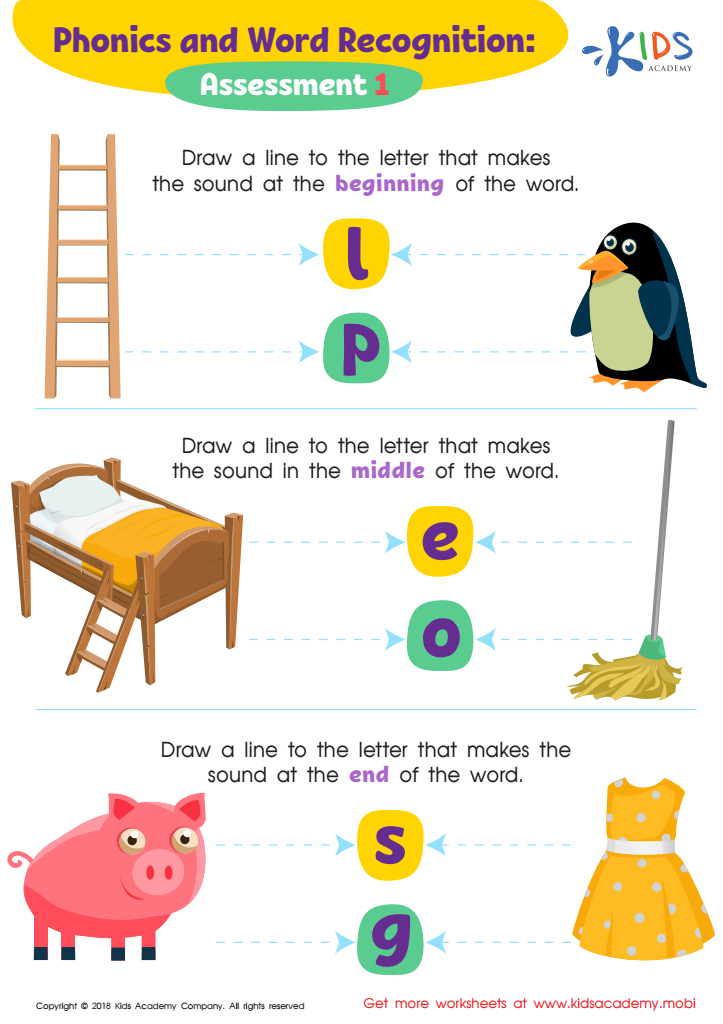
Phonics and Word Recognition: Assessment 1 ELA Worksheet
 Assign to My Students








Phonics activities are crucial for children aged 3-9 as they lay the foundation for reading and writing skills. These activities help young learners understand the relationship between letters and sounds, which is essential for decoding words. When parents and teachers engage with phonics activities, they not only foster a child’s literacy skills but also boost their confidence in reading.
Phonics activities provide targeted practice that makes learning interactive and enjoyable. By incorporating games, songs, and matching activities, kids develop phonemic awareness and improve their ability to recognize sounds in words. Activities that come with answers allow caregivers to easily assess a child’s progress and provide immediate feedback, steering them towards areas that need reinforcement.
Furthermore, these activities support different learning styles, making them accessible to diverse learners. With early mastery of phonics, children can transition smoothly to more complex reading tasks, which is vital for academic success in later grades. Involved parents and skilled educators who prioritize phonics not only help develop essential reading skills but also nurture a lifelong love for reading, ultimately setting the stage for better educational outcomes and independent learning. Thus, prioritizing phonics activities is an investment in a child's future.








