Filters

11 filtered results

Clear all filters
Favorites
With answer key
Interactive

11 filtered results

Difficulty Level

Grade


Explore our engaging "Reading Fiction Worksheets Activities with Answers" designed for ages 3-9! Our curated collection helps nurture young readers’ comprehension skills through exciting, age-appropriate fiction excerpts. Each worksheet features fun exercises that encourage critical thinking, expression, and vocabulary development, making reading a delightful experience. With clear answer keys provided, it's easy for educators and parents to guide children through enjoyable activities. Foster a love for literature while building essential literacy skills! Whether in the classroom or at home, these worksheets provide valuable resources for every budding reader. Dive into the world of fiction and watch creativity flourish!

Check out this FREE Reading Fiction Trial Lesson for age 3-9!

Answer Questions about Key Details in an Informational Text

Favorites
With answer key
Interactive
  • Reading Fiction
  • 3-9
  • With answer key
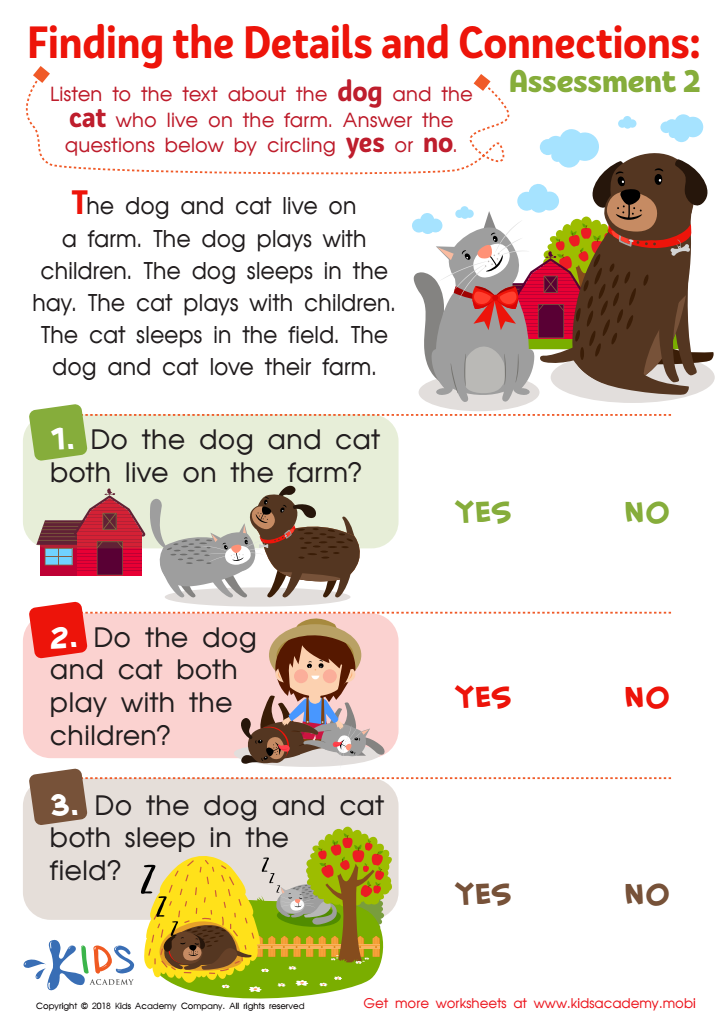
Finding the Details and Connections: Assessment 2 Worksheet

Finding the Details and Connections: Assessment 2 Worksheet

Does your child love animals? If you have pets, they'll relate to the text in this worksheet. Read it aloud to them and help them answer the simple questions by circling yes or no. The story is about a dog and cat living on a farm. Let your child read it aloud to you if they can.
Finding the Details and Connections: Assessment 2 Worksheet
Worksheet
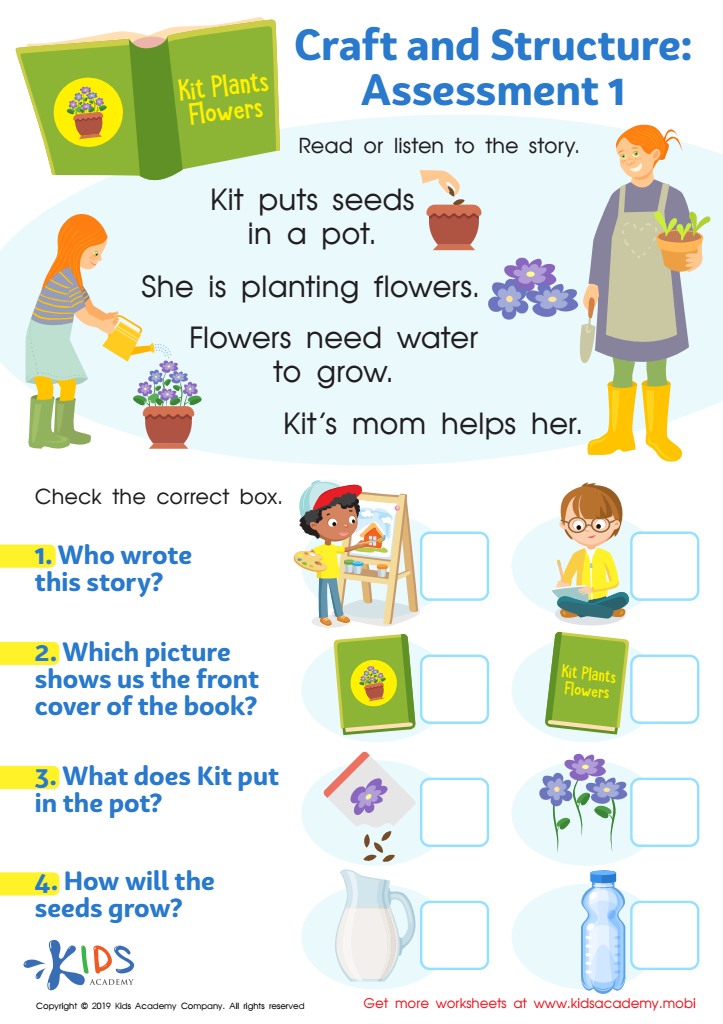
Craft and Structure: Assessment 1 Worksheet

Craft and Structure: Assessment 1 Worksheet

A good reader needs more than word recognition: children must be able to identify story elements like author and main points. Test your child's craft and structure knowledge with this free PDF worksheet. They will read or listen to a story, then check off the correct answers according to what they heard or read.
Craft and Structure: Assessment 1 Worksheet
Worksheet
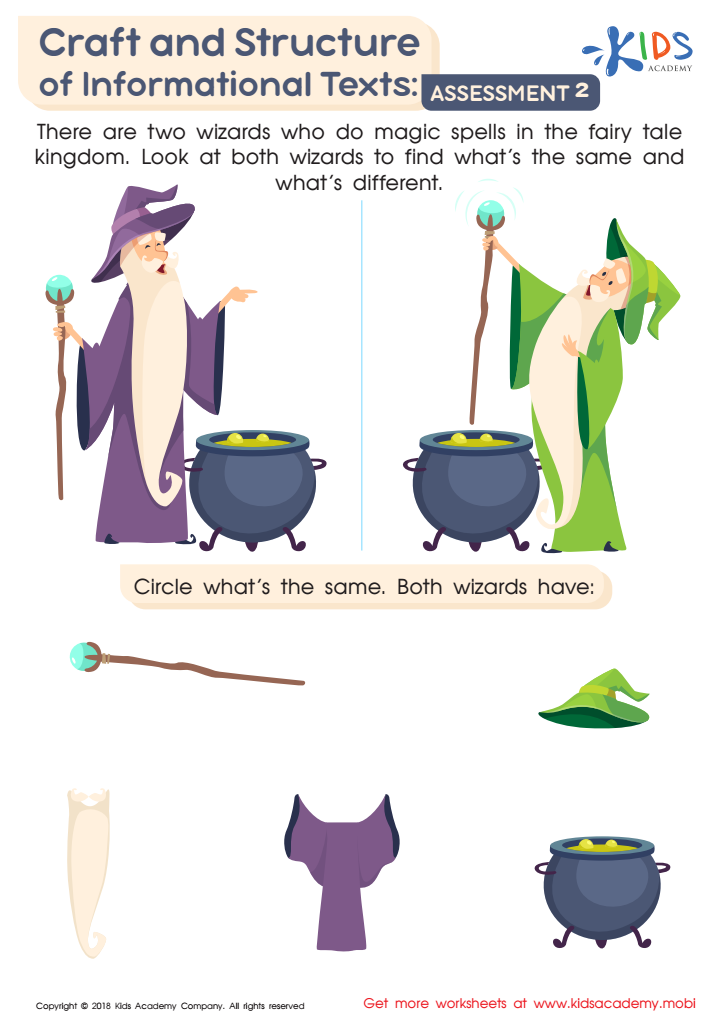
Craft and Structure of Informational Texts: Assessment 2 Worksheet

Craft and Structure of Informational Texts: Assessment 2 Worksheet

This assessment has kids looking at two similar fairy tale wizards, focusing on their visuals to find the similarities and differences. Then, they'll circle the things they both have. It's a great way to help children hone their detail-oriented comprehension skills, which is essential when using informational texts.
Craft and Structure of Informational Texts: Assessment 2 Worksheet
Worksheet
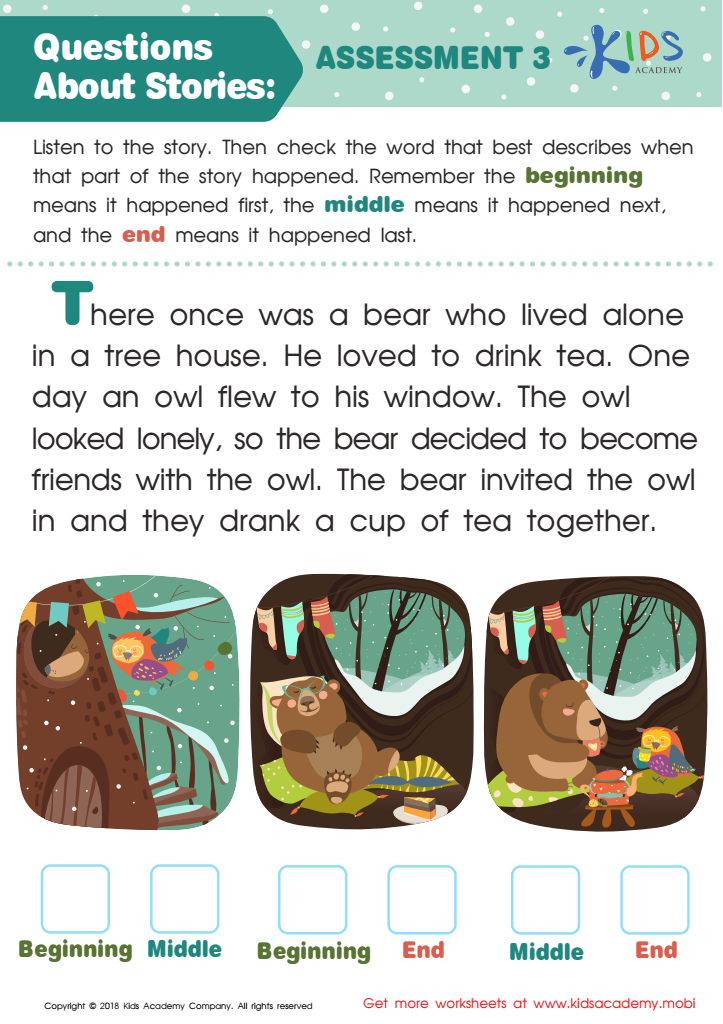
Questions About Stories: Assessment 3 Worksheet

Questions About Stories: Assessment 3 Worksheet

Help kids understand stories by having them listen to a story and check boxes for the beginning, middle, and end. This worksheet makes it fun for even the youngest learners to recall story elements and sequence of events. Let them listen to the story from start to finish, then look at the pictures to check which part of the story they depict.
Questions About Stories: Assessment 3 Worksheet
Worksheet
Questions About Stories: Assessment 2 Worksheet

Questions About Stories: Assessment 2 Worksheet

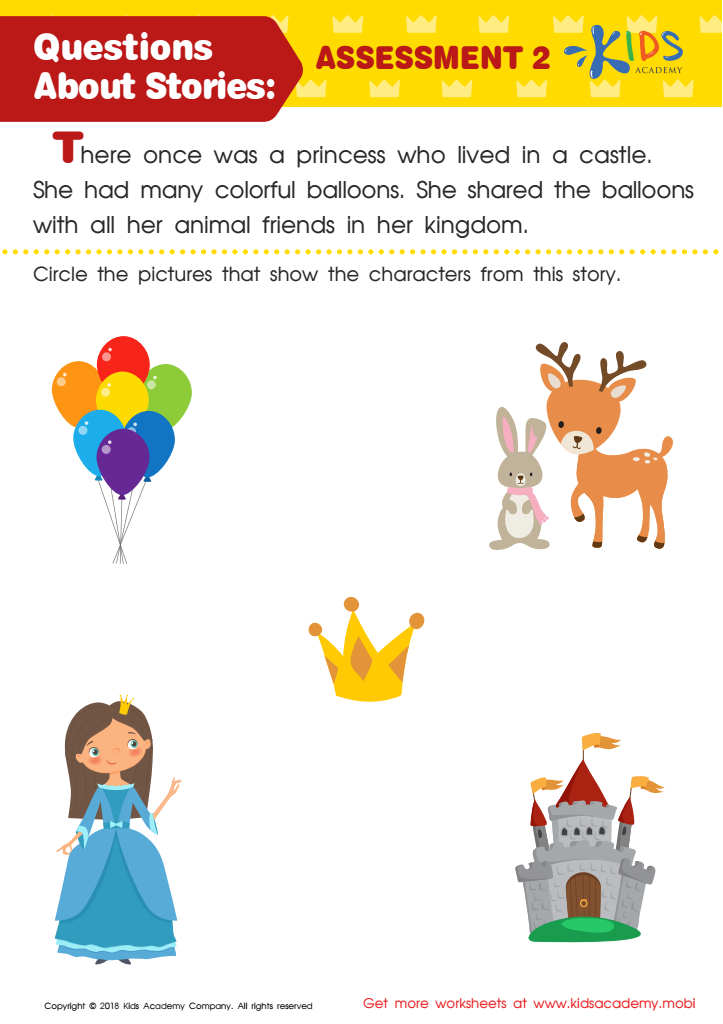
Talk to your child about what a princess is and what activities they associate with that word. Then, read the story to them and help them identify characters in the pictures. Look out for details and ask them questions to ensure they understand.
Questions About Stories: Assessment 2 Worksheet
Worksheet
Craft and Structure of Stories: Assessment 2 Worksheet

Craft and Structure of Stories: Assessment 2 Worksheet

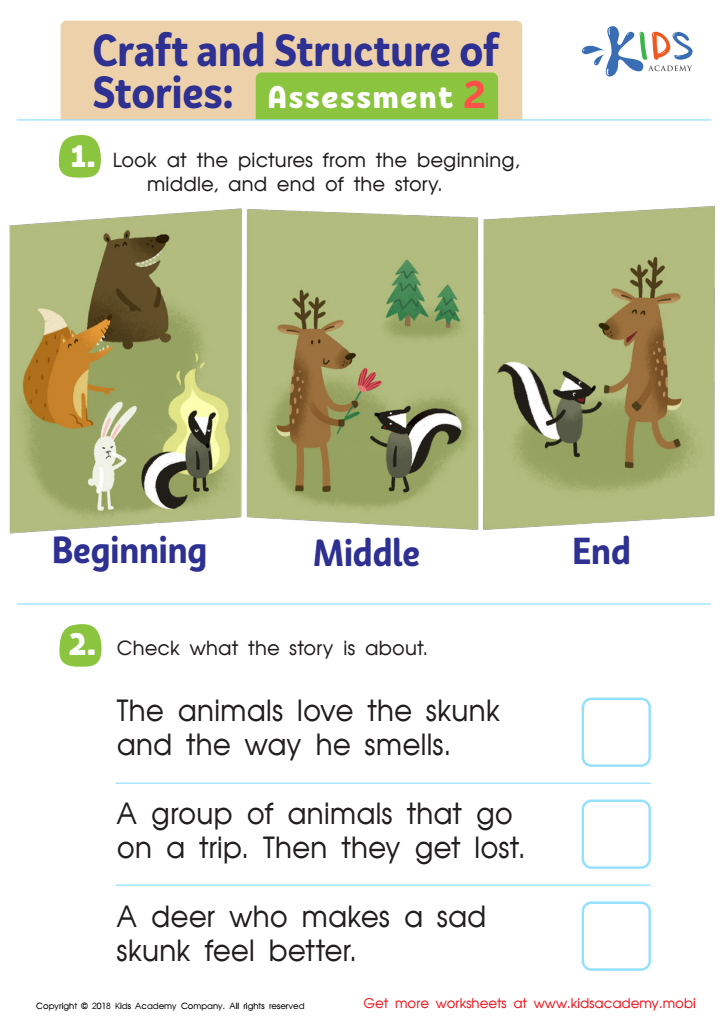
Help your child assess their story sequencing and reading comprehension skills using this cute worksheet! It encourages them to look at the three pictures on the page, each representing a scene from the beginning, middle and end. Ask them what the story is about, then let them check the box next to the correct answer. This is a great way to ensure they understand the main events of a story.
Craft and Structure of Stories: Assessment 2 Worksheet
Worksheet
Finding the Details and Connections: Assessment 1 Worksheet

Finding the Details and Connections: Assessment 1 Worksheet

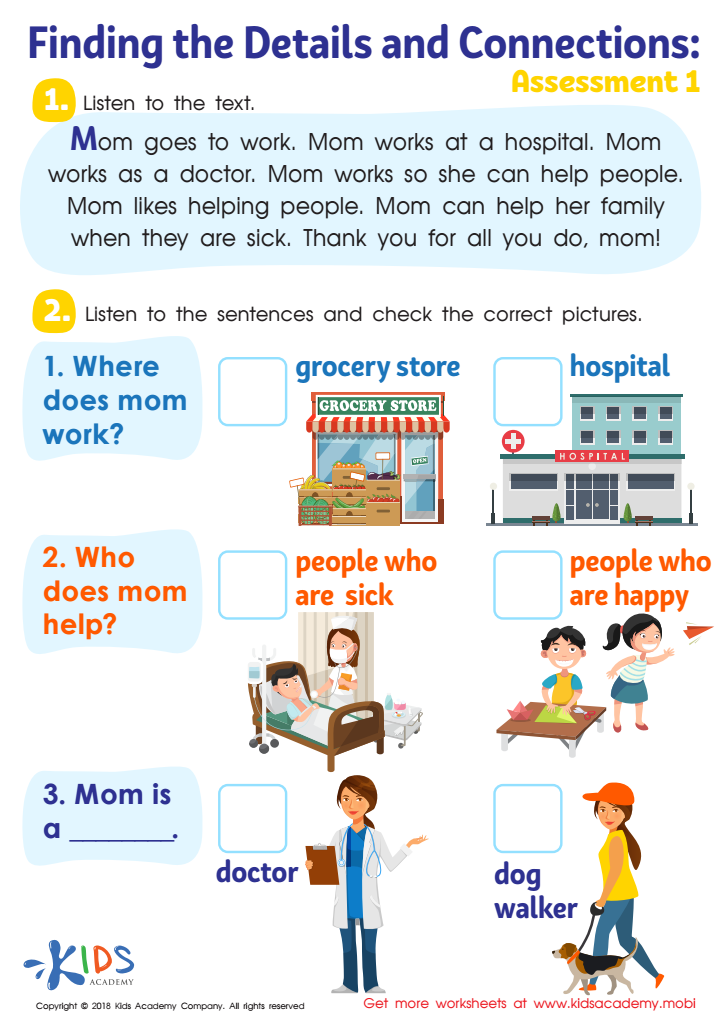
Ask your students what their parents do for a job. Do they know what profession their mom is in and where she works? Professionals have places they go to do their job. In this task, Mom goes to a hospital and is a doctor. Read the text and help them check the right pictures.
Finding the Details and Connections: Assessment 1 Worksheet
Worksheet
Questions About Stories: Assessment 1 Worksheet

Questions About Stories: Assessment 1 Worksheet

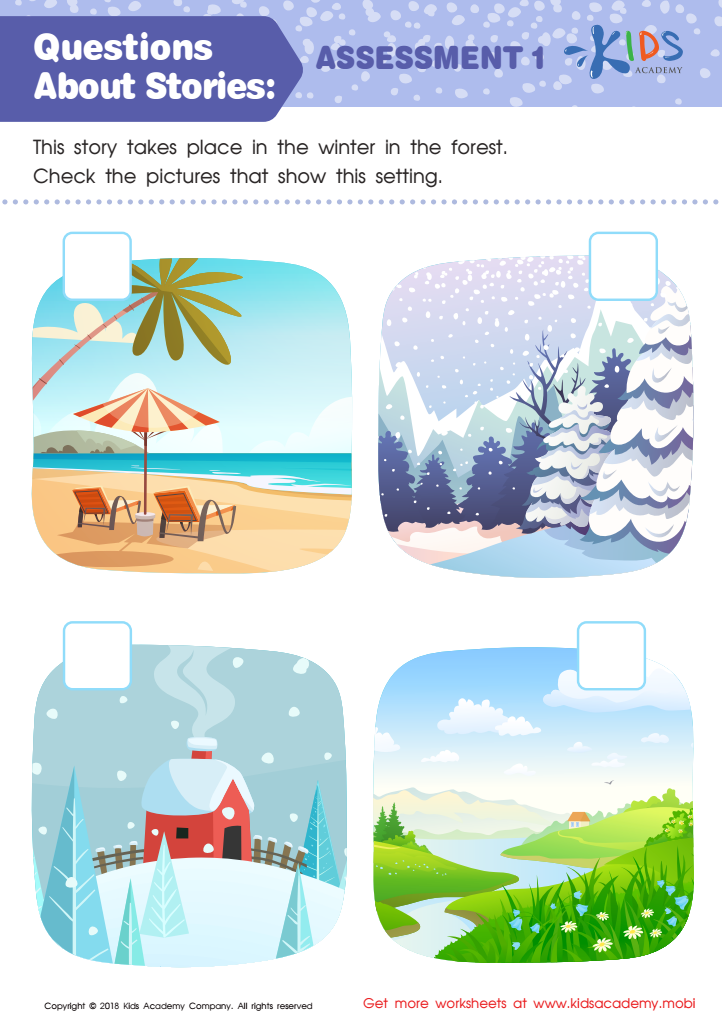
Winter brings snow, cold, short days, and darkness. Schools can even close due to heavy snow. Ask your child what their favourite winter activities are and what color they associate with 'winter'. This worksheet takes place in a winter forest. Look at the 4 pictures with your child, and help them identify which one shows the correct setting.
Questions About Stories: Assessment 1 Worksheet
Worksheet
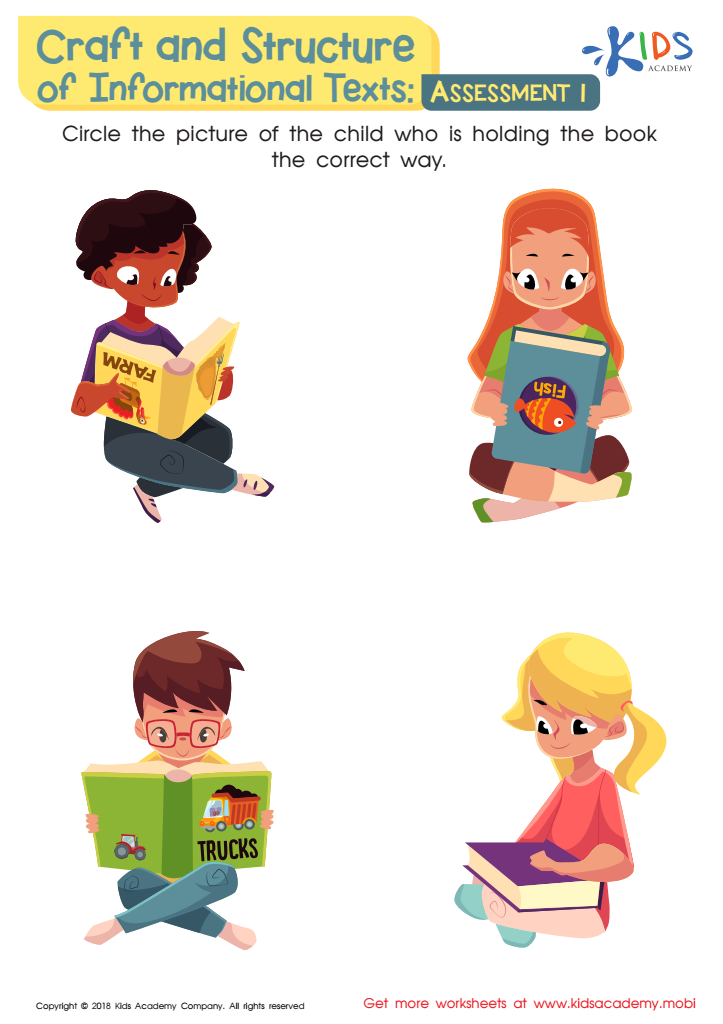
Craft and Structure of Informational Texts: Assessment 1 Worksheet

Craft and Structure of Informational Texts: Assessment 1 Worksheet

Young children need to know how to hold books correctly when they start reading. This assessment worksheet helps them show they know what to do. They'll look at the pictures and circle the child who is holding the book correctly. It's a great way to tell they are well on their way to becoming lifetime readers!
Craft and Structure of Informational Texts: Assessment 1 Worksheet
Worksheet
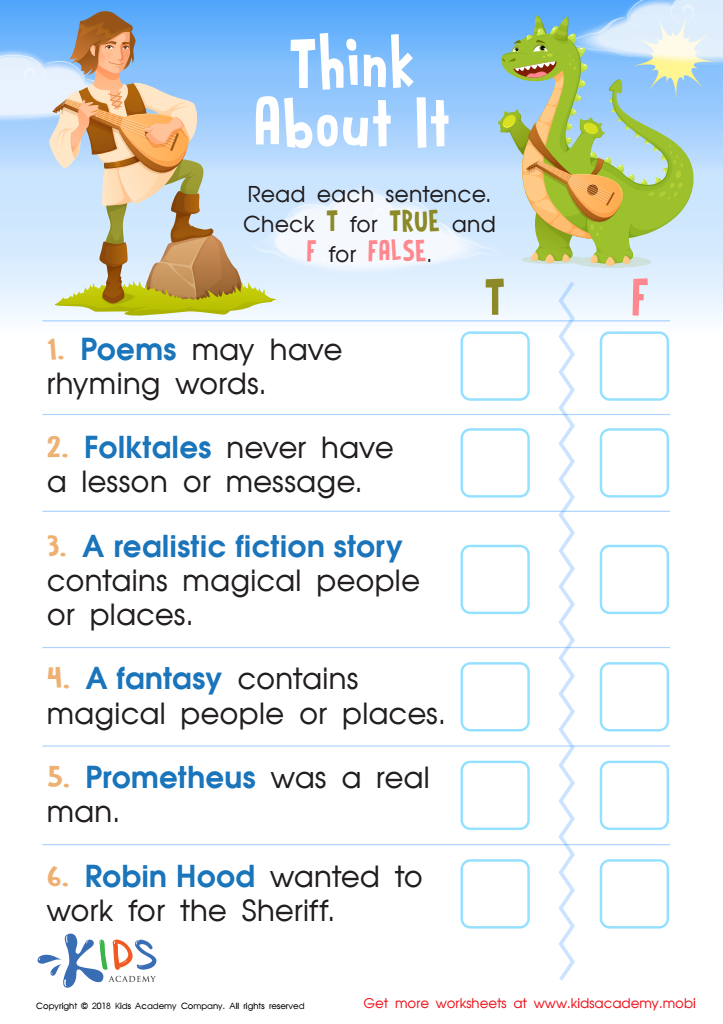
Think About It: Assessment Worksheet

Think About It: Assessment Worksheet

Reading is a fun and important way to learn. Help your students become better readers with this simple yet colorful worksheet. Read each sentence aloud, then have them read it by themselves. Ask them to check T for True and F for False. It's a great way to practice their reading skills!
Think About It: Assessment Worksheet
Worksheet
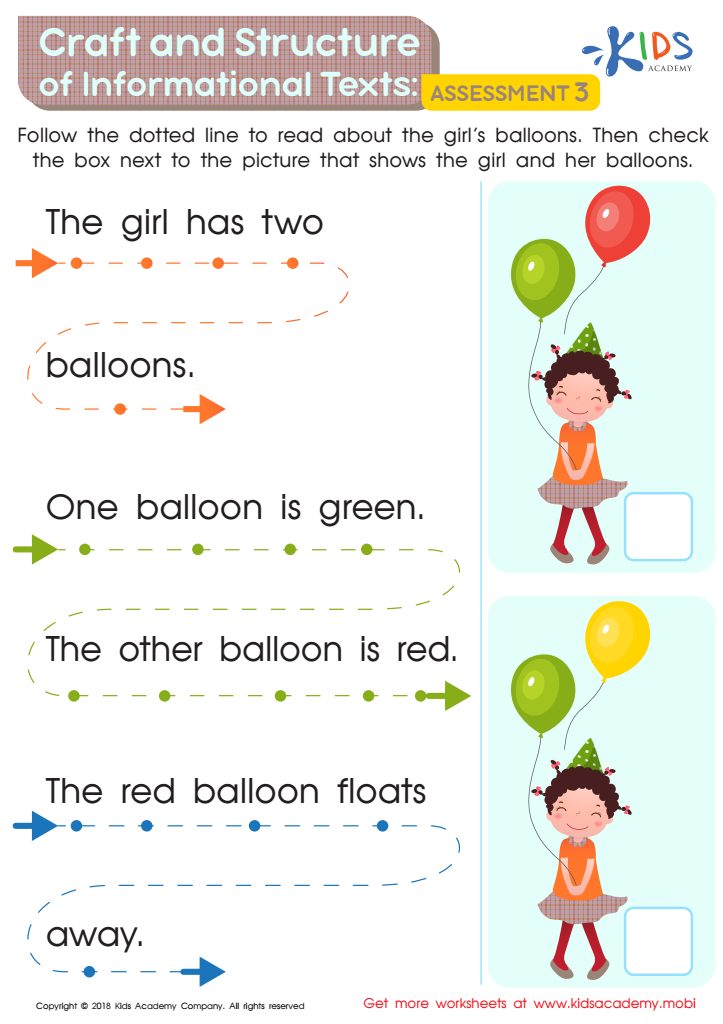
Craft and Structure of Informational Texts: Assessment 3 Worksheet


Craft and Structure of Informational Texts: Assessment 3 Worksheet

Test your beginning reader's understanding of left-to-right directionality and use of details from informational texts with this fun worksheet. Follow the traceable paths to find the right picture for each sentence. This will help your child gain confidence and be successful as a reader.
Craft and Structure of Informational Texts: Assessment 3 Worksheet

Worksheet


Reading fiction activities for children aged 3-9 are essential for several reasons, making them a vital focus for both parents and teachers. Firstly, engaging with fictional stories fosters imagination and creativity in young minds. Children can explore diverse worlds, characters, and situations, which cultivates open-mindedness and emotional intelligence.

Secondly, fiction plays a significant role in language development. Through listening to stories, children are exposed to vocabulary, sentence structure, and narrative patterns that enrich their communication skills. This linguistic growth supports their literacy journey, providing a foundation for lifelong reading habits.

Moreover, fiction often deals with themes of friendship, empathy, and morality, offering valuable lessons. Activities surrounding these stories, such as discussions and reflection questions, can help children connect the plot to their own experiences, promoting critical thinking.

Additionally, these activities can strengthen the bond between parents, teachers, and children through shared storytelling experiences. Reading together not only opens opportunities for learning but also nurtures emotional connections.

In summary, embracing reading fiction activities is not just about promoting literacy; it enhances cognitive and emotional development crucial for young children’s overall growth. Fostering a love for storytelling can shape well-rounded individuals who appreciate not only literature but also the world around them.