Vowels Worksheets Activities With Answers for Ages 4-7
3 filtered results
-
From - To
Discover engaging Vowels Worksheets Activities designed for children ages 4-7! Our resources aim to enhance phonemic awareness and literacy skills in a fun and interactive way. Whether your little learners are identifying, matching, or filling in the blanks, these activities provide essential practice with vowels. Each worksheet is accompanied by an answer key, making it easy for parents and educators to support learning. Perfect for at-home practice or classroom use, our downloadable worksheets ensure that early readers build a strong foundation in understanding sounds and letters. Ready to spark a love for learning? Explore our vowel worksheets today!
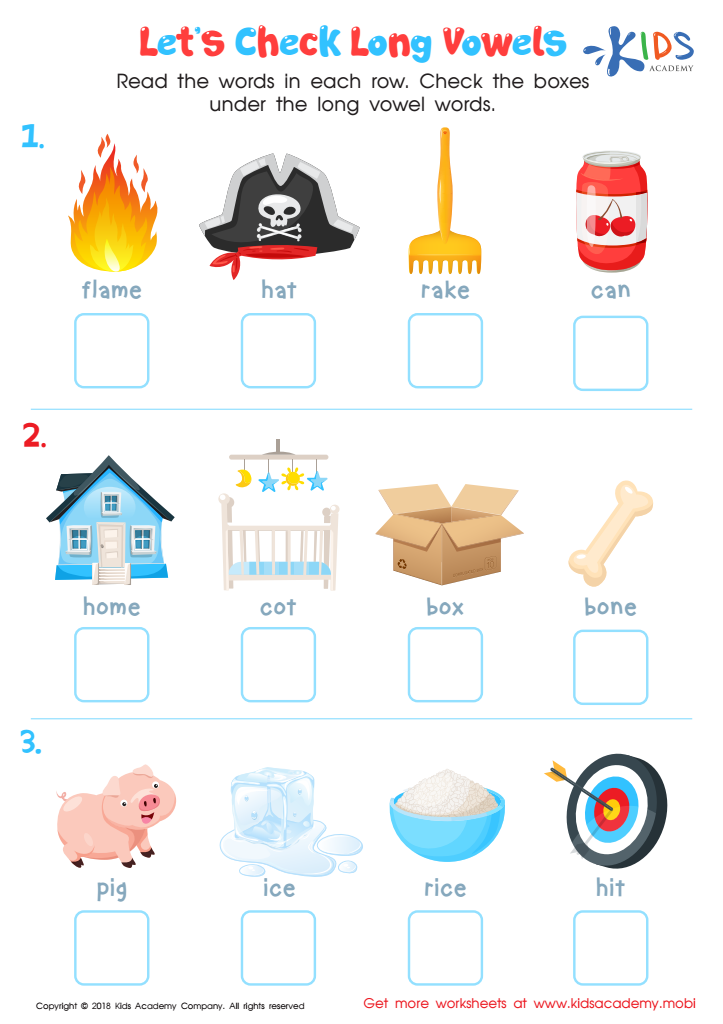
Let's Check Long Vowels: Assessment Worksheet
 Assign to My Students
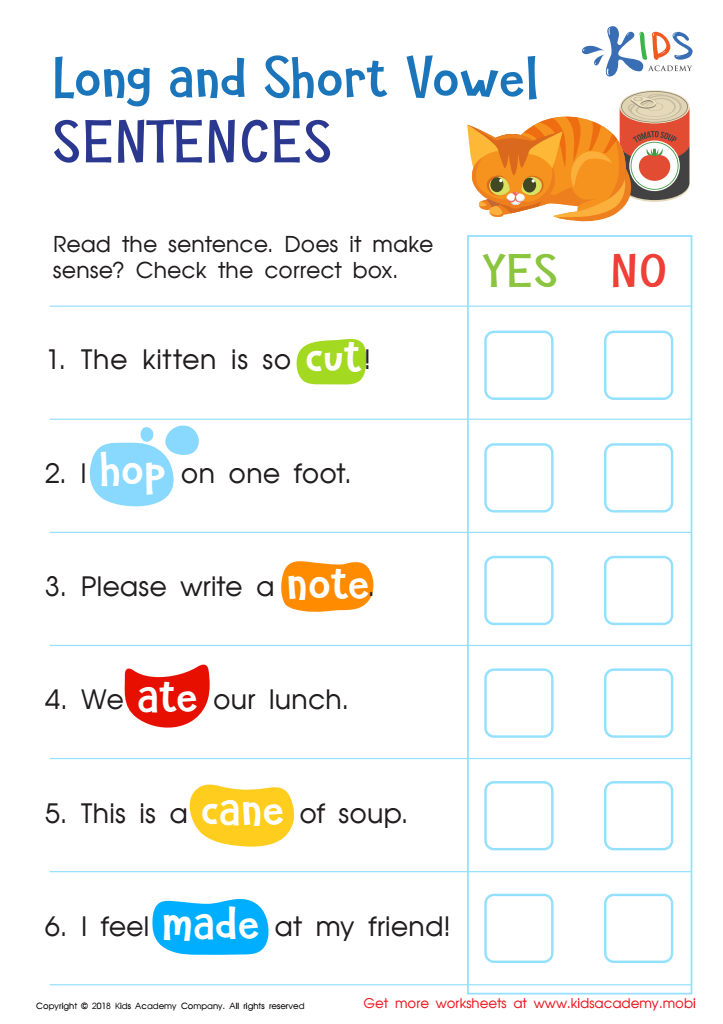
Long and Short Vowel Sentences: Assessment Worksheet
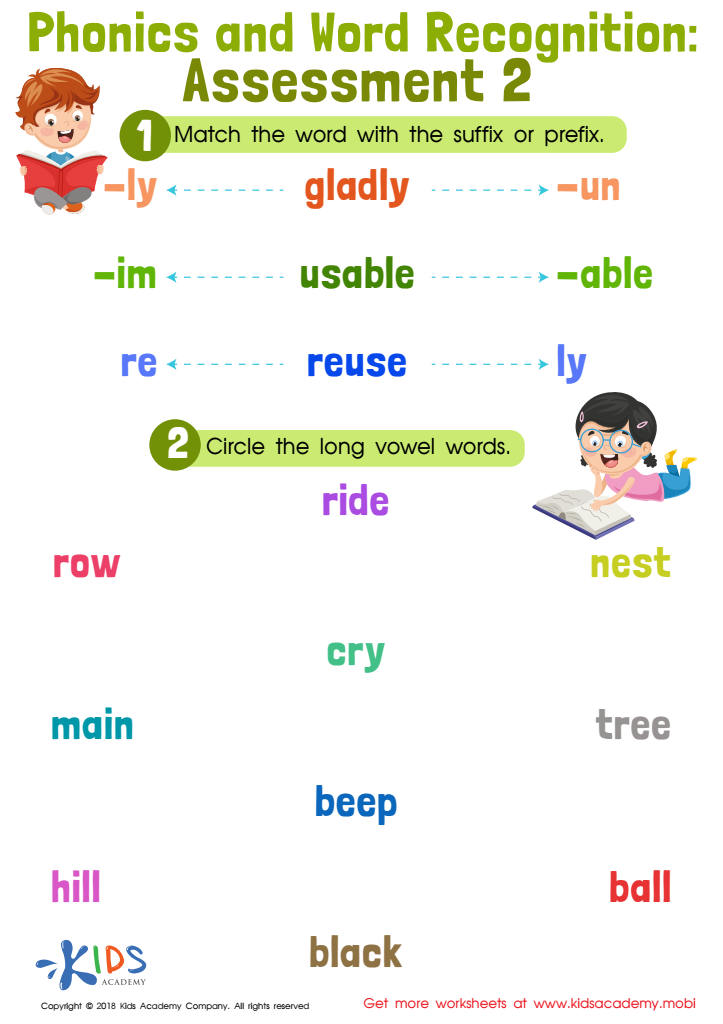
Phonics and Word Recognition: Assessment 2








Vowel activities for children aged 4-7 are crucial for developing foundational literacy skills. At this age, children are learning to recognize, sound out, and use vowels, which play a key role in word formation. Engaging in vowel activities supports phonemic awareness, the ability to hear and manipulate sounds in words, vastly improving their reading and writing abilities.
Parents and teachers should care about these activities because they can enhance children's vocabulary and comprehension. Fun and interactive vowel exercises help maintain a child’s interest, transforming learning into an enjoyable experience. When children participate in engaging vowel games, they are more likely to retain information and feel motivated, paving the way for lifelong learning.
Moreover, skillfully designed activities often include various learning styles, accommodating visual, auditory, and kinesthetic learners, which offers more personalized learning opportunities. They also facilitate assessments for teachers and caregivers to monitor students' progress, identifying areas needing extra support.
Ultimately, nurturing a strong understanding of vowels through targeted activities not only builds critical language skills but also boosts confidence, setting children on a path to academic success. This early emphasis on vowels lays the groundwork for proficient reading, an essential milestone for future educational growth.








