Addition & Subtraction Worksheets Activities With Answers for Ages 7-9 - Page 2
26 filtered results
-
From - To
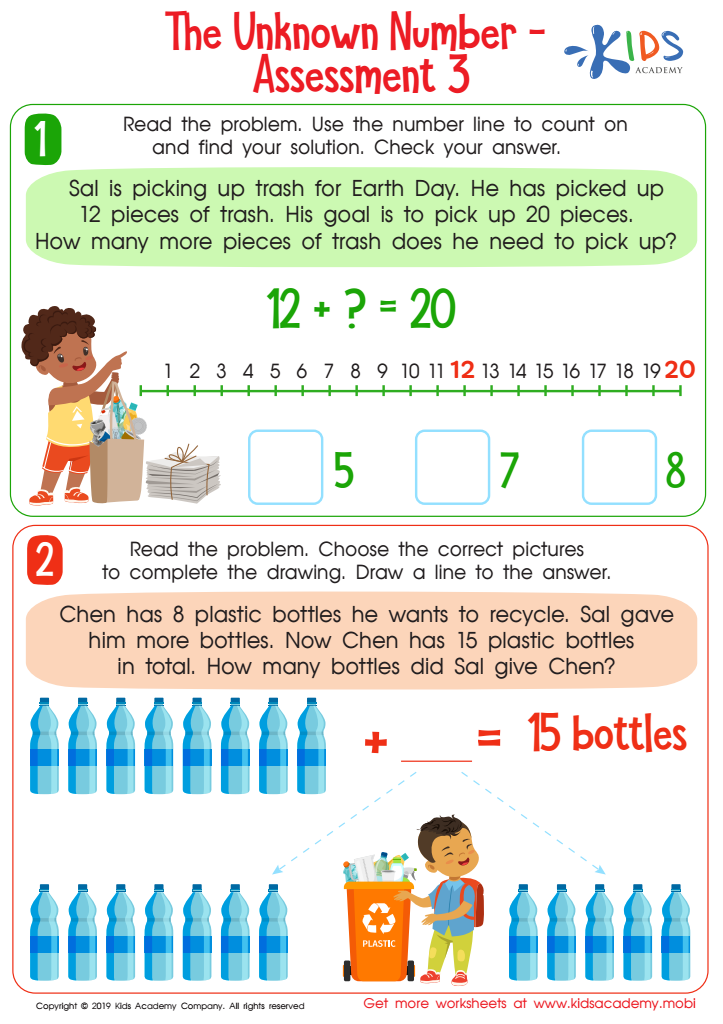
The Unknown Number - Assessment 3 Worksheet
 Assign to My Students
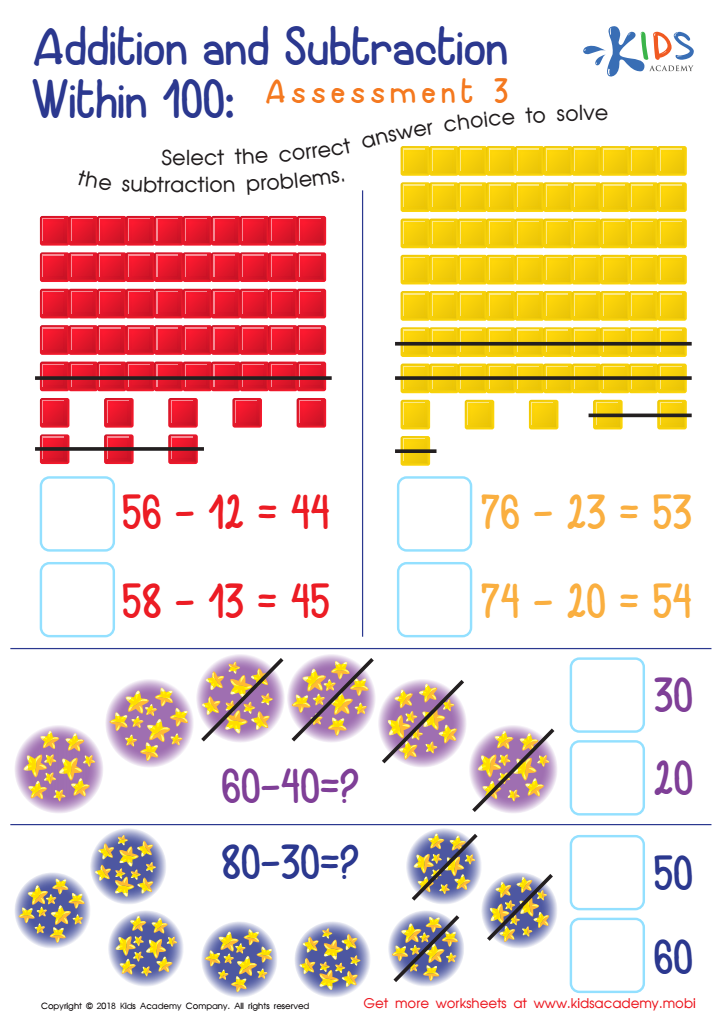
Addition and Subtraction Within 1: Assessment 3 Worksheet





.jpg)


Parents and teachers should prioritize addition and subtraction activities with answers for children aged 7-9 for several reasons. First, this age group is at a crucial stage in their mathematical development, transitioning from basic number recognition to more complex problem-solving. Engaging in structured activities helps reinforce foundational skills, ensuring that students gain confidence and proficiency in mathematics.
Additionally, these activities foster critical thinking and enhance cognitive skills. When children practice addition and subtraction, they learn to approach problems logically and develop strategies for tackling various mathematical scenarios. Furthermore, having access to correct answers allows both parents and teachers to provide immediate feedback, reinforcing learning and correcting misconceptions promptly.
Additionally, incorporating these activities into learning routines creates an enjoyable and interactive approach to math. Families can turn it into a bonding experience, while teachers can make classes more engaging through games and challenges. Finally, mastering these basic operations is crucial for future mathematical concepts, such as multiplication and division, making it imperative that educators and caregivers provide ample practice.
In summary, addition and subtraction activities are essential for developing strong math skills, boosting confidence, and preparing young learners for future academic success.








