Filters

7 filtered results

Clear all filters
Favorites
With answer key
Interactive

7 filtered results

Difficulty Level

Grade


Discover our engaging phonics worksheets and activities designed specifically for children ages 7-9! These interactive resources help reinforce essential phonics skills, including letter sounds, blends, and word recognition. Each worksheet is thoughtfully crafted to enhance reading fluency and comprehension, making phonics fun and effective. Each activity includes an easy-to-follow answer key, ensuring that children and educators can quickly assess understanding. Perfect for at-home practice or classroom use, our phonics worksheets support early literacy development, catering to all learning styles. Encourage a love for reading and strengthen foundational skills with our exciting phonics activities today!

Check out this FREE Phonics Trial Lesson for age 7-9!

Short and Long Vowel Sort

Favorites
With answer key
Interactive
  • Phonics
  • 7-9
  • With answer key
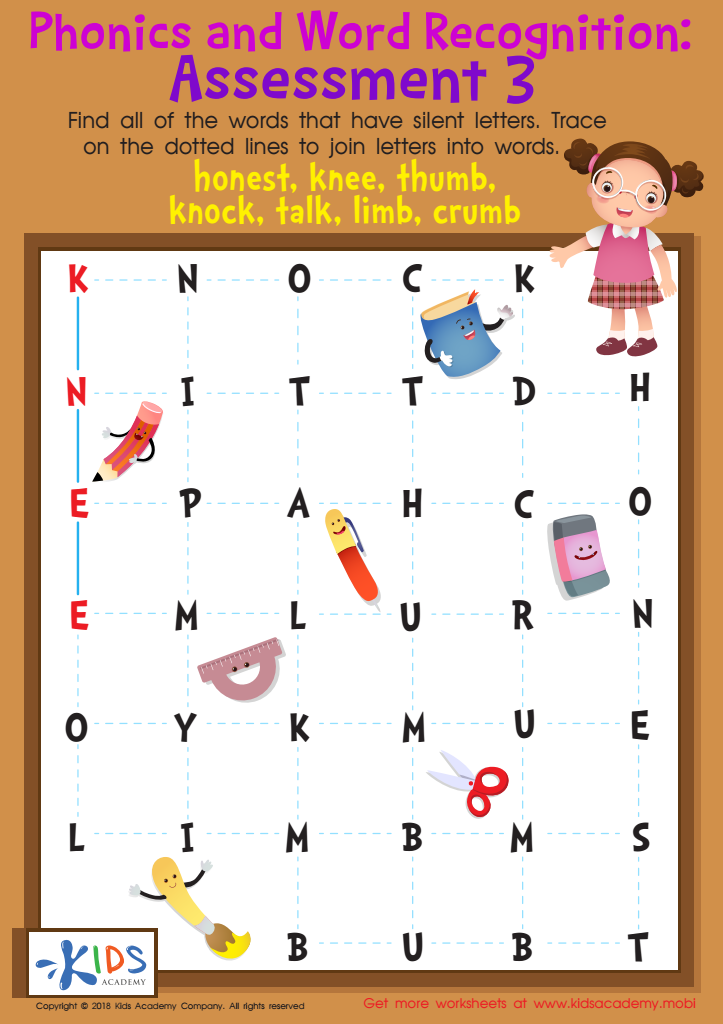
Let's Check Long Vowels: Assessment Worksheet

Let's Check Long Vowels: Assessment Worksheet

This worksheet helps your child identify objects and learn long vowel sounds. Ask them to say the names of the four objects in each row. Then, help them check the boxes to confirm they know the long vowel sounds. This will help them develop their reading skills.
Let's Check Long Vowels: Assessment Worksheet
Worksheet
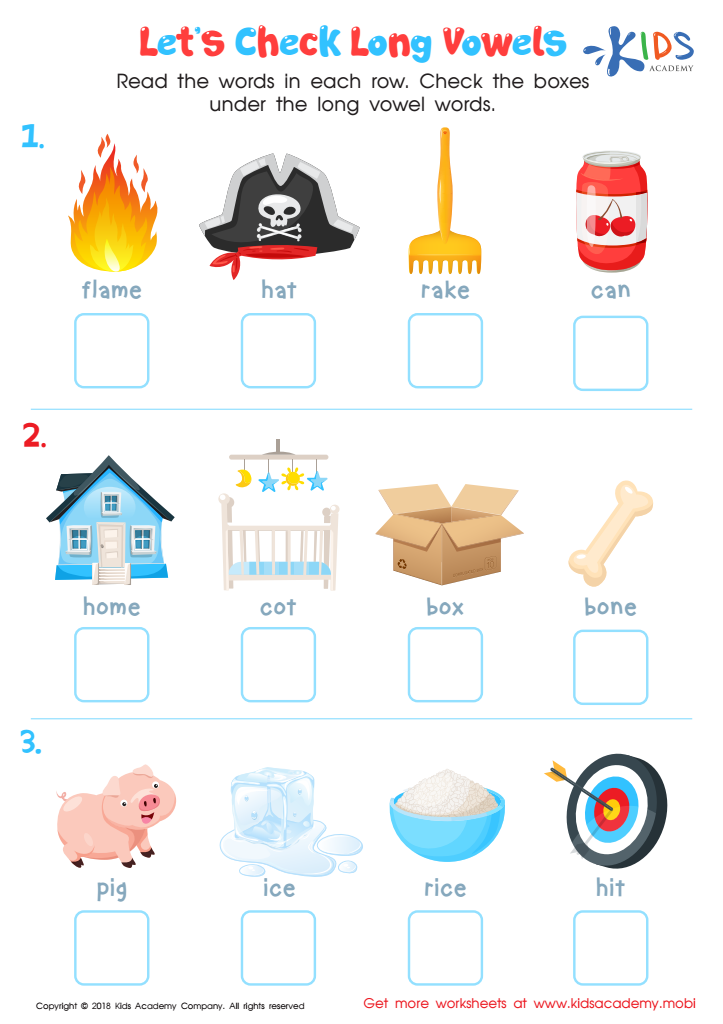
Phonics and Word Recognition: Assessment 3 Worksheet

Phonics and Word Recognition: Assessment 3 Worksheet

Silent letters can be tricky for kids learning to read and write. Show them how they work with words like 'knee' and 'dumb'. Then, challenge them to come up with their own. Give them a worksheet with silent letters and trace the lines to join the letters into words.
Phonics and Word Recognition: Assessment 3 Worksheet
Worksheet
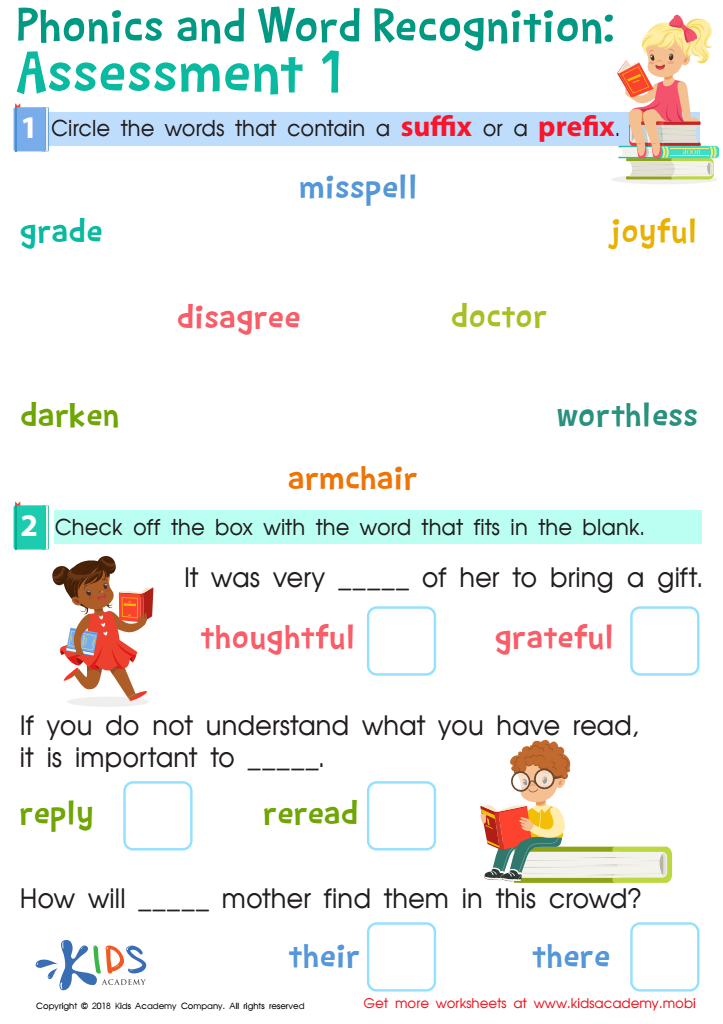
Phonics and Word Recognition: Assessment 1 Worksheet

Phonics and Word Recognition: Assessment 1 Worksheet

Explain prefixes (words added to start of another word to give it a new meaning) and suffixes (added to end of word to change its meaning) to your kids with examples like 'unhappy' (prefix) and 'forgetful' (suffix). Now, help your child complete this worksheet, including circling words and checking boxes.
Phonics and Word Recognition: Assessment 1 Worksheet
Worksheet
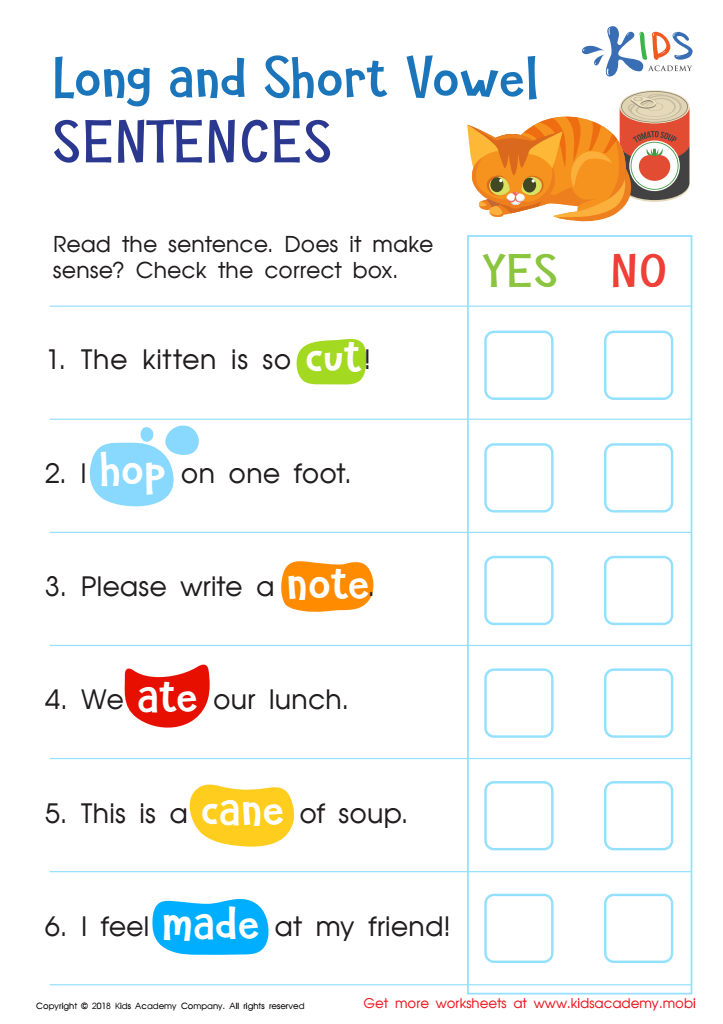
Long and Short Vowel Sentences: Assessment Worksheet

Long and Short Vowel Sentences: Assessment Worksheet

This printable worksheet helps kids practice differentiating between short and long vowel sounds. They'll use context clues to figure out which words make sense in simple sentences. A great way to build reading and writing skills!
Long and Short Vowel Sentences: Assessment Worksheet
Worksheet
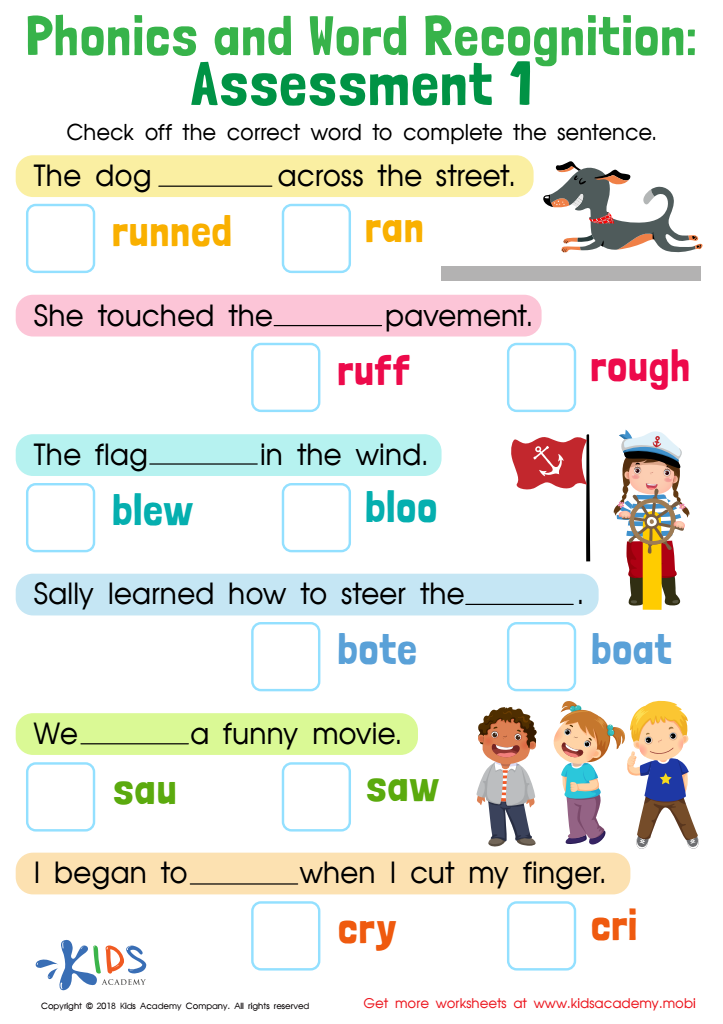
Phonics and Word Recognition: Assessment 1 Worksheet

Phonics and Word Recognition: Assessment 1 Worksheet

This worksheet tests phonetics and word recognition. Students should be familiar with past tense verbs. Read incomplete sentences, then read multiple options and help students select the correct one.
Phonics and Word Recognition: Assessment 1 Worksheet
Worksheet
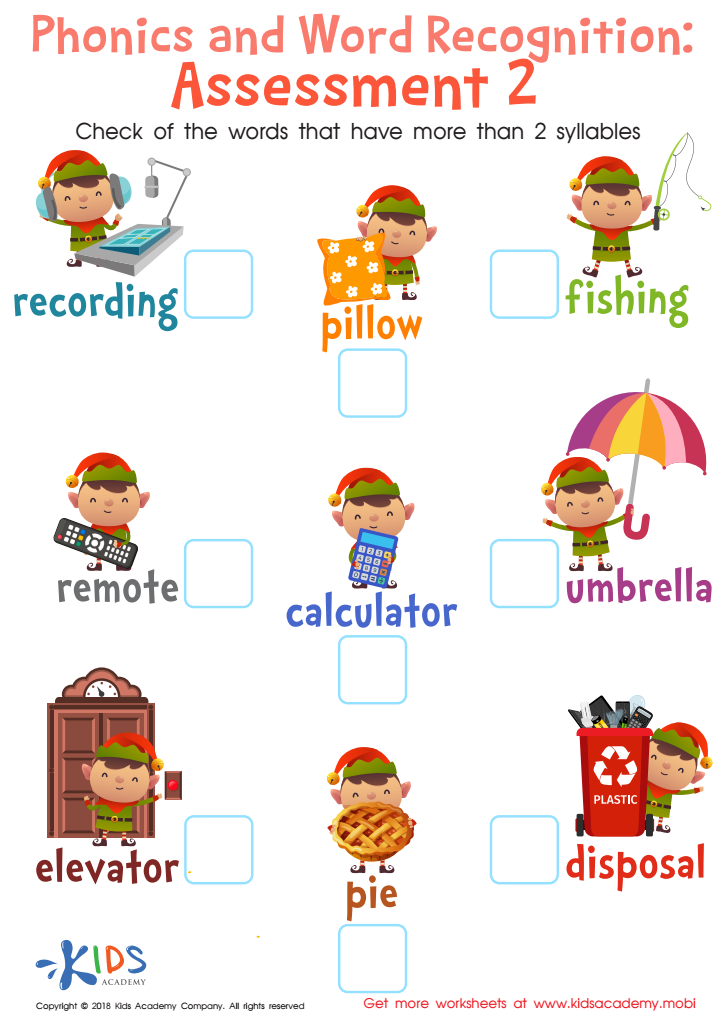
Phonics and Word Recognition: Assessment 2 Worksheet

Phonics and Word Recognition: Assessment 2 Worksheet

Help your kids learn proper pronunciation by counting syllables. Most words they'll encounter have 1-3 syllables, making them simple to say. Have them repeat the words in your worksheet after you. Focus on longer words with more than two syllables.
Phonics and Word Recognition: Assessment 2 Worksheet

Worksheet
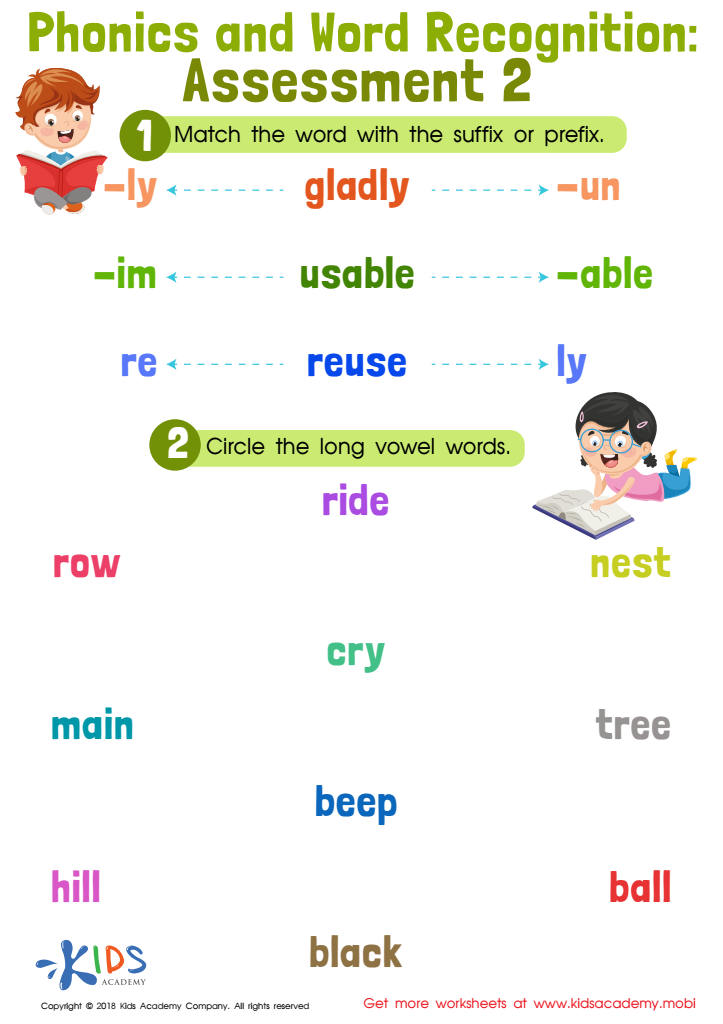
Phonics and Word Recognition: Assessment 2


Phonics and Word Recognition: Assessment 2
Give kids common examples of suffixes and prefixes, such as "un-," "unhappy," "ness," "happyness." Ask them to match each word in the word recognition exercise to the correct suffix or prefix. Test phonetic understanding by having them circle the long vowel sounds.
Phonics and Word Recognition: Assessment 2

Worksheet


Phonics activities for ages 7-9 are essential tools for enhancing reading and writing skills, laying a strong foundation for literacy development. At this age, children are transitioning from learning to read to reading to learn, making phonics not just about letter-sound relationships, but also about comprehension and vocabulary expansion. Engaging in phonics activities helps consolidate their understanding of spelling patterns and word structures, which is crucial as texts become more complex.

Parents and teachers should care because phonics activities boost students' confidence and prevent literacy struggles. When children can decode words fluently, they are more likely to enjoy reading, leading to a lifelong love for literature and improved academic performance across subjects. Furthermore, the incorporation of answers in phonics activities enables caregivers and educators to provide immediate feedback, reinforcing correct knowledge and addressing misconceptions swiftly.

Moreover, phonics instruction hands children the tools necessary for independent reading, fostering autonomy and critical thinking. By prioritizing these activities, parents and educators can foster a supportive learning environment that empowers children to thrive academically and beyond. Ultimately, enhancing phonemic awareness through phonics benefits not just individual learners but also contributes positively to broader educational outcomes.