Easy Phonics Worksheets Activities With Answers for Ages 3-7
4 filtered results
-
From - To
Discover a fun and engaging way to strengthen early reading skills with our "Easy Phonics Worksheets Activities With Answers for Ages 3-7." Tailored for young learners, these worksheets cover essential phonics concepts, making learning enjoyable and interactive. Each activity is designed to enhance letter recognition, sound association, and word formation, fostering a solid foundation for reading. Additionally, our answer keys simplify the assessment process for parents and educators. Explore a variety of colorful and captivating exercises that hold the attention of children while promoting their literacy development. Perfect for home or classroom use, these worksheets are a must-have for early education!
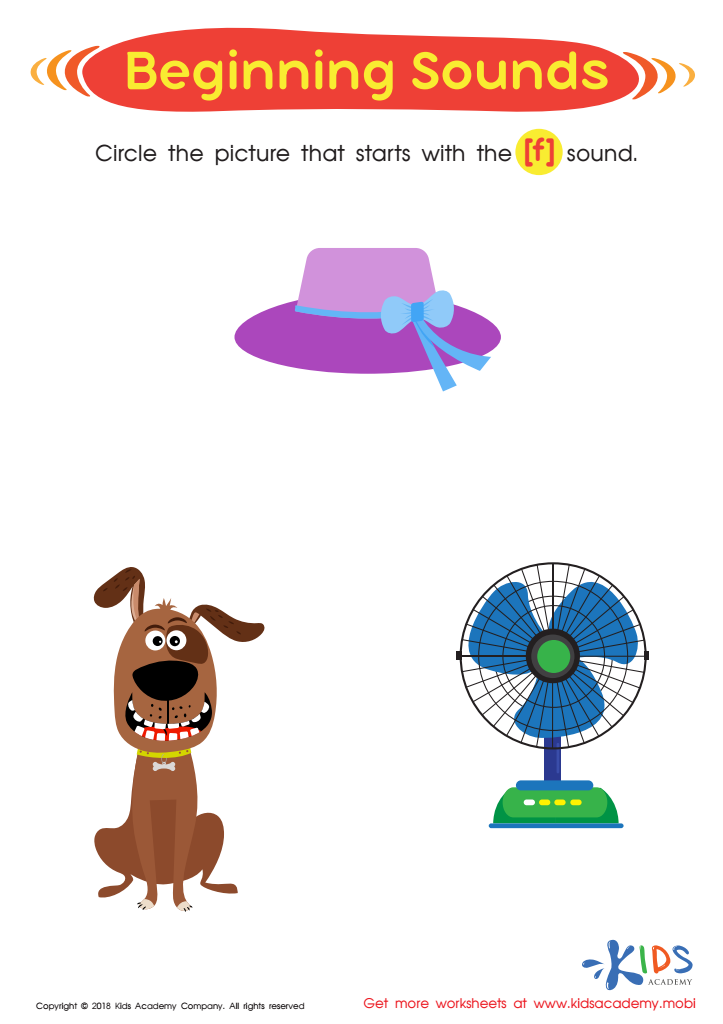
Beginning Sounds Assessment Printable
 Assign to My Students
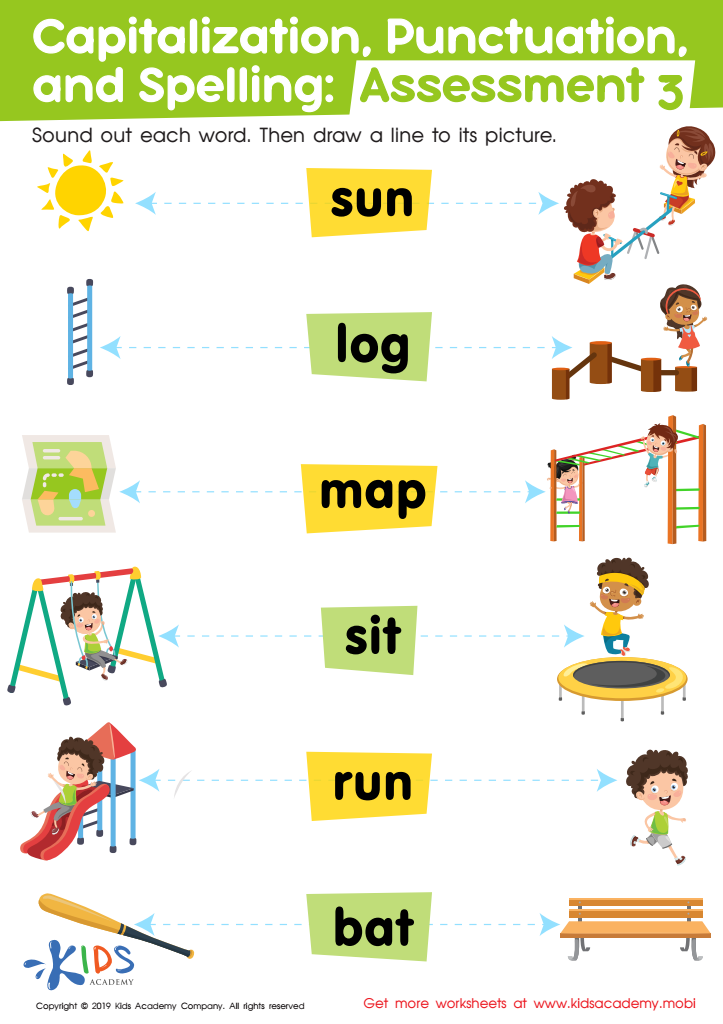
Capitalization. Punctuation. Spelling. Assessment 3 Worksheet
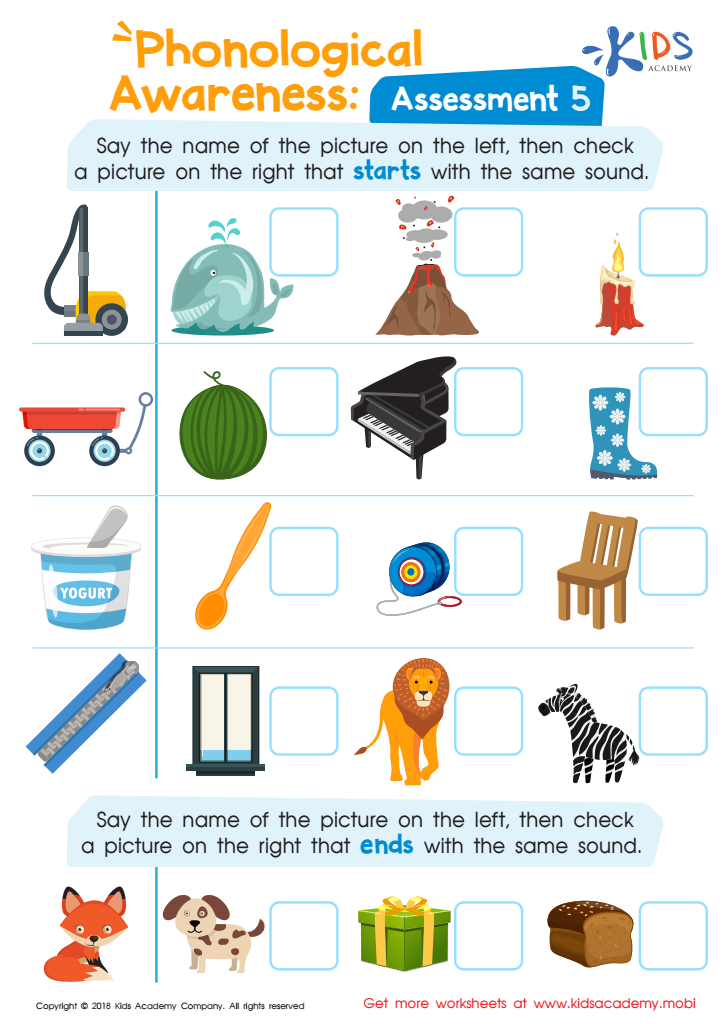
Phonological Awareness: Assessment 5 Worksheet
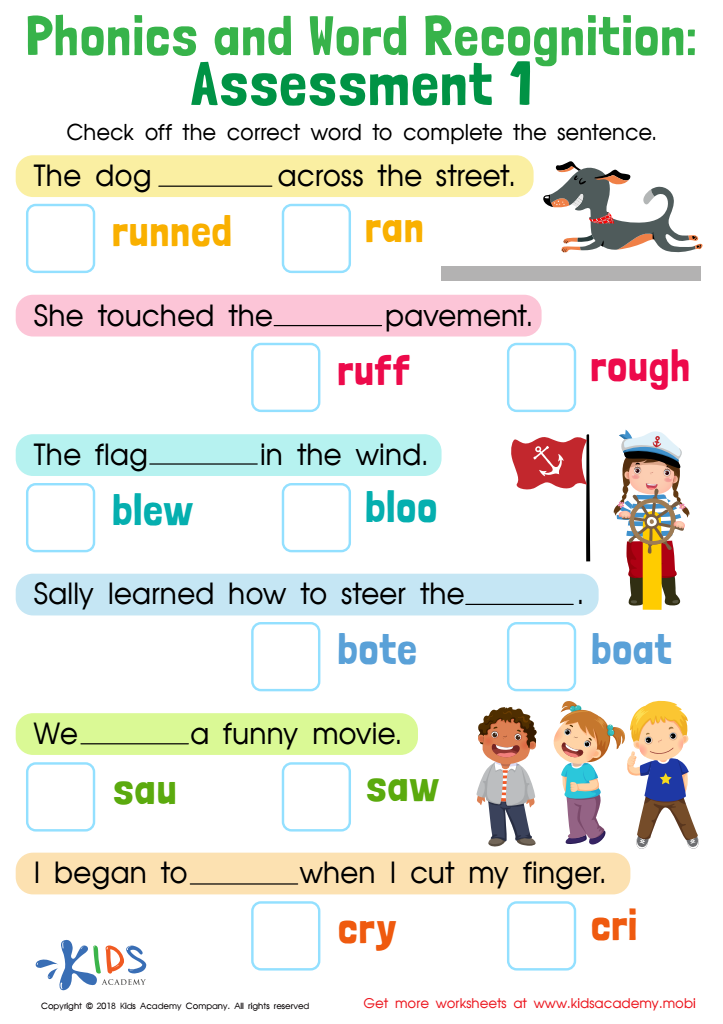
Phonics and Word Recognition: Assessment 1 Worksheet








Parents and teachers should prioritize Easy Phonics Activities with Answers for ages 3-7 because these foundational skills play a crucial role in early literacy development. Phonics serves as the bridge between spoken language and written text, enabling young learners to decode words and grasp the intricacies of reading. Engaging in phonics activities helps children develop essential skills like sound recognition, blending, and segmenting, which are integral for reading fluency and comprehension.
Moreover, these activities are designed to be interactive and enjoyable, fostering a love for learning. They incorporate games, songs, and hands-on tasks that cater to diverse learning styles, making reading an engaging experience for young children. Encouraging practice through fun, age-appropriate phonics exercises can build confidence and reduce the anxiety often associated with early learning.
Additionally, providing answers and guided support helps parents and teachers assess students' progress and address challenges promptly, ensuring a more individualized approach to learning. By investing time in easy phonics activities, parents and educators lay a solid foundation for lifelong literacy skills, enhancing students’ academic success and enabling them to communicate effectively in various contexts as they grow.








