Filters

7 filtered results

Clear all filters
Favorites
With answer key
Interactive

7 filtered results

Difficulty Level

Grade


Discover our engaging Easy Matching Worksheets designed specifically for children aged 6-8! These fun activities enhance early learning through interactive matching exercises that foster logical thinking and memory skills. Each worksheet comes with an answer key for easy reference, ensuring parents and educators can effortlessly support kids as they learn. Our activities cover a range of topics, making learning enjoyable while encouraging critical thinking and cognitive development. Perfect for classroom use or at-home practice, these worksheets are an ideal resource to help young learners develop essential skills while having fun. Explore our collection today and watch your child's confidence grow!

Check out this FREE Matching Trial Lesson for age 6-8!

Addition with Arrays - Part 2

Favorites
With answer key
Interactive
  • Matching
  • 6-8
  • With answer key
  • Easy
Empty and Light or Heavy and Full? Worksheet

Empty and Light or Heavy and Full? Worksheet

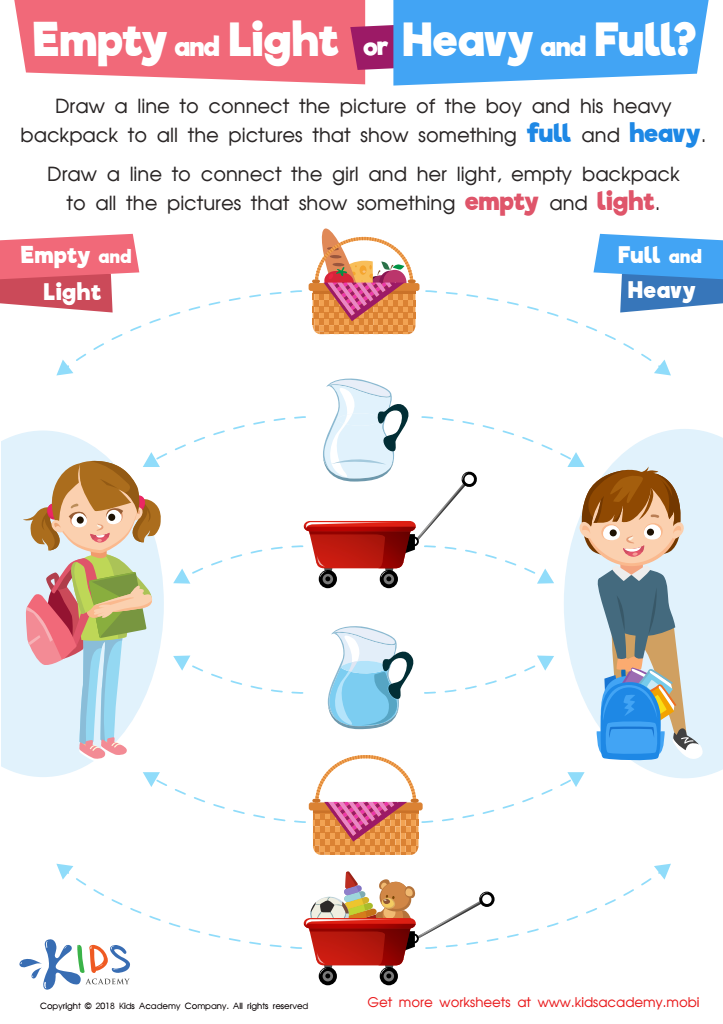
Kids can have trouble understanding measurement, like the differences between heavy and light. This worksheet helps them associate full with heavy and empty with light, using familiar images. Plus, it's a fun way to practice fine motor skills, tracing the lines to connect the pictures.
Empty and Light or Heavy and Full? Worksheet
Worksheet
Counting Birds Worksheet

Counting Birds Worksheet

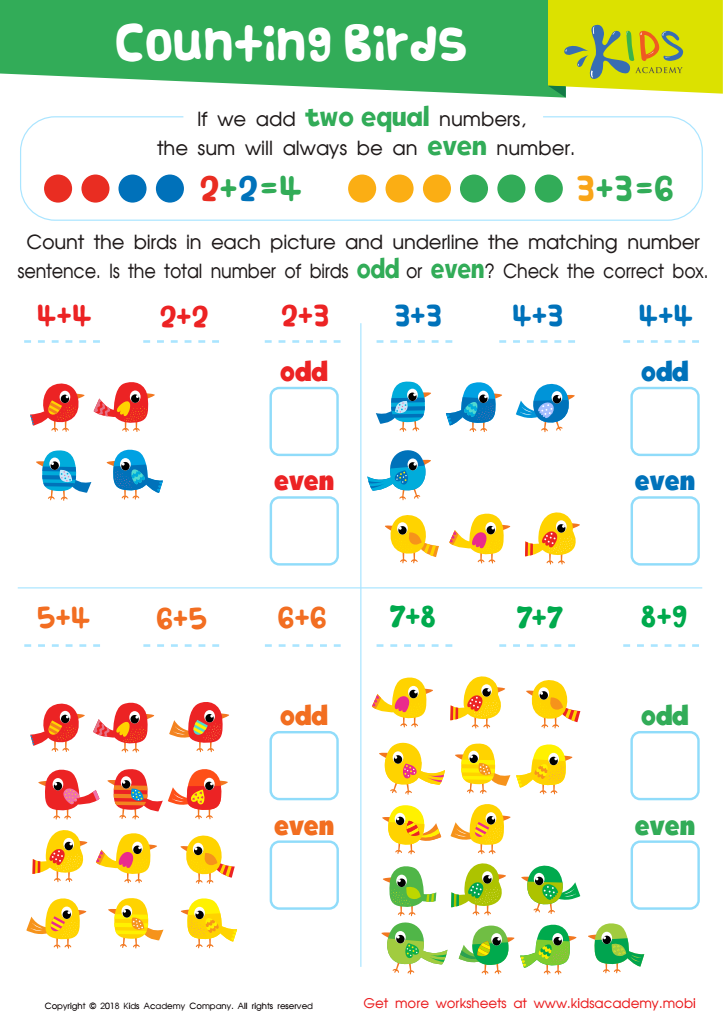
Help your child count and underline the matching number sentence in the worksheet. Ask them if the total number of birds in each picture is odd or even, then check the correct box. When two equal numbers are added, the sum is always an even number (e.g. 2+2=4, 4+4=8, both divisible by 2).
Counting Birds Worksheet
Worksheet
Fruity Array Quest Worksheet

Fruity Array Quest Worksheet

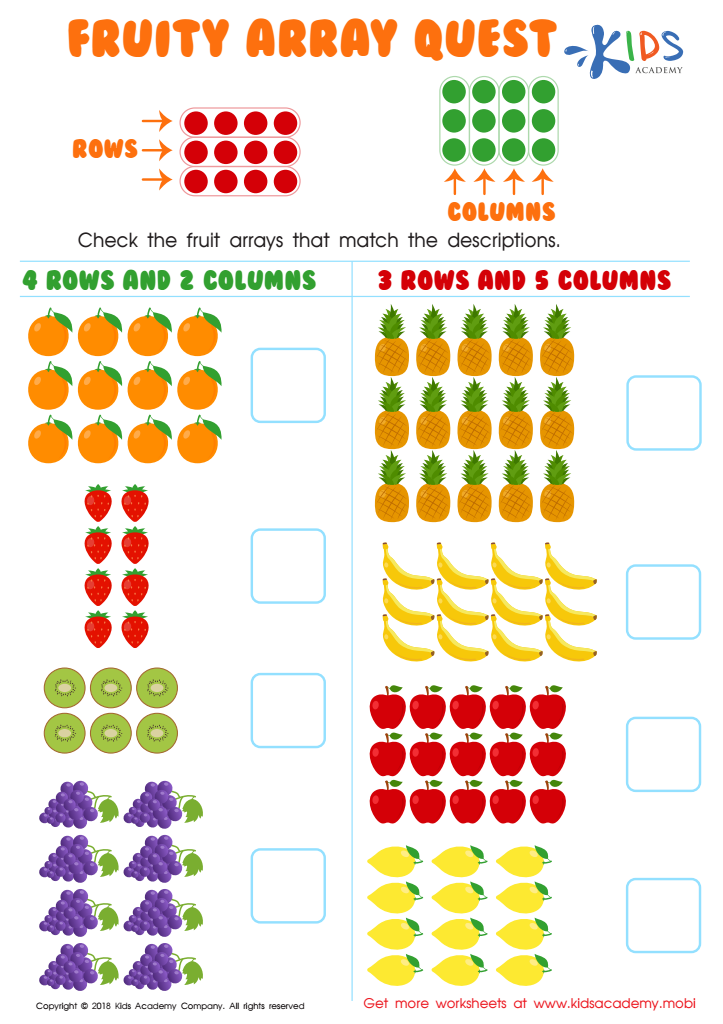
Explain rows (horizontal) and columns (vertical) to your child before starting the worksheet. Show them the picture and the arrows indicating direction. Your child should be able to answer the questions easily after that. Help them match the fruit arrays that match the descriptions.
Fruity Array Quest Worksheet
Worksheet
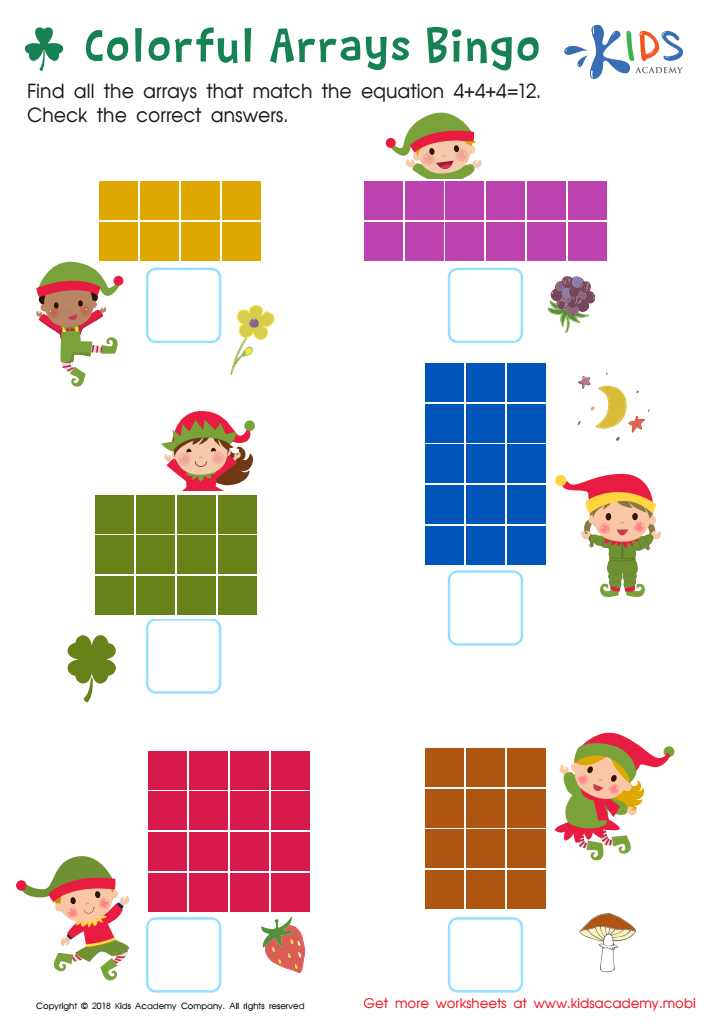
Colorful Arrays Bingo Worksheet

Colorful Arrays Bingo Worksheet

This worksheet stimulates thinking about arrays and how to represent them. Instruct students to count the 6 arrays and find which ones sum up to 12. Ask them to check the answers for accuracy.
Colorful Arrays Bingo Worksheet
Worksheet
Multiplication worksheet for grade 3

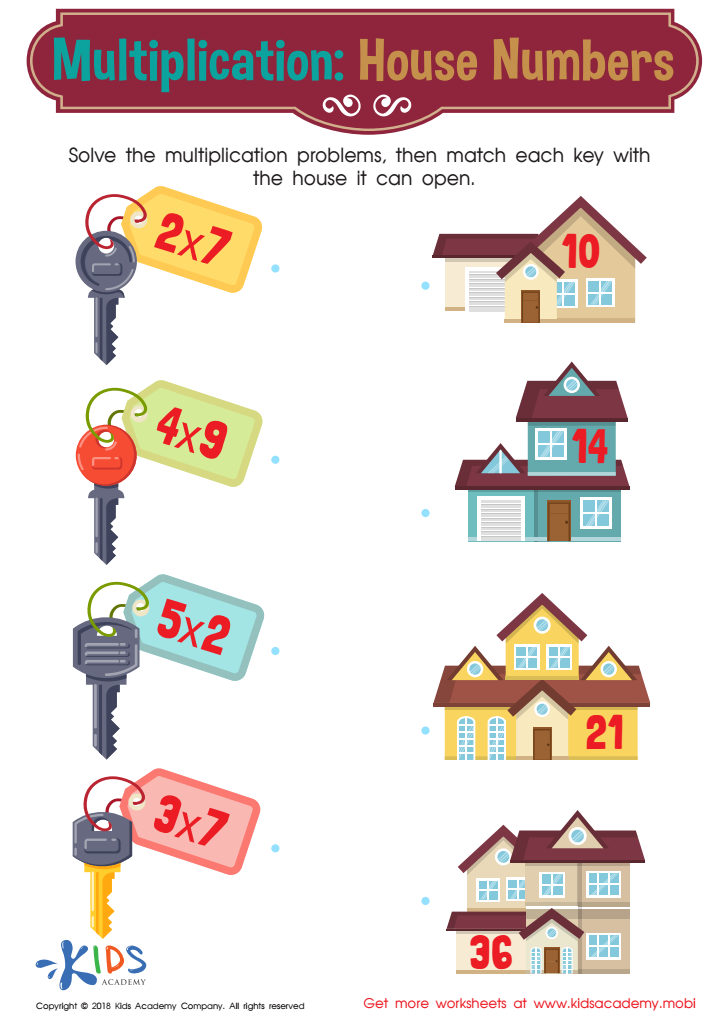
House Numbers Worksheet

This multiplication worksheet is perfect for grade 3 students to sharpen their math skills! Each problem unlocks the door to a house on the page - can they figure out which key fits which door? By solving each problem, they'll boost their multiplication skills and have fun along the way.
House Numbers Worksheet
Worksheet
What Time Is it? Hour Hands Worksheet

What Time Is it? Hour Hands Worksheet

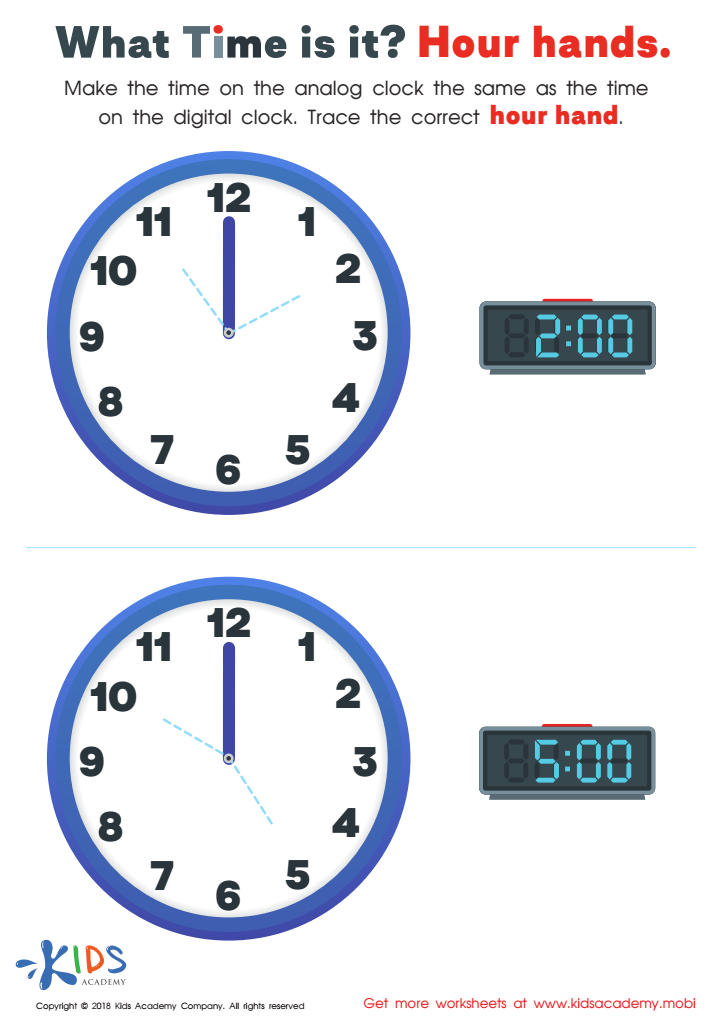
Does your child know how to read analogue and digital clocks? This worksheet will help them learn. Trace the correct hour hand to match the time on a digital clock to the analogue clock. Help them read the time correctly, both on analogue and digital clocks.
What Time Is it? Hour Hands Worksheet
Worksheet
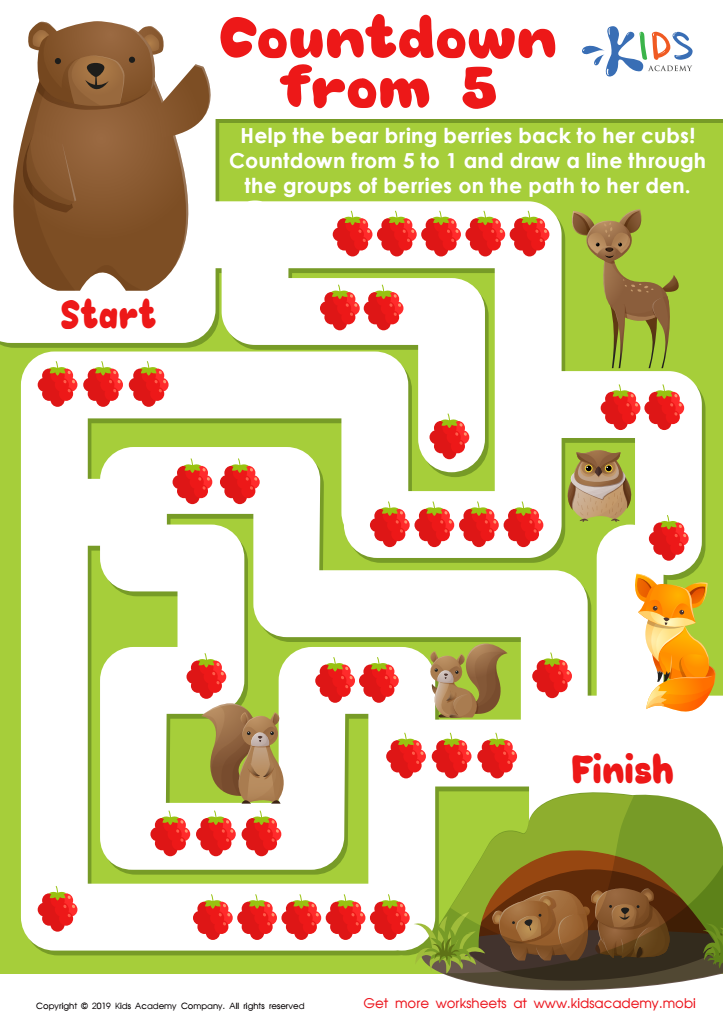
Countdown from 5 Worksheet


Countdown from 5 Worksheet

Encourage your kids to help Mama Bear find her way to her den! Ask them to count down from 5 to 1 and draw a line through the groups of berries on the path. Point them to the picture of the friendly bears. A fun and safe way to enjoy these cute animals!
Countdown from 5 Worksheet
Worksheet


Easy matching activities for children aged 6-8 are essential tools for early learning, making them valuable for parents and teachers alike. These activities enhance cognitive skills by engaging children in recognizing patterns, improving memory, and developing critical thinking abilities. As kids identify and match items, they not only practice important reasoning skills but also build vocabulary and language comprehension—key components of early literacy.

Furthermore, such activities can be adapted to suit various subjects, ranging from math to science, promoting a multi-disciplinary approach to learning. Parents and teachers should prioritize these engaging exercises, as they provide opportunities for interactive, playful learning, fostering a positive attitude toward education. Such activities can also be easily integrated into home routines or classroom practices, making them convenient resources for busy schedules.

Moreover, these matching tasks can cater to different learning styles, appealing to visual, auditory, and kinesthetic learners, thus ensuring inclusivity. By participating in these activities together, parents and children can strengthen their bonds, while teachers can identify individual student needs and tailor future lessons. Investing time in easy matching activities is a proactive step towards nurturing a holistic educational experience for young learners.