Silent Vowels Worksheets for Ages 3-9
5 filtered results
-
From - To
Discover our engaging Silent Vowels Worksheets designed for children aged 3-9! These worksheets introduce young learners to the fascinating world of silent vowels, helping them enhance their reading and spelling skills in a fun and interactive way. Each worksheet features colorful illustrations and age-appropriate activities that promote phonemic awareness and vocabulary building. Kids will enjoy practicing by identifying words with silent vowels, completing exercises, and reinforcing their learning through creative tasks. Perfect for homeschooling or classroom use, our worksheets make mastering silent vowels enjoyable for every child. Download now and help your little ones unlock the secrets of silent vowels today!
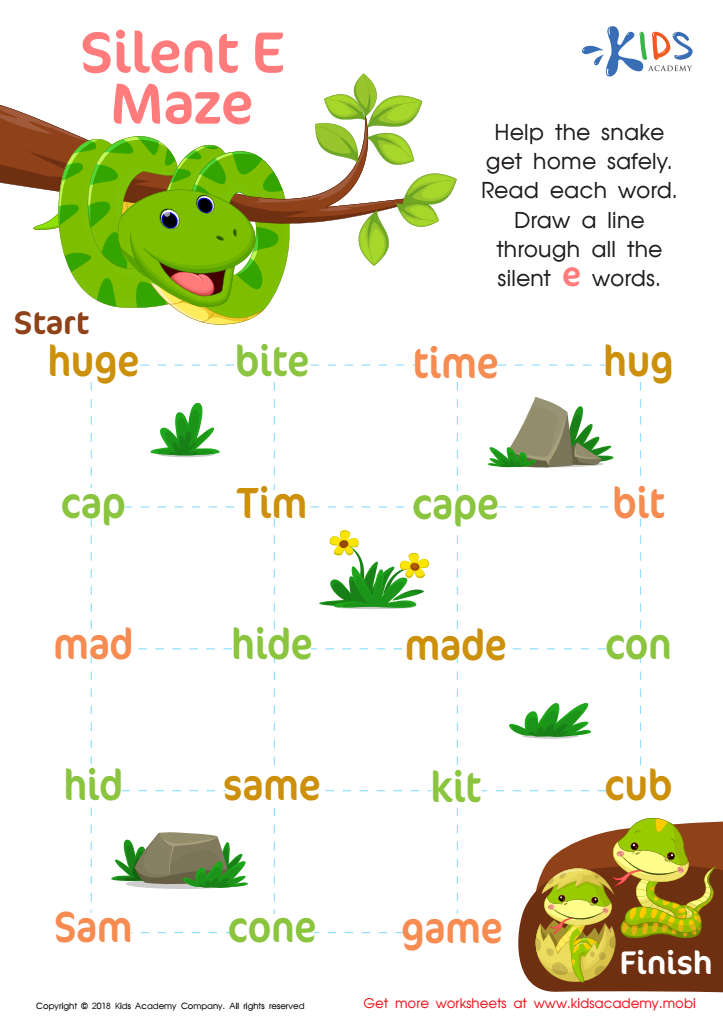
Silent E Maze Worksheet
 Assign to My Students
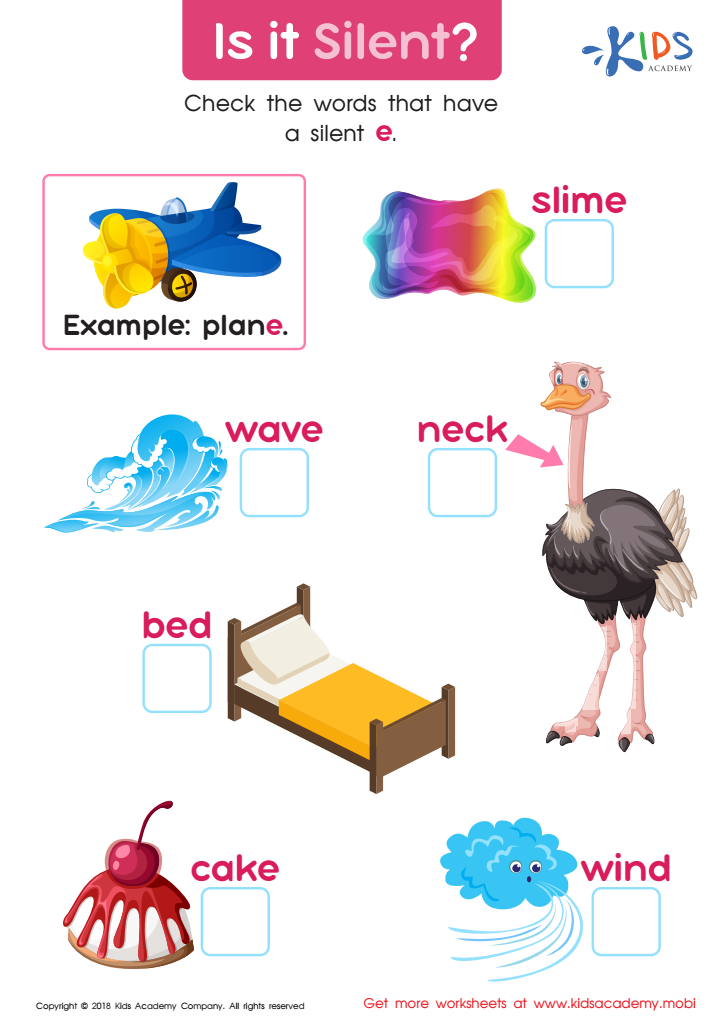
Is It Silent? Worksheet
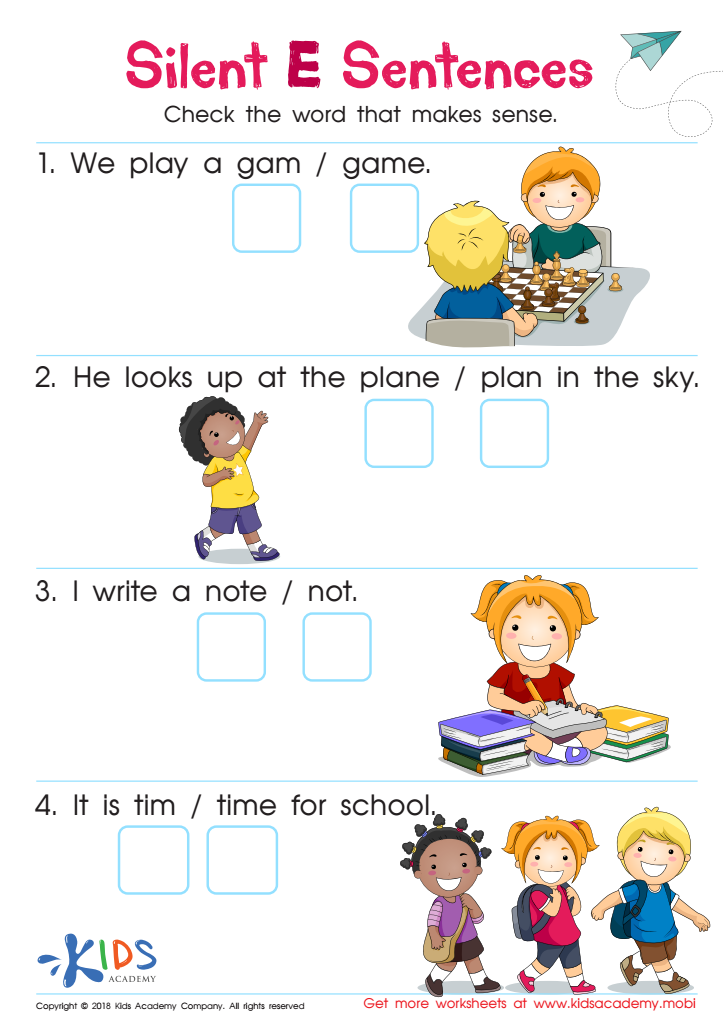
Silent E Sentences Worksheet
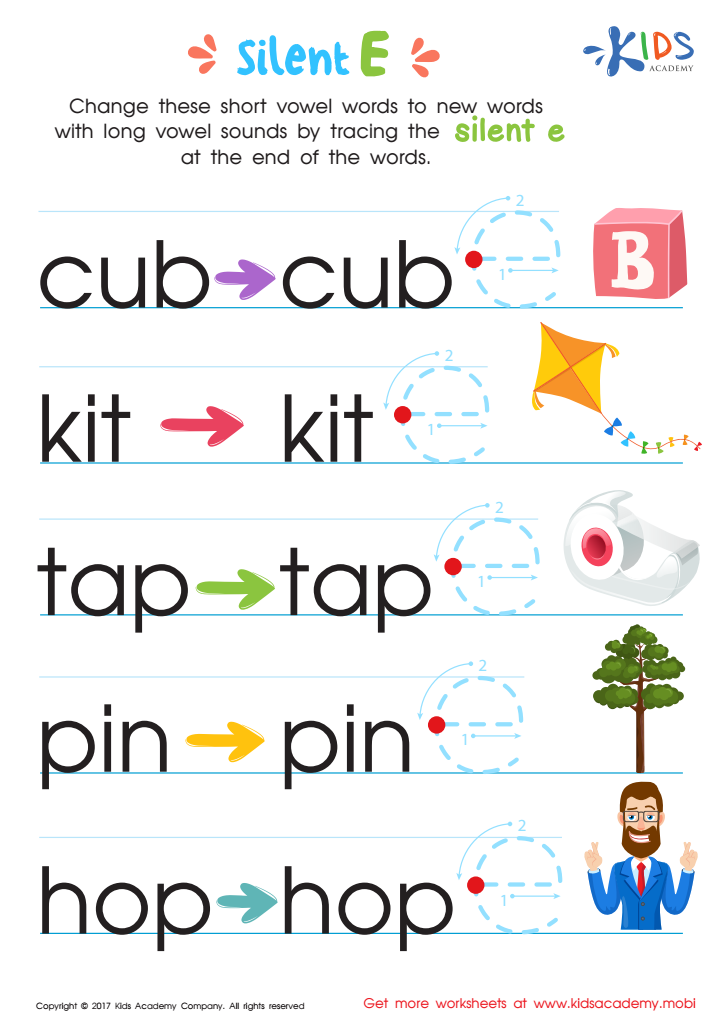
Silent E Words Worksheet
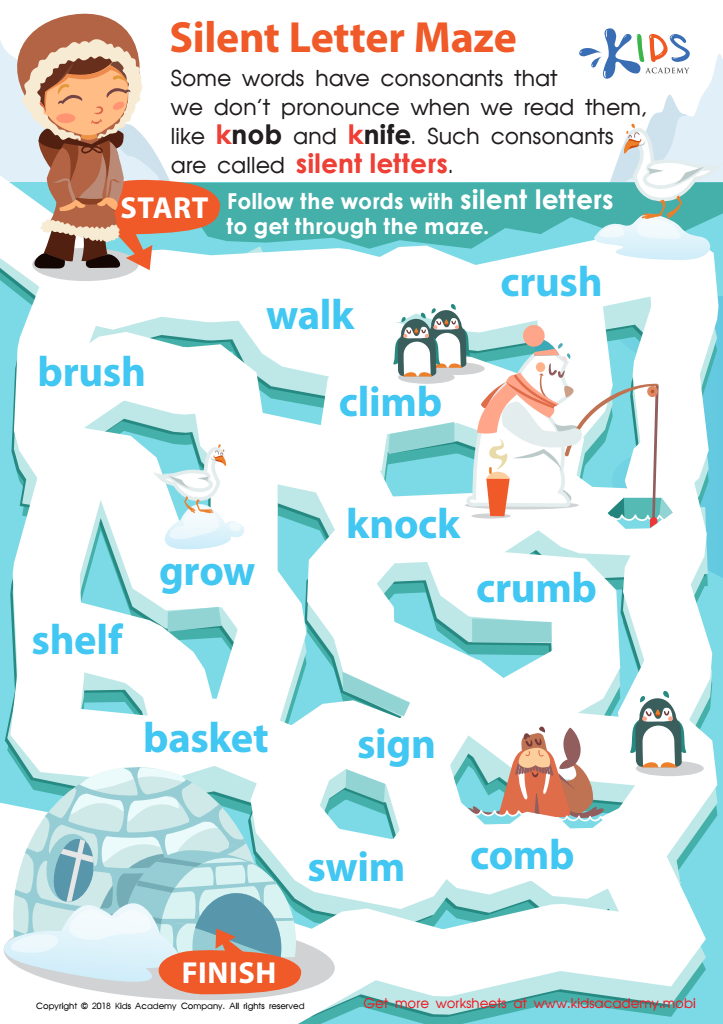
Silent Letter Maze Worksheet


Understanding silent vowels is essential for parents and teachers working with children aged 3-9 as it plays a crucial role in early literacy development. Silent vowels, such as the 'e' in 'name' or the 'a' in 'bread,' are often overlooked but have significant implications for reading and writing skills. Familiarizing young learners with these concepts helps them decode words more effectively, enhancing their phonemic awareness and overall reading comprehension.
When children grasp the complexity of silent vowels, they become more confident readers and spellers. This understanding reduces frustration when encountering unfamiliar words and builds a foundational knowledge for more advanced language concepts. Moreover, incorporating silent vowel lessons can make learning interactive and fun through games and activities, fostering a love for reading.
By nurturing an awareness of silent vowels early on, parents and teachers equip children with vital tools that bridge phonics and word recognition. This foundational skill set supports their progress toward fluent reading abilities, ultimately setting them up for academic success. In an increasingly literacy-driven world, recognizing the importance of silent vowels fosters independence, creativity, and a better appreciation for the nuances of the English language. Thus, parents and teachers should prioritize this aspect of language education.